7 Warning Signs Your Lake Arrowhead Home Needs an Electrical Inspection (Before It's Too Late)
October 24, 2025
7 Warning Signs Your Lake Arrowhead Home Needs an Electrical Inspection (Before It's Too Late)
Last Updated: October 2025
Your Lake Arrowhead cabin is your mountain sanctuary—a place where you escape the chaos of everyday life and reconnect with nature. But while you're admiring the pine trees and planning your next hike, your home's electrical system might be sending you warning signals that something's seriously wrong.
Electrical problems don't announce themselves with flashing neon signs. They whisper through flickering lights, hum through warm outlets, and hide behind walls until a minor issue becomes a major hazard. For homeowners in Lake Arrowhead, Blue Jay, Crestline, and Running Springs, recognizing these warning signs early can save you thousands in repairs—or even save your home from an electrical fire.
Why Mountain Homes Have Unique Electrical Challenges
Before we dive into the warning signs, it's important to understand why Lake Arrowhead properties face different electrical risks than homes in the valley:
Older Construction: Many mountain cabins were built in the 1960s-80s as weekend retreats, not year-round residences. The electrical systems were designed for minimal power usage—a few lights, a refrigerator, maybe a small heater. Today's homeowners are running wifi routers, home offices, modern appliances, and HVAC systems on wiring that was never meant to handle this load.
Harsh Weather Conditions: Heavy snow, ice storms, high winds, and temperature extremes take a toll on electrical equipment. What might last 40 years in San Bernardino could need replacement after 25 years in the mountains.
Wildlife and Pest Damage: Rodents love to nest in warm spaces during winter—including inside electrical panels and wall cavities where they can chew through wiring insulation.
DIY Repairs Gone Wrong: We've all seen them—the creative electrical "solutions" from previous owners who thought they could save a few bucks. These shortcuts create hidden hazards that only reveal themselves years later.
Now, let's look at the seven warning signs that your Lake Arrowhead home needs a professional electrical inspection.
Warning Sign #1: Frequent Circuit Breaker Trips
What It Means: Your circuit breaker is doing its job—protecting your home from an overload. But if you're constantly resetting breakers, especially the same one repeatedly, that's not normal.
Why It Happens in Mountain Homes: Winter brings increased electrical demand. Space heaters, heated blankets, heat tape for pipes, and holiday decorations all add to your power consumption. If your electrical panel is undersized (common in older Lake Arrowhead cabins with 60-100 amp service), you're asking it to deliver more power than it's designed to handle.
The Hidden Danger: Repeated overloads can damage circuit breakers, causing them to fail when you need protection most. Some older breakers can even weld shut, allowing dangerous overheating without tripping.
What to Do: Don't just keep resetting the breaker. A licensed Lake Arrowhead electrician can perform a load calculation to determine if you need a panel upgrade, circuit redistribution, or additional circuits for high-draw appliances.
Warning Sign #2: Flickering or Dimming Lights
What It Means: Lights that flicker, dim, or brighten randomly indicate an unstable power supply to that fixture or circuit.
Common Causes:
Loose wire connections at the fixture, switch, or panel
Corroded connections due to moisture infiltration
Overloaded circuits sharing power with large appliances
Damaged wiring from pests or age
Issues with the utility service connection
Why It's Serious: Loose connections create resistance, which generates heat. Over time, this heat can melt wire insulation and ignite nearby combustible materials. According to the National Fire Protection Association, electrical failures or malfunctions are the second leading cause of home fires.
When to Call an Electrician: If flickering affects multiple rooms or occurs when you're not running major appliances, schedule an inspection immediately. This could indicate a serious problem at your main panel or service entrance.
Warning Sign #3: Outlets or Switches That Are Warm to the Touch
What It Means: Electrical outlets and switches should never feel warm or hot. Heat indicates resistance in the connection, which means electricity is being converted to heat instead of flowing smoothly.
Why This Happens: Common culprits include:
Loose wire connections behind the outlet
Aluminum wiring (common in homes built between 1965-1973)
Overloaded circuits
Defective devices
Poor electrical workmanship
The Fire Risk: That warmth is a precursor to overheating. Electrical outlets and switches are frequently involved in home fires. The heat can ignite dust, lint, or other materials that accumulate in the outlet box over years.
Immediate Action: Stop using the outlet or switch immediately. Don't just swap it out yourself—the problem might be in the wiring behind the wall, not the device itself. Have a qualified electrician diagnose and repair the root cause.
Warning Sign #4: Burning Smell or Discolored Outlets
What It Means: This is your home's way of screaming for help. A burning smell near outlets, switches, or your electrical panel indicates wiring insulation is melting or has already caught fire.
What Causes This:
Overheated wiring from overloaded circuits
Short circuits
Arc faults (dangerous electrical sparks jumping between conductors)
Charred connections in the outlet box or panel
Warning Signs to Watch For:
Burning plastic or fish-like odor
Black or brown discoloration around outlets
Scorch marks on walls or ceiling near electrical fixtures
Smoke or sparks from outlets
Critical Response: If you smell burning or see smoke, turn off power at the main panel and call an emergency electrician in Lake Arrowhead immediately. This is not a "wait until tomorrow" situation.
Warning Sign #5: Your Home Has Two-Prong Outlets
What It Means: Two-prong outlets indicate your home lacks a proper grounding system, a critical safety feature in modern electrical installations.
Why Grounding Matters: The ground wire provides a safe path for electrical current if there's a fault in an appliance or wiring. Without it:
You're at higher risk of electrical shock
Sensitive electronics aren't protected from power surges
You can't use modern three-prong appliances safely (those adapter plugs don't add grounding)
Common in Older Lake Arrowhead Homes: Many mountain cabins built before 1970 have ungrounded outlets. While they might work, they don't meet current safety standards and create liability issues if you rent your property.
The Solution: A professional electrician can assess your system and either run new grounded wiring or install GFCI outlets where appropriate. This upgrade protects your family and increases your home's value.
Warning Sign #6: Lights Dim When Appliances Turn On
What It Means: If your lights dim when the refrigerator kicks on, the washing machine starts, or you fire up the microwave, your electrical system is struggling to meet demand.
The Underlying Issue: This typically indicates:
Undersized electrical service (60-100 amp panels in homes that need 200 amps)
Shared circuits where lights and appliances compete for power
Voltage drop from undersized wiring
Weak connections in your main panel or service entrance
Why It's a Problem: Beyond being annoying, voltage fluctuations can damage sensitive electronics, shorten appliance lifespans, and indicate your system is operating at its limit. During winter when heating demands increase, this stress intensifies.
Professional Assessment: An electrician can measure voltage drop, calculate your home's actual load requirements, and recommend solutions ranging from dedicated circuits for large appliances to a complete service upgrade.
Warning Sign #7: Your Electrical Panel is Outdated or Shows Signs of Damage
What to Look For:
Rust or corrosion on the panel box
Panels manufactured by Federal Pacific or Zinsco (known fire hazards)
Scorch marks or heat discoloration inside the panel
Panel that feels warm to the touch
Fuses instead of circuit breakers
Crackling or buzzing sounds from the panel
Moisture or evidence of water intrusion
Why These Matter: Your electrical panel is the heart of your home's electrical system. If it's compromised, damaged, or simply too old, it can't protect your home effectively. Federal Pacific and Zinsco panels have been linked to thousands of fires because their breakers fail to trip during overloads.
Special Note for Lake Arrowhead Homeowners: Moisture from snow melt, condensation, and mountain humidity can infiltrate panels faster than in drier climates. Annual inspections help catch these issues early.
The Fix: If your panel shows any of these warning signs, schedule an inspection with a licensed electrician who can recommend repair or replacement options.
How Often Should You Get an Electrical Inspection?
The National Electrical Code doesn't mandate specific inspection intervals for residential properties, but electrical safety experts recommend:
Every 3-5 years for homes under 25 years old
Every 1-3 years for homes over 25 years old
Annually for homes over 40 years old or with known electrical issues
Before buying or selling any property
After any major storm that caused power outages or property damage
Before starting a major renovation that adds electrical load
For Lake Arrowhead homeowners, we recommend leaning toward more frequent inspections due to harsh weather conditions and the prevalence of older construction.
What Happens During a Professional Electrical Inspection?
A comprehensive electrical safety inspection from a licensed Lake Arrowhead electrician includes:
Visual Assessment:
Examining your electrical panel for damage, proper labeling, and appropriate breaker sizing
Checking outlets and switches throughout your home
Inspecting visible wiring in basements, attics, and crawl spaces
Evaluating your home's grounding and bonding system
Testing and Measurements:
Testing GFCI and AFCI outlets to ensure proper function
Measuring voltage at various locations to identify voltage drop issues
Checking for proper polarity at outlets
Thermal imaging to detect hot spots behind walls (available with advanced inspections)
Documentation:
Detailed report of findings with photos
Prioritized list of safety concerns
Recommendations for repairs or upgrades
Estimated costs for recommended work
Safety Compliance Review:
Verifying your system meets current National Electrical Code standards
Identifying code violations that could affect insurance or resale
Checking for amateur wiring or dangerous DIY work
A thorough inspection typically takes 2-4 hours depending on your home's size and complexity.
The Real Cost of Ignoring Warning Signs
Putting off electrical repairs feels like saving money—until disaster strikes. Consider these potential costs:
Electrical Fires: According to the U.S. Fire Administration, electrical fires cause an estimated $1.3 billion in property damage annually. The average electrical fire causes $25,000-$50,000 in damage. Your insurance might not cover damage from a known defect you failed to repair.
Complete System Failure: Ignoring minor issues can cascade into major failures requiring emergency repairs at premium prices—often during holidays or storms when electricians are overwhelmed with calls.
Injury or Electrocution: Faulty electrical systems put your family at risk. Medical bills, lost work time, and the emotional toll far exceed the cost of preventive maintenance.
Inability to Sell: When you list your property, home inspectors will find electrical defects. Buyers will either walk away or demand major price reductions. Fixing problems proactively gives you control over timing and costs.
Higher Insurance Premiums: Insurance companies are increasingly strict about electrical systems. Outdated panels or known hazards like Federal Pacific breakers can lead to higher premiums or policy cancellation.
Compare these costs to a $200-400 electrical inspection that identifies problems while they're still manageable and affordable to fix.
Don't Wait for an Emergency
Electrical problems rarely fix themselves. That flicker you're ignoring today could be the loose connection that causes a fire next month. That breaker you keep resetting could fail at the worst possible moment.
Lake Arrowhead's mountain environment is already challenging enough without worrying about your home's electrical safety. Whether you've noticed one of these warning signs or you simply can't remember the last time a professional evaluated your system, now is the time to take action.
A comprehensive electrical inspection provides:
Peace of mind knowing your home is safe
A roadmap for necessary repairs prioritized by urgency
Documentation for insurance purposes
Improved home value and marketability
Prevention of costly emergency repairs
Schedule Your Lake Arrowhead Electrical Safety Inspection Today
Don't wait for flickering lights to turn into sparking wires. Don't let warm outlets become electrical fires. And don't risk your family's safety or your mountain home investment because you put off a simple inspection.
Lake Arrowhead Electrical provides thorough, honest electrical inspections for homeowners throughout the San Bernardino Mountains. Our licensed electricians understand the unique challenges of mountain properties and have the experience to identify problems other contractors might miss.
Our comprehensive inspection includes:
Complete electrical panel evaluation
Outlet and switch testing throughout your home
Wiring assessment in accessible areas
GFCI and AFCI testing
Voltage and grounding checks
Detailed written report with photos
Prioritized recommendations
Transparent pricing for any needed repairs
We serve: Lake Arrowhead, Blue Jay, Crestline, Running Springs, Arrowbear Lake, Cedar Glen, Twin Peaks, and surrounding mountain communities.
Call (909) 403-4740 now for your electrical safety inspection.
Same-day and emergency appointments available.
Your mountain home should be your safe haven—not a hidden hazard. Let us help you keep it that way.
Frequently Asked Questions
How much does an electrical inspection cost in Lake Arrowhead?
A comprehensive residential electrical inspection typically costs between $200-$400 depending on your home's size and complexity. This investment identifies potential problems that could cost thousands to repair if left unaddressed. Many electricians offer inspection discounts when combined with repair work.
Can I inspect my own electrical system?
While you can visually check for obvious issues like damaged outlets or scorch marks, a proper electrical inspection requires specialized tools and training. Licensed electricians can identify problems that aren't visible to homeowners, use testing equipment to measure electrical characteristics, and understand code requirements. DIY electrical work also poses serious shock and fire risks.
Will an electrical inspection tell me if my wiring needs replacing?
Yes. A thorough inspection evaluates your wiring's condition, type, and capacity. The electrician will identify outdated or dangerous wiring materials (like aluminum or cloth-insulated wiring), determine if your system can handle your power needs, and recommend repairs or upgrades as needed.
How long does an electrical inspection take?
Most residential inspections take 2-4 hours depending on your home's size, age, and complexity. Larger homes or properties with known issues may take longer. The electrician will provide a timeline when scheduling your appointment.
Do I need to be home during the inspection?
Yes, the electrician will need access to your electrical panel (usually in a garage, basement, or exterior wall), attic, basement, and all rooms of your home. You don't need to follow them around, but should be available to answer questions and receive the report.
What's the difference between an electrical inspection and a home inspection?
A general home inspection includes a basic electrical evaluation but isn't as comprehensive as a dedicated electrical inspection performed by a licensed electrician. Home inspectors check for obvious defects but may miss issues that specialized electrical testing would reveal. If you're buying or selling, consider both.
Are electrical inspections required in California?
California doesn't require routine residential electrical inspections, but inspections are mandatory when selling a home (as part of the home inspection process), after electrical work that requires a permit, and after certain types of property damage. Many insurance companies also require inspections for older homes.
What happens if the inspection finds problems?
The electrician will provide a detailed report prioritizing issues by safety urgency. They'll explain each problem, why it matters, and provide estimates for repairs. You decide which repairs to tackle immediately and which can wait. Critical safety hazards should be addressed right away.
Can an electrical inspection help lower my insurance rates?
Potentially. Some insurance companies offer discounts for homes with updated electrical systems. If your inspection leads to repairs like a panel upgrade, removing Federal Pacific breakers, or replacing old wiring, notify your insurance agent—you might qualify for reduced premiums.
What should I do to prepare for an electrical inspection?
Clear access to your electrical panel, make sure all areas of your home are accessible (including attics and basements), know the locations of all outlets and switches, and compile a list of any electrical issues you've noticed. Turn off sensitive electronics before the inspection begins.
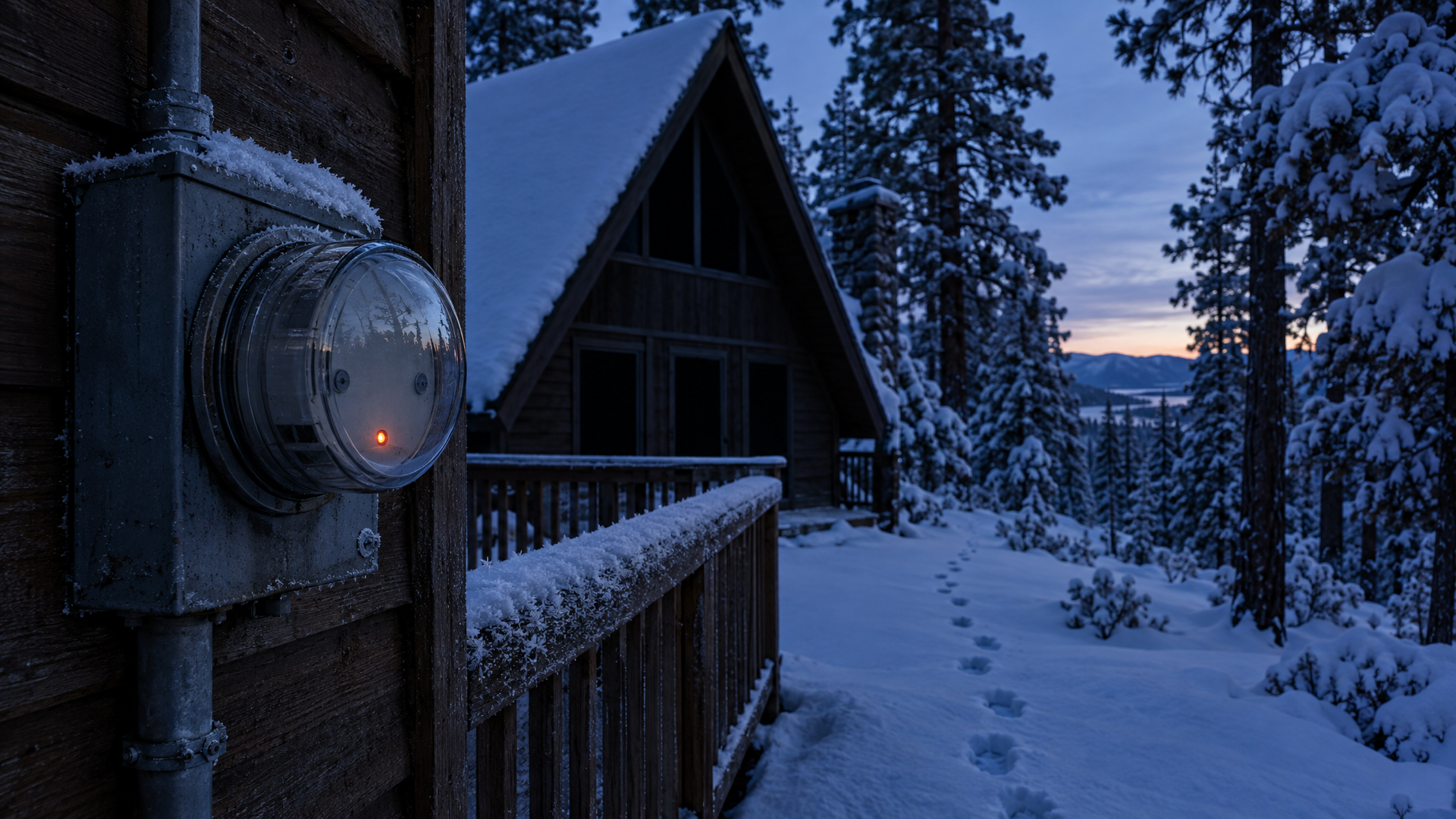
Your Lake Arrowhead cabin pays SCE's ~$24 fixed charge even when empty. What changed Oct 1, what shutting off power saves, and standby loads. (909) 403-4740
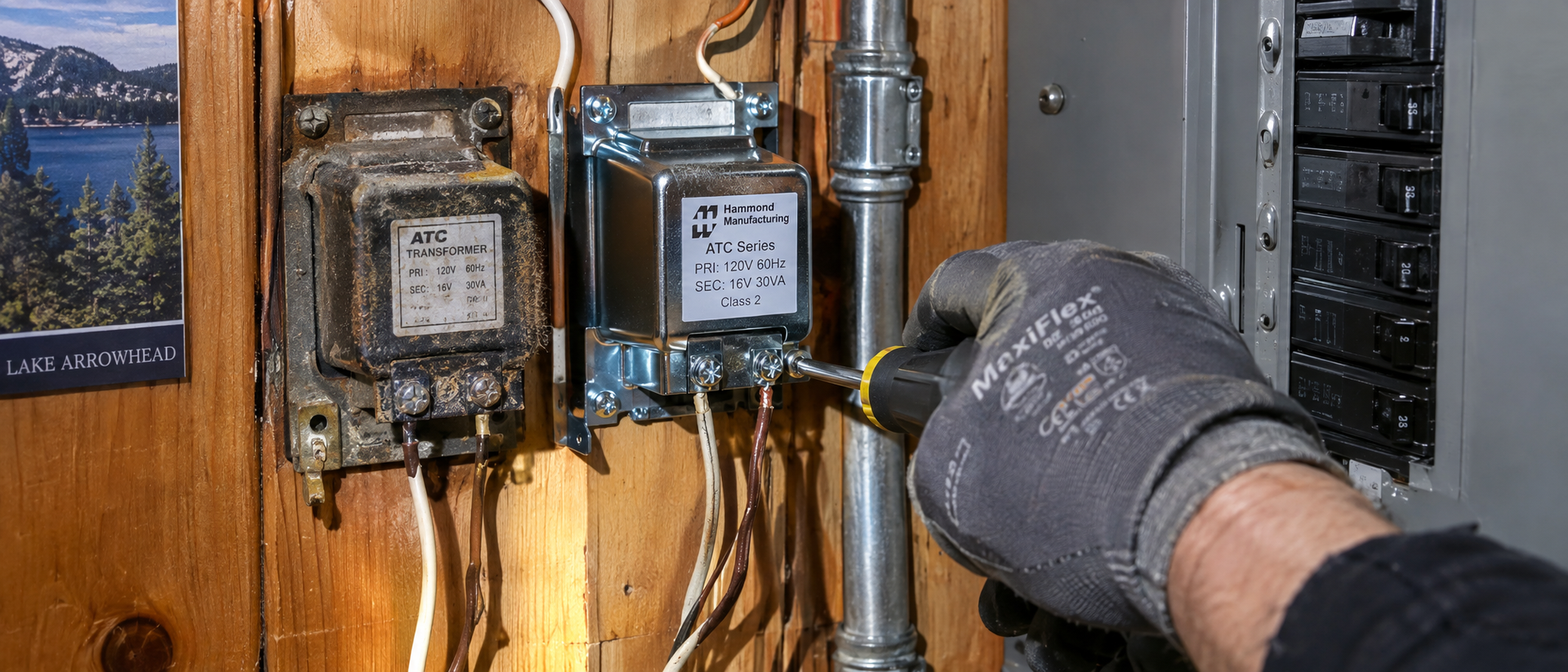
Old doorbell transformers built for simple chimes can't power a modern video doorbell. What voltage and VA rating actually work. (909) 403-4740.
SCE can now shut off power earlier on high-risk circuits this fire season. What that means for Lake Arrowhead, and what to check before the next PSPS.
Storm damage doesn't hit evenly on the mountain — some properties lose power first and get it back last. Here's why, and what to do about it.
Steep driveways, dense forest, and vacant rental periods make outdoor lighting a safety issue in Lake Arrowhead, not just decor. (909) 403-4740.
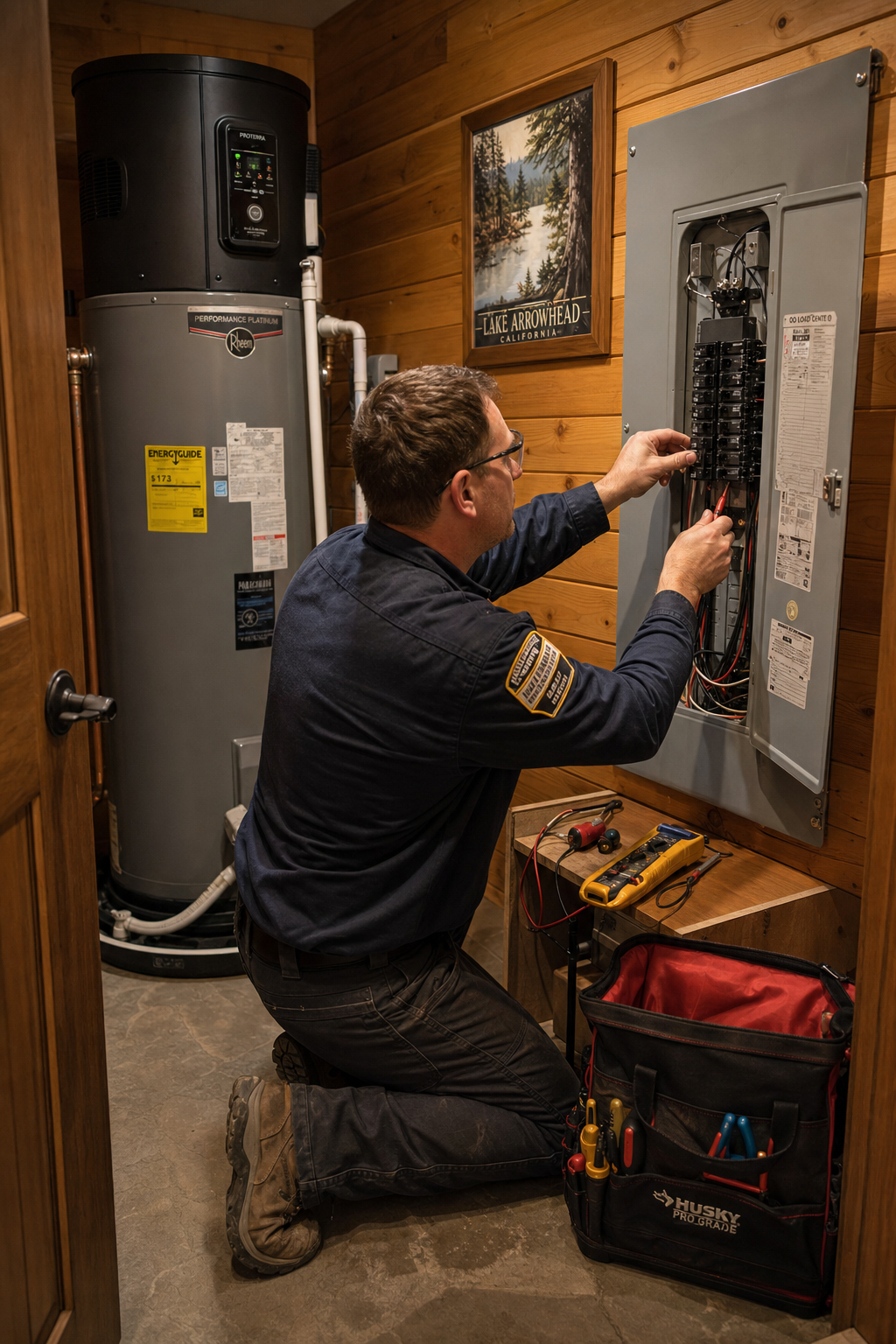
Heat pump water heaters need a dedicated 240V circuit (or a newer 120V plug-in model). What Lake Arrowhead homeowners should know before installing.
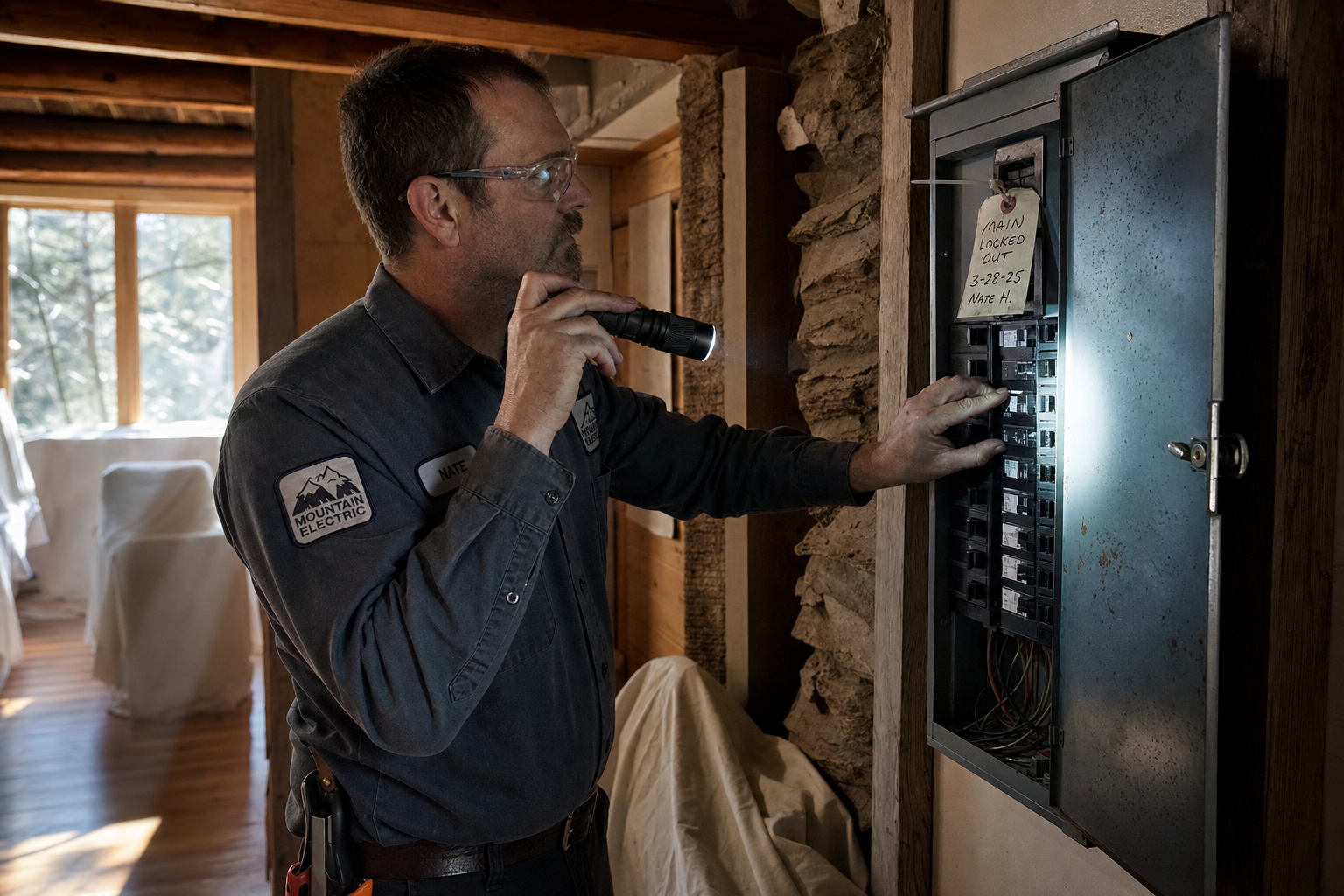
Flipping the main breaker blind in spring causes cabin fires. The proper shutdown and startup order for Lake Arrowhead cabin owners. (909) 403-4740.
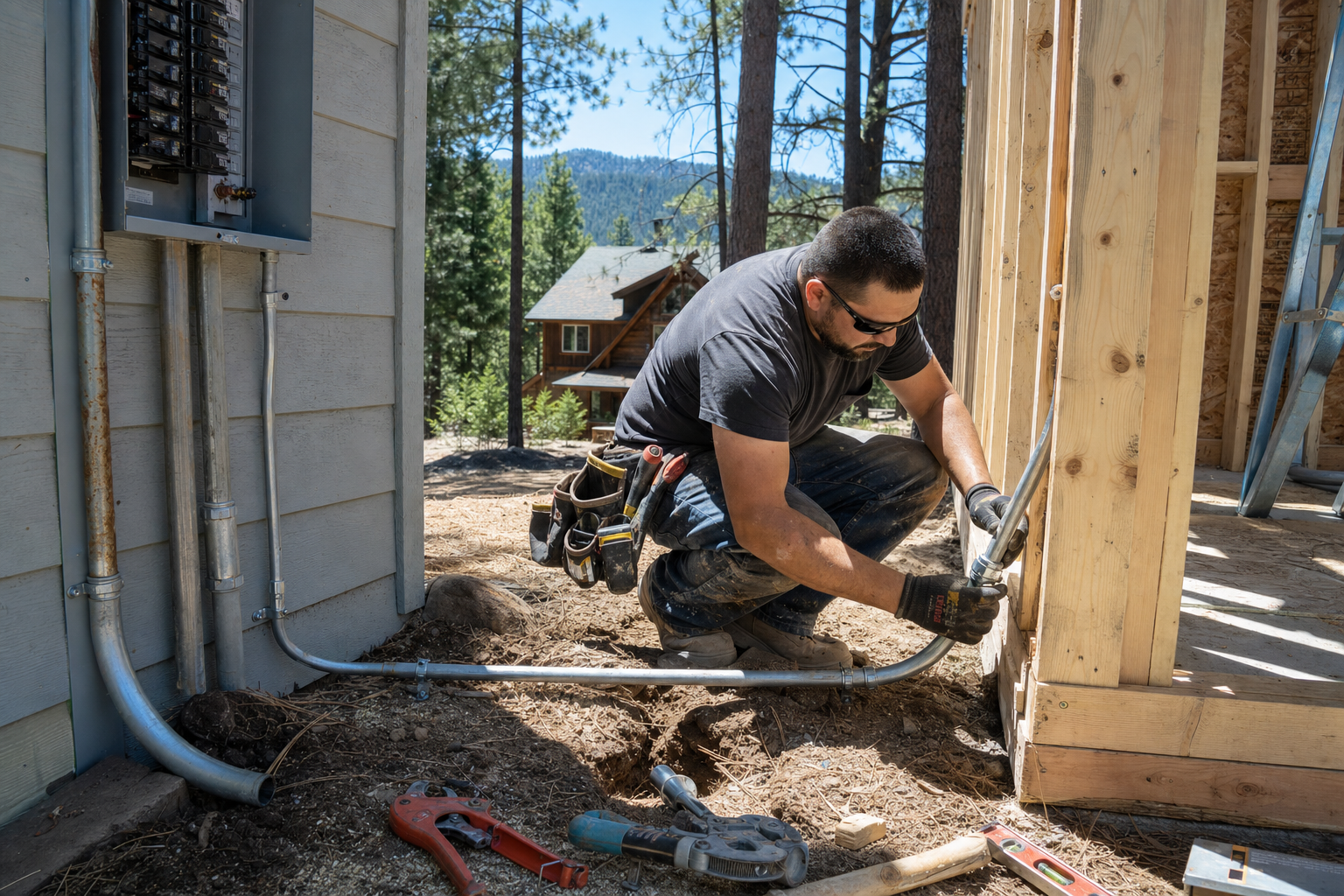
Building an ADU in Lake Arrowhead? What subpanel size, main panel capacity, and Title 24 EV-ready wiring you actually need. (909) 403-4740.
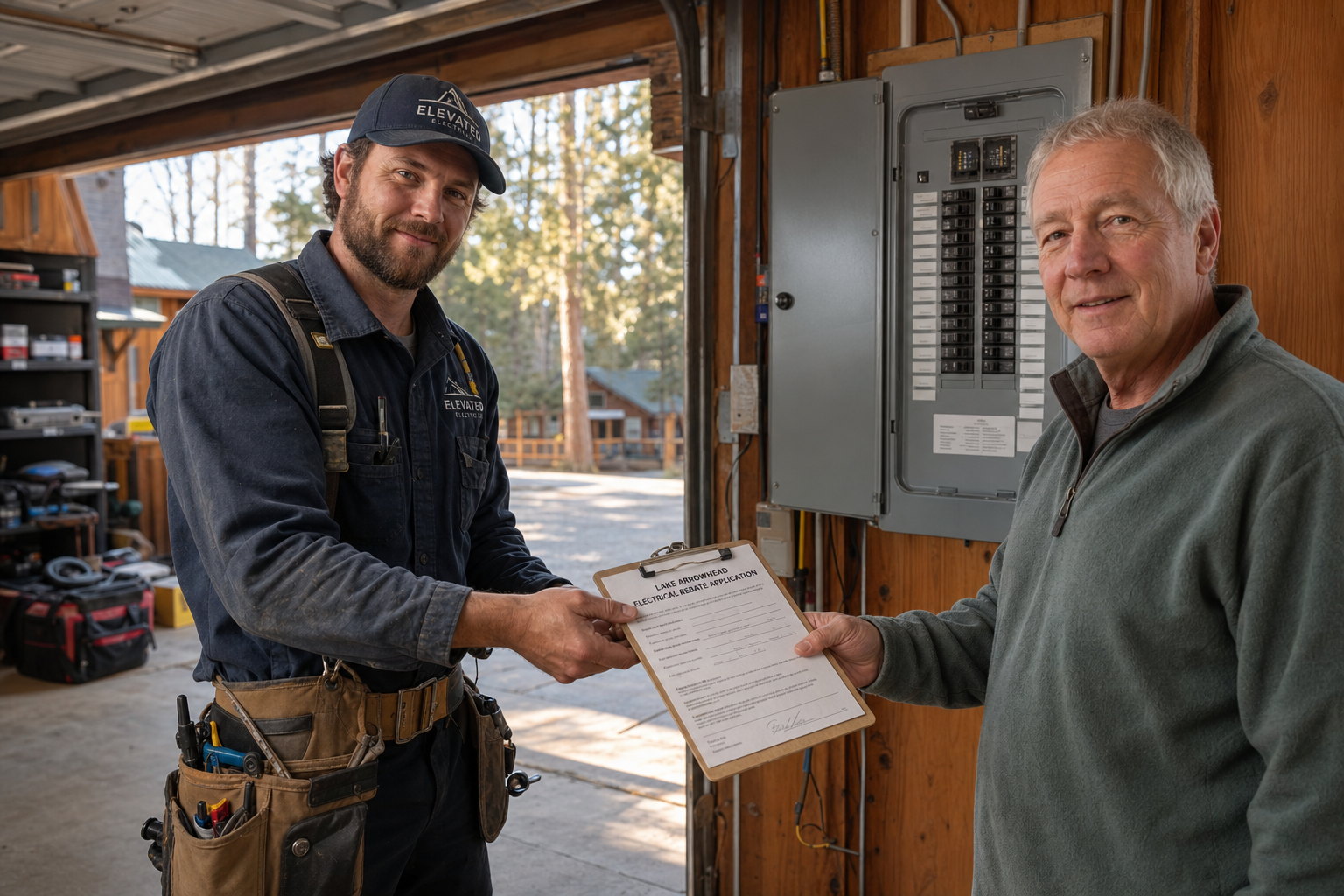
SCE's Charge Ready Home program covers up to $4,200 of your panel upgrade cost for EV charging in Lake Arrowhead. Eligibility & how to apply. (909) 403-4740.
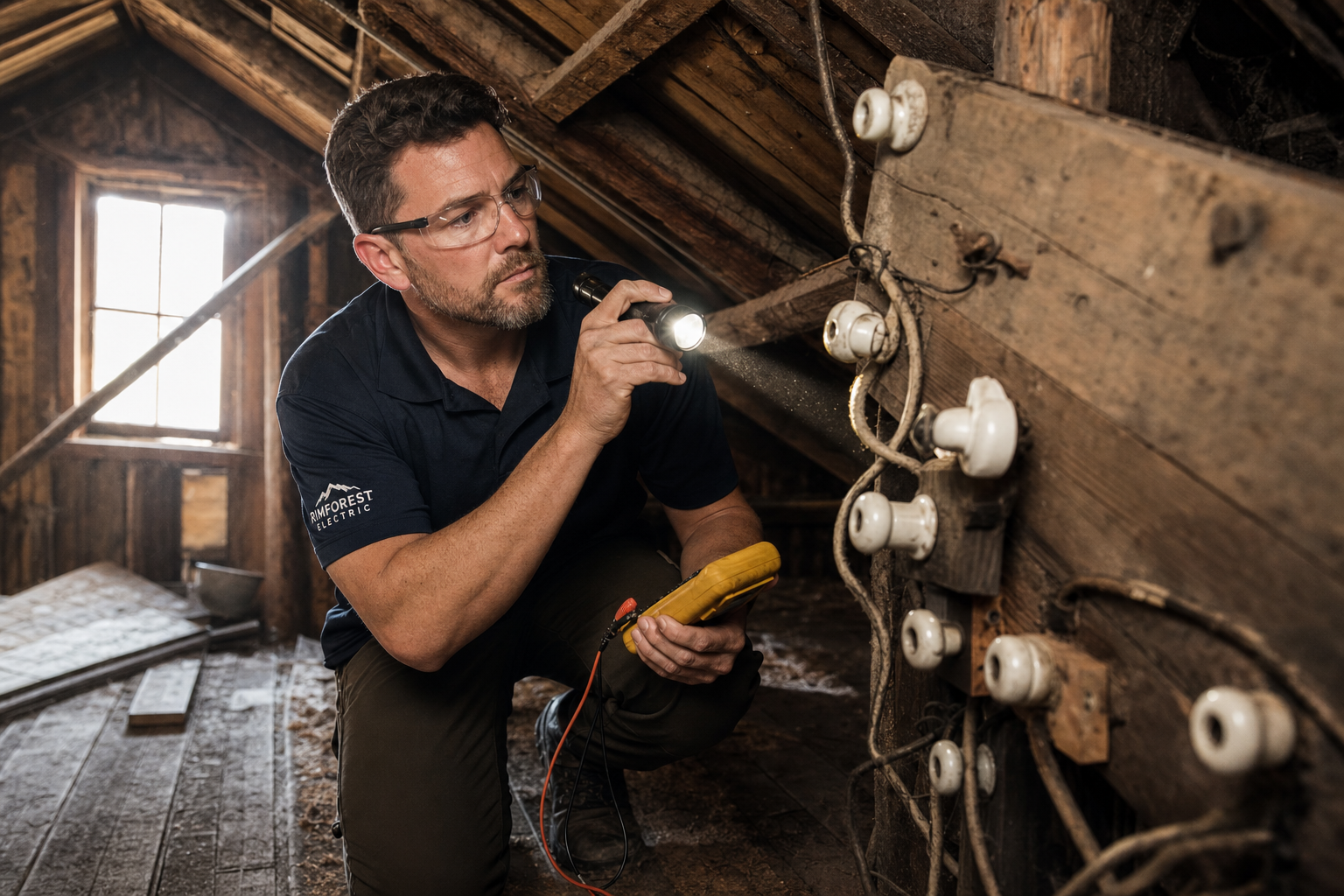
Electrician serving Rimforest, CA — home to the mountain's first 1870s wagon road and some of its oldest cabins. Knob-and-tube wiring & more. (909) 403-4740.