How to Protect Your Lake Arrowhead Home from Winter Power Surges (Before They Destroy Your Electronics)
January 4, 2026
How to Protect Your Lake Arrowhead Home from Winter Power Surges (Before They Destroy Your Electronics)
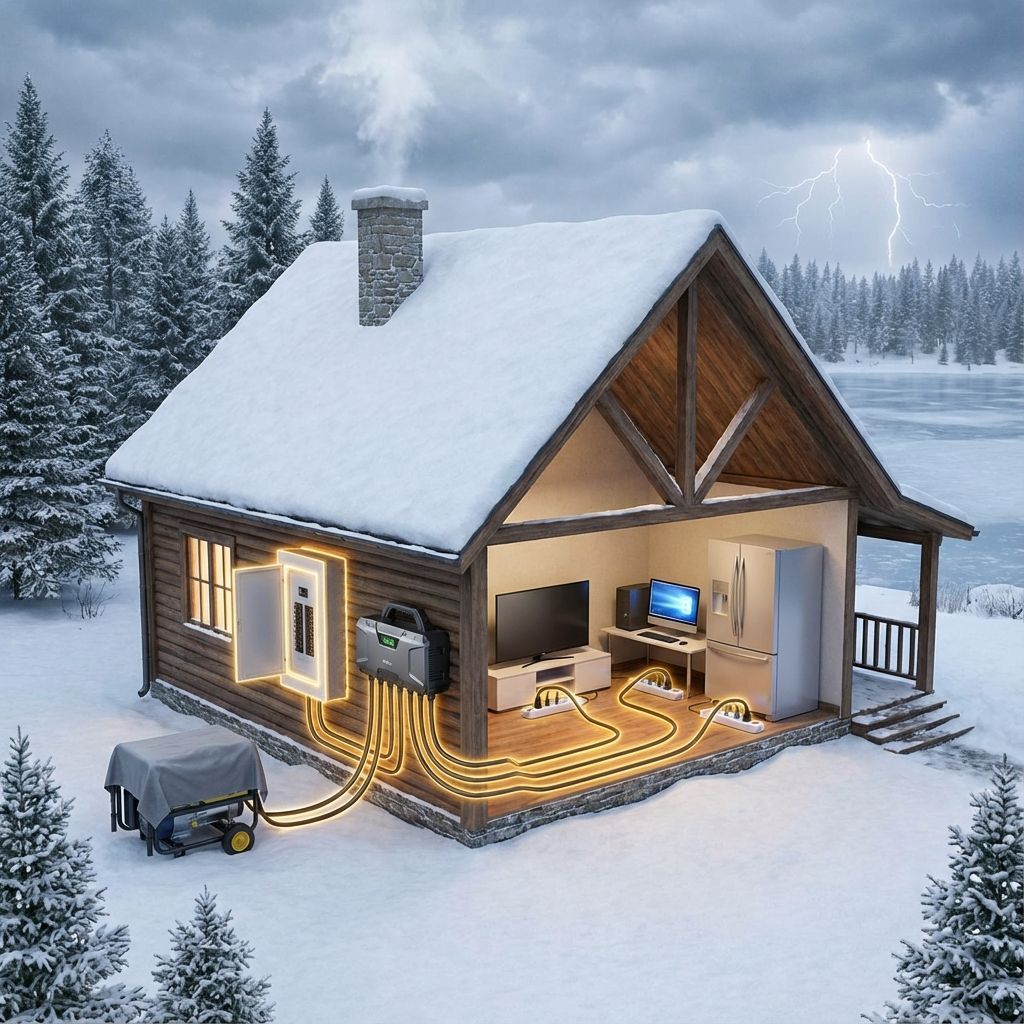
The snow is falling, your fireplace is crackling, and Lake Arrowhead is transforming into the winter wonderland you love. Then suddenly—the lights flicker. A few seconds later, they're back on. Everything seems fine, but you don't realize that brief power surge just shortened the lifespan of your refrigerator, damaged your smart TV, and potentially corrupted data on your home office computer.
Power surges are one of the most overlooked electrical hazards facing Lake Arrowhead homeowners, and winter is when they strike most frequently. Between ice storms, heavy snow loads on power lines, and utility grid fluctuations from temperature extremes, our mountain community experiences power quality issues that valley homes rarely encounter.
The good news? With the right protection strategies, you can safeguard your valuable electronics and appliances from surge damage—and avoid the frustration and expense of premature equipment failure.
What Is a Power Surge (And Why Winter Makes Them Worse)
A power surge is a brief spike in your home's electrical voltage that exceeds the standard 120 volts flowing through your outlets. These surges can range from minor fluctuations barely above normal to massive spikes exceeding 6,000 volts.
Most people think of lightning strikes when they hear "power surge," but in Lake Arrowhead, the reality is more complex:
Internal Surges: When large appliances like your furnace, refrigerator, or well pump cycle on and off, they create small voltage spikes throughout your home's electrical system. These happen daily and gradually degrade sensitive electronics over time.
Utility Grid Switching: When Southern California Edison responds to outages or adjusts power distribution during high-demand periods, voltage fluctuations ripple through the system. Mountain communities are particularly vulnerable because we're often at the end of long distribution lines.
Weather-Related Events: Ice accumulation on power lines, snow-laden trees contacting electrical equipment, and wind damage create power interruptions followed by restoration surges—the voltage spike when power comes back on after an outage.
Temperature Fluctuations: Lake Arrowhead's dramatic temperature swings between day and night cause expansion and contraction in electrical infrastructure, creating loose connections that generate surges.
Winter amplifies all these factors. Your heating system cycles more frequently, creating more internal surges. Ice storms and heavy snow create more grid instabilities. And the combination of cold weather equipment stress and high power demand stresses the entire electrical system.
The Hidden Cost of Power Surges in Mountain Homes
Most surge damage happens gradually, not catastrophically. You won't necessarily see sparks fly or smell burning plastic. Instead, your electronics slowly deteriorate:
Shortened Equipment Lifespan: That smart TV that should last 10 years fails after 5. Your refrigerator compressor burns out years early. Your HVAC system needs replacement sooner than expected.
Data Loss: Home office computers, security systems, and smart home devices can suffer corrupted memory, lost files, and system failures from repeated small surges.
Reduced Performance: Electronics experiencing surge damage often show declining performance—slower computers, dimmer TV displays, inconsistent appliance operation—before complete failure.
Expensive Repairs: Modern appliances contain circuit boards and electronic controls that are expensive to replace. A surge-damaged refrigerator control board can cost $400-800 to repair—nearly as much as a new appliance.
Consider this: The average American household has over $15,000 worth of surge-sensitive devices. In Lake Arrowhead homes with smart home systems, home offices, and modern appliances, that number is often much higher. Without proper protection, you're gambling with tens of thousands of dollars in equipment.
What Mountain Homeowners Need to Protect
Not all devices face equal surge risk. Understanding what needs protection helps you prioritize your surge protection strategy:
High Priority (Protect First):
Computers, laptops, and networking equipment
Smart TVs and home entertainment systems
Smart home hubs and automation systems
Security system control panels
Major appliances (refrigerators, washers, dryers)
HVAC system control boards
Well pump controls (if applicable)
Medical equipment
Medium Priority:
Kitchen appliances (microwaves, coffee makers)
Office equipment (printers, monitors)
Gaming consoles
Garage door openers
Ceiling fans with electronic controls
Lower Priority (But Still Worth Protecting):
Lamps with standard bulbs
Basic power tools
Simple appliances without electronic controls
Everything electronic benefits from surge protection, but if you're working with a budget, start with the most expensive and critical items first.
The Three Levels of Surge Protection
Effective surge protection isn't a single solution—it's a layered defense strategy that stops surges at different points in your electrical system.
Level 1: Whole-Home Surge Protection
A whole-home surge protector installs at your electrical panel and protects your entire home by intercepting large surges before they enter your electrical system.
How It Works: The device monitors incoming voltage and diverts surge energy safely to ground when voltage exceeds safe levels. Think of it as a pressure relief valve for your electrical system.
What It Protects Against:
Utility grid surges from power restoration after outages
Lightning strikes to nearby power lines
Transformer malfunctions
Large external surges before they reach your outlets
What It Doesn't Protect Against: Internal surges created by appliances cycling within your home. These surges originate downstream from the protection point.
Cost: $300-600 for equipment and professional installation by a licensed electrician.
Lake Arrowhead Benefit: Because we experience more utility grid fluctuations and weather-related power events, whole-home protection is especially valuable here. It's the foundation of your surge protection strategy.
Level 2: Point-of-Use Surge Protectors
These are the surge protector power strips you plug into outlets to protect individual devices or groups of devices.
Quality Matters: Not all power strips are surge protectors. Look for these specifications:
UL 1449 rating (the safety standard for surge protection)
Joule rating of at least 1,000 (higher is better—this indicates energy absorption capacity)
Clamping voltage of 400V or less (lower is better—this is when protection activates)
Indicator lights showing protection status
$25,000+ connected equipment warranty
What It Protects: Individual devices plugged into the unit from both external and internal surges.
Best Practices:
Replace surge protectors every 3-5 years—their protection capacity degrades over time
Never daisy-chain surge protectors (plugging one into another)
Don't use extension cords with surge protectors
Ensure the protection indicator light is on—if it's off, the unit is no longer protecting
Cost: $20-100 depending on features and number of outlets.
Lake Arrowhead Consideration: Mountain weather can cause frequent small surges that deplete surge protector capacity faster. Check your units annually and replace if the protection indicator is off.
Level 3: Specialized Protection for Critical Equipment
Some devices merit dedicated, high-quality protection beyond standard power strips.
Uninterruptible Power Supplies (UPS): These combine surge protection with battery backup, ensuring:
Protection from surges and voltage sags
Continuous power during brief outages
Clean, regulated power for sensitive electronics
Time to properly shut down equipment during extended outages
Ideal for: Home office computers, networking equipment, security systems, medical devices.
Dedicated Appliance Surge Protectors: Heavy-duty units designed for large appliances like refrigerators, washing machines, and HVAC equipment.
Whole-House Generator Integration: Properly installed backup generators include surge suppression in the transfer switch, providing both backup power and surge protection.
Common Surge Protection Mistakes Lake Arrowhead Homeowners Make
After years of electrical service in the mountains, we see these mistakes repeatedly:
Mistake #1: Assuming "6-Outlet Power Strip" Means "Surge Protector"
Many inexpensive multi-outlet power strips provide no surge protection whatsoever. Always verify:
Look for "surge protector" or "surge suppressor" on the packaging
Check for a UL 1449 rating
Confirm joule rating and clamping voltage specifications
If the packaging doesn't mention these specifications, it's not a surge protector—just a basic power strip.
Mistake #2: Ignoring the Protection Indicator Light
Most quality surge protectors have a light indicating when protection is active. If that light is off or red (depending on the model), your devices are no longer protected. The surge protector has absorbed its maximum capacity and needs replacement.
We frequently find homeowners using "dead" surge protectors for years, completely unaware their equipment has no protection.
Mistake #3: Protecting Only Computers While Ignoring Appliances
Modern appliances contain expensive electronic control boards that are just as vulnerable to surge damage as computers. Your refrigerator, washing machine, dryer, dishwasher, and HVAC system all need protection.
Replacing a surge-damaged refrigerator control board costs hundreds of dollars—far more than the surge protector that would have prevented the damage.
Mistake #4: Not Replacing Surge Protectors After Major Events
If your area experienced a lightning strike, major power outage, or significant electrical event, inspect and potentially replace your surge protectors. Large surges can exhaust a surge protector's capacity in a single event, leaving it unable to protect against future surges.
Mistake #5: Forgetting About Coaxial and Phone Line Protection
Surges don't only travel through electrical outlets. Cable TV lines, satellite connections, phone lines, and internet connections can also carry surge voltage into your equipment.
Quality surge protectors include coaxial and phone line connections alongside electrical outlets, protecting all pathways into your devices.
Mistake #6: Skipping Whole-Home Protection
Many Lake Arrowhead homeowners rely solely on point-of-use surge protectors, missing the comprehensive protection that whole-home units provide. Whole-home protection is especially important for:
Hardwired appliances you can't plug into a power strip
Built-in equipment like furnaces and well pumps
Lighting systems with electronic controls
The overall health of your home's electrical system
Think of surge protection like home security: You want both a perimeter defense (whole-home protection) and individual room security (point-of-use protectors).
Installing Whole-Home Surge Protection: What to Expect
Whole-home surge protector installation is not a DIY project—it requires a licensed electrician and proper permitting. Here's what the process involves:
Assessment: The electrician evaluates your electrical panel to determine:
Panel compatibility with surge protection devices
Available space for installation
Proper grounding for surge diversion
Overall panel condition (older panels may need upgrades first)
Device Selection: Professional-grade whole-home surge protectors come in various capacities. Your electrician will recommend appropriate specifications based on:
Your home's electrical service size (100-amp, 200-amp, etc.)
Local lightning risk
Presence of sensitive equipment
Your budget
Installation: The surge protector connects directly to your electrical panel's main bus bars and ground system. Installation typically takes 1-2 hours and includes:
Shutting off main breaker (temporary power interruption)
Mounting the surge protection device
Making electrical connections
Verifying proper grounding
Testing the installation
Restoring power
Documentation: Your electrician should provide:
Warranty registration information
Product specifications
Installation date (for future reference)
Testing and maintenance recommendations
Permits: San Bernardino County requires permits for electrical panel modifications. Professional electricians handle permitting and final inspection.
Cost Breakdown:
Surge protection device: $150-400
Labor and installation: $150-300
Permit fees: $50-100
Total: $300-600
This investment protects tens of thousands of dollars in equipment and provides peace of mind during every mountain storm.
Special Surge Protection Considerations for Lake Arrowhead Homes
Mountain properties face unique challenges that make surge protection even more critical:
Well Pumps and Water Systems
If your property relies on a well pump, the control system is highly vulnerable to surge damage. A damaged well pump controller can leave you without water and cost $500-2,000 to replace.
Protection strategy: Install dedicated surge protection at both the electrical panel (whole-home) and at the well pump control box. Consider a UPS for the control system if water availability is critical.
Vacation Homes and Part-Time Residences
If you're not at your Lake Arrowhead property year-round, surge damage can occur while you're away, remaining undiscovered until equipment fails during your next visit.
Protection strategy: Whole-home surge protection is essential for vacation properties. Consider unplugging non-essential electronics when away for extended periods, and install monitoring systems that alert you to electrical problems.
Smart Home Systems
Modern mountain homes often include smart thermostats, security systems, lighting controls, and automation hubs—all expensive and surge-sensitive.
Protection strategy: Use high-quality UPS devices for central hubs and networking equipment. Ensure coaxial and network lines have surge protection since smart devices often connect through these pathways.
Home Offices
With more people working remotely from Lake Arrowhead, home office equipment represents significant investment and contains critical business data.
Protection strategy: Never rely solely on basic power strips for home office equipment. Invest in quality UPS units that provide both surge protection and battery backup, ensuring you can save work and properly shut down equipment during power events.
Backup Generators
If you have a whole-home backup generator (and you should consider one for mountain living), the transfer switch should include surge protection. Generators can actually produce "dirty" power with voltage fluctuations that damage electronics.
Protection strategy: Verify your transfer switch includes surge suppression. If not, install whole-home surge protection at your main panel.
Surge Protection Maintenance: Keep Your Protection Active
Surge protection isn't a "set it and forget it" solution. Regular maintenance ensures continued protection:
Monthly: Check indicator lights on all point-of-use surge protectors. Replace any units showing inactive protection.
Quarterly: Inspect power cords and surge protector housings for damage. Look for discoloration, burning smells, or loose connections.
Annually: Test whole-home surge protection if your unit includes a test button. Consider having your electrician inspect the installation during routine electrical service.
After Major Events: Following significant storms, lightning strikes nearby, or extended power outages, inspect all surge protection devices. Large events can exhaust protection capacity.
Every 3-5 Years: Replace point-of-use surge protectors even if they appear functional. Protection capacity degrades over time through small surges you may not notice.
When Moving or Renovating: If you're updating your electrical panel, add whole-home surge protection during the upgrade. If you're adding sensitive equipment, reassess your protection needs.
What to Do When a Surge Happens
Despite best protection efforts, some surges may affect your equipment. Here's how to respond:
Immediate Actions:
Check all surge protector indicator lights—replace any showing inactive protection
Test affected devices before continuing use
Document any equipment damage for insurance claims
Unplug equipment if you suspect electrical system damage
Assessment:
If multiple devices failed simultaneously, you likely experienced a significant surge
If only one device failed, it may be unrelated to surge activity
Look for signs of electrical system damage (burning smells, discolored outlets, tripped breakers)
Professional Evaluation:
Contact a Lake Arrowhead electrician if you notice:
Multiple surge protectors failed simultaneously
Electrical system irregularities (flickering lights, unusual sounds)
Concerns about your panel or wiring
Questions about improving your protection strategy
Insurance Considerations:
Some homeowner policies cover surge damage to electronics and appliances. Document all damage with photos, receipts, and description of the surge event for potential claims.
Is Surge Protection Really Worth the Investment?
Let's look at the math:
Without Surge Protection:
Smart TV: $1,200 (replaced after surge damage)
Home office computer: $1,500 (replaced after surge damage)
Refrigerator control board: $600 (repair after surge damage)
HVAC control board: $800 (repair after surge damage)
Networking equipment: $400 (replaced after surge damage)
Total loss from single major surge: $4,500
With Surge Protection:
Whole-home surge protector: $500 (one-time installation)
Quality point-of-use protectors (5 units): $250
Replacement surge protectors every 3-5 years: $250
Total 5-year cost: $1,000
The choice is clear. For less than the cost of replacing a single damaged smart TV and computer, you can protect your entire home for years.
And this calculation doesn't even account for the inconvenience of equipment failure, lost data, interrupted work, or the stress of dealing with simultaneous appliance failures during a mountain winter.
Protect Your Mountain Investment Today
Your Lake Arrowhead home is more than a house—it's your mountain retreat, your investment, and your sanctuary from the busy world. Don't let preventable surge damage compromise your comfort or cost you thousands in premature equipment replacement.
Winter is the worst time to discover your surge protection is inadequate. The combination of increased heating system cycles, winter storms, and ice-related grid instabilities makes the next few months the highest-risk period for surge events.
Now is the time to evaluate your home's surge protection and make improvements before the next major storm rolls through.
Ready to Protect Your Home from Winter Power Surges?
Lake Arrowhead Electrical
specializes in comprehensive surge protection solutions for mountain properties. We understand the unique electrical challenges of life at elevation and provide expert installation and service throughout the San Bernardino Mountains.
Our Surge Protection Services Include:
Whole-home surge protector installation
Electrical panel evaluation and upgrades
Point-of-use protection recommendations
Electrical system inspections
Generator transfer switch integration
Emergency electrical repairs after surge events
Don't wait until surge damage costs you thousands. Call (909) 403-4740 today for a free surge protection consultation.
Proudly serving Lake Arrowhead, Blue Jay, Crestline, Running Springs, Cedar Glen, Twin Peaks, and all San Bernardino Mountain communities.
Lake Arrowhead Electrical
– Licensed, insured, and trusted by mountain homeowners for reliable electrical solutions that protect your family and your investment.
Ready to take the next step? Contact us today at (909) 403-4740
or visit www.lakearrowheadelectrical.com
to schedule your surge protection assessment. Winter storms wait for no one—protect your home now.
Your Lake Arrowhead cabin pays SCE's ~$24 fixed charge even when empty. What changed Oct 1, what shutting off power saves, and standby loads. (909) 403-4740
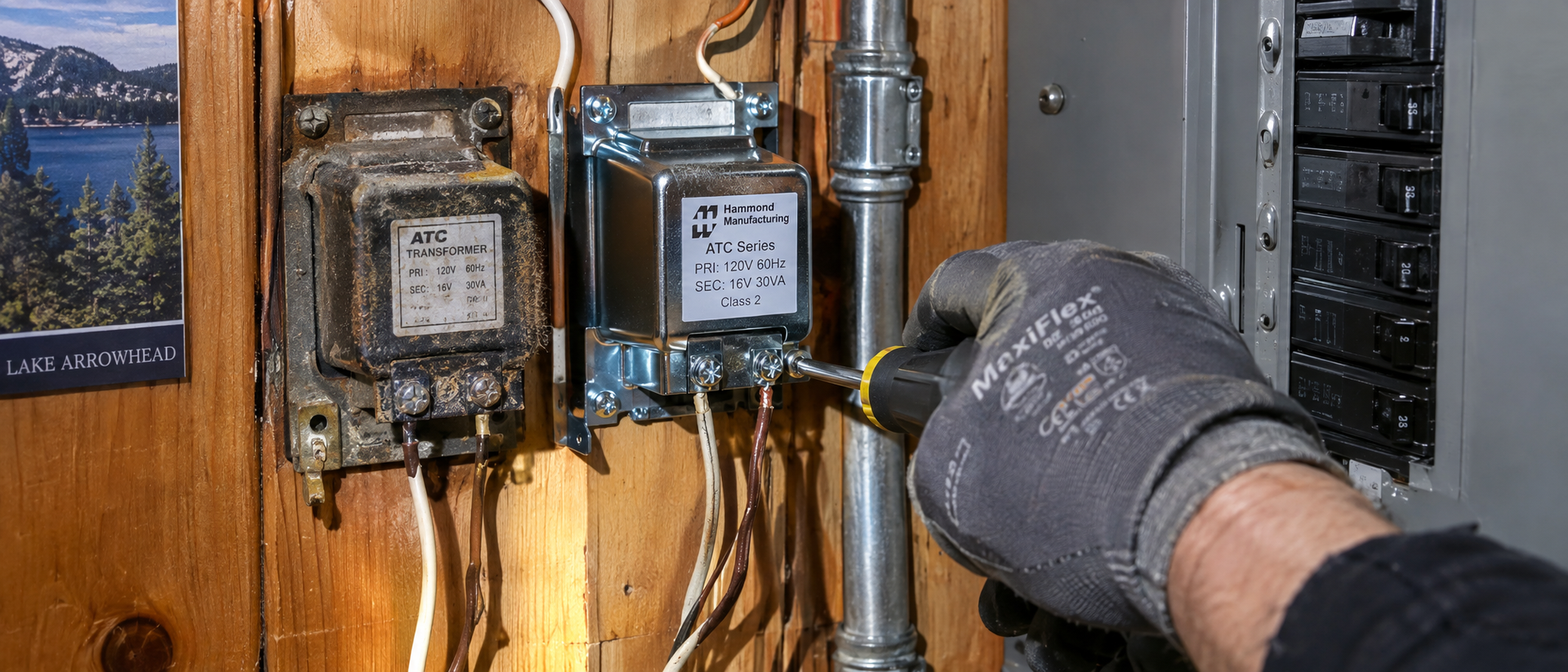
Old doorbell transformers built for simple chimes can't power a modern video doorbell. What voltage and VA rating actually work. (909) 403-4740.
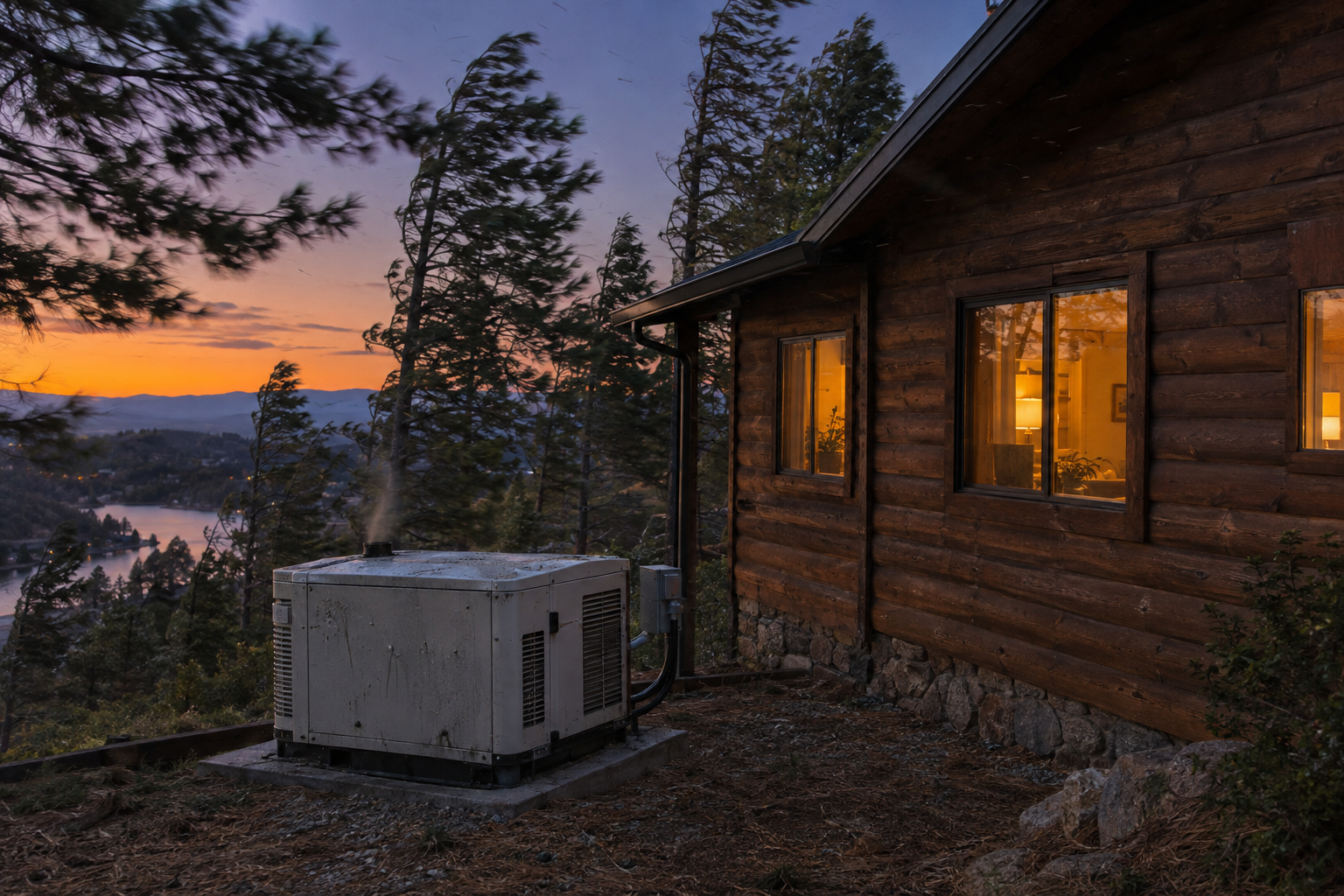
SCE can now shut off power earlier on high-risk circuits this fire season. What that means for Lake Arrowhead, and what to check before the next PSPS.
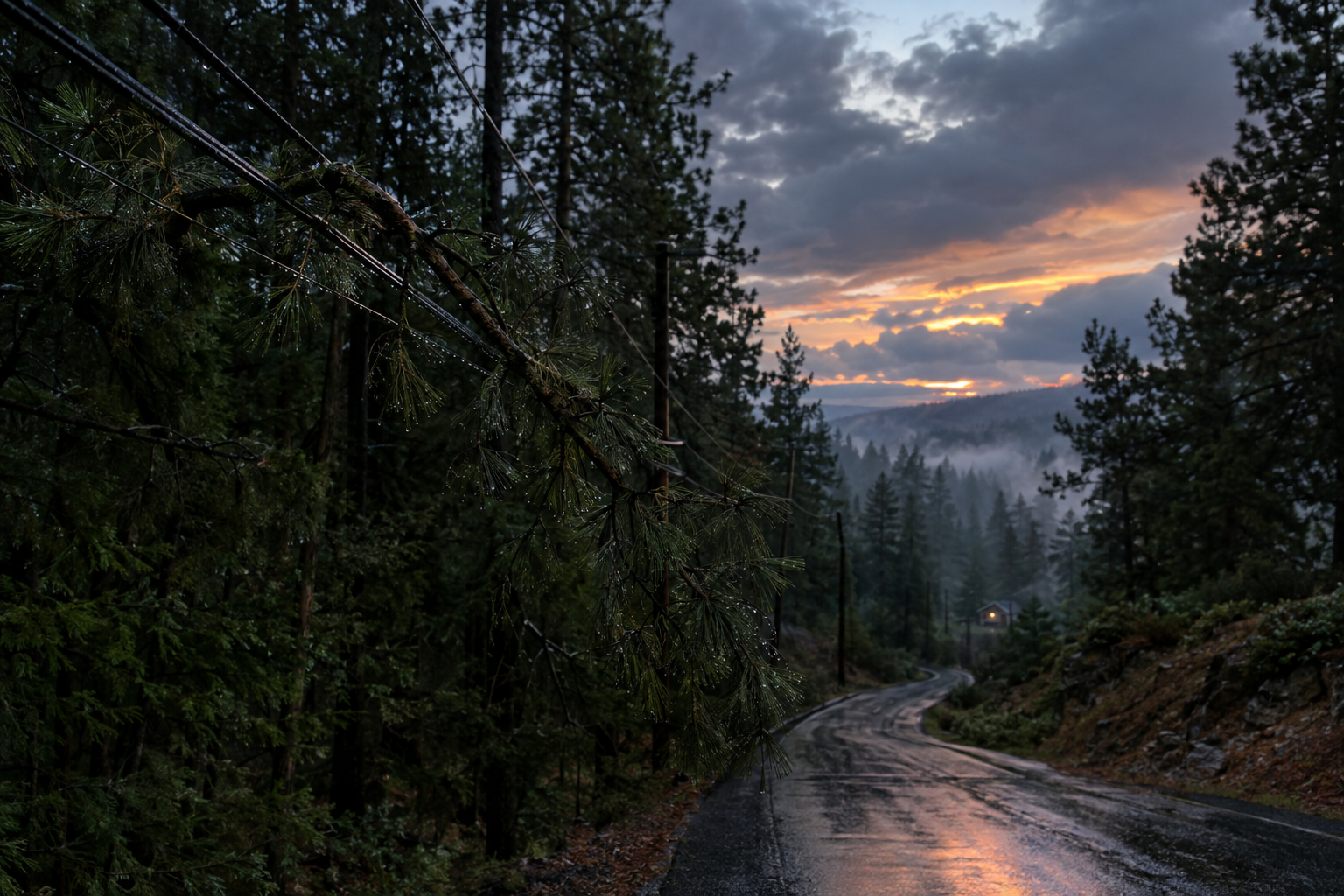
Storm damage doesn't hit evenly on the mountain — some properties lose power first and get it back last. Here's why, and what to do about it.
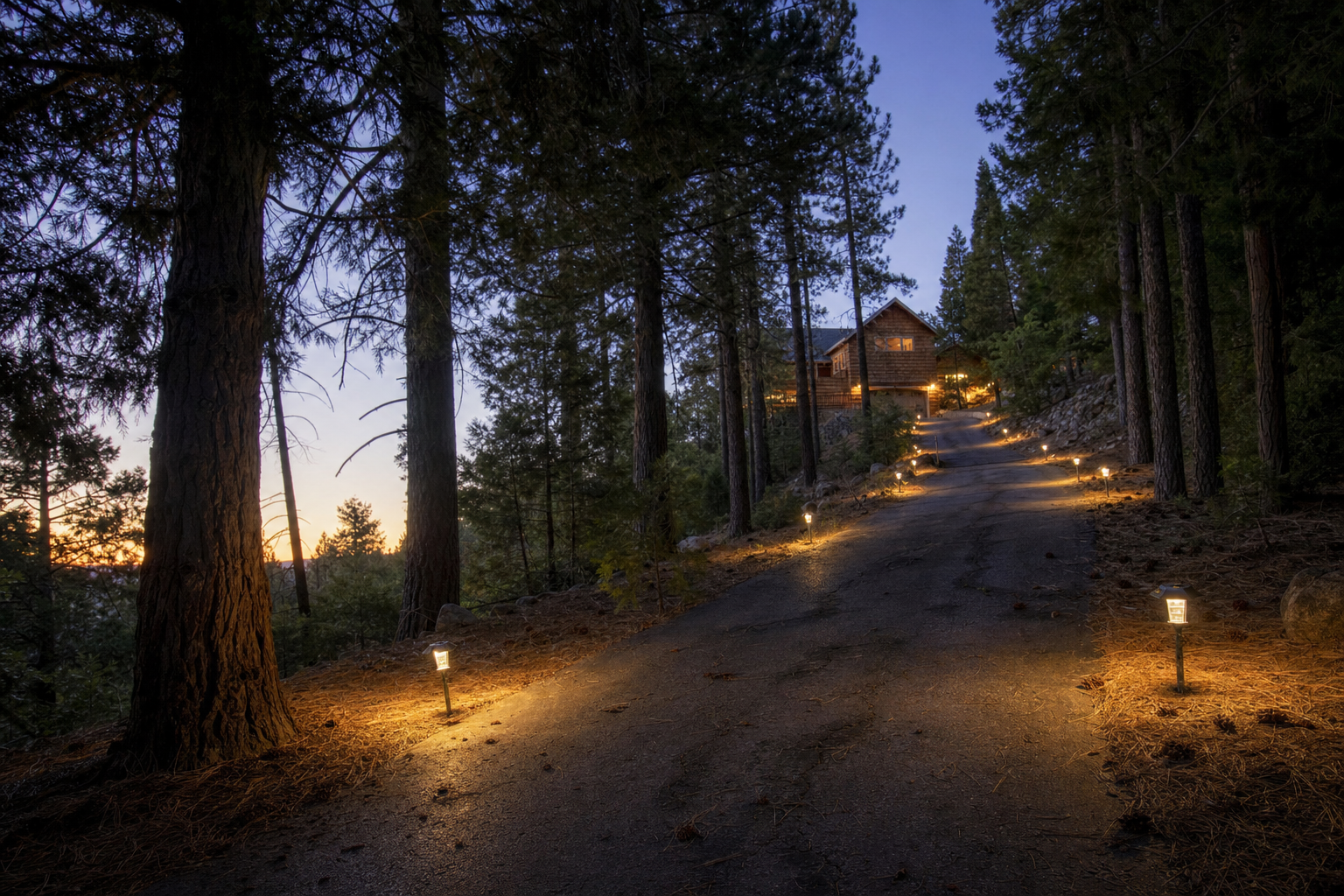
Steep driveways, dense forest, and vacant rental periods make outdoor lighting a safety issue in Lake Arrowhead, not just decor. (909) 403-4740.
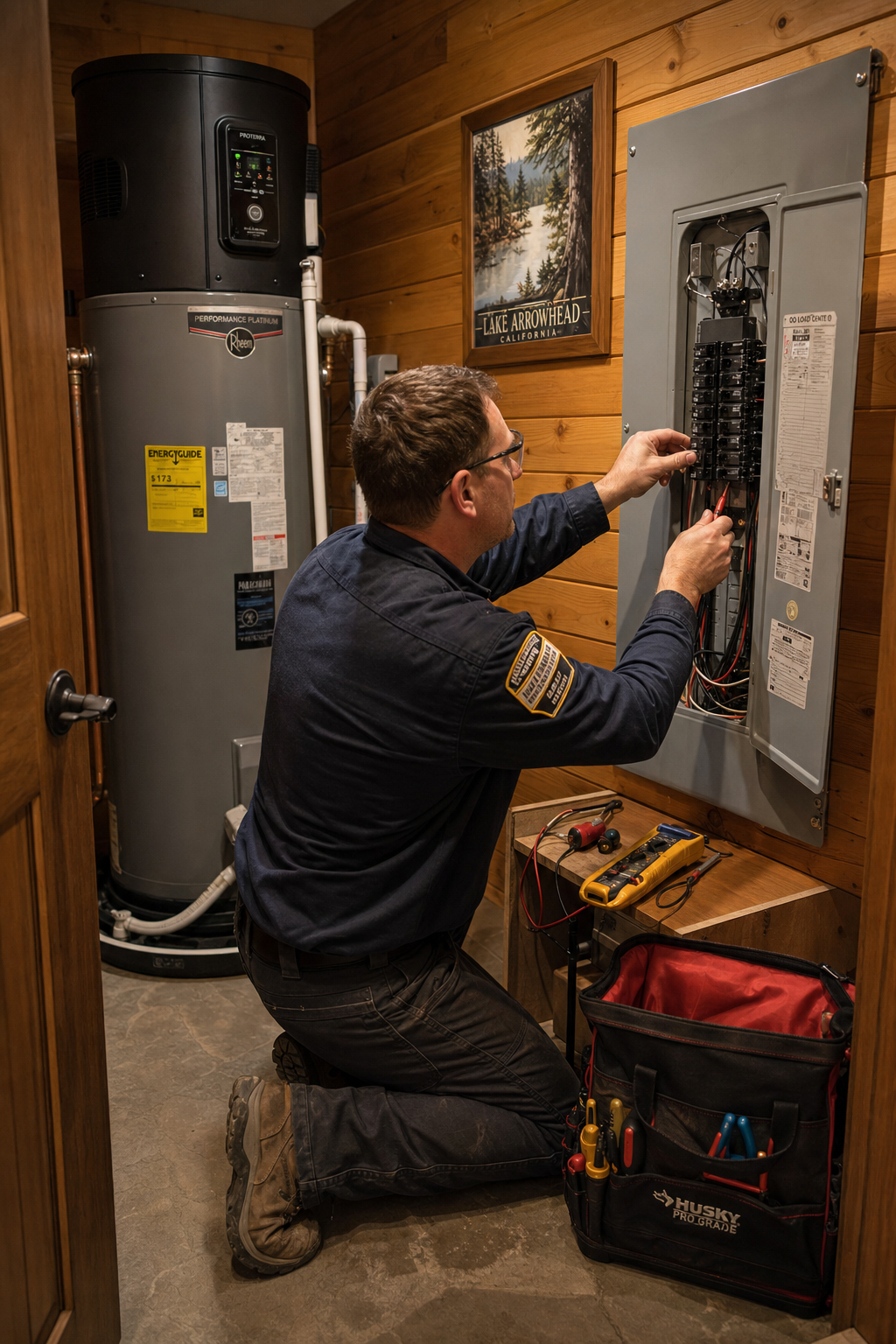
Heat pump water heaters need a dedicated 240V circuit (or a newer 120V plug-in model). What Lake Arrowhead homeowners should know before installing.
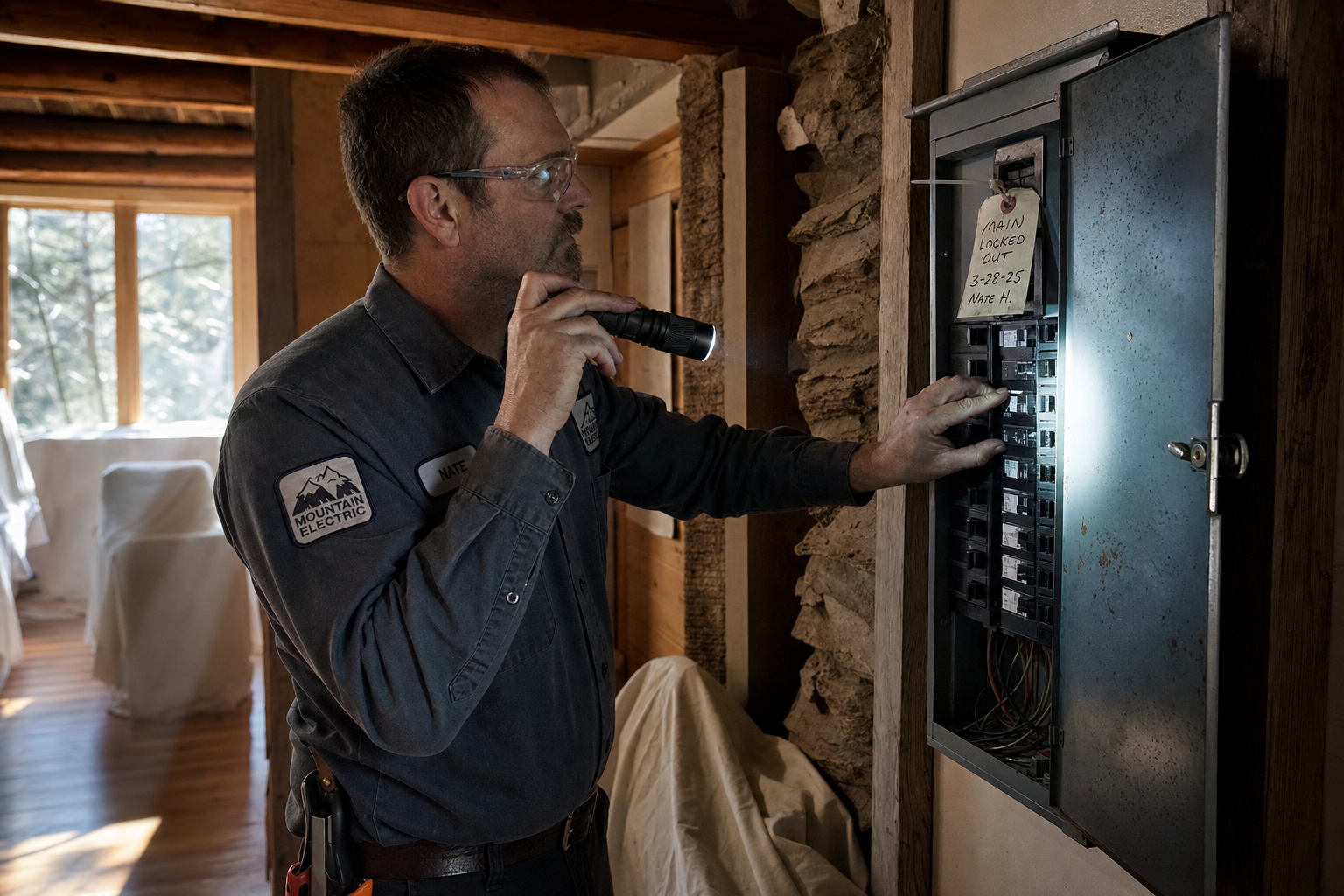
Flipping the main breaker blind in spring causes cabin fires. The proper shutdown and startup order for Lake Arrowhead cabin owners. (909) 403-4740.
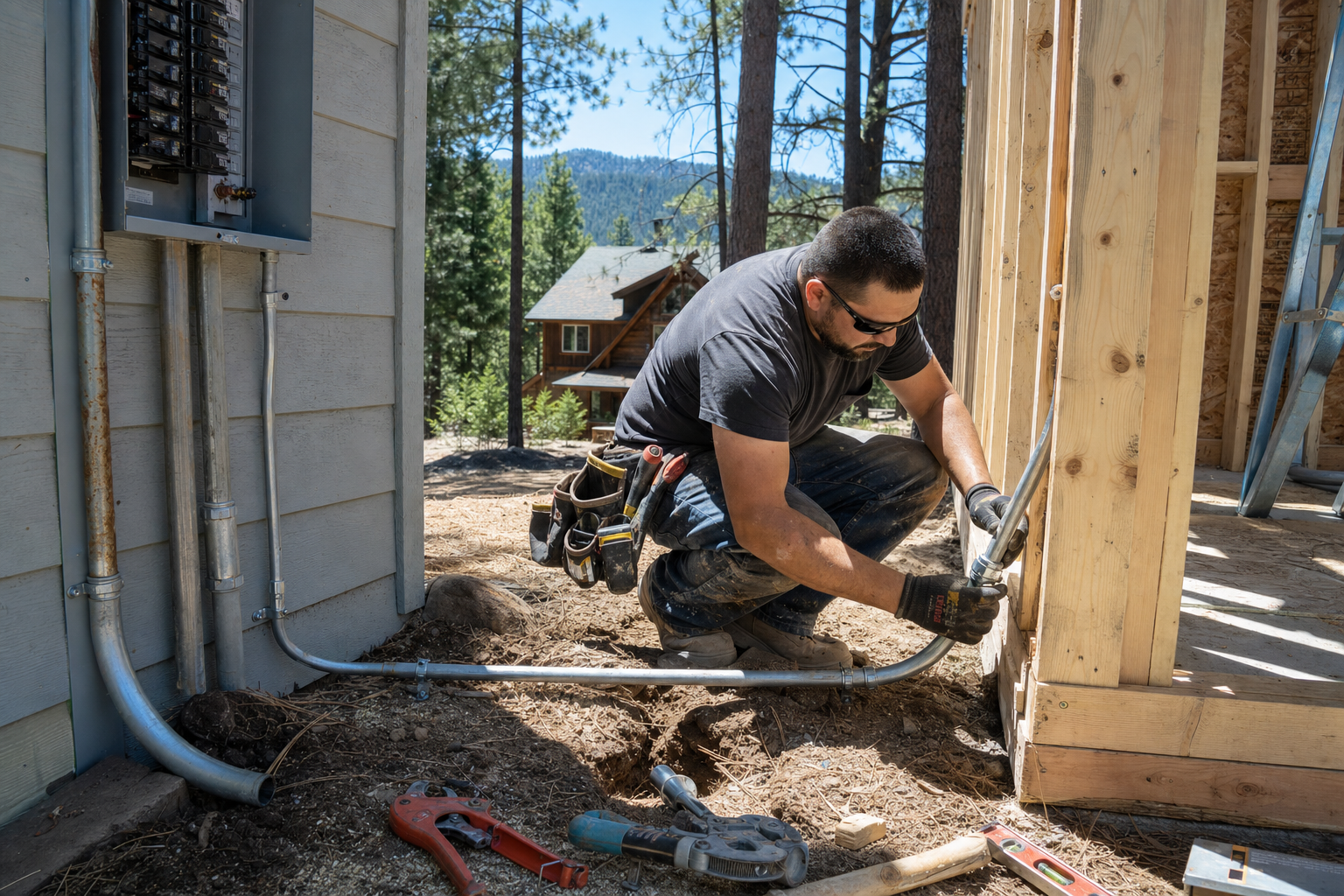
Building an ADU in Lake Arrowhead? What subpanel size, main panel capacity, and Title 24 EV-ready wiring you actually need. (909) 403-4740.
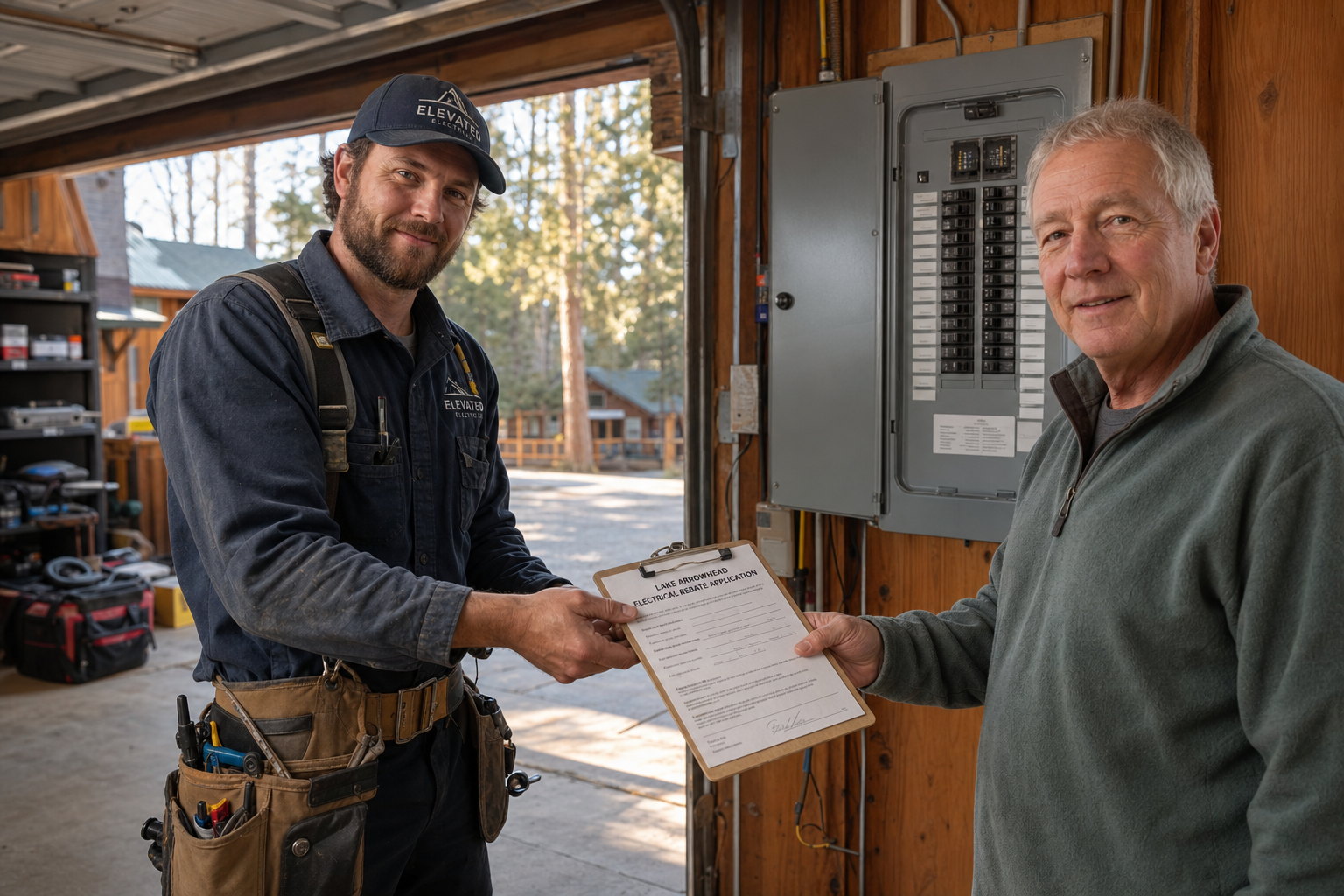
SCE's Charge Ready Home program covers up to $4,200 of your panel upgrade cost for EV charging in Lake Arrowhead. Eligibility & how to apply. (909) 403-4740.
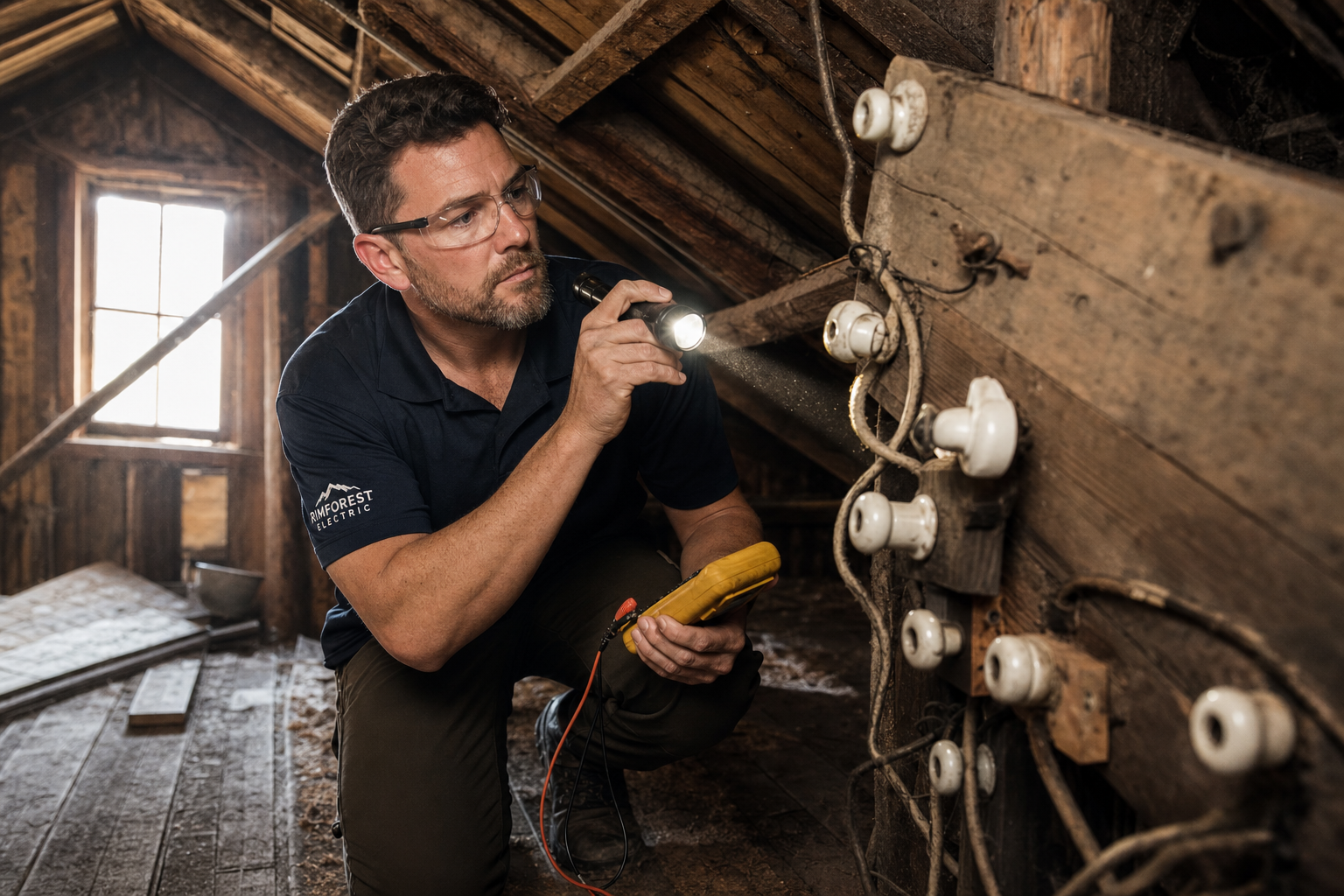
Electrician serving Rimforest, CA — home to the mountain's first 1870s wagon road and some of its oldest cabins. Knob-and-tube wiring & more. (909) 403-4740.