Why Every Lake Arrowhead Home Needs a Backup Generator (Before the Next Storm Hits)
January 20, 2026
Why Every Lake Arrowhead Home Needs a Backup Generator (Before the Next Storm Hits)
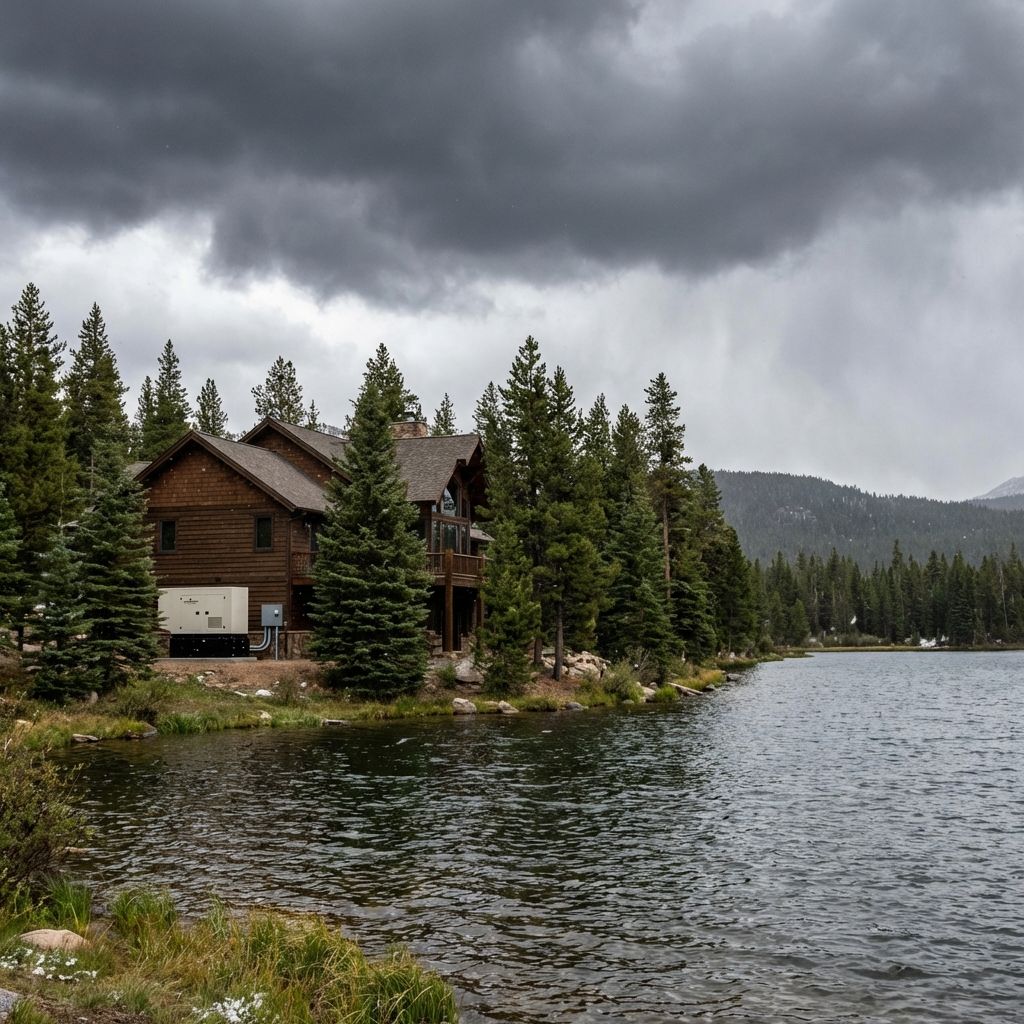
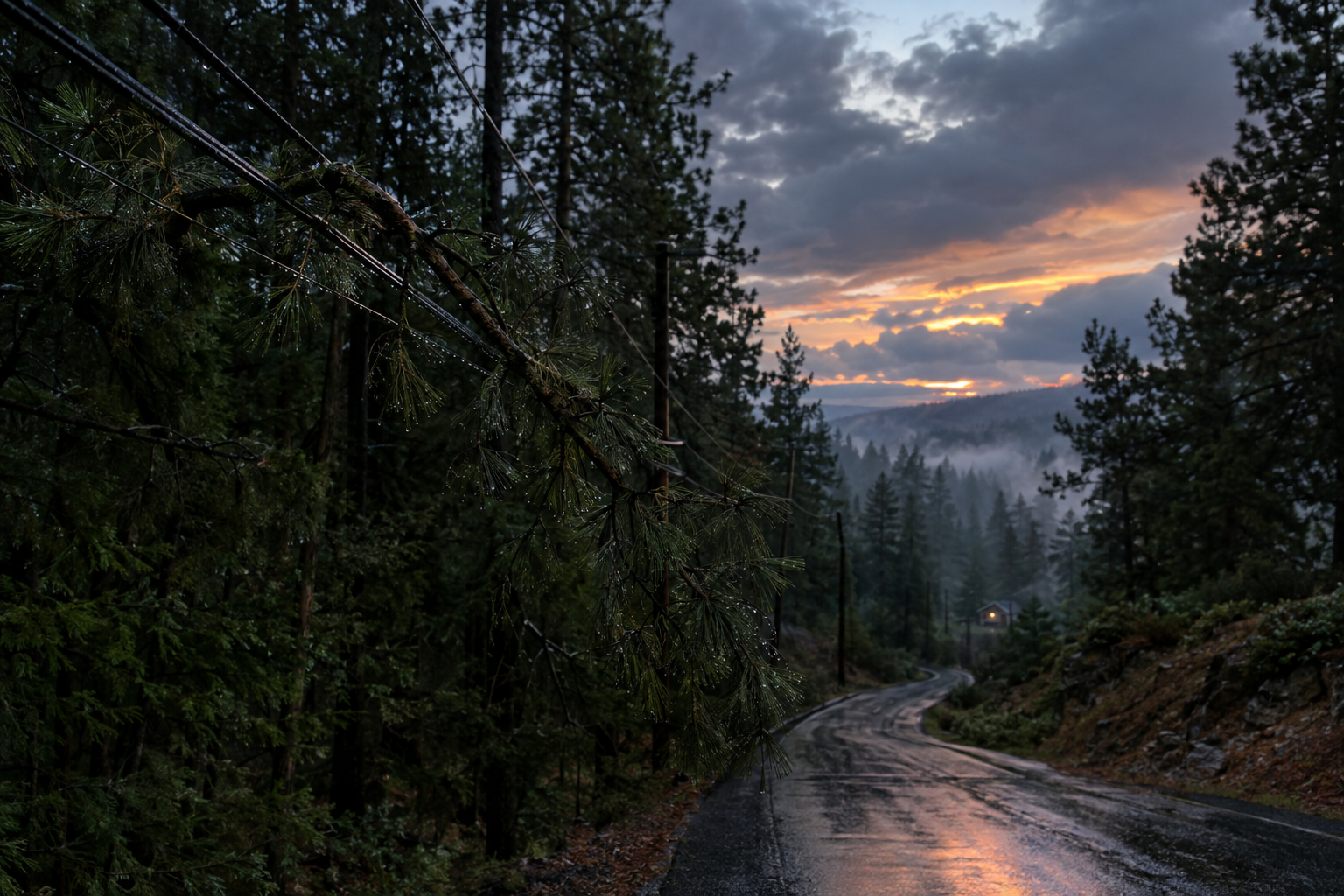
The power flickers. Then it goes out completely. In the San Bernardino Mountains, this isn't a rare occurrence—it's a regular reality of mountain living. Heavy snow, ice storms, fallen trees, and high winds can knock out electricity in Lake Arrowhead, Blue Jay, Crestline, and Running Springs for hours or even days.
While you can't control when storms hit, you can control how they affect your home. A whole-home backup generator transforms power outages from major disruptions into minor inconveniences.
Power Outages in Lake Arrowhead: The Real Cost
Mountain communities face more frequent and longer power outages than valley residents. When the grid goes down at 5,000+ feet elevation during winter, the stakes are higher:
Immediate Concerns:
Frozen pipes from loss of heating
Spoiled food from refrigerator/freezer failure
No water (if you have a well pump system)
Security system shutdown
Medical equipment failure
Unsafe conditions for elderly or vulnerable family members
Long-Term Damage:
Burst pipes causing thousands in water damage
HVAC system damage from freezing temperatures
Insurance claims and deductibles
Temporary housing costs while repairs are made
Lost work productivity
The average Lake Arrowhead power outage costs homeowners $500-2,000 when you factor in spoiled food, damaged pipes, hotel stays, and lost productivity. A single major outage can cost more than your generator installation.
Whole-Home Generators vs. Portable Generators: What Lake Arrowhead Homeowners Need to Know
Portable Generators: The Budget Option (With Major Drawbacks)
Portable generators cost less upfront ($400-1,500), but they come with significant limitations for Lake Arrowhead homes:
Limitations:
Manual setup every time power fails (often in freezing, dark conditions)
Limited capacity (can't power whole home)
Requires fuel storage and regular refueling
Carbon monoxide risks if not properly ventilated
No automatic operation (useless if you're away from your property)
Noisy operation
Requires extension cords creating trip hazards
Best Use Cases:
Occasional weekend cabin use
Temporary solution while planning whole-home installation
Budget constraints preventing permanent installation
Very small cabins with minimal electrical needs
Whole-Home Backup Generators: Complete Power Security
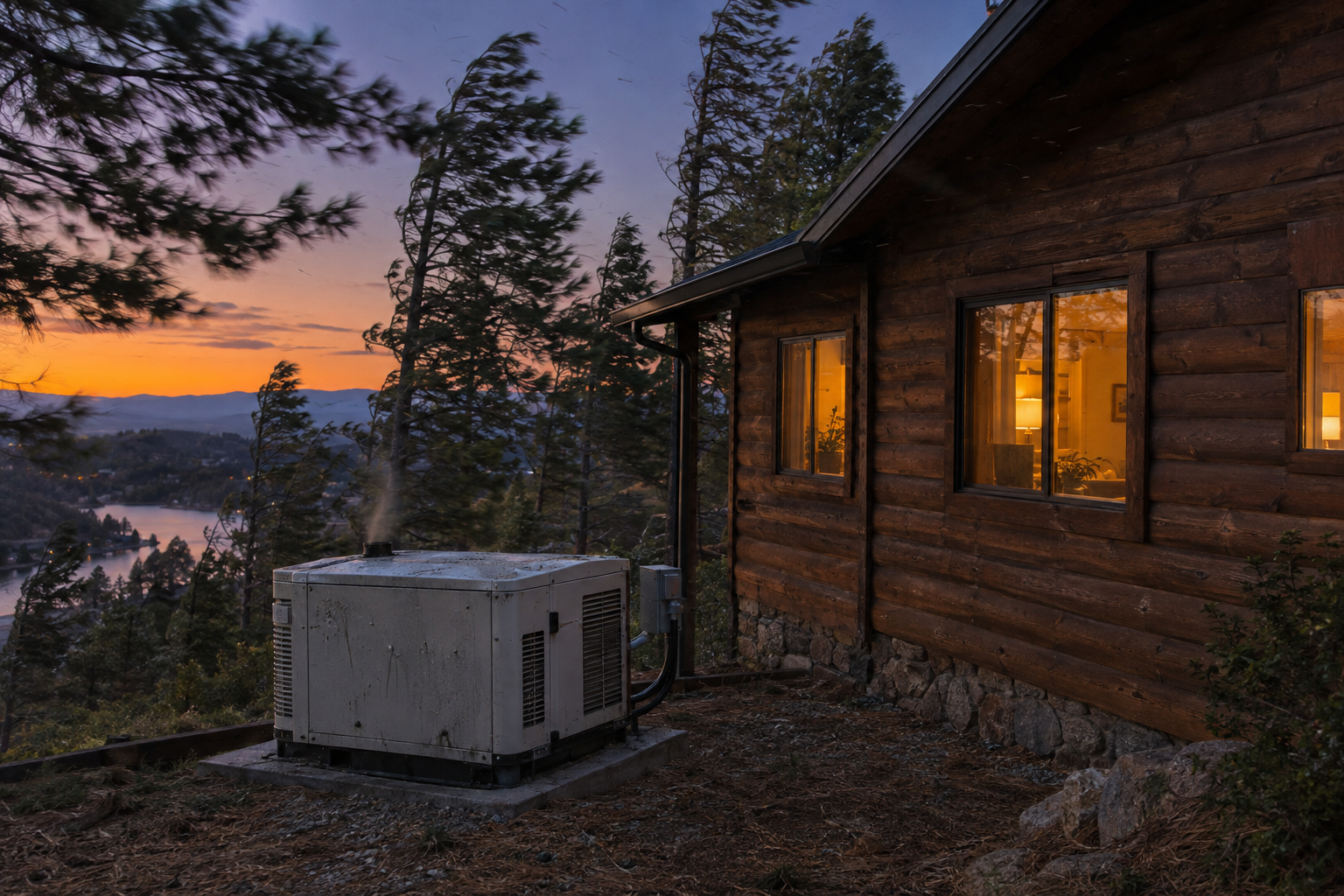
Permanent backup generators install outside your Lake Arrowhead home and connect directly to your electrical panel through a transfer switch.
Advantages:
Automatic operation: Power restores within 10-30 seconds of outage
Complete coverage: Powers entire home including HVAC, appliances, lighting
Runs on natural gas or propane: No fuel storage or refilling needed
Operates while you're away: Protects vacation homes and part-time residences
Increases property value: Major selling point for mountain real estate
Quieter operation: Enclosed units with sound dampening
Weather-protected: Built for mountain conditions
Weekly self-testing: Ensures readiness when you need it
Investment Range:
Equipment and installation: $5,000-15,000 depending on home size and fuel type
Ongoing costs: Minimal (annual maintenance $150-300)
For Lake Arrowhead homeowners, whole-home generators aren't luxury items—they're practical investments that pay for themselves by preventing damage and maintaining comfort during inevitable mountain outages.
Sizing Your Generator: How Much Power Does Your Lake Arrowhead Home Need?
Generator sizing is critical. Too small and it won't power essential systems. Too large wastes money on unnecessary capacity.
Essential Load Calculation
A licensed electrician evaluates your home's specific needs, but here are general guidelines:
Small Cabin (under 1,500 sq ft):
Generator size: 10-12 kW
Powers: Refrigerator, furnace, lights, well pump, some outlets
Fuel type: Propane (most mountain homes)
Installation cost range: $5,000-8,000
Medium Home (1,500-2,500 sq ft):
Generator size: 14-20 kW
Powers: Full HVAC, all appliances, lighting, outlets, security systems
Fuel type: Propane or natural gas (if available)
Installation cost range: $7,000-12,000
Large Home (2,500+ sq ft):
Generator size: 22-30 kW
Powers: Everything including hot tub, additional HVAC zones, garage
Fuel type: Propane or natural gas
Installation cost range: $10,000-15,000+
Critical Circuits for Mountain Homes
Even with a properly sized generator, prioritizing critical circuits ensures efficient operation:
Must-Have:
Heating system (furnace blower, baseboard heaters)
Well pump (if applicable)
Refrigerator and freezer
At least one bathroom
Kitchen outlets
Security/communication systems
Should-Have:
All HVAC zones
Water heater
Laundry
Garage door opener
Outdoor lighting
Nice-to-Have:
Hot tub/spa
Electric vehicle charger
Workshop/garage outlets
All lighting circuits
Your electrician will design a load management system ensuring critical circuits receive power first, with additional capacity available for comfort systems.
Natural Gas vs. Propane Generators for Lake Arrowhead
Propane Generators: The Mountain Standard
Most Lake Arrowhead properties use propane for backup generators because natural gas infrastructure is limited in mountain communities.
Propane Advantages:
Available throughout mountain areas
Tanks already exist for heating/cooking
Reliable fuel supply (not grid-dependent)
Can add larger tank for extended runtime
Clean burning with minimal maintenance
Propane Considerations:
Requires adequate tank capacity (recommend 500-1,000 gallon tank)
Tank refills needed during extended outages
Fuel costs vary seasonally
Tank placement requires space and access
Runtime Examples (20 kW generator at 50% load):
250-gallon tank: ~24 hours
500-gallon tank: ~48 hours
1,000-gallon tank: ~96 hours
For most Lake Arrowhead outages (12-48 hours), a 500-gallon propane tank provides adequate fuel with buffer capacity.
Natural Gas Generators: Limited But Ideal When Available
Some Lake Arrowhead neighborhoods have natural gas infrastructure, making it the preferred fuel source.
Natural Gas Advantages:
Unlimited runtime (as long as gas service continues)
No refueling ever needed
Lower fuel costs than propane
No tank space requirements
Simpler installation
Natural Gas Limitations:
Not available in most mountain areas
Depends on utility infrastructure (can fail during disasters)
Requires adequate gas line capacity
If your Lake Arrowhead property has natural gas service, verify the line can support both your home's existing gas appliances AND generator demand simultaneously.
Generator Installation: What Lake Arrowhead Homeowners Should Expect
Phase 1: Site Assessment and Planning
A licensed electrician visits your property to evaluate:
Electrical System:
Current panel capacity
Load calculation for essential circuits
Transfer switch requirements
Necessary upgrades to accommodate generator
Generator Placement:
Level concrete pad location
Clearance requirements (3-4 feet from structures)
Distance from windows/vents (carbon monoxide safety)
Fuel line routing from tank to generator
Sound considerations for neighbors
Permitting:
San Bernardino County building permits
Electrical permits
Gas line permits (if applicable)
Homeowner association approvals (if applicable)
Phase 2: Equipment Selection
Your electrician recommends specific generator models based on:
Required power capacity
Fuel type availability
Budget constraints
Noise level preferences
Available space
Aesthetic preferences (aluminum vs. steel enclosures)
Leading Generator Brands for Mountain Homes:
Generac (most popular, widest service network)
Kohler (premium quality, quieter operation)
Briggs & Stratton (reliable, good value)
Cummins (commercial-grade durability)
All major brands offer models suitable for Lake Arrowhead conditions, with weather-resistant enclosures and cold-weather starting packages.
Phase 3: Installation
Professional installation typically takes 2-4 days:
Day 1-2: Site Preparation
Concrete pad installation (must cure before generator placement)
Fuel line routing and connection
Electrical conduit installation
Day 3: Generator Installation
Generator placement on pad
Transfer switch installation at electrical panel
Electrical connections from transfer switch to generator
Fuel line final connection and testing
Battery installation
Day 4: Testing and Commissioning
Complete system testing
Load testing to verify proper operation
Transfer switch timing adjustment
Homeowner training on operation
Final inspection and permit closure
Phase 4: Activation and Monitoring
Modern generators include:
Automatic weekly self-testing (usually Sunday mornings)
Mobile app monitoring (some models)
Maintenance reminders
Error code alerts
Your electrician will program the generator for optimal performance and explain the monitoring features.
Generator Maintenance: Keeping Your System Ready
Backup generators are designed for long service lives, but regular maintenance ensures reliability when you need it most.
Weekly Automatic Testing
Generators self-test weekly, running for 15-20 minutes to:
Exercise the engine
Circulate oil
Charge the battery
Verify all systems function properly
You'll hear the generator run briefly (usually quieter than lawn mowers). This is normal and ensures readiness.
Annual Professional Maintenance
Schedule yearly service with a qualified technician:
Maintenance Checklist:
Oil and filter change
Air filter replacement
Spark plug inspection/replacement
Battery test and terminals cleaning
Fuel system inspection
Transfer switch testing
Voltage and frequency verification
Coolant level check (liquid-cooled units)
Control panel diagnostics
Typical Annual Maintenance Cost: $150-300
Homeowner Responsibilities
Between professional services:
Keep area around generator clear (3-foot radius)
Remove snow and ice buildup in winter
Inspect for rodent damage (they like warm enclosures)
Listen during weekly tests for unusual sounds
Verify no error codes appear
Ensure adequate propane level (don't let tank drop below 20%)
Extended Warranty Options
Most generators include:
2-3 year manufacturer warranty (standard)
5-10 year extended warranty (optional purchase)
For Lake Arrowhead's harsh mountain conditions, extended warranties provide peace of mind and protect your investment. Cost typically ranges from $300-800 depending on generator size and coverage length.
Common Lake Arrowhead Generator Questions
Q: Will my generator work during heavy snow?
A: Yes. Generators include weather-resistant enclosures designed for mountain conditions. Snow accumulation should be cleared from around the unit (maintain 3-foot clearance), but the generator will start and run in freezing temperatures. Most include cold-weather starting packages for reliable operation down to -20°F.
Q: How long can a generator run continuously?
A: Whole-home generators are designed for extended operation. With proper fuel supply, they can run indefinitely. However, most Lake Arrowhead outages resolve within 12-72 hours. The limiting factor is typically fuel capacity (propane) rather than generator capability.
Q: Will my generator power my entire house?
A: It depends on generator sizing and your home's electrical load. Properly sized generators power all essential systems and most comfort systems. Very large homes may require load shedding (automatically managing which circuits receive power) during peak demand, but critical systems always maintain power.
Q: How loud are backup generators?
A: Modern residential generators operate at 60-70 decibels (similar to normal conversation or dishwasher). This is significantly quieter than portable generators. Placement away from bedrooms and neighbor proximity further reduces noise impact.
Q: Can I install a generator myself to save money?
A: No. California law requires licensed electricians to install transfer switches and make electrical connections. Propane work requires licensed gas fitters. DIY installation voids warranties, violates building codes, creates insurance issues, and poses serious safety risks including carbon monoxide poisoning and electrical fires.
Q: What happens to my generator when power is restored?
A: The transfer switch automatically detects utility power restoration, allows a brief stabilization period (avoiding voltage spikes), then transfers your home back to grid power. The generator runs a short cool-down period, then automatically shuts off. The entire process is seamless—you may not even notice the transition.
Q: Do generators require special insurance?
A: Your existing homeowner's insurance typically covers permanently installed generators. However, inform your insurance company about the installation. Some insurers offer premium reductions because generators prevent freeze damage and reduce claim likelihood.
Q: How do generators affect property value?
A: Backup generators significantly increase Lake Arrowhead property values. Buyers view them as essential infrastructure for mountain living, similar to well pumps or septic systems. Expect to recoup 70-90% of installation costs in increased property value, with full cost recovery in high-demand markets.
Real Lake Arrowhead Generator Success Stories
The Vacation Home Owner
"We're only at our Lake Arrowhead cabin every other weekend. Last winter, we were in Orange County when a major storm knocked out power for 4 days. Our neighbors' pipes froze and burst—$15,000 in damage. Our generator kicked on automatically, kept the heat running, and we didn't have a single problem. Best $8,500 we ever spent." - Mark T., Blue Jay
The Full-Time Resident
"We moved to Lake Arrowhead for retirement and love it—except the power outages. Before installing our generator, we'd go to a hotel every time a storm was forecast. Now we stay comfortable at home no matter what. Last month's 36-hour outage didn't affect us at all. We just lived normally while neighbors sat in the dark." - Susan & Robert K., Lake Arrowhead
The Medical Necessity
"My wife requires oxygen therapy and refrigerated medications. Losing power isn't just inconvenient—it's life-threatening. Our generator is literally a life-saving device. The peace of mind knowing her medical equipment will never lose power is priceless." - James M., Crestline
Financing Options for Lake Arrowhead Generator Installation
Generator installation represents a significant investment, but several financing options make it accessible:
Home Equity Line of Credit (HELOC)
Use existing home equity to finance generator installation:
Typically lowest interest rates (currently 7-9%)
Interest may be tax-deductible
Flexible repayment terms
Requires adequate home equity
Contractor Financing
Many generator installers offer financing programs:
Quick approval process
Promotional 0% APR periods (12-24 months typical)
No collateral required
Higher interest rates after promotional period
Cash Payment Discounts
Some electricians offer 3-5% discounts for cash payment:
Immediate savings
No interest or financing fees
Requires full payment at installation
Energy Efficiency Loans
Some California programs offer low-interest loans for home improvements that increase resilience and energy efficiency. Check current availability through:
PACE financing (Property Assessed Clean Energy)
California FHA 203(k) rehabilitation loans
Local utility rebate programs
Insurance Benefits of Backup Generators
Installing a backup generator can reduce homeowner's insurance costs and improve coverage:
Premium Reductions
Many insurance companies offer 5-10% premium reductions for homes with backup generators because they:
Prevent freeze damage from heating system failure
Maintain security system operation
Reduce likelihood of claims during outages
Demonstrate proactive risk management
Improved Coverage
Generators may help you:
Qualify for better insurance companies (some won't insure mountain homes without backup power)
Reduce deductibles
Improve claim outcomes (showing you took reasonable precautions)
Documentation Requirements
To receive insurance benefits:
Provide professional installation documentation
Include generator on homeowner's policy
Maintain annual service records
Verify adequate fuel supply (propane tank size)
Contact your insurance agent before installation to understand specific requirements and potential premium reductions.
The Best Time to Install Your Lake Arrowhead Generator
Spring and Fall: Ideal Installation Windows
Advantages:
Better weather for installation crews
Concrete curing conditions optimal
Less demand = better electrician availability = lower costs
Time to test system before winter storms
Typical Installation Timeline:
Initial consultation: 1-2 weeks
Permitting: 2-4 weeks
Equipment delivery: 1-3 weeks
Installation: 3-5 days
Total: 6-10 weeks from decision to operation
Don't Wait for Winter
Common mistake: Waiting until power outages start to install generators.
Problems with winter installation:
Electricians overwhelmed with emergency calls
Limited crew availability
Weather delays installation
Frozen ground complicates concrete work
You're without protection during current outages
By the time you experience a major outage and decide you need a generator, you're 2-3 months away from installation. Meanwhile, another storm could cause thousands in damage.
Take Control of Power Outages: Get Your Free Generator Assessment
Mountain living means accepting nature's power and beauty—but that doesn't mean accepting powerless vulnerability during storms. A professionally installed backup generator transforms power outages from major disasters into minor inconveniences.
Whether you're protecting a vacation cabin or your year-round mountain home, backup power isn't a luxury—it's smart risk management that pays for itself by preventing damage, maintaining comfort, and protecting your family.
Lake Arrowhead Electrical has installed hundreds of backup generators throughout the San Bernardino Mountains. We understand mountain conditions, navigate local permitting, and design systems that work reliably when you need them most.
Ready to Protect Your Lake Arrowhead Home?
Lake Arrowhead Electrical
offers:
Free in-home generator assessment
Load calculations and system design
Permit handling and coordination
Professional installation with licensed electricians
Ongoing maintenance and service
24/7 emergency support
Our generator services include:
Whole-home backup generator installation
Transfer switch installation and upgrades
Load management system design
Annual generator maintenance
Emergency generator repair
Pre-purchase generator inspections
Propane tank coordination
Permit and inspection services
Call (909) 403-4740 for your free generator consultation.
Proudly serving Lake Arrowhead, Blue Jay, Crestline, Running Springs, Cedar Glen, Twin Peaks, Rim Forest, and all San Bernardino Mountain communities.
Lake Arrowhead Electrical
– Licensed, insured, and locally trusted for reliable electrical solutions that keep your mountain home safe and comfortable year-round.
Don't wait for the next power outage to wish you had a generator. Take control of your power security today.
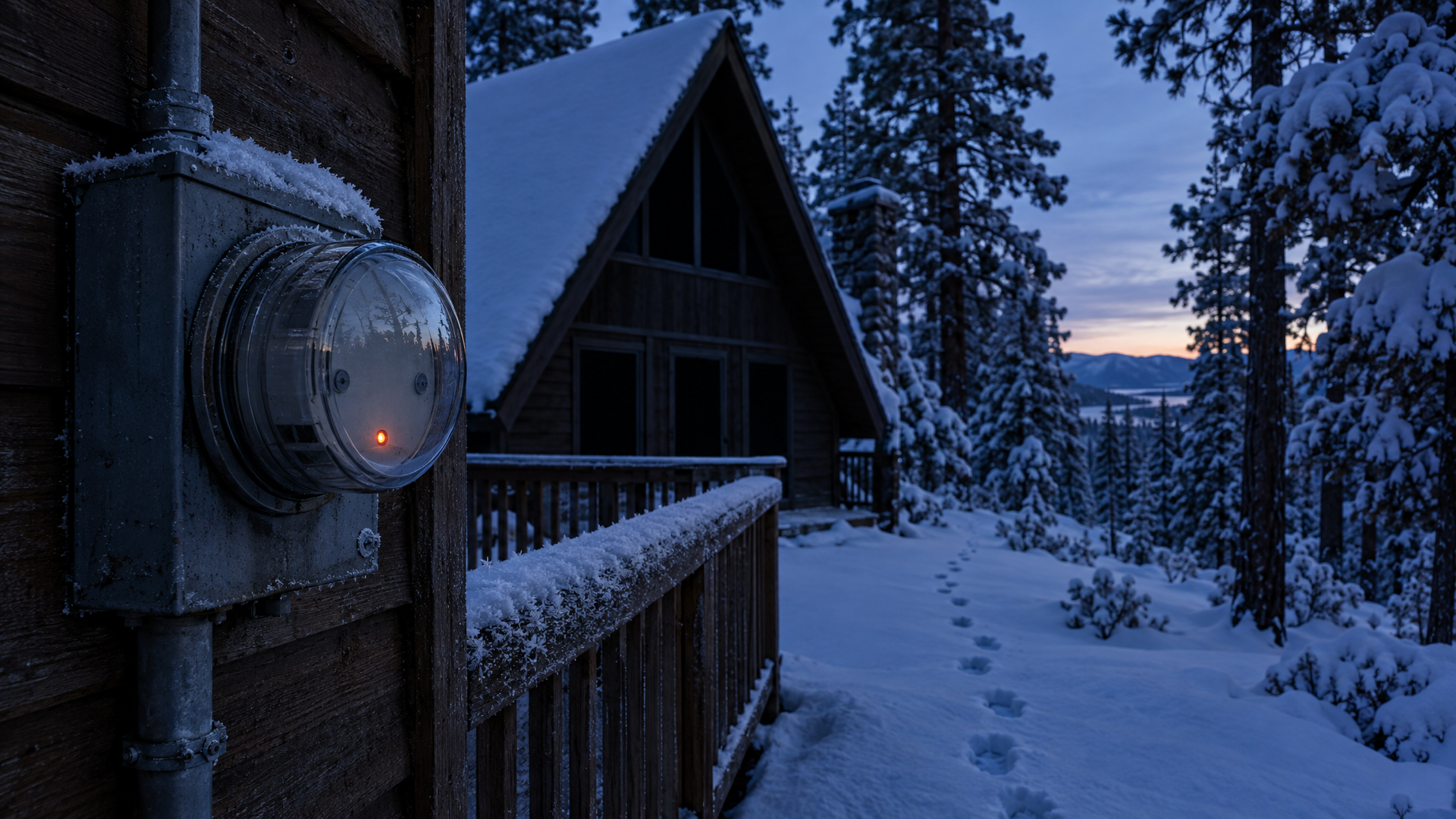
Your Lake Arrowhead cabin pays SCE's ~$24 fixed charge even when empty. What changed Oct 1, what shutting off power saves, and standby loads. (909) 403-4740
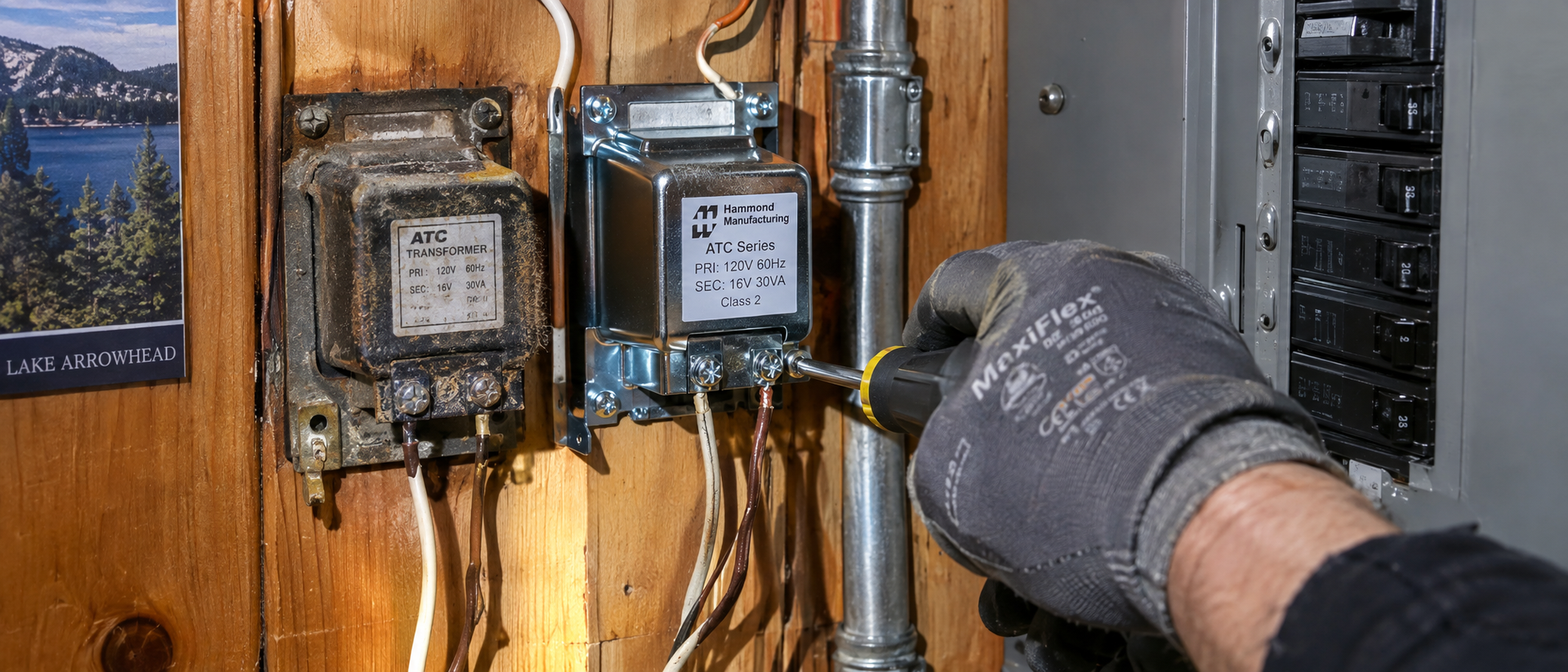
Old doorbell transformers built for simple chimes can't power a modern video doorbell. What voltage and VA rating actually work. (909) 403-4740.
SCE can now shut off power earlier on high-risk circuits this fire season. What that means for Lake Arrowhead, and what to check before the next PSPS.
Storm damage doesn't hit evenly on the mountain — some properties lose power first and get it back last. Here's why, and what to do about it.
Steep driveways, dense forest, and vacant rental periods make outdoor lighting a safety issue in Lake Arrowhead, not just decor. (909) 403-4740.
Heat pump water heaters need a dedicated 240V circuit (or a newer 120V plug-in model). What Lake Arrowhead homeowners should know before installing.
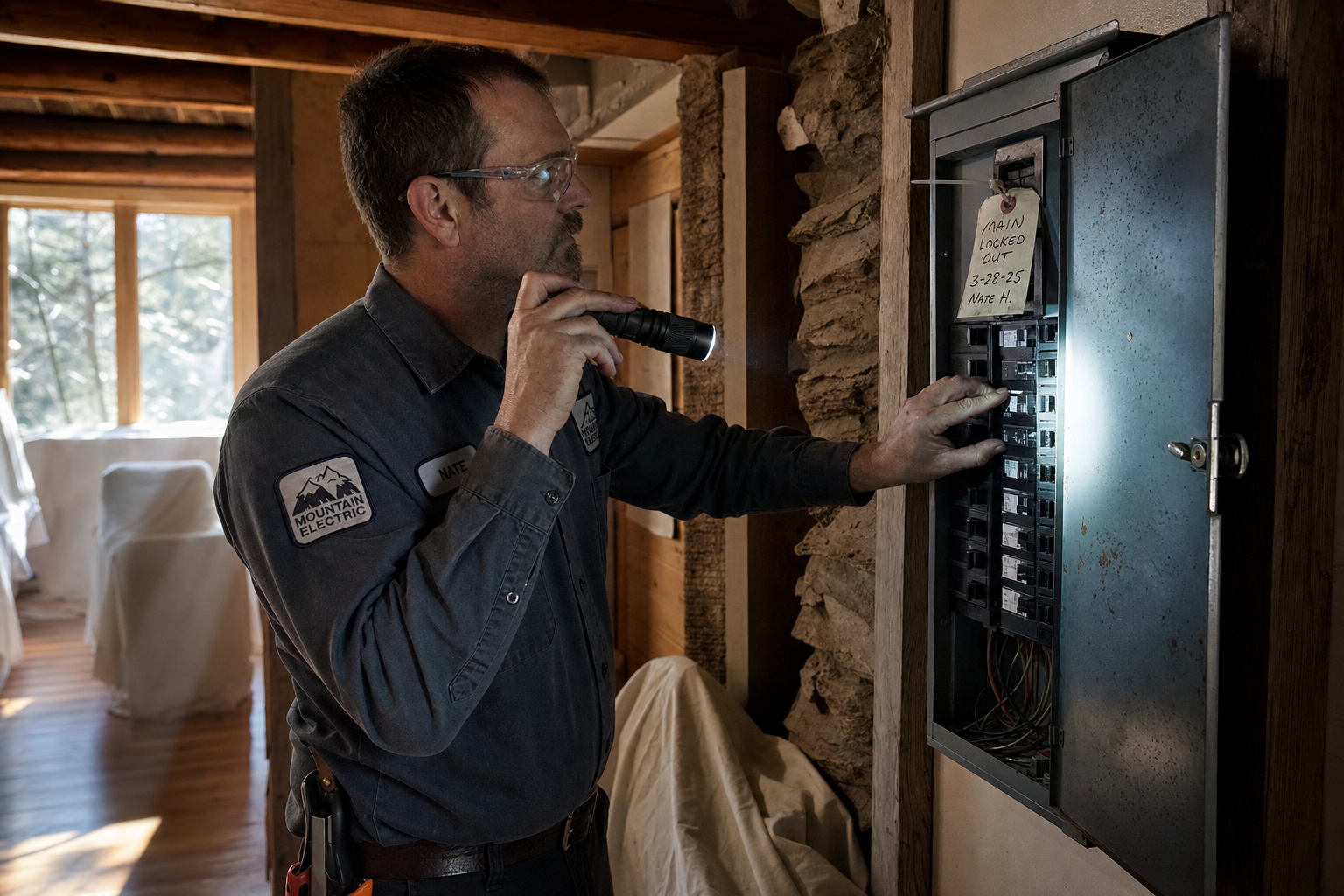
Flipping the main breaker blind in spring causes cabin fires. The proper shutdown and startup order for Lake Arrowhead cabin owners. (909) 403-4740.
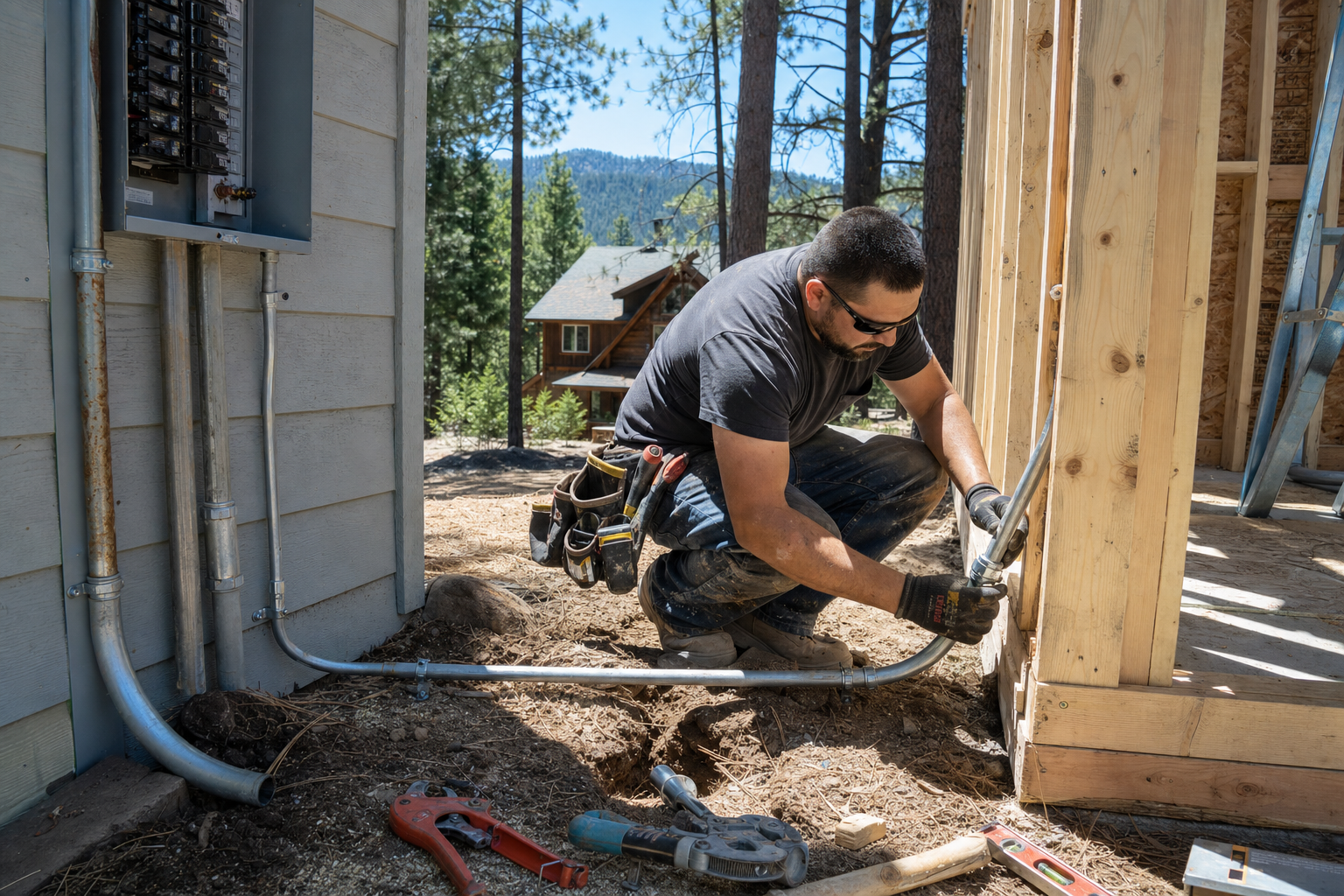
Building an ADU in Lake Arrowhead? What subpanel size, main panel capacity, and Title 24 EV-ready wiring you actually need. (909) 403-4740.
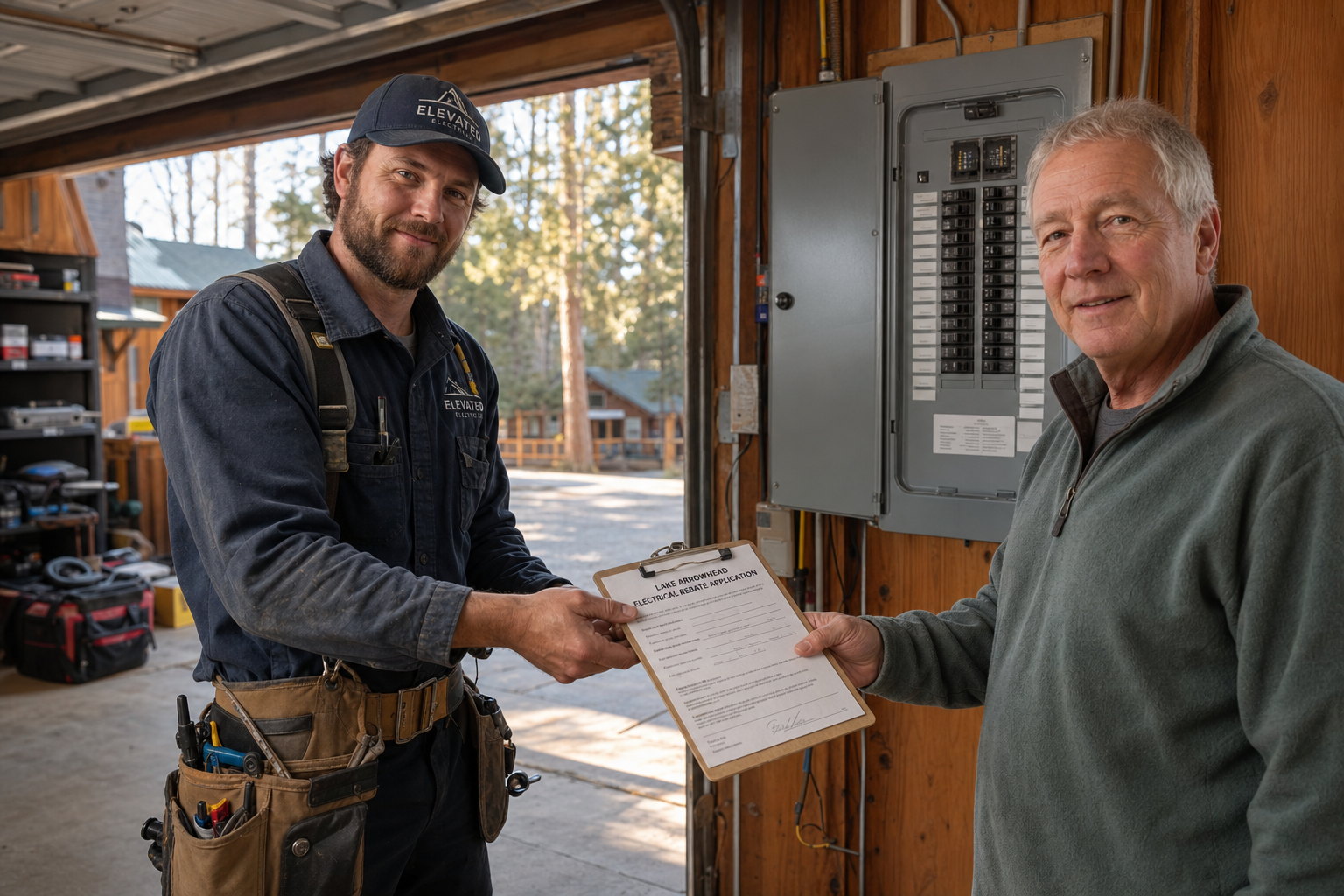
SCE's Charge Ready Home program covers up to $4,200 of your panel upgrade cost for EV charging in Lake Arrowhead. Eligibility & how to apply. (909) 403-4740.
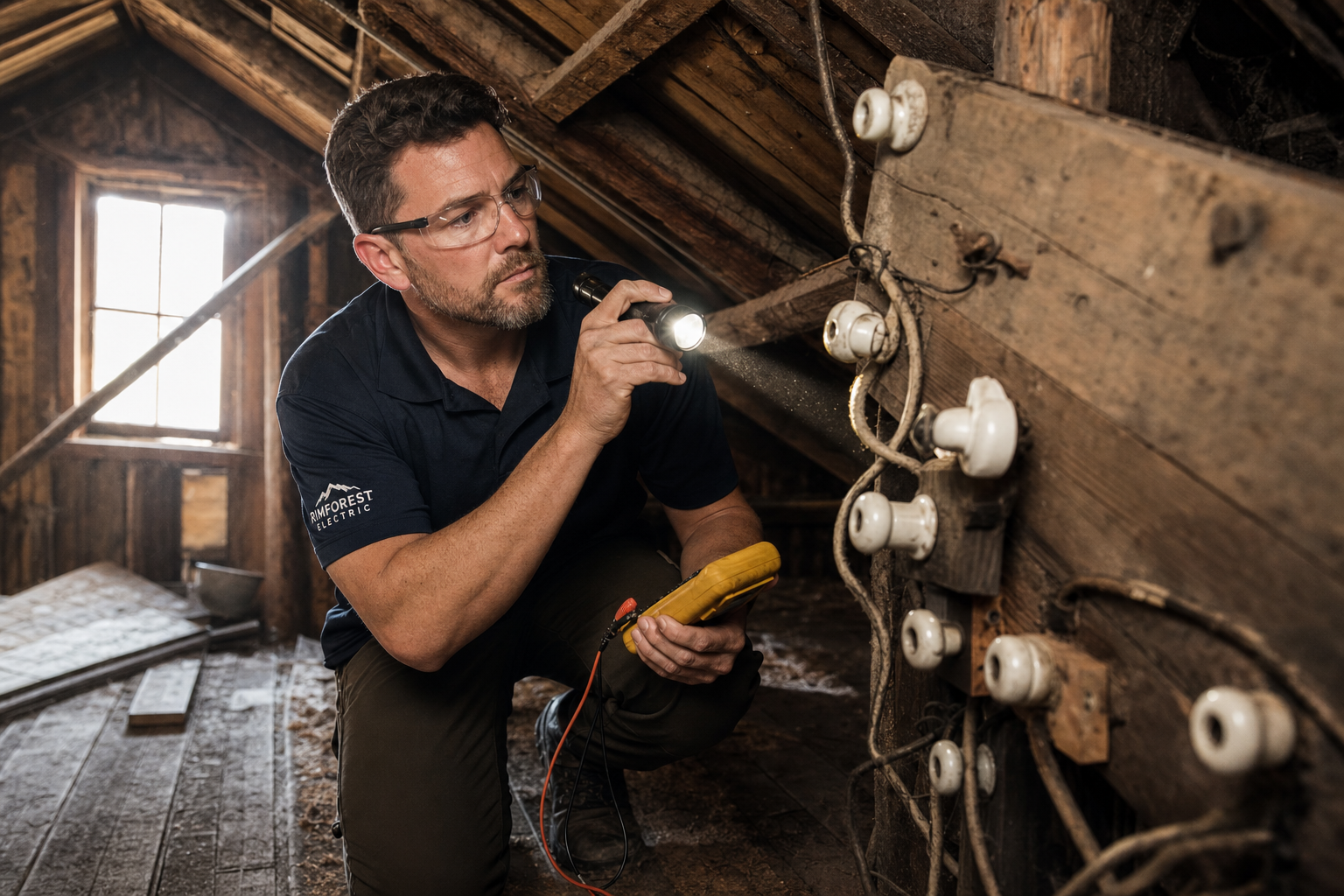
Electrician serving Rimforest, CA — home to the mountain's first 1870s wagon road and some of its oldest cabins. Knob-and-tube wiring & more. (909) 403-4740.