How to Choose an Electrician in Lake Arrowhead (What Mountain Properties Actually Require)
February 17, 2026
How to Choose an Electrician in Lake Arrowhead (What Mountain Properties Actually Require)
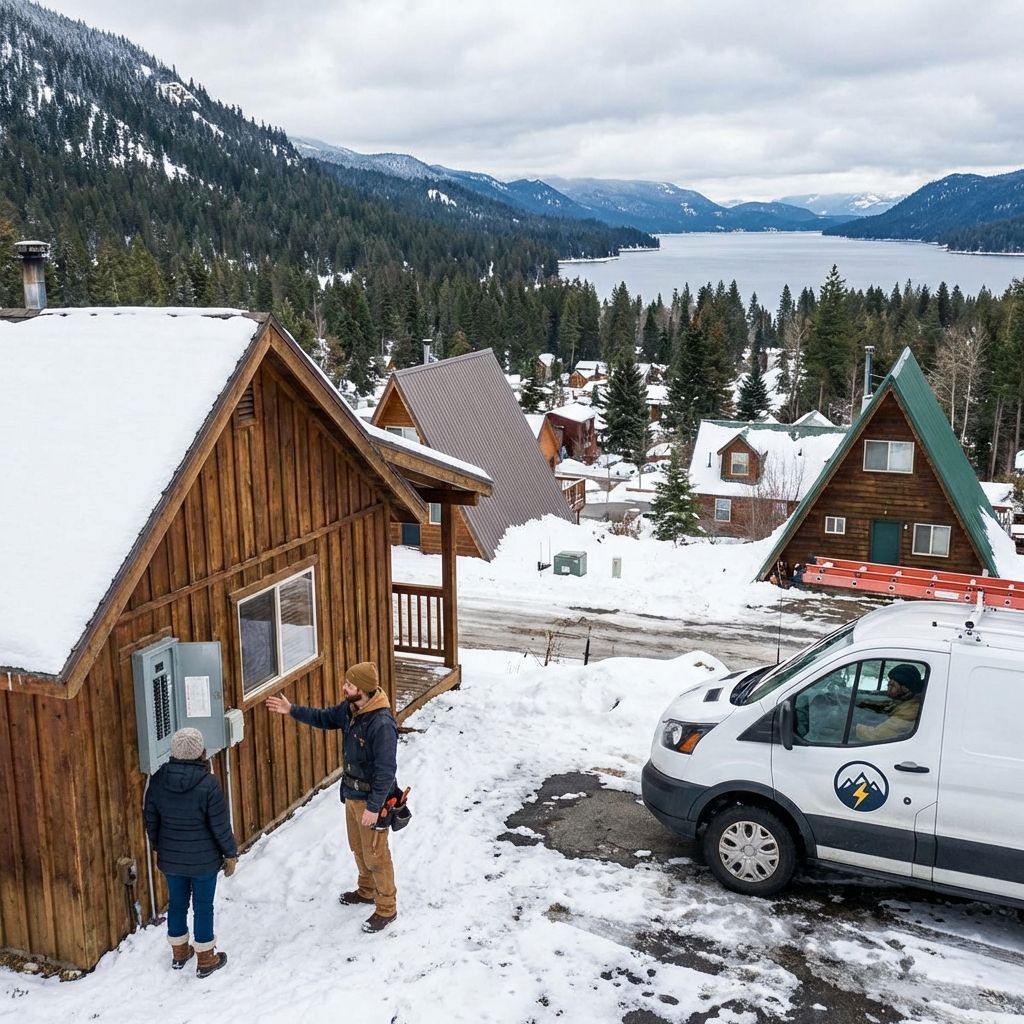
Not every electrician who works in the San Bernardino Valley belongs on your Lake Arrowhead property.
This isn't snobbery — it's a practical reality of mountain electrical work. A licensed electrician from Redlands or San Bernardino who does excellent work on tract homes at 1,200 feet of elevation is working in a fundamentally different environment than a cabin at 5,200 feet that was built in 1974, sits in a forest, gets 10 feet of snow per year, has been through three DIY renovations by previous owners, and runs off a 100-amp panel that was undersized when it was installed.
The qualifications that matter for mountain electrical work go beyond license number and hourly rate. Here's how to evaluate electricians specifically for Lake Arrowhead, Blue Jay, Crestline, Running Springs, Twin Peaks, and the surrounding San Bernardino Mountain communities.
1. Verify the C-10 License — Then Ask About Mountain Experience Separately
California requires all electrical contractors to hold a C-10 Electrical Contractor license from the California Contractors State License Board. This is non-negotiable and easy to verify: search the contractor's name or license number at cslb.ca.gov before hiring anyone.
Verifying the license takes 60 seconds and confirms:
The license is current and in good standing
The contractor hasn't had disciplinary actions or bond violations
They're carrying workers' compensation insurance (required for any company with employees)
However — and this matters in mountain communities specifically — a valid C-10 license tells you the electrician is qualified to do electrical work. It doesn't tell you they understand the unique challenges of San Bernardino Mountain properties.
Once you've confirmed the license, ask directly: "How much of your work is in Lake Arrowhead and the surrounding mountain communities specifically?" and "Are you familiar with the permitting process through San Bernardino County for mountain properties?"
An electrician who primarily works in valley communities will still be licensed. But they may not have encountered Federal Pacific panels in aging mountain cabins, may not know how snow loads affect outdoor electrical components, and may not have a working relationship with the county building department for mountain permits. These aren't minor gaps when you're dealing with a 1960s cabin at elevation.
2. Understand What Makes Mountain Electrical Work Different
Lake Arrowhead properties present specific electrical challenges that don't exist in most California homes. Before hiring anyone, understand what you're asking them to handle:
Older housing stock with accumulated modifications. Many cabins in Lake Arrowhead, Cedar Glen, and Twin Peaks were built between the 1950s and 1980s as weekend retreats — not full-time residences. Over decades, previous owners added circuits, modified wiring, and made improvements of varying quality, often without permits. The result is frequently a layered electrical system with no single person who understands it completely. An experienced mountain electrician knows how to trace these systems, identify unpermitted work, and bring things up to code efficiently. An electrician unfamiliar with this type of property will take far longer and may miss issues hiding behind decades of modifications.
Extreme thermal cycling. Lake Arrowhead regularly experiences temperature swings of 40°F or more between day and night, and seasonal swings between below-freezing winters and warm summers. These cycles cause expansion and contraction in electrical connections, gradually loosening wire terminations at outlets, panels, and junction boxes. Loose connections are one of the primary causes of electrical fires in mountain homes — and an electrician who doesn't account for this environment when making connections is setting you up for problems down the road.
High snow and moisture exposure. Exterior electrical components — service entrances, outdoor outlets, conduit, meter bases — face ice accumulation, freeze-thaw cycles, and moisture infiltration that doesn't occur at lower elevations. Proper weatherproofing and component selection for mountain conditions isn't optional; it's the difference between a connection that lasts and one that fails after two winters.
Propane-heavy systems. Most mountain homes in Lake Arrowhead use propane rather than natural gas, and many have well pump systems. Both have specific electrical requirements — especially generator integration and transfer switch sizing — that an electrician primarily working in utility-served valley neighborhoods may handle less often.
Wildfire risk and code implications. San Bernardino National Forest communities have specific code requirements related to fire risk that affect outdoor electrical work, subpanel placement, and certain wiring methods. A locally experienced electrician knows these requirements without needing to research them.
3. Ask About Permit Handling for San Bernardino County Mountain Communities
Electrical work requiring permits in Lake Arrowhead falls under San Bernardino County jurisdiction, and the permitting process for mountain communities has its own rhythm and requirements.
Unpermitted electrical work is one of the most common — and most costly — issues discovered during Lake Arrowhead real estate transactions. Buyers who inherit unpermitted work can face demands to bring everything up to current code, which on a 1970s cabin can be a substantial project. Sellers who discover unpermitted work late in escrow face pressure to complete remediation on an accelerated timeline, often at premium rates.
When getting quotes, ask specifically:
"Will you handle the permit application for this project?"
"Do you have experience with San Bernardino County permitting for mountain communities?"
"What happens if the inspector identifies issues that weren't in the original scope?"
A legitimate, professional electrician will pull permits for any work that legally requires them. An electrician who suggests skipping the permit to "save time and money" is offering you short-term convenience in exchange for long-term liability — both in resale value and in safety.
4. Insurance Is Table Stakes — Verify It Specifically
Two types of insurance matter when hiring a mountain electrician:
General liability insurance covers property damage that might occur during the work. At minimum, look for $1 million per occurrence coverage. Ask for the certificate directly — don't just take verbal confirmation.
Workers' compensation insurance covers the electrician's employees if they're injured on your property. In California, any contractor with employees is legally required to carry workers' comp. If they don't, and a worker is injured at your home, you can be held financially liable. The CSLB license verification mentioned above will show whether active workers' comp coverage is on file.
For mountain properties specifically, consider this: electrical work on a Lake Arrowhead home often involves working in conditions that aren't present in valley jobs — steep roofs, icy conditions, confined crawl spaces under older cabins, and remote locations far from immediate medical response. Adequate insurance coverage isn't a bureaucratic formality here; it's genuinely relevant to the risk profile of the work.
5. Evaluate Their Familiarity With Vacation Home and Part-Time Resident Scenarios
A large percentage of Lake Arrowhead properties are vacation homes, part-time residences, or short-term rentals. This creates electrical scenarios that a primarily residential valley electrician rarely encounters.
Seasonal startup and shutdown. Cabins that sit empty for months need electrical systems that remain stable through the winter without damage from freezing, rodent activity, or moisture infiltration. An electrician experienced with vacation properties can advise on how to properly winterize electrical systems and what to inspect at seasonal startup.
Remote monitoring and smart home integration. Part-time residents increasingly want remote visibility into their property's electrical and environmental status — especially after hearing about neighbors' pipes freezing during undetected power outages. An electrician familiar with smart panels, remote monitoring devices, and home automation can integrate these systems properly rather than leaving them as add-ons bolted to an unchanged older system.
Short-term rental compliance. San Bernardino County has specific inspection requirements for short-term rental permits, including electrical safety standards. If you're renting your Lake Arrowhead property on Airbnb, VRBO, or similar platforms, your electrical system needs to meet these standards. An electrician who works regularly in the mountain rental market will know these requirements; one who doesn't may miss compliance issues that create liability down the road.
Generator integration for unoccupied properties. A whole-home backup generator is particularly valuable for a vacation cabin because it operates automatically when you're not there — keeping the heat on, preventing pipe freezes, and maintaining security systems during outages. Proper sizing and transfer switch installation for a vacation home has different considerations than a primary residence. Ask whether the electrician has installed generators specifically for part-time occupied mountain properties.
6. Get Multiple Quotes — And Understand Why They Vary
For any significant electrical project in Lake Arrowhead, get at least three quotes. Prices in the mountain market vary for legitimate reasons:
Crew location. An electrician based in Lake Arrowhead or Blue Jay has no drive time to your property. An electrician coming from the Inland Valley may charge a travel surcharge or simply quote higher to cover their time. This isn't unreasonable — but it means a significantly lower quote from a valley-based contractor may not actually save you money once travel is factored in, and it means longer waits for return visits and emergency service.
Permit inclusion. Some quotes include permit fees; others don't. Confirm explicitly what the quote covers. A quote that omits permits will be lower upfront but higher once permits are added — and if you ask an electrician to skip permits to reduce cost, you're taking on long-term liability.
Material quality. Panel brands, breaker quality, wire gauge, and weatherproofing components differ in cost. An experienced mountain electrician may specify higher-quality materials that cost more upfront but last significantly longer in harsh conditions. Ask what specific materials are included in the quote.
Scope assumptions. Two electricians quoting a "panel upgrade" may be quoting different scopes — one assuming a straightforward swap, another accounting for the likelihood of finding code violations in an older cabin that will need to be corrected during the work. The lower quote isn't always the more accurate one.
When you receive quotes, ask each electrician to explain what's included, what's excluded, and what conditions might change the final price. A contractor who gives you a clear, itemized answer and explains their assumptions is a more reliable partner than one who gives you a number and moves on.
7. Emergency Availability Matters More at Elevation
An electrical emergency in Lake Arrowhead in January is not the same as an electrical emergency in Rancho Cucamonga. Response time matters more, conditions are harder, and the consequences of waiting — frozen pipes from lost heat, no water from a dead well pump — compound quickly.
Ask any electrician you're considering: "Do you offer emergency service after hours and on weekends? What's your typical response time to Lake Arrowhead during a winter storm?"
An electrician who has to drive up from the valley during a snow event may not make it for hours — or at all if chains are required and conditions are deteriorating. A locally based electrician is already at elevation, already has a truck prepared for mountain conditions, and can respond on the timeline that mountain emergencies actually require.
The Standard to Hold Any Mountain Electrician To
A qualified electrician for Lake Arrowhead properties should be able to:
Produce a current C-10 license number you can verify at cslb.ca.gov
Provide certificates of general liability and workers' compensation insurance immediately
Explain their specific experience with San Bernardino Mountain properties
Handle permit applications through San Bernardino County without coaching
Give you a detailed, itemized quote with clear scope assumptions
Explain their emergency service availability and realistic response times for mountain conditions
Demonstrate familiarity with the specific challenges common in older Lake Arrowhead cabins
If an electrician hedges on any of these points, keep looking. The right contractor will answer all of them without hesitation — because they work in this environment every day.
Lake Arrowhead Electrical is based in Blue Jay, at the heart of the mountain communities we serve.
We work exclusively in Lake Arrowhead, Blue Jay, Crestline, Running Springs, Cedar Glen, Twin Peaks, Rim Forest, and the surrounding San Bernardino Mountain communities — which means we know the housing stock, the county permitting process, the weather conditions, and the specific challenges of mountain electrical work better than any valley contractor.
We're fully licensed (C-10), insured, and available for emergency service. Whether you need a panel upgrade, generator installation, electrical inspection for a real estate transaction, or emergency repairs during a winter storm, we're already up the mountain.
Call (909) 403-4740 for a free quote. Available 24/7 for emergencies.
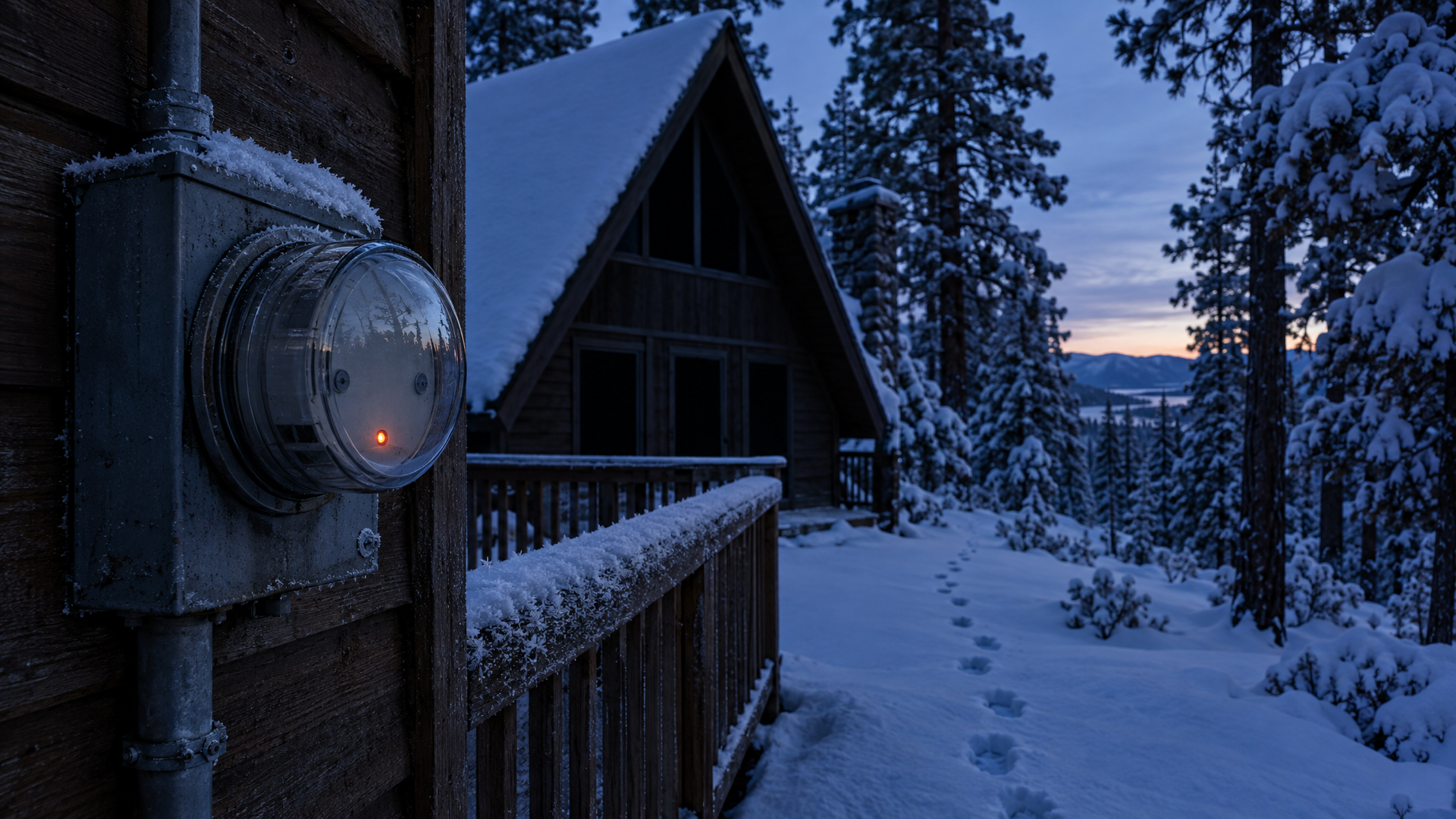
Your Lake Arrowhead cabin pays SCE's ~$24 fixed charge even when empty. What changed Oct 1, what shutting off power saves, and standby loads. (909) 403-4740
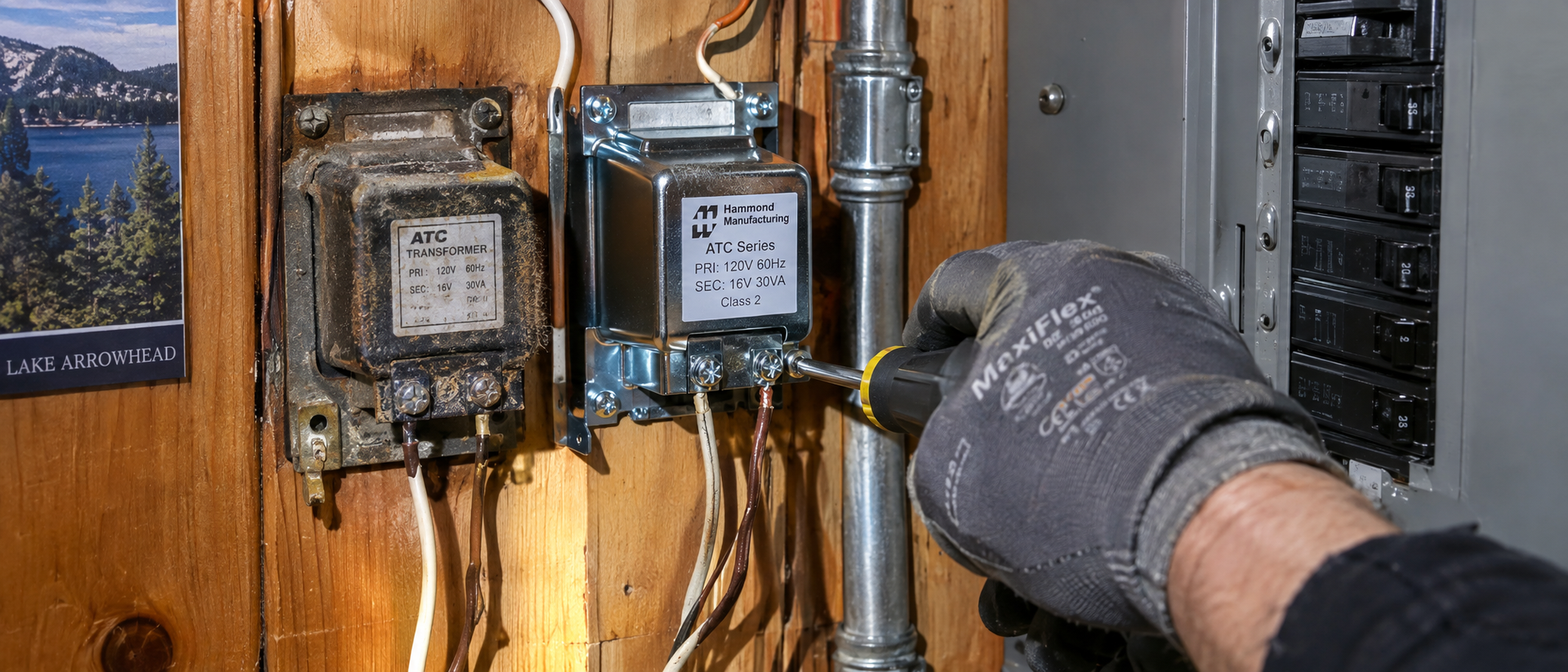
Old doorbell transformers built for simple chimes can't power a modern video doorbell. What voltage and VA rating actually work. (909) 403-4740.
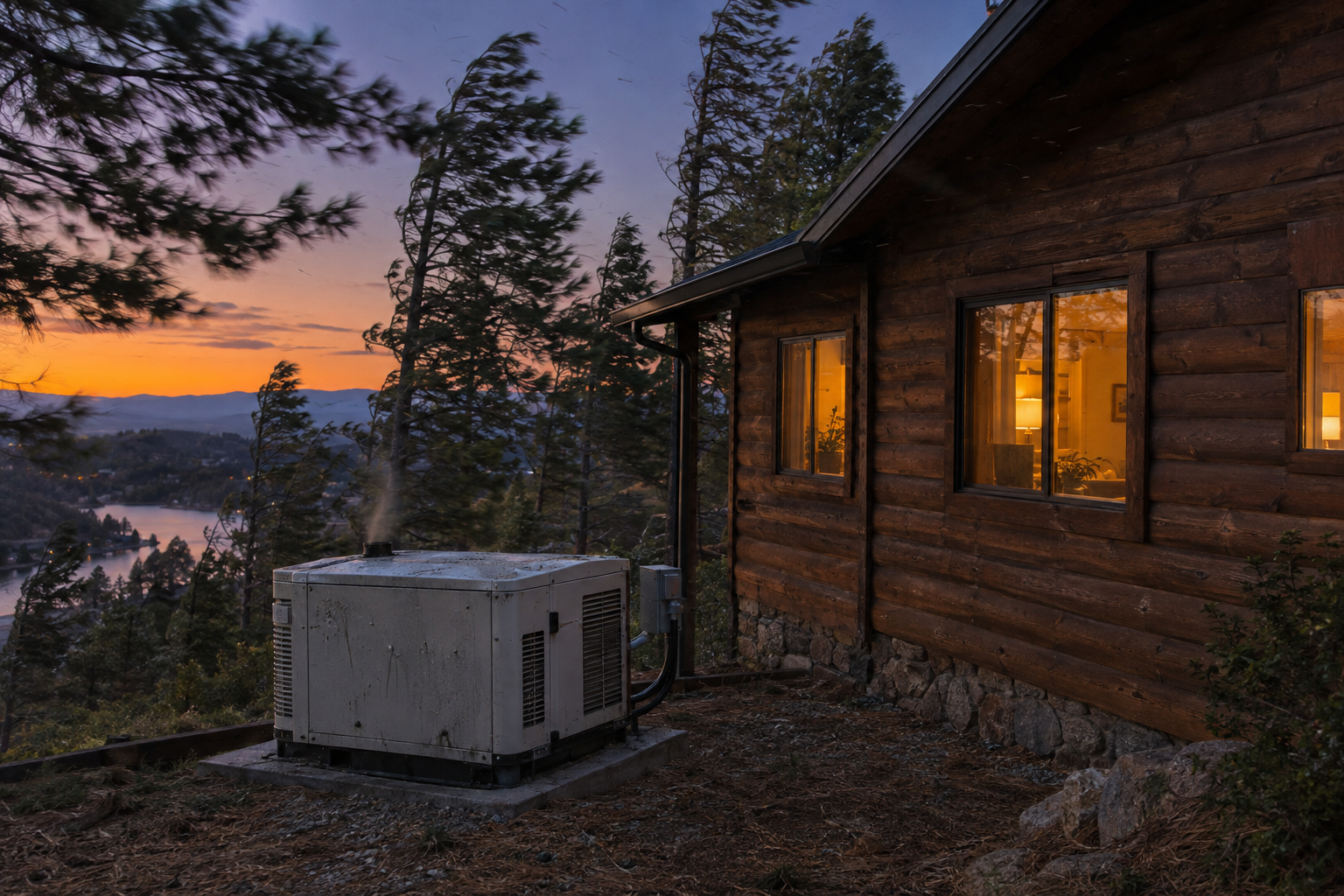
SCE can now shut off power earlier on high-risk circuits this fire season. What that means for Lake Arrowhead, and what to check before the next PSPS.
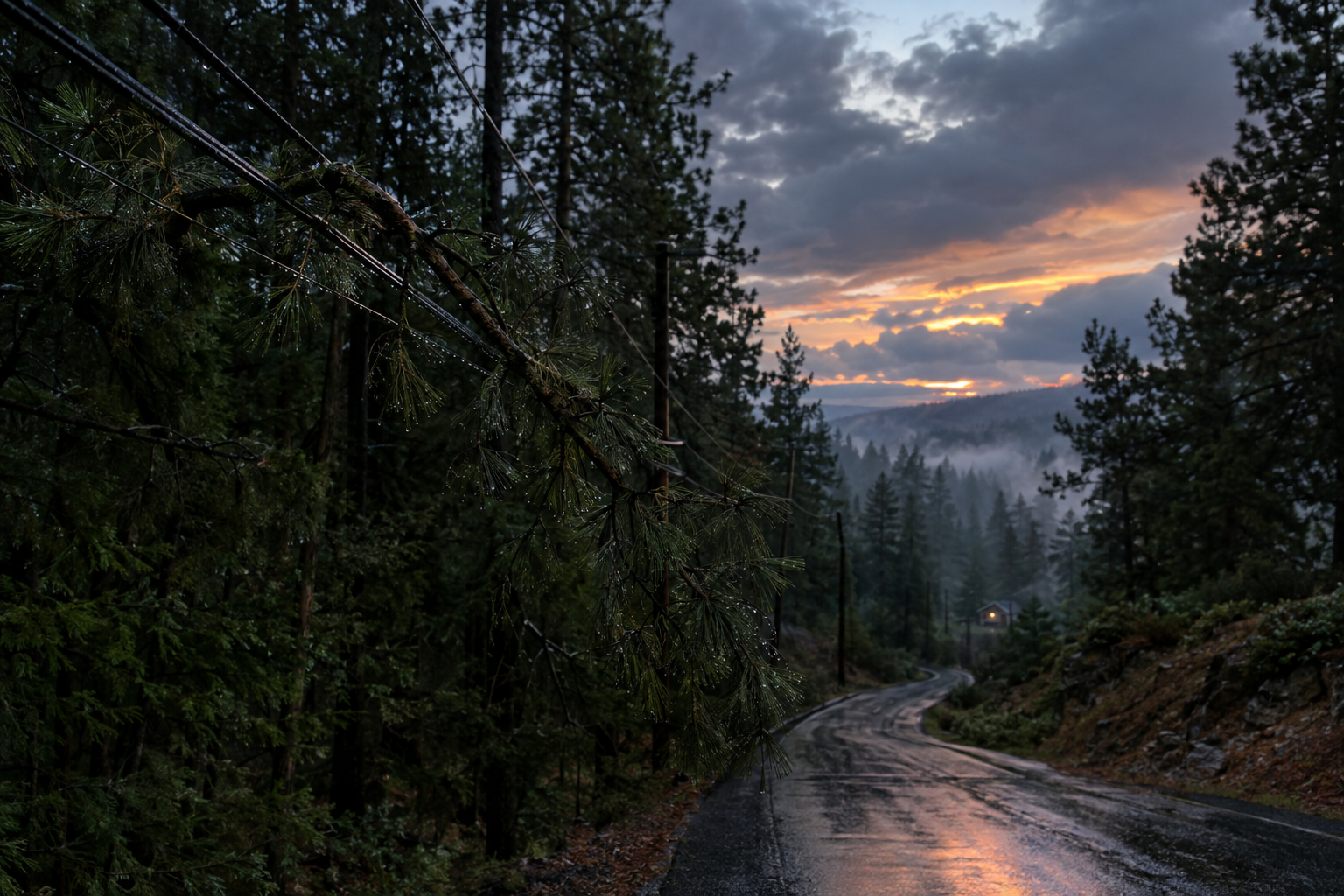
Storm damage doesn't hit evenly on the mountain — some properties lose power first and get it back last. Here's why, and what to do about it.
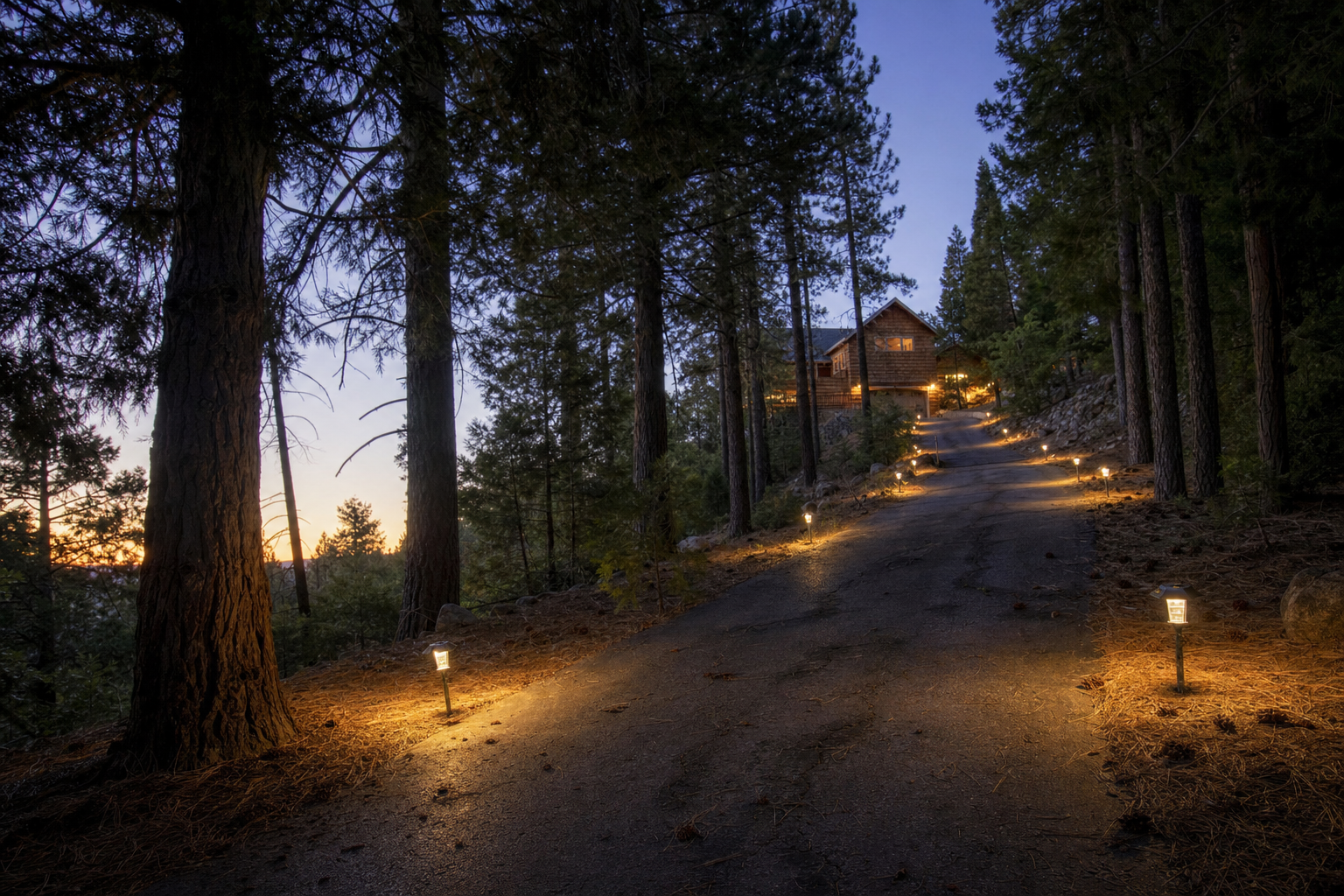
Steep driveways, dense forest, and vacant rental periods make outdoor lighting a safety issue in Lake Arrowhead, not just decor. (909) 403-4740.
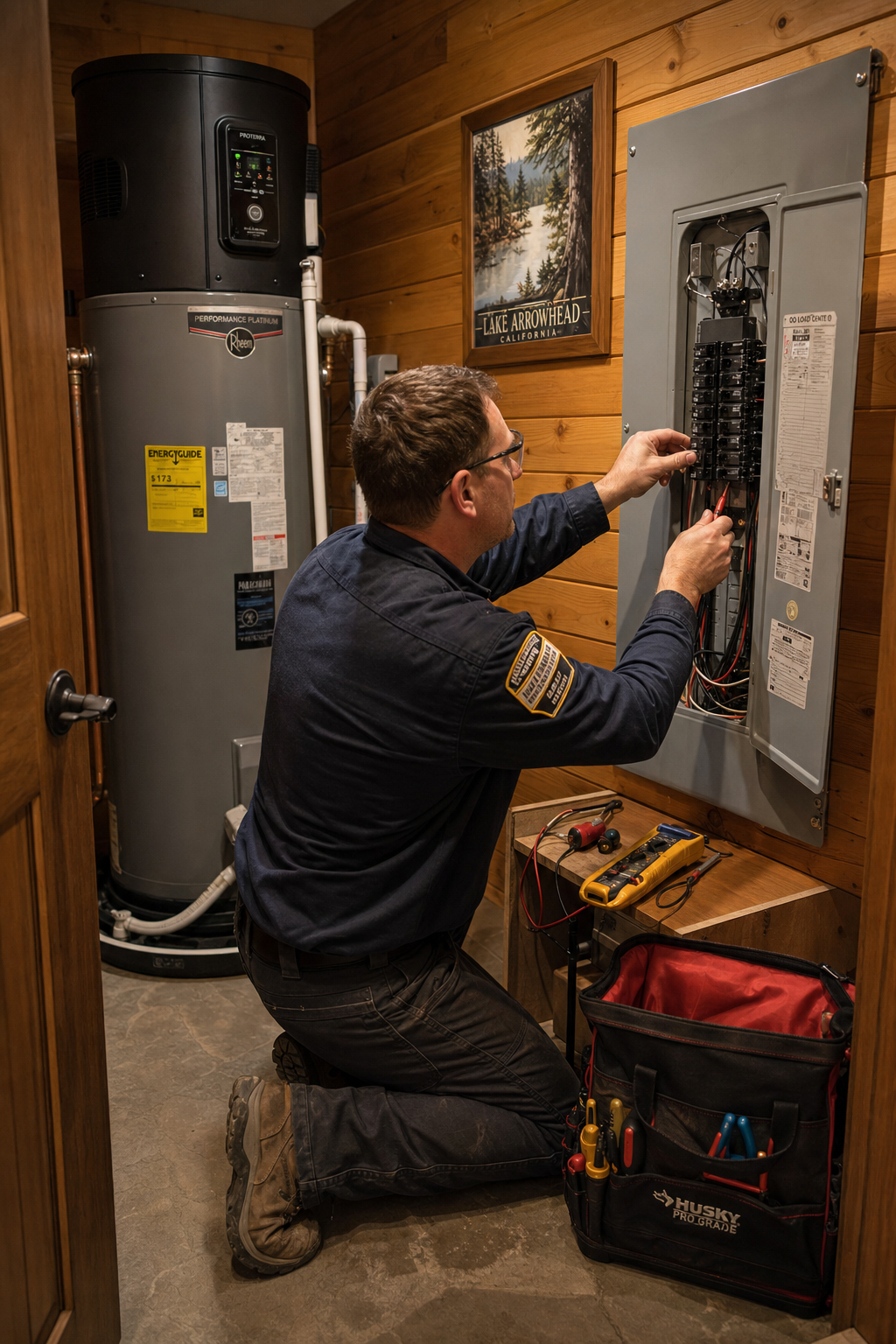
Heat pump water heaters need a dedicated 240V circuit (or a newer 120V plug-in model). What Lake Arrowhead homeowners should know before installing.
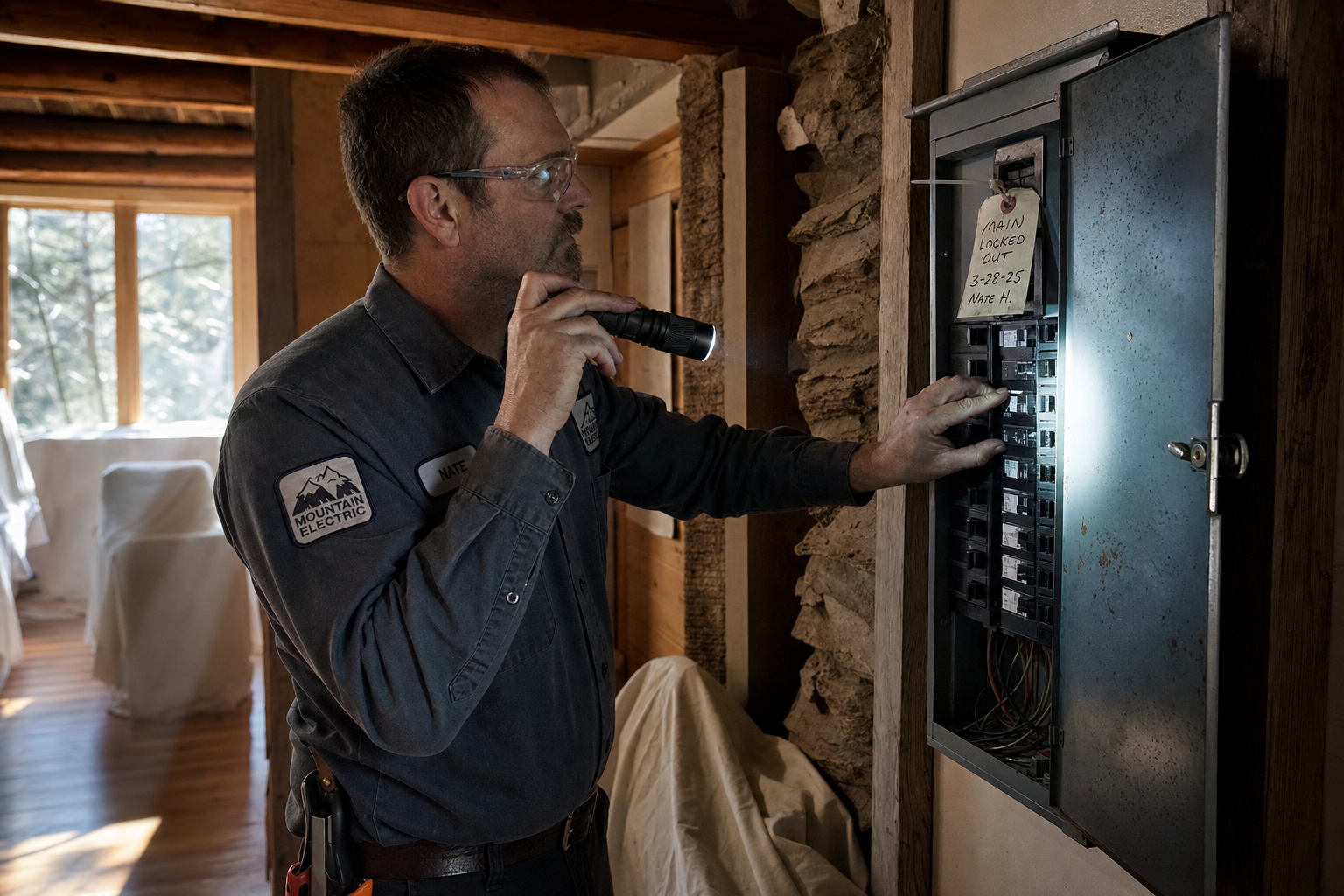
Flipping the main breaker blind in spring causes cabin fires. The proper shutdown and startup order for Lake Arrowhead cabin owners. (909) 403-4740.
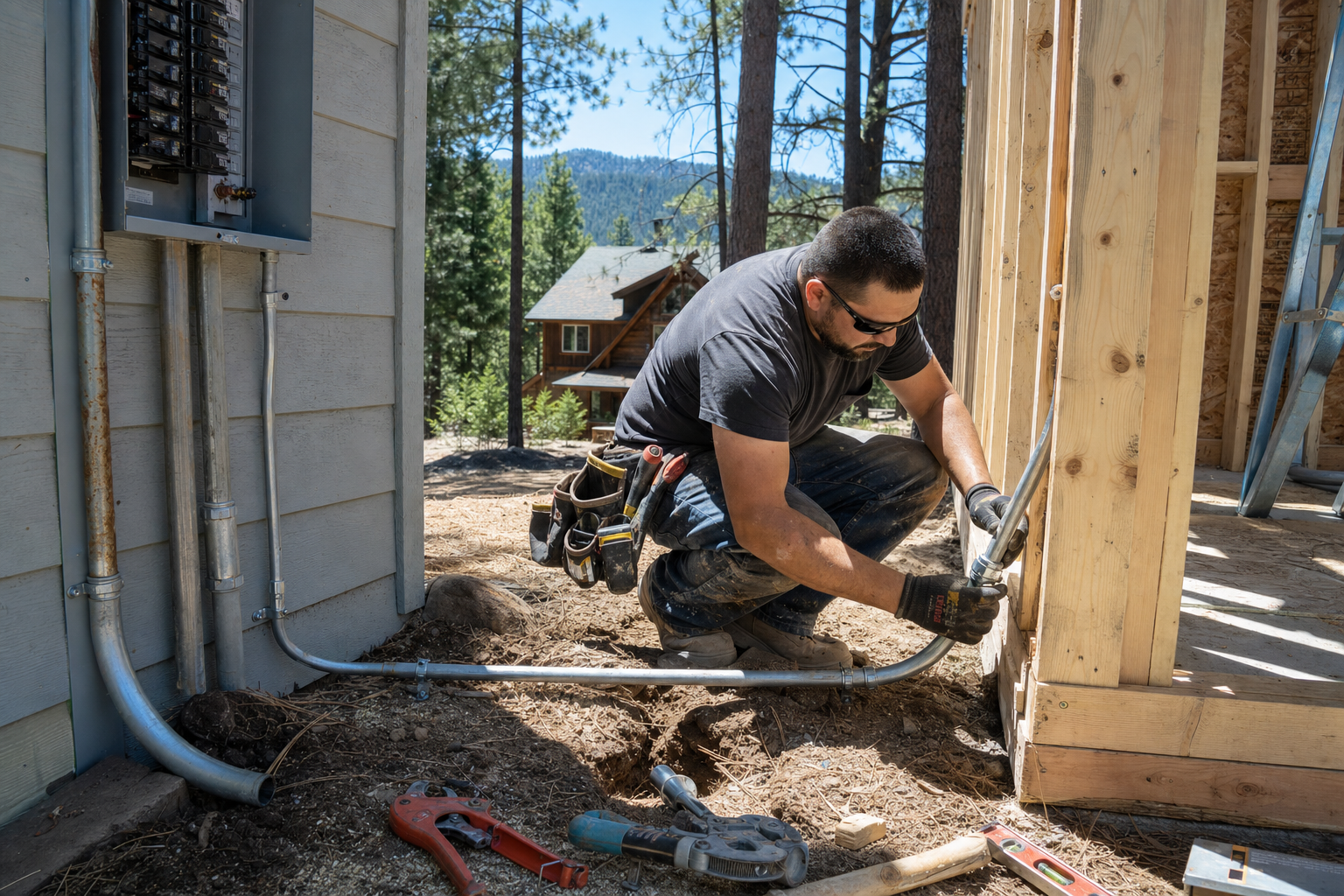
Building an ADU in Lake Arrowhead? What subpanel size, main panel capacity, and Title 24 EV-ready wiring you actually need. (909) 403-4740.
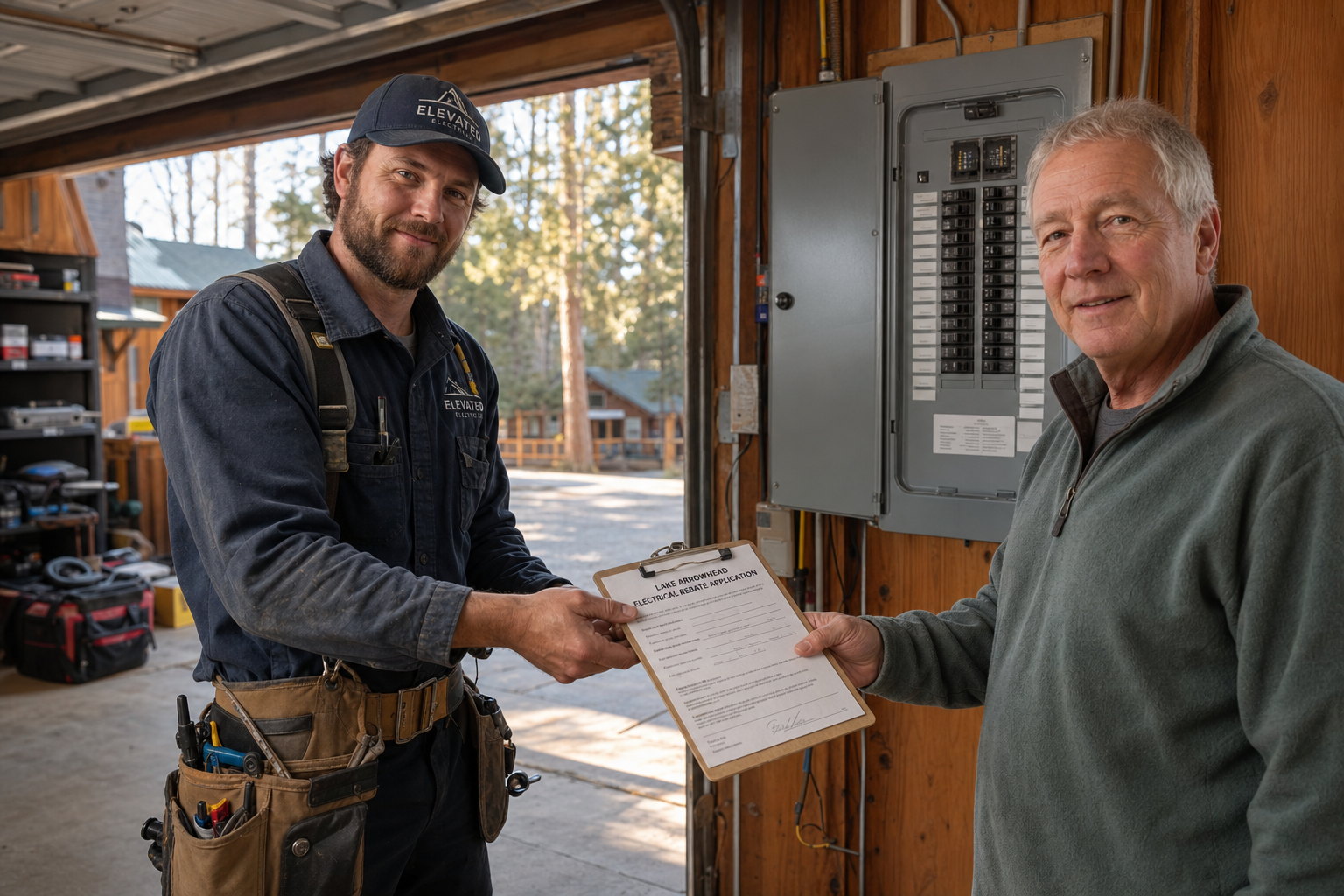
SCE's Charge Ready Home program covers up to $4,200 of your panel upgrade cost for EV charging in Lake Arrowhead. Eligibility & how to apply. (909) 403-4740.
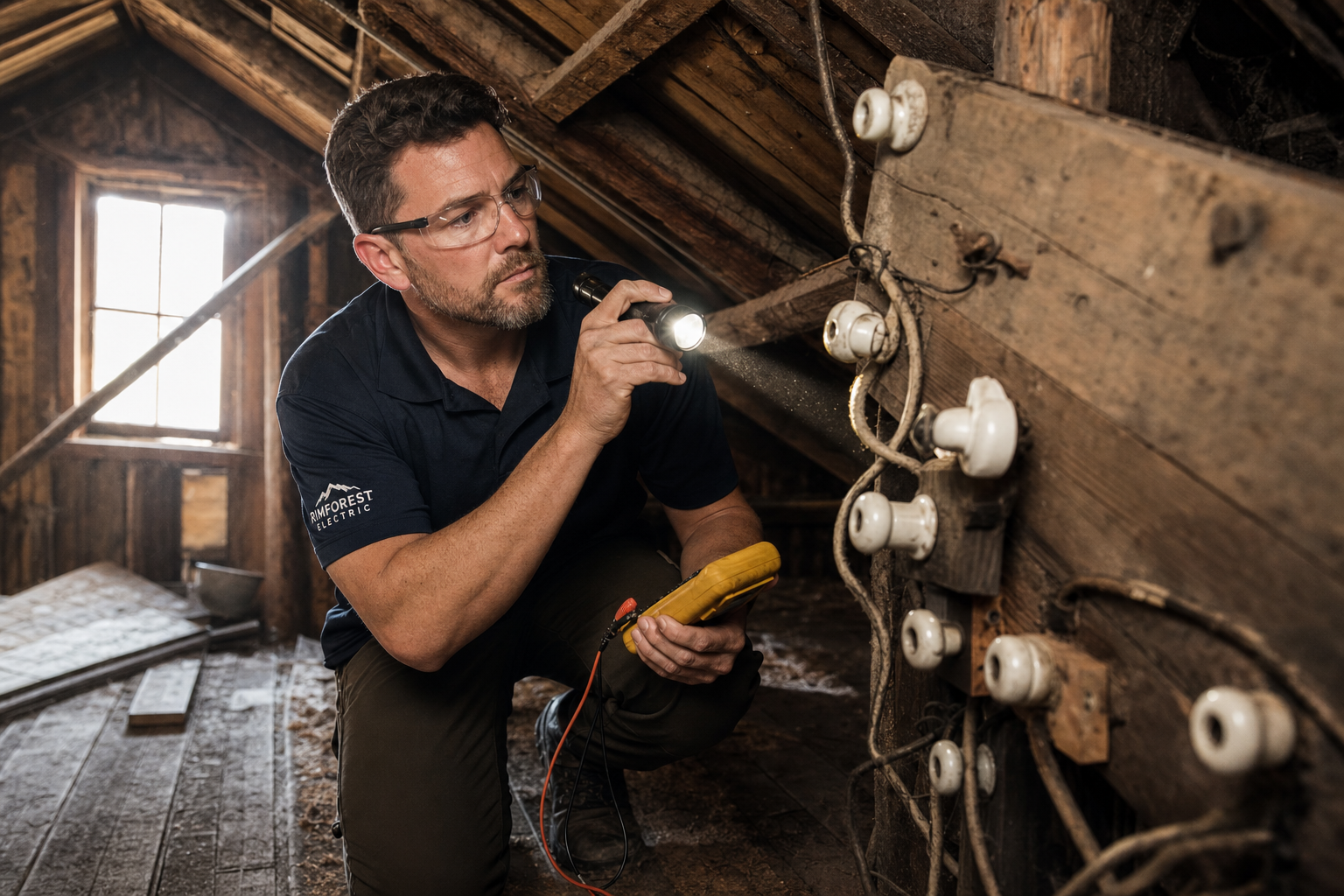
Electrician serving Rimforest, CA — home to the mountain's first 1870s wagon road and some of its oldest cabins. Knob-and-tube wiring & more. (909) 403-4740.