EV Charger Installation in Lake Arrowhead: What Mountain Homeowners Need to Know Before They Buy
March 4, 2026
EV Charger Installation in Lake Arrowhead: What Mountain Homeowners Need to Know Before They Buy
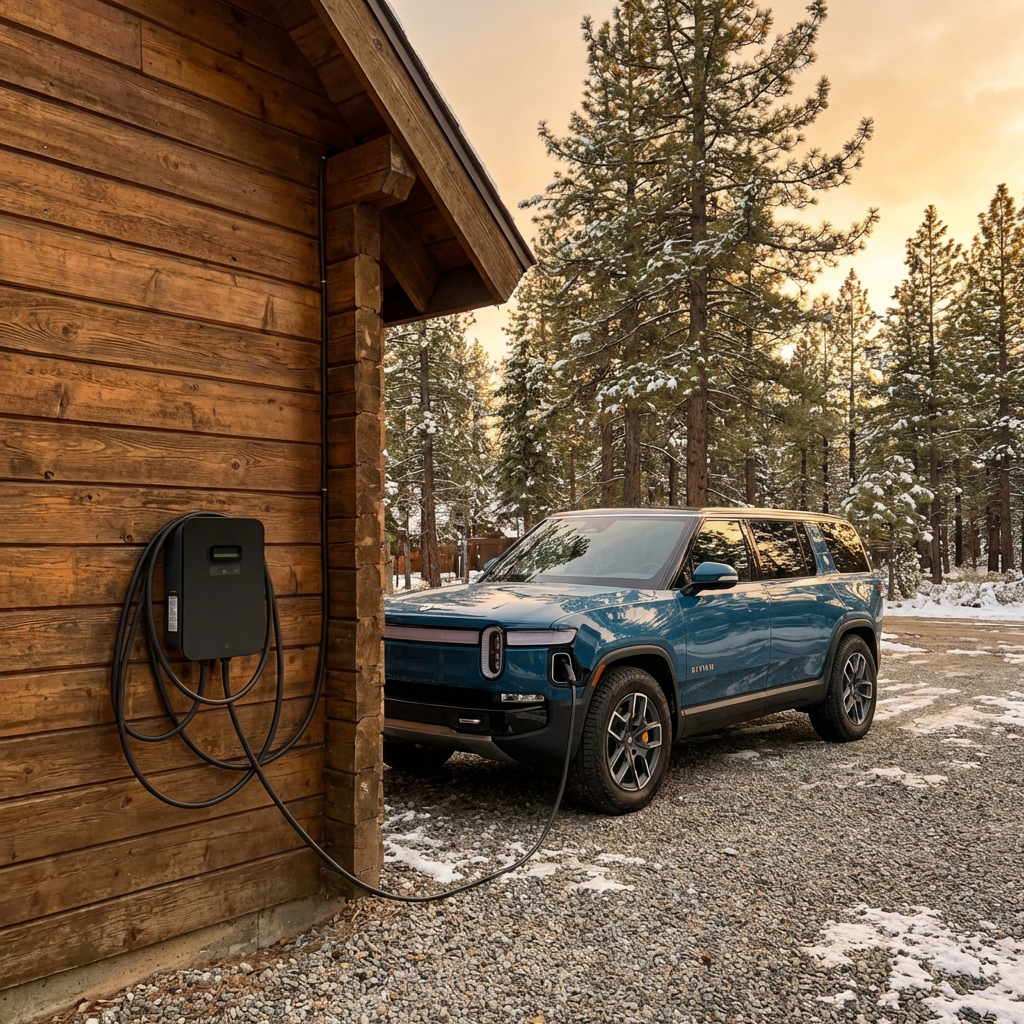
Electric vehicles are showing up in Lake Arrowhead driveways more often — and for good reason. But installing an EV charger at a mountain cabin involves challenges that don't come up at a valley home. Older electrical panels, propane-heavy systems, limited permit familiarity, and extreme weather create a completely different installation environment than what most EV charger guides assume.
If you're planning an EV charger installation at your Lake Arrowhead, Blue Jay, Crestline, or Running Springs property, here's what you need to know before you call anyone.
Why EV Charger Installation Is Different in the San Bernardino Mountains
Most EV owners in Rancho Cucamonga or Riverside handle Level 2 charger installation without much drama. Their homes are newer, panels are 200-amp, and the electrician knows the city permit process cold.
Mountain properties don't work that way. Three factors make Lake Arrowhead EV charger installation more complex:
Older electrical panels. A significant percentage of cabins in Cedar Glen, Twin Peaks, and the surrounding communities were built in the 1960s–1980s with 100-amp or even 60-amp service panels. A Level 2 EV charger requires a dedicated 240-volt, 50-amp circuit. On an undersized panel, that's not available without a panel upgrade first.
Long runs from panel to garage. Mountain cabins often have detached garages, steep lots, and unusual layouts where the path from your electrical panel to your parking spot requires 50–100+ feet of conduit — sometimes through finished walls or under decks with limited access.
San Bernardino County permitting. EV charger installations in Lake Arrowhead fall under San Bernardino County jurisdiction. Pulling an electrical permit for mountain properties has its own requirements and timelines. Any electrician you hire should be familiar with this process and handle it for you — not leave you to figure it out alone.
Level 1 vs. Level 2 vs. DC Fast Charging: What Works for a Mountain Home
Level 1 (standard 120V outlet): This charges your EV at roughly 3–5 miles of range per hour. For a weekend cabin where you arrive with a mostly-charged battery, this can work in a pinch. The downside: if you arrive with 40 miles of range left and need to leave Monday with a full charge, overnight Level 1 won't get you there.
Level 2 (240V dedicated circuit): This is the practical standard for home charging. A Level 2 charger delivers 20–30 miles of range per hour, meaning most EVs charge fully overnight. This requires a dedicated 240V, 40–50 amp circuit and a licensed electrician for installation. For most Lake Arrowhead homeowners — whether full-time or weekends only — Level 2 is the right answer.
DC Fast Charging: Commercial fast chargers aren't viable for residential installation due to the electrical service requirements involved. Not a realistic option for a mountain home.
The practical answer for mountain properties: Level 2, installed with a weatherproof outlet or hardwired EVSE (Electric Vehicle Supply Equipment) rated for outdoor use. In Lake Arrowhead's freeze-thaw climate, cold-weather rated equipment isn't optional — it's a requirement.
Does Your Lake Arrowhead Cabin Need a Panel Upgrade First?
This is the question that determines whether your EV charger installation is a one-step or two-step project.
You likely need a panel upgrade if:
Your home has 100-amp or less service (very common in pre-1980s mountain cabins)
Your panel already has limited space for new breakers
You're running electric heating, a hot tub, or other high-draw appliances
A licensed electrician evaluates your panel and determines it can't safely accommodate a new 50-amp circuit
You may be fine without an upgrade if:
Your home already has 200-amp service
You have available breaker slots
Your overall electrical load has room for a 50-amp addition
Panel upgrades at mountain properties typically cost $2,500–$4,500 in the Lake Arrowhead area, depending on scope and whether service entrance upgrades are required. If you're already upgrading the panel, adding an EV charger circuit at the same time is the most cost-efficient path — one permit, one crew visit, lower combined labor cost.
According to the U.S. Department of Energy, approximately 80% of EV charging happens at home. Getting the infrastructure right at your mountain property means you arrive to a full charge every time — no more hunting for public stations in Big Bear or running low before you reach the valley.
What Does EV Charger Installation Cost in Lake Arrowhead?
Costs vary based on your home's existing electrical setup, the distance from panel to charger, and whether any additional work is required. Here are realistic ranges for the San Bernardino Mountain area:
Straightforward Level 2 charger on existing 200-amp panel, short run: $600–$1,200
Level 2 charger with long conduit run (50+ ft): $1,000–$1,800
Level 2 charger plus panel upgrade (100A to 200A): $3,500–$5,500
Outdoor-rated EVSE with weatherproof installation: add $150–$300
San Bernardino County permit and inspection: $75–$150
These are installed costs including equipment, labor, conduit, and permit. Equipment-only costs for a quality Level 2 charger (ChargePoint, Wallbox, or JuiceBox) run $400–$800. Don't let a contractor skip the permit — unpermitted electrical work creates liability during home sales and can void your homeowner's insurance.
Outdoor Installation Requirements for Mountain Weather
Lake Arrowhead isn't Irvine. Your EV charger installation needs to account for:
Cold-weather operation. Most quality Level 2 chargers are rated to operate in temperatures as low as -22°F to -40°F. Verify this spec before purchasing — budget units sometimes have limited cold-weather ratings.
Weatherproof enclosure. The outlet or EVSE unit must be mounted in a weatherproof location or enclosed housing. NEMA 4 or NEMA 3R rated enclosures protect against rain, snow, and ice.
GFCI protection. California code requires GFCI protection on 240V outlets for EV charging in most installation scenarios. This is a safety requirement, not optional.
Conduit choice. PVC conduit can become brittle in extreme cold. Rigid metal conduit or schedule 80 PVC handles mountain temperature extremes better and provides more physical protection against snow equipment and wildlife.
Mounting location. In areas with significant snow accumulation, mounting the charger higher on the wall prevents snow buildup from blocking or damaging the connection point.
EV Charger Installation for Vacation Homes and Part-Time Residences
If your Lake Arrowhead property is a vacation cabin rather than your primary residence, a few additional considerations apply:
Smart charger features matter more. A charger with Wi-Fi connectivity and an app lets you monitor charging status, schedule charging during off-peak hours, and confirm your vehicle is charging correctly — all from your primary residence in Orange County or the Inland Empire. Brands like ChargePoint, Wallbox, and Emporia include these features.
Power management if you have a generator. If you're planning to charge your EV during a grid outage using your generator, the generator must be properly sized (most Level 2 chargers draw 7.2–11.5 kW) and the transfer switch configured to include the EV charger circuit. This requires planning at installation — not an afterthought.
Property value impact. EV charger infrastructure is increasingly on buyer checklists. In the Lake Arrowhead real estate market, a properly installed Level 2 charger is a genuine selling feature — especially as EV adoption continues growing across Southern California.
How to Choose the Right Electrician for EV Charger Installation in Lake Arrowhead
Not every valley electrician should be doing EV charger installations at mountain properties. When evaluating contractors, confirm:
C-10 license from the California Contractors State License Board (verify at cslb.ca.gov)
Experience with San Bernardino County permits for mountain community properties
Familiarity with panel assessment — they should evaluate your current panel capacity before quoting, not assume it's adequate
Weatherproof installation experience — they should specify appropriate conduit, EVSE ratings, and mounting location for mountain conditions without prompting
Permit handling — they pull and close the permit, including final inspection
Ask specifically: "Have you installed EV chargers at Lake Arrowhead or mountain properties before?" A contractor who primarily works on new construction in the valley may not have encountered the panel limitations and unusual layouts common in mountain cabins.
Frequently Asked Questions
Can I install an EV charger myself at my Lake Arrowhead cabin?
No. California law requires a licensed C-10 electrical contractor to install 240V circuits, pull permits, and pass inspection. DIY EV charger wiring also voids most charger warranties and can invalidate your homeowner's insurance coverage.
How long does installation typically take?
For a straightforward installation on an adequate panel, most jobs complete in 3–6 hours. If a panel upgrade is required, budget 1–2 days. Permitting adds lead time — plan 2–4 weeks for permit approval in San Bernardino County.
Will my HOA or the county restrict where I can install the charger?
San Bernardino County has no blanket restriction on EV charger installations. Some Lake Arrowhead HOAs have aesthetic guidelines about visible electrical equipment — check your CC&Rs before finalizing the installation location.
Does my homeowner's insurance cover EV charger installation?
The charger unit itself can typically be added to a homeowner's policy as attached equipment. Notify your insurer after installation. Properly permitted and inspected installations make claims straightforward; unpermitted work can create coverage issues.
What happens to my EV charger during a power outage?
Level 2 chargers require grid power and don't function during outages unless connected to a generator with adequate capacity. If power reliability is a concern — and it is for most Lake Arrowhead homeowners — discuss generator sizing and transfer switch configuration with your electrician at the time of EV charger installation.
Ready to Install an EV Charger at Your Lake Arrowhead Property?
Lake Arrowhead Electrical installs Level 2 EV chargers throughout the San Bernardino Mountains — including Lake Arrowhead, Blue Jay, Crestline, Running Springs, Cedar Glen, and Twin Peaks. We assess your panel before quoting, handle all San Bernardino County permits, and install with mountain weather in mind.
Call (909) 403-4740
for a free EV charger installation assessment. We'll evaluate your panel capacity, walk you through equipment options, and give you a clear quote with no surprises.
Licensed C-10 electrical contractor. Fully insured. Local to the mountain communities we serve.
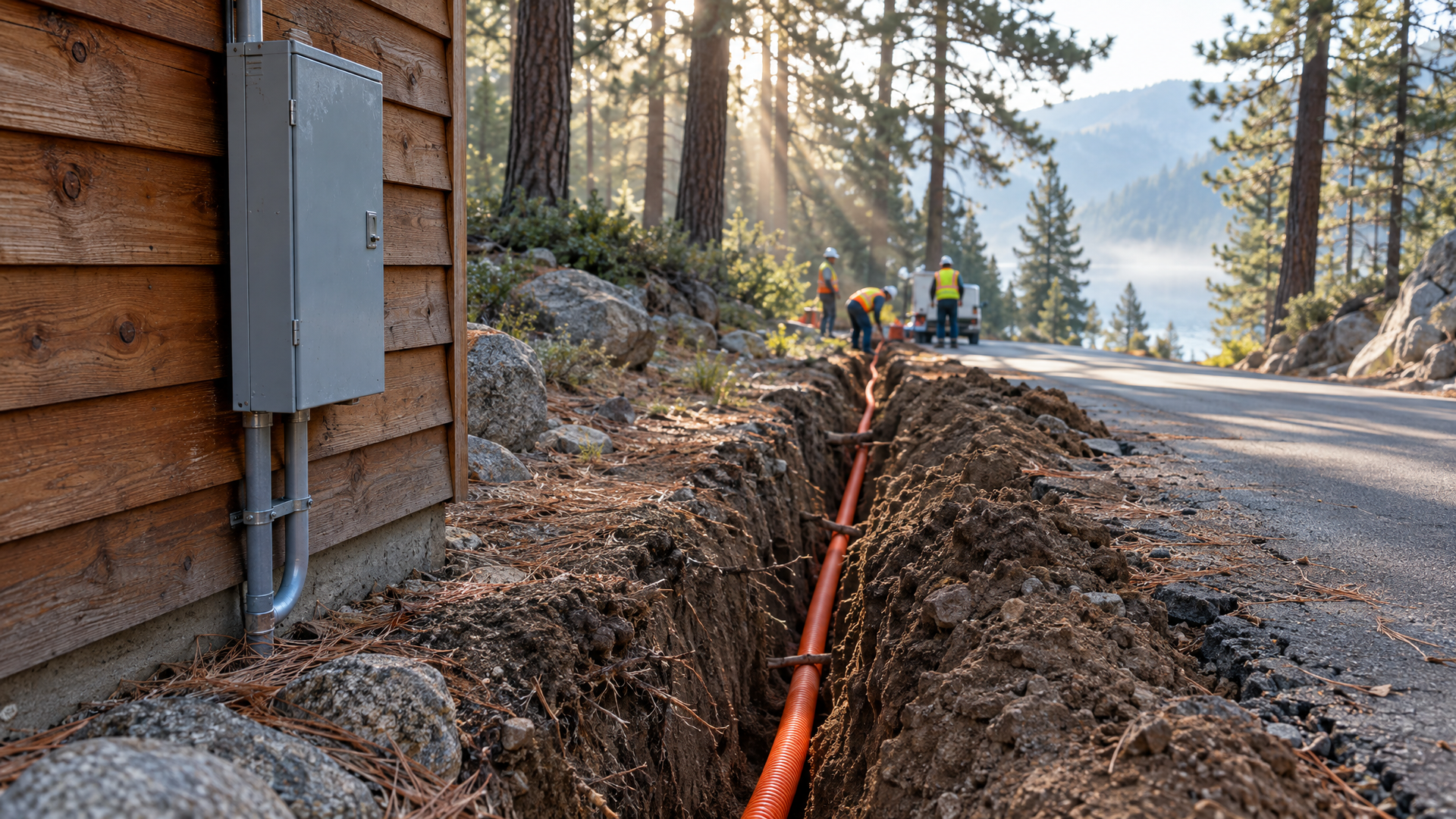
SCE is covering or burying power lines in high fire-risk areas. What Lake Arrowhead homeowners may need to do and pay for on their own side. (909) 403-4740
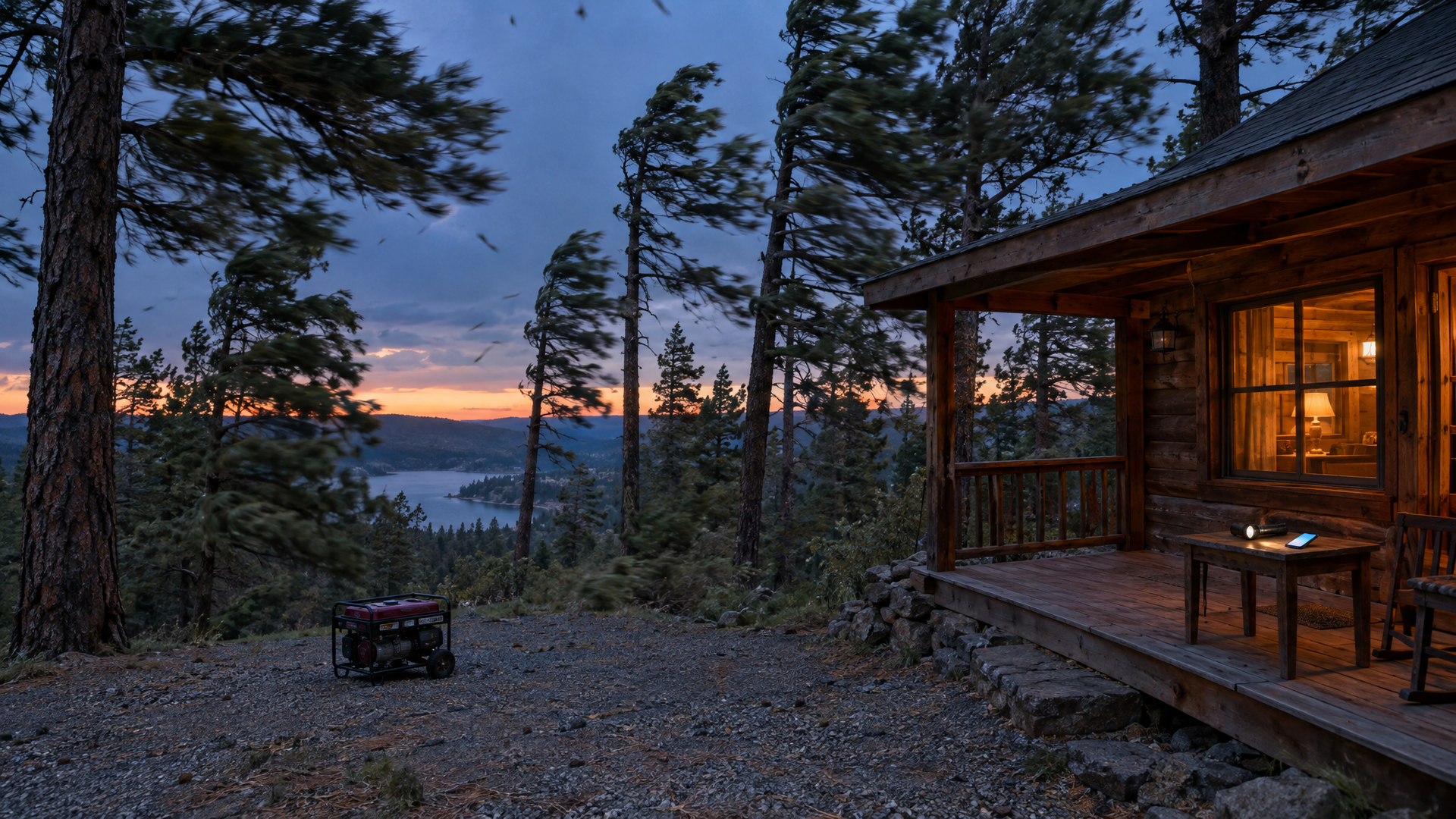
Possible SCE power shutoff? What to do in the next 24 hours in Lake Arrowhead: alerts, generator, appliances, and restoration. (909) 403-4740
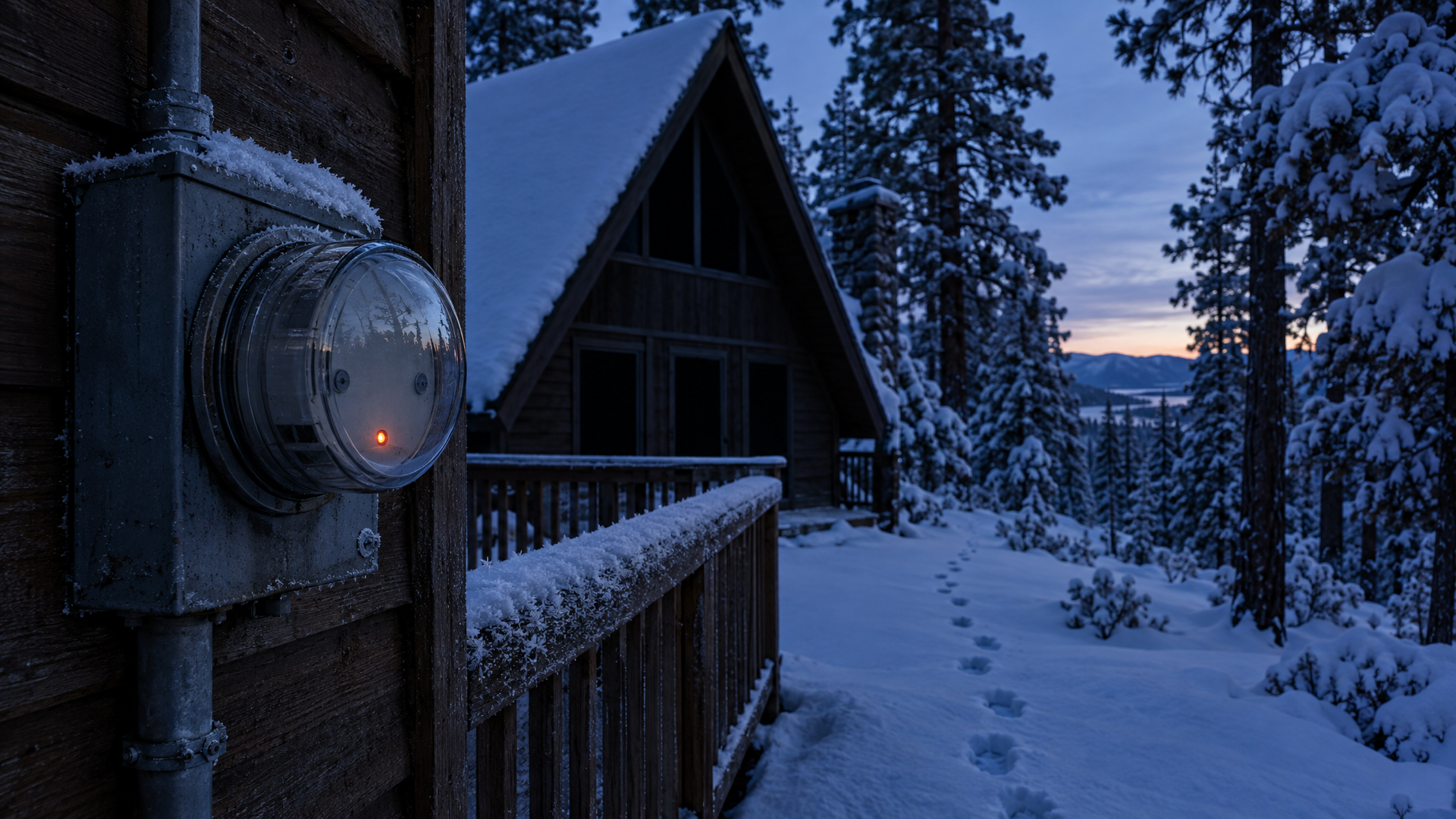
Your Lake Arrowhead cabin pays SCE's ~$24 fixed charge even when empty. What changed Oct 1, what shutting off power saves, and standby loads. (909) 403-4740
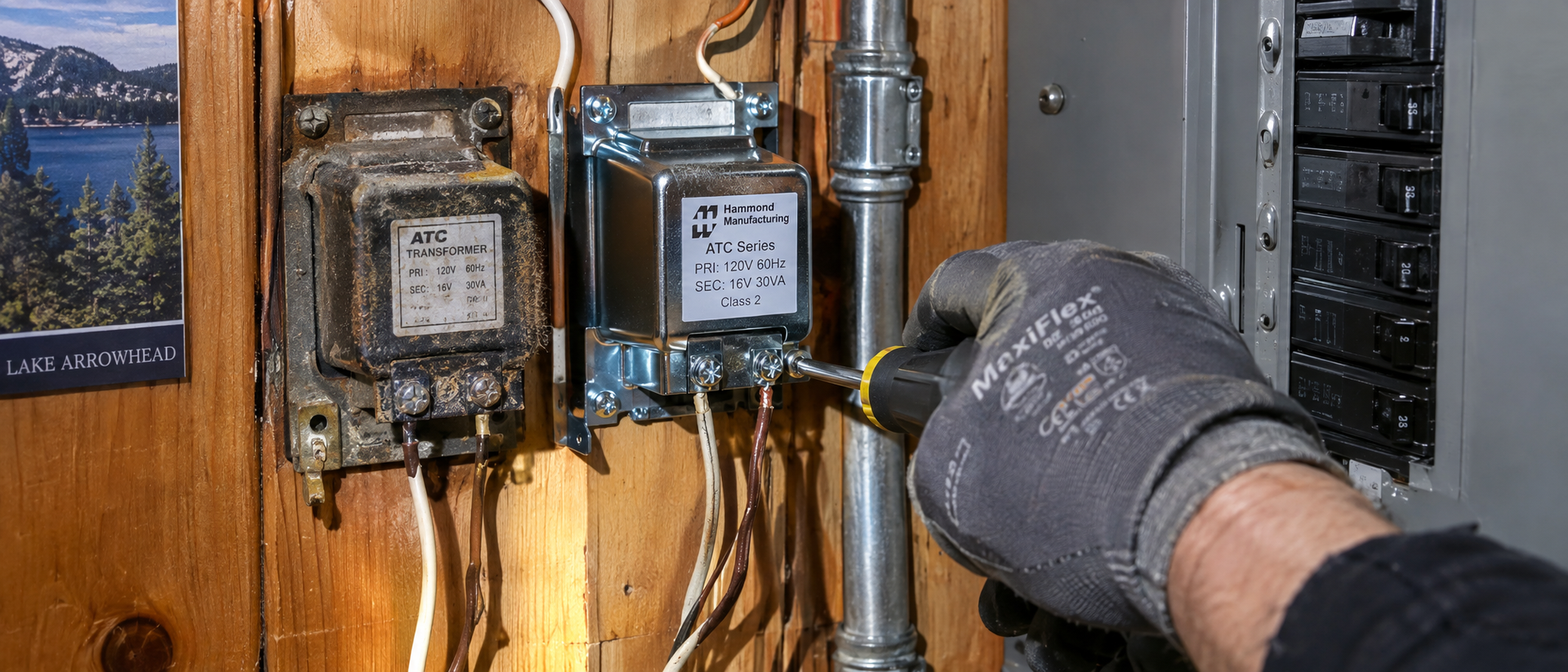
Old doorbell transformers built for simple chimes can't power a modern video doorbell. What voltage and VA rating actually work. (909) 403-4740.
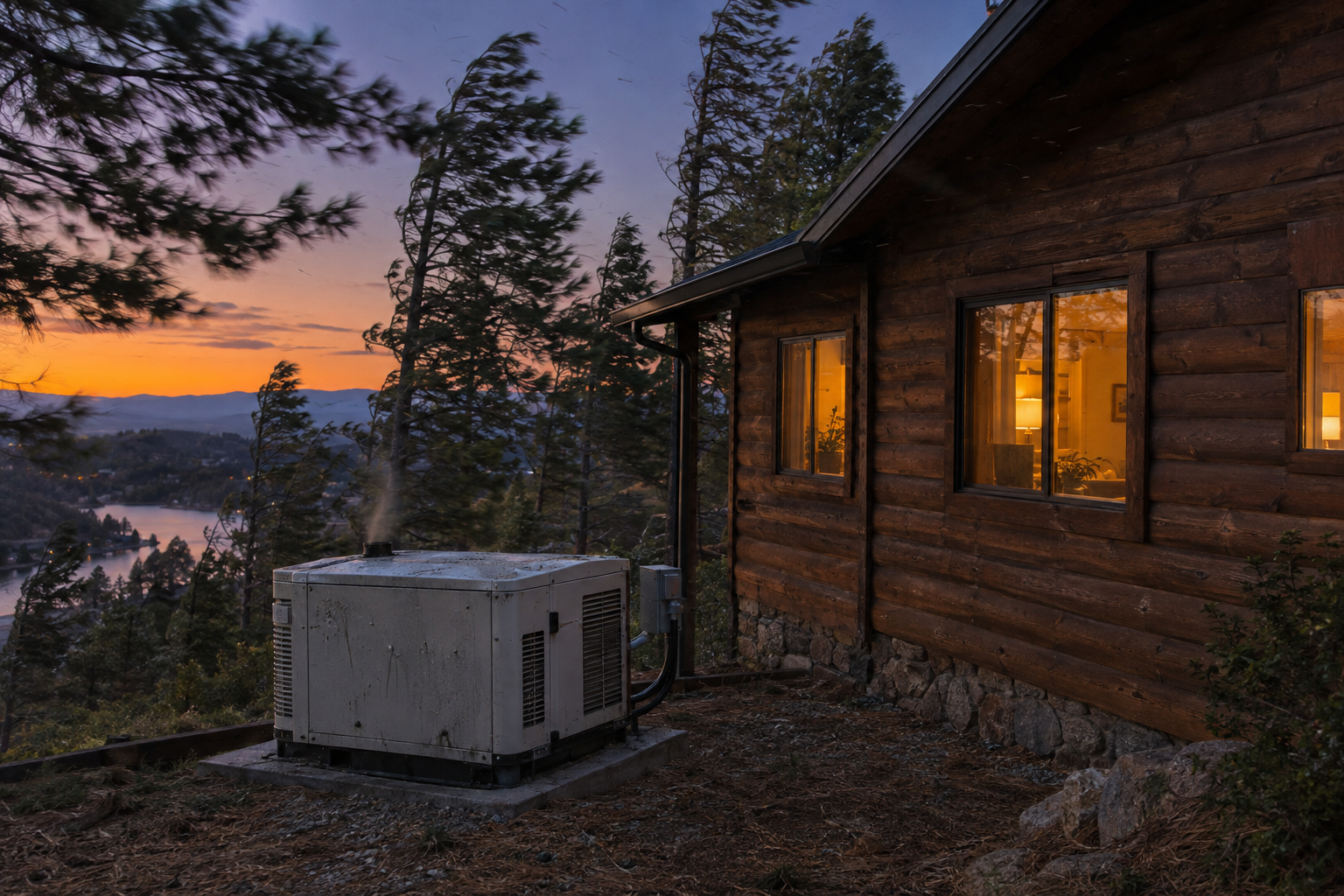
SCE can now shut off power earlier on high-risk circuits this fire season. What that means for Lake Arrowhead, and what to check before the next PSPS.
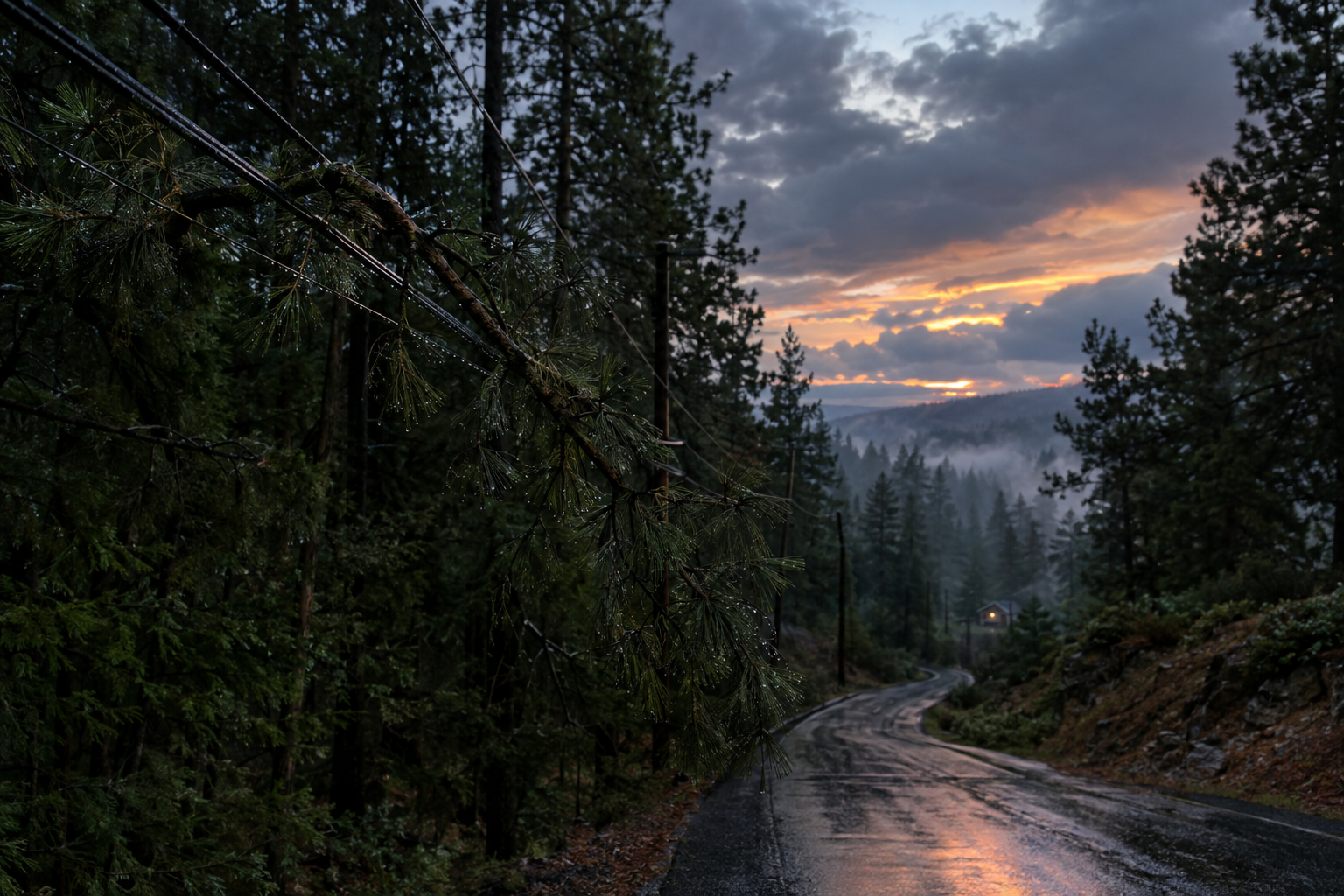
Storm damage doesn't hit evenly on the mountain — some properties lose power first and get it back last. Here's why, and what to do about it.
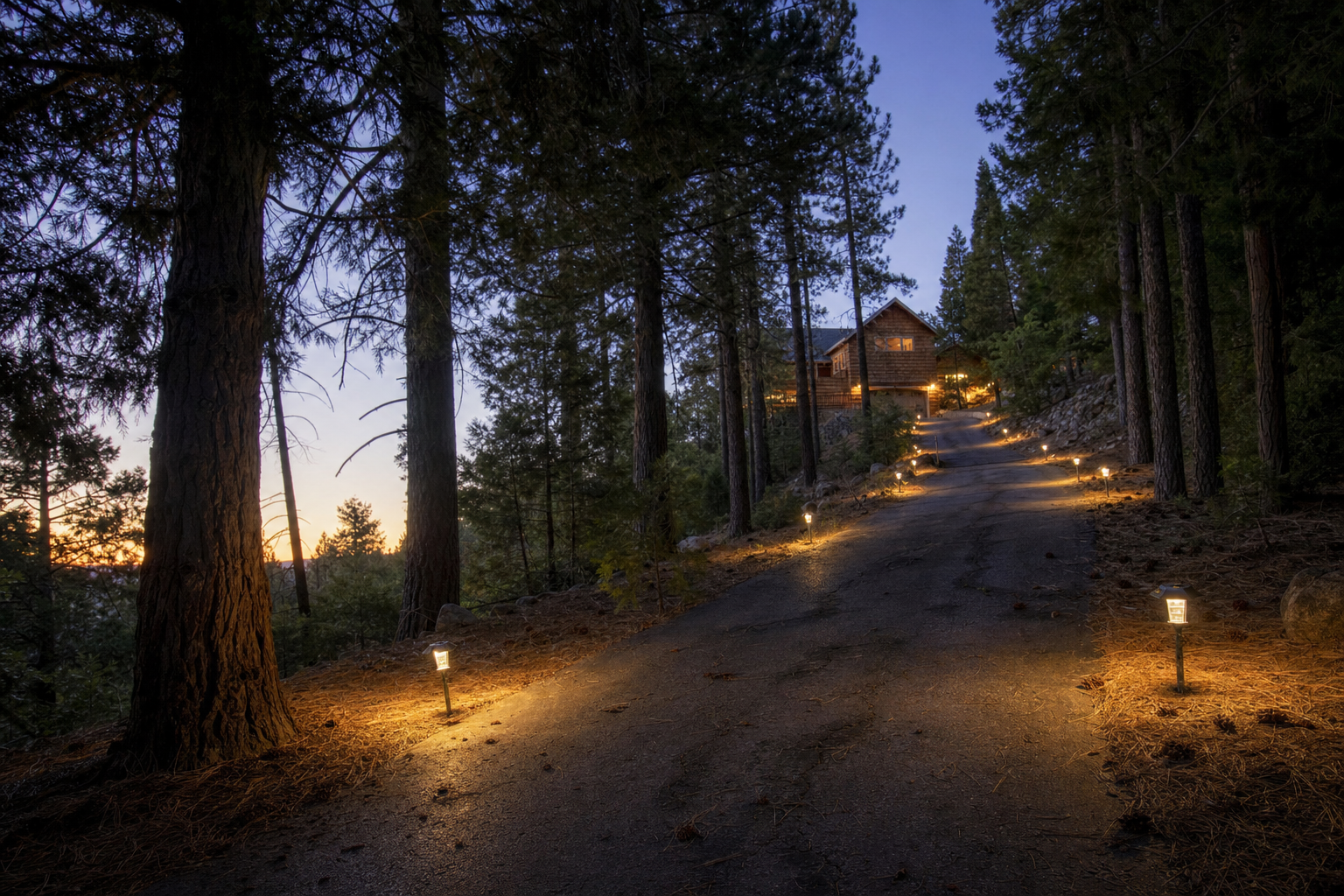
Steep driveways, dense forest, and vacant rental periods make outdoor lighting a safety issue in Lake Arrowhead, not just decor. (909) 403-4740.
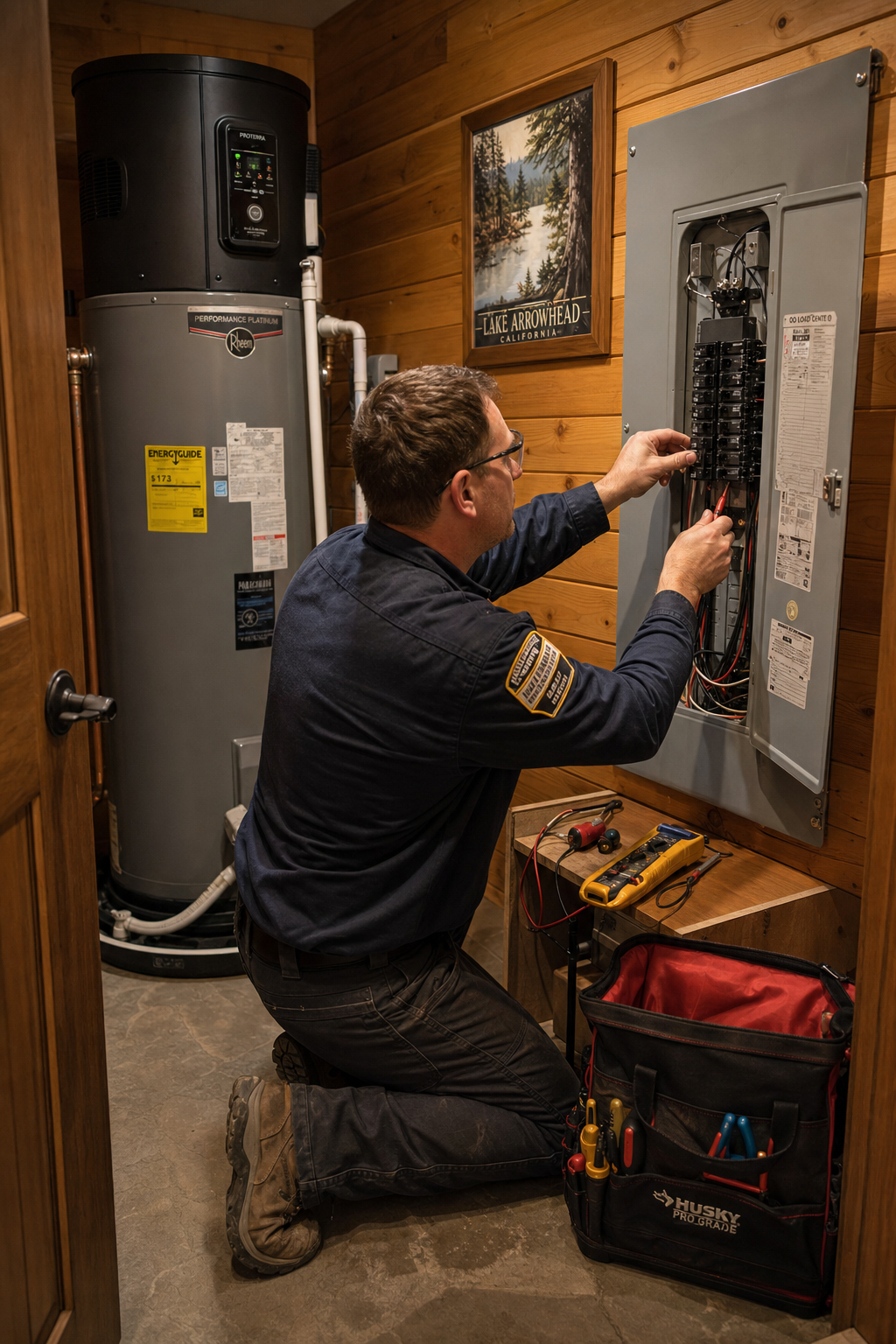
Heat pump water heaters need a dedicated 240V circuit (or a newer 120V plug-in model). What Lake Arrowhead homeowners should know before installing.
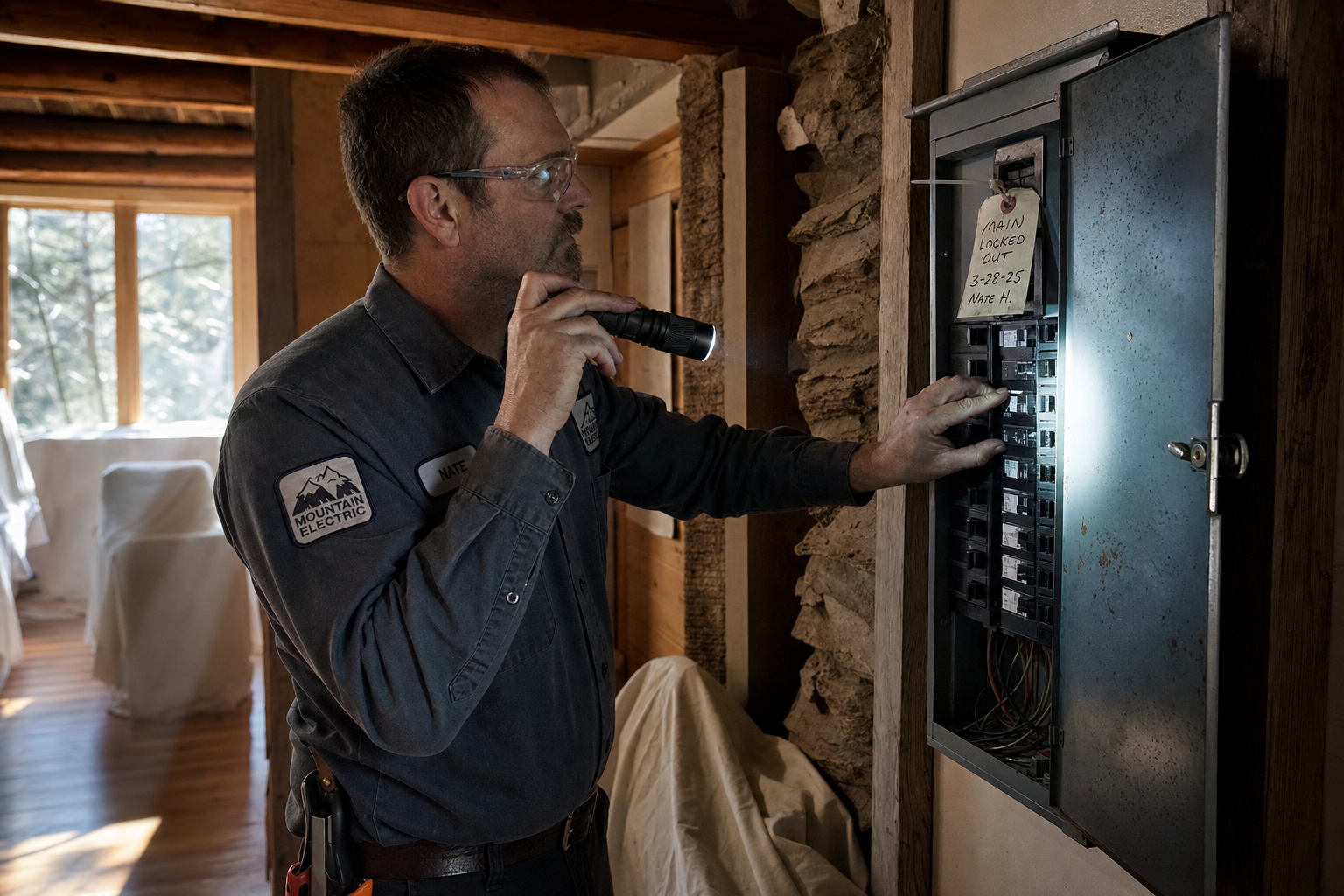
Flipping the main breaker blind in spring causes cabin fires. The proper shutdown and startup order for Lake Arrowhead cabin owners. (909) 403-4740.
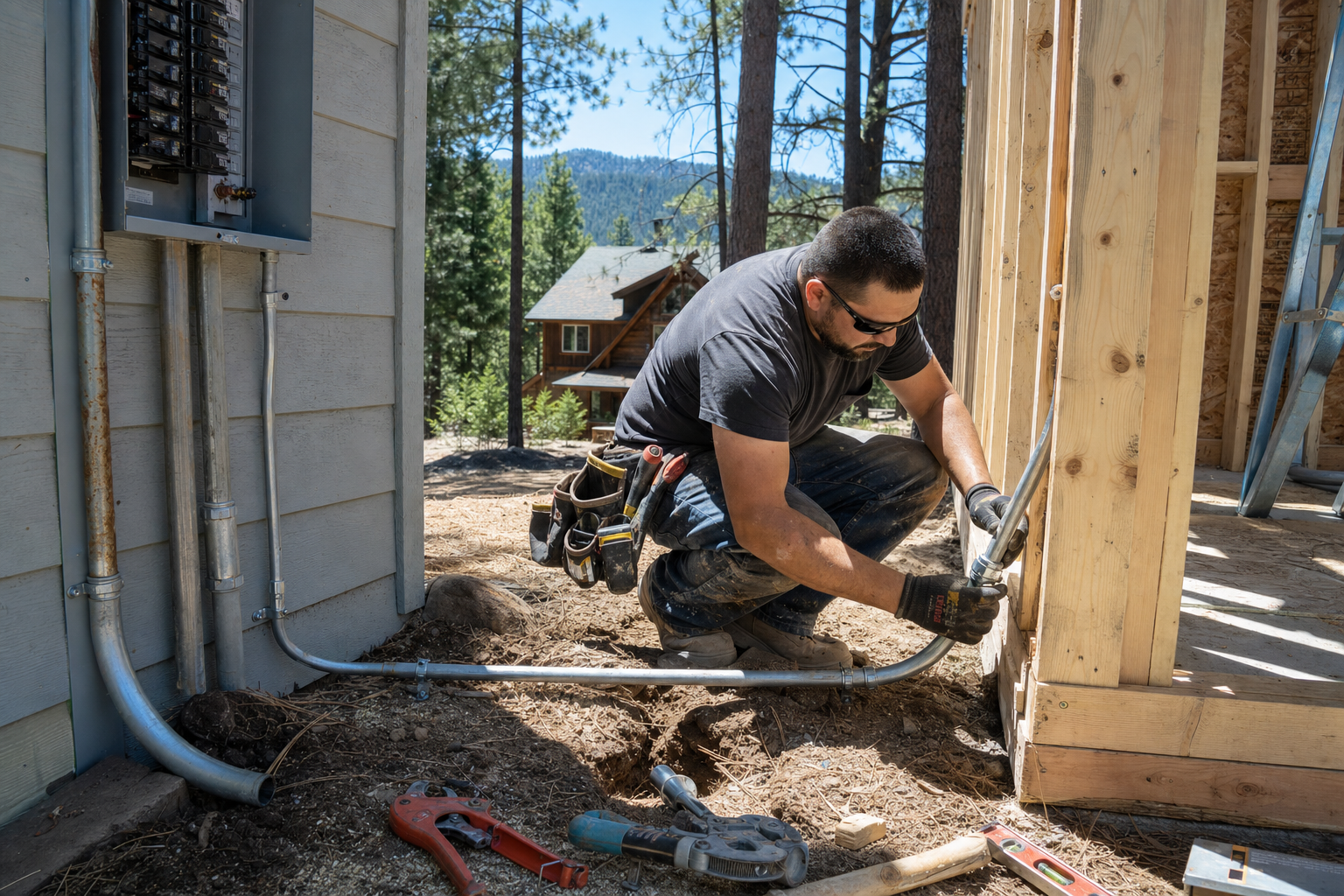
Building an ADU in Lake Arrowhead? What subpanel size, main panel capacity, and Title 24 EV-ready wiring you actually need. (909) 403-4740.