Electrical Panel Upgrade in Lake Arrowhead: What Mountain Homeowners Need to Know
April 16, 2026
Electrical Panel Upgrade in Lake Arrowhead: What Mountain Homeowners Need to Know
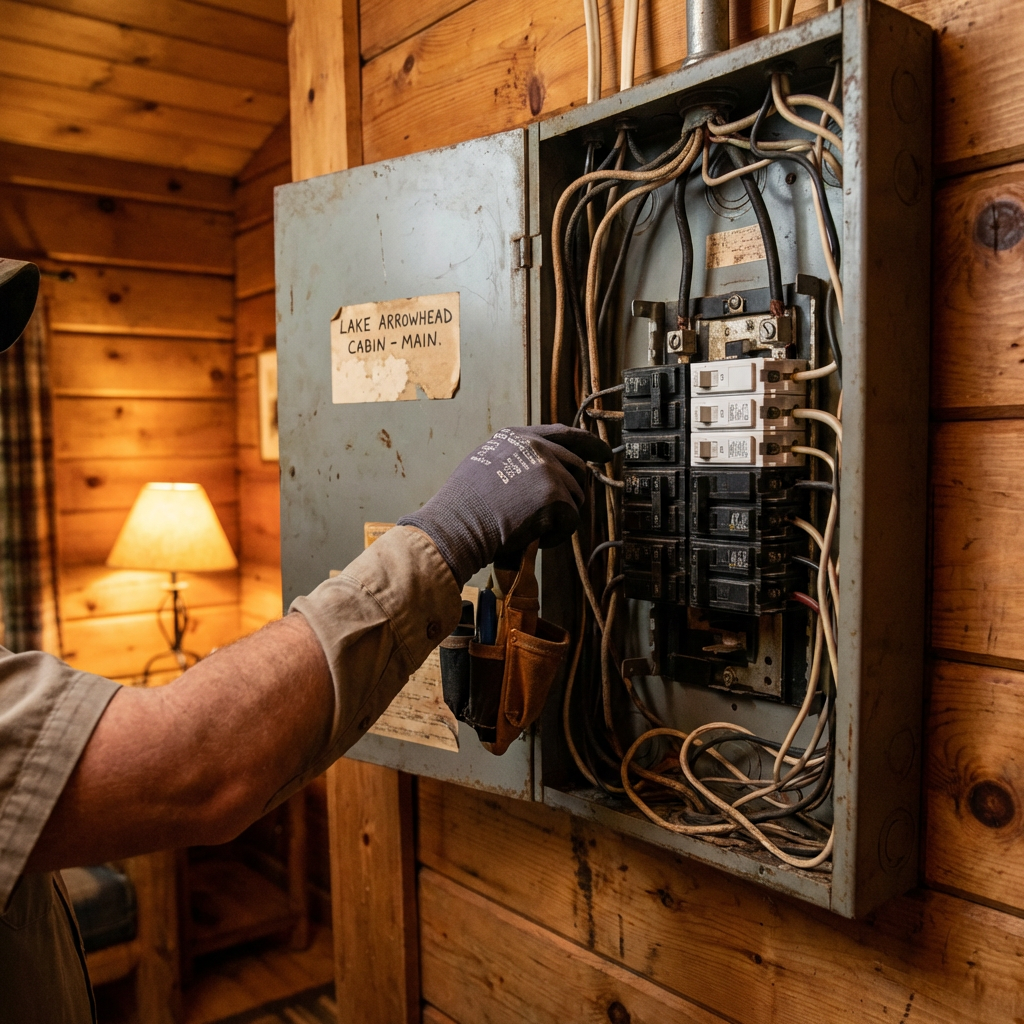
If your Lake Arrowhead cabin was built before 1990, there's a reasonable chance your electrical panel was never designed to handle the way you actually live in it today. That 100-amp panel made sense for a weekend retreat with a few light fixtures and a basic kitchen. It doesn't make sense for a home that runs electric heat, a hot tub, EV charger, well pump, and a full appliance suite simultaneously.
A panel upgrade isn't glamorous work — it doesn't change how your home looks or feels — but it's one of the most consequential electrical projects you can do on a mountain property. It's the foundation that everything else runs on.
Here's what Lake Arrowhead homeowners need to know before starting one.
Why Mountain Cabins Need Panel Upgrades More Often Than Valley Homes
Most homes in Lake Arrowhead, Blue Jay, Cedar Glen, and Twin Peaks were built as seasonal retreats in the 1960s through 1980s. The electrical systems reflect that era — and that intended use.
A seasonal cabin at 5,200 feet of elevation, used a few weekends a year, doesn't need much electrical capacity. But that same cabin, used as a full-time or part-time residence today, is being asked to carry loads it was never designed for:
Electric baseboard heaters or forced-air electric heat drawing 20–30+ amps continuously
Hot tubs wired on their own 50–60 amp dedicated circuits
Level 2 EV chargers requiring a dedicated 50-amp circuit
Well pump systems with separate control and motor circuits
Modern appliances (dishwashers, washer/dryer, refrigerators) that weren't part of the original load calculation
The result is a panel that's undersized for actual demand — which shows up as tripped breakers, dimming lights when large appliances cycle on, limited room for new circuits, or panels that are simply too old to safely expand.
Signs Your Lake Arrowhead Panel Needs to Be Upgraded
You don't need an electrician to recognize most of these — they show up in everyday use:
Breakers tripping regularly. A breaker that trips occasionally is doing its job. A breaker that trips every time you run the microwave and the coffee maker at the same time is telling you the circuit is undersized or the panel is at capacity.
Lights dim when large appliances kick on. If your lights drop noticeably when the well pump, furnace blower, or hot tub heater cycles on, you're seeing voltage sag — a sign the panel is being pulled to or past its rated capacity.
No room for new breakers. If every slot in your panel is occupied and there's no space to add a circuit — for an EV charger, a new subpanel, or a generator transfer switch — an upgrade is the only path forward.
Federal Pacific or Zinsco panels. Both brands have documented safety histories including breakers that fail to trip during overloads. If your panel cover says "Stab-Lok," "Federal Pacific," or "Zinsco," have it evaluated before the next storm season. These aren't theoretical concerns in mountain homes with aging wiring.
100-amp or less service. If your home's service is 100 amps, it's probably fine for a small cabin with minimal electrical load. It's likely undersized if you're running electric heat, a hot tub, and modern appliances. The standard for new construction and renovated homes is 200-amp service.
Burn marks, rust, or heat at the panel. Any visible discoloration, corrosion, or warmth around breakers or bus bars is a safety issue, not an aesthetic one.
What a Panel Upgrade Actually Involves
A panel upgrade at a Lake Arrowhead cabin is more involved than swapping the box on a valley home. Here's the realistic sequence:
1. Load assessment.
Before anything else, a licensed electrician evaluates your actual electrical load — what circuits you have, what they're serving, and what capacity you'll need going forward. This determines whether you need a 200-amp upgrade or whether a subpanel in a specific area (garage, hot tub pad) solves the problem more efficiently.
2. San Bernardino County permitting.
Electrical panel work in Lake Arrowhead falls under San Bernardino County jurisdiction. A permit is required, and your electrician should handle the application — not you. Mountain community permitting has its own rhythm, and an electrician familiar with county requirements moves through it faster. Unpermitted panel work creates serious problems during real estate transactions.
3. Utility coordination.
The utility (Southern California Edison for most Lake Arrowhead properties) needs to disconnect service at the meter while the upgrade is completed. Your electrician coordinates this — timing matters because your property will be without power during the work.
4. Panel installation.
The old panel comes out, the new one goes in. A 200-amp upgrade typically replaces the main panel and may include a new service entrance (the conduit and wiring from the meter to the panel). In older cabins with accumulated modifications, this is also when a good electrician documents and cleans up any existing wiring issues found during the work.
5. Inspection and permit close.
San Bernardino County inspects the work before the permit is closed. Your electrician should be present at inspection and handle any punch list items on the spot.
The whole process for a straightforward panel swap typically takes one to two days of on-site work, plus permit lead time of two to four weeks in advance.
What Does a Panel Upgrade Cost in Lake Arrowhead?
Expect realistic ranges — not the low-end numbers that don't account for mountain conditions:
100-amp to 200-amp panel upgrade (straightforward): $2,500–$4,000
Panel upgrade with new service entrance: $3,500–$5,500
Panel upgrade plus generator transfer switch: $4,000–$6,500
Panel upgrade plus subpanel (e.g., detached garage or hot tub): $4,500–$7,000
What drives the higher end in mountain properties: longer conduit runs on steep lots, older service entrance equipment that needs to be replaced simultaneously, code corrections on existing wiring discovered during the work, and San Bernardino County permit fees.
Get an itemized quote before work begins. Any quote that doesn't specify what's included in the scope — and what might change the price — isn't a complete quote.
Combining a Panel Upgrade with Other Electrical Work
If you're already doing a panel upgrade, it's the right time to add other electrical improvements in the same permit and the same site visit. Work that pairs well:
Generator transfer switch. Whole-home backup generators require a properly sized transfer switch at the panel. Installing it during a panel upgrade is more efficient than adding it later as a separate project. Learn more about backup generators and surge protection for Lake Arrowhead properties.
EV charger circuit. A dedicated 50-amp circuit for a Level 2 charger is straightforward to add during a panel upgrade when there's already an open permit and crew on site.
Hot tub or spa circuit. Hot tubs require a dedicated 240-volt, 50–60 amp circuit with a disconnect within sight of the unit. Adding it during a panel project saves a return trip.
GFCI and AFCI breaker upgrades. Older panels often have standard breakers in locations that now require GFCI or AFCI protection under current California code. Upgrading these during the panel work brings the whole system closer to current standards.
Working with San Bernardino County: What to Expect
Mountain homeowners sometimes try to avoid permits to save time or money. On a panel upgrade, this is a mistake worth being direct about.
An unpermitted panel upgrade: doesn't get inspected, which means errors don't get caught; creates disclosure obligations (and potential deal-killers) when you sell; can void your homeowner's insurance coverage for fire claims if the cause is traced to unpermitted electrical work; and can require full tear-out and redo at your expense if discovered during a sale.
The permit timeline in San Bernardino County for mountain communities typically runs two to four weeks. A licensed electrician who works regularly in the area knows how to submit properly and avoid delays. If your electrician is suggesting you skip the permit — or seems unfamiliar with mountain community permitting requirements — that's a red flag worth acting on.
Frequently Asked Questions
How long will my power be out during a panel upgrade?
For most Lake Arrowhead panel upgrades, power is off for four to eight hours during the main installation day. Your electrician coordinates with SCE for the meter disconnect and reconnect, so timing is planned in advance — not a surprise interruption.
Do I need to upgrade my panel before adding a hot tub or EV charger?
Possibly. An electrician evaluates your current panel capacity to determine if it can accommodate a new 50-amp circuit safely. Many 100-amp panels in older mountain cabins can't — the upgrade is the necessary first step.
What's the difference between a panel upgrade and a service upgrade?
A panel upgrade replaces the breaker panel itself. A service upgrade refers to increasing the amperage coming into your home from the utility — including the service entrance conductors, meter base, and main panel. In practice, many panel upgrades include a service upgrade as part of the work, especially when going from 100-amp to 200-amp service.
My panel has open breaker slots. Why do I still need an upgrade?
Open slots don't necessarily mean available capacity. Your panel's total amperage rating determines how much load it can serve — even a panel with open slots may be at or near capacity if existing circuits are drawing close to the rated maximum.
Can I stay in the cabin during a panel upgrade?
Yes, though you'll be without power for part of the day. For vacation properties where the timing is flexible, scheduling the work during a non-visit period is often more convenient.
Ready to have your Lake Arrowhead panel evaluated? Call (909) 403-4740 for a free assessment.
We handle all San Bernardino County permitting, coordinate the SCE disconnect, and complete the work with mountain conditions in mind.
Serving Lake Arrowhead, Blue Jay, Crestline, Running Springs, Cedar Glen, Twin Peaks, Rim Forest, and surrounding San Bernardino Mountain communities.
Possible SCE power shutoff? What to do in the next 24 hours in Lake Arrowhead: alerts, generator, appliances, and restoration. (909) 403-4740
Your Lake Arrowhead cabin pays SCE's ~$24 fixed charge even when empty. What changed Oct 1, what shutting off power saves, and standby loads. (909) 403-4740
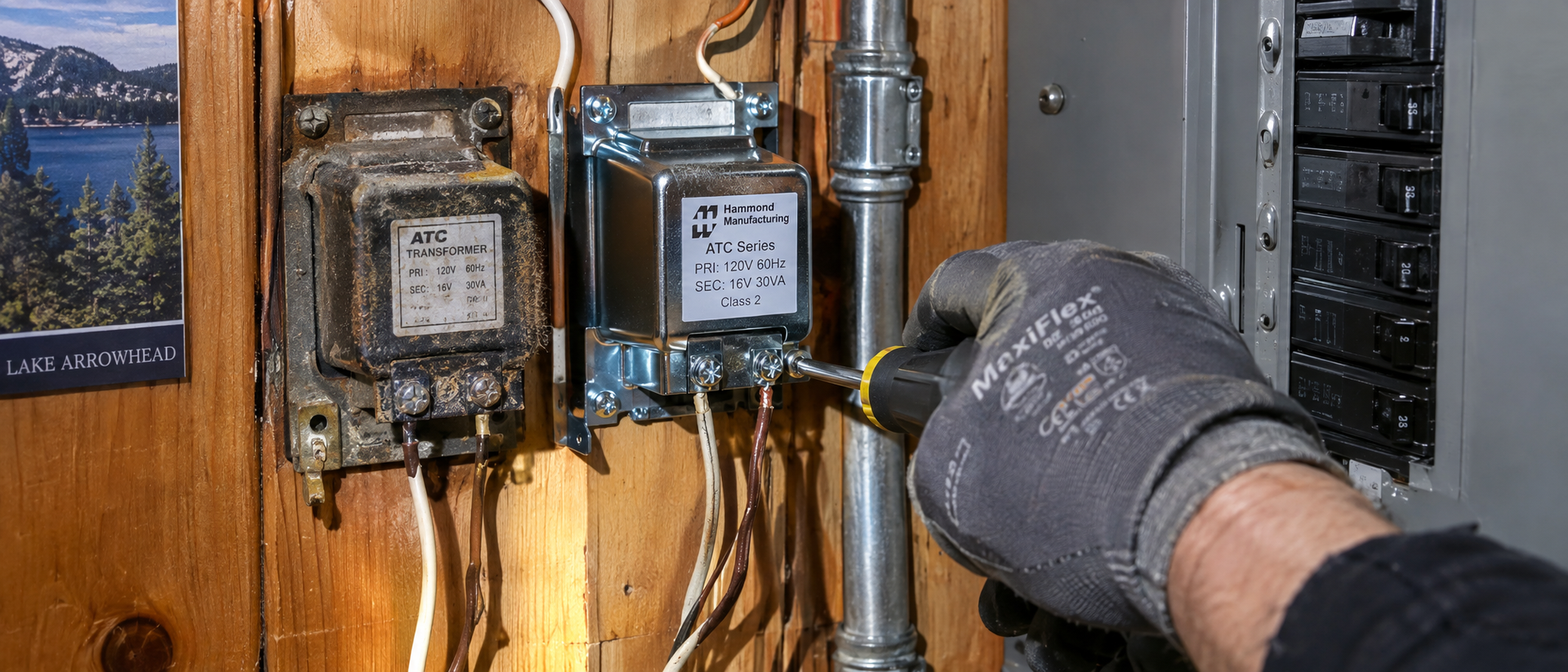
Old doorbell transformers built for simple chimes can't power a modern video doorbell. What voltage and VA rating actually work. (909) 403-4740.
SCE can now shut off power earlier on high-risk circuits this fire season. What that means for Lake Arrowhead, and what to check before the next PSPS.
Storm damage doesn't hit evenly on the mountain — some properties lose power first and get it back last. Here's why, and what to do about it.
Steep driveways, dense forest, and vacant rental periods make outdoor lighting a safety issue in Lake Arrowhead, not just decor. (909) 403-4740.
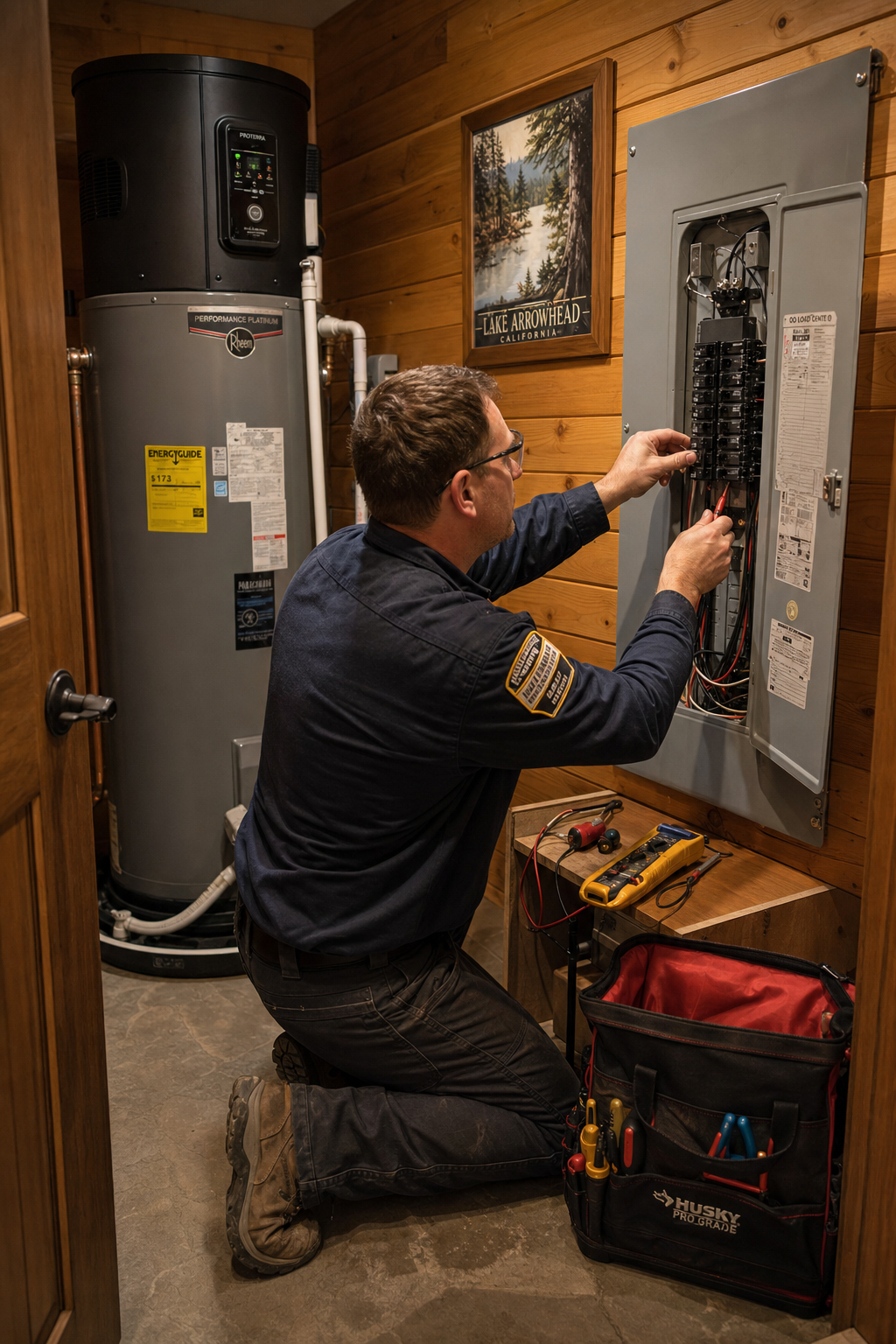
Heat pump water heaters need a dedicated 240V circuit (or a newer 120V plug-in model). What Lake Arrowhead homeowners should know before installing.
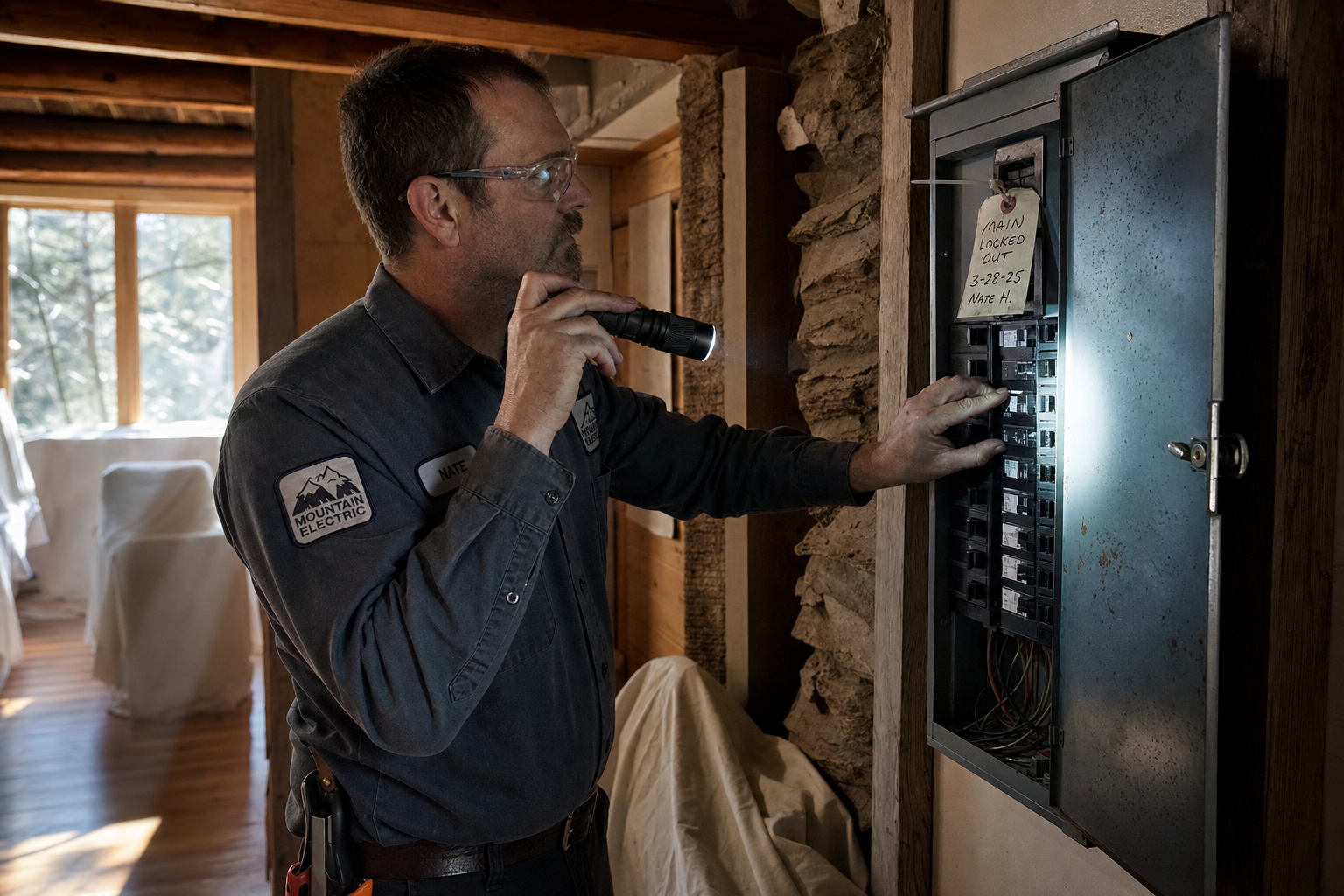
Flipping the main breaker blind in spring causes cabin fires. The proper shutdown and startup order for Lake Arrowhead cabin owners. (909) 403-4740.
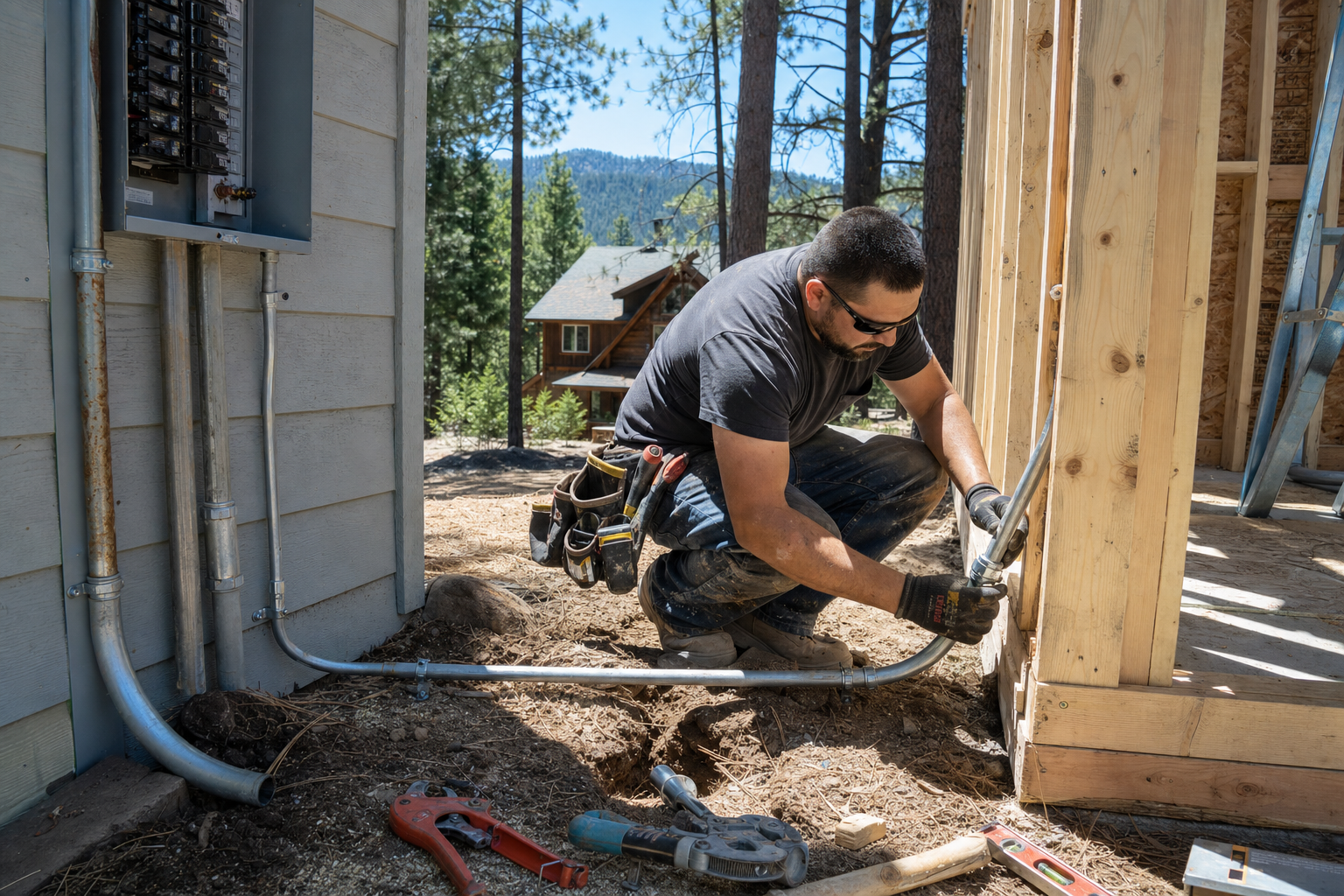
Building an ADU in Lake Arrowhead? What subpanel size, main panel capacity, and Title 24 EV-ready wiring you actually need. (909) 403-4740.
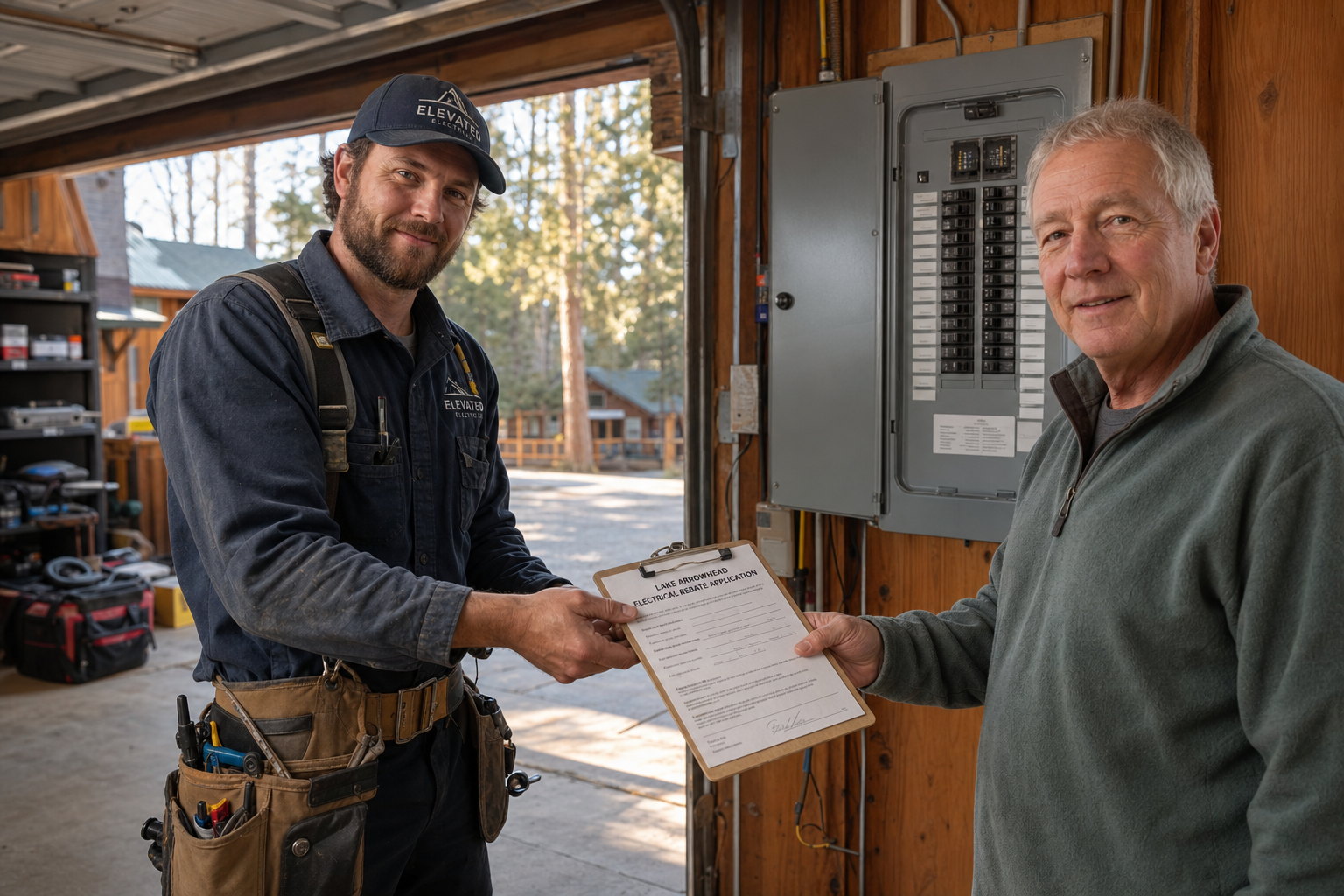
SCE's Charge Ready Home program covers up to $4,200 of your panel upgrade cost for EV charging in Lake Arrowhead. Eligibility & how to apply. (909) 403-4740.