How Much Does EV Charger Installation Cost in Lake Arrowhead? (2026 Pricing Guide)
May 16, 2026

How Much Does EV Charger Installation Cost in Lake Arrowhead? (2026 Pricing Guide)

Quick answer: Most Lake Arrowhead homeowners pay between $1,200 and $3,500 for a Level 2 EV charger installation. If your cabin needs a panel upgrade first — common in pre-1980s mountain homes in Cedar Glen, Twin Peaks, and Blue Jay — total project cost typically runs $4,000 to $7,500. Final pricing depends on panel capacity, distance from the panel to your parking area, garage construction, and whether a service entrance upgrade is needed.

If you've been pricing out an EV charger for your Lake Arrowhead, Crestline, Running Springs, or Blue Jay property and the quotes are coming back wildly different, you're not imagining it. Mountain installations swing harder than valley jobs because the variables — old panels, long conduit runs, propane backup systems, freeze-rated equipment — aren't standard everywhere.

This guide breaks down what actually drives your final number, what the SCE service area means for your install, and where Lake Arrowhead Village, Blue Jay, and the rim communities differ from a job down in San Bernardino or Highland.

For a deeper look at the technical side — Level 1 vs Level 2, cold-weather equipment, and whether you need a panel upgrade — see our EV charger installation guide for Lake Arrowhead homeowners. This post focuses on the money.

EV Charger Installation Cost Breakdown for Lake Arrowhead

Here's how a typical Level 2 install in the San Bernardino mountains breaks down. Pricing reflects the Lake Arrowhead Village, Blue Jay, Twin Peaks, Cedar Glen, Crestline, and Running Springs service area.

Cost ComponentTypical Range (Lake Arrowhead)Level 2 charger unit (Tesla Wall Connector, ChargePoint, Wallbox)$400 – $750Standard installation (existing 200-amp panel, short conduit run)$800 – $1,500Long conduit run (detached garage, outdoor mount, >30 ft from panel)+$400 – $1,200Sub-panel addition (if main panel is full but service is adequate)+$800 – $1,500Full panel upgrade (100-amp → 200-amp service)+$2,500 – $4,500Service entrance upgrade (SCE coordination, weather head, riser)+$1,500 – $3,000San Bernardino County electrical permit$150 – $350Cold-weather rated outdoor enclosure / NEMA 4X box+$200 – $400

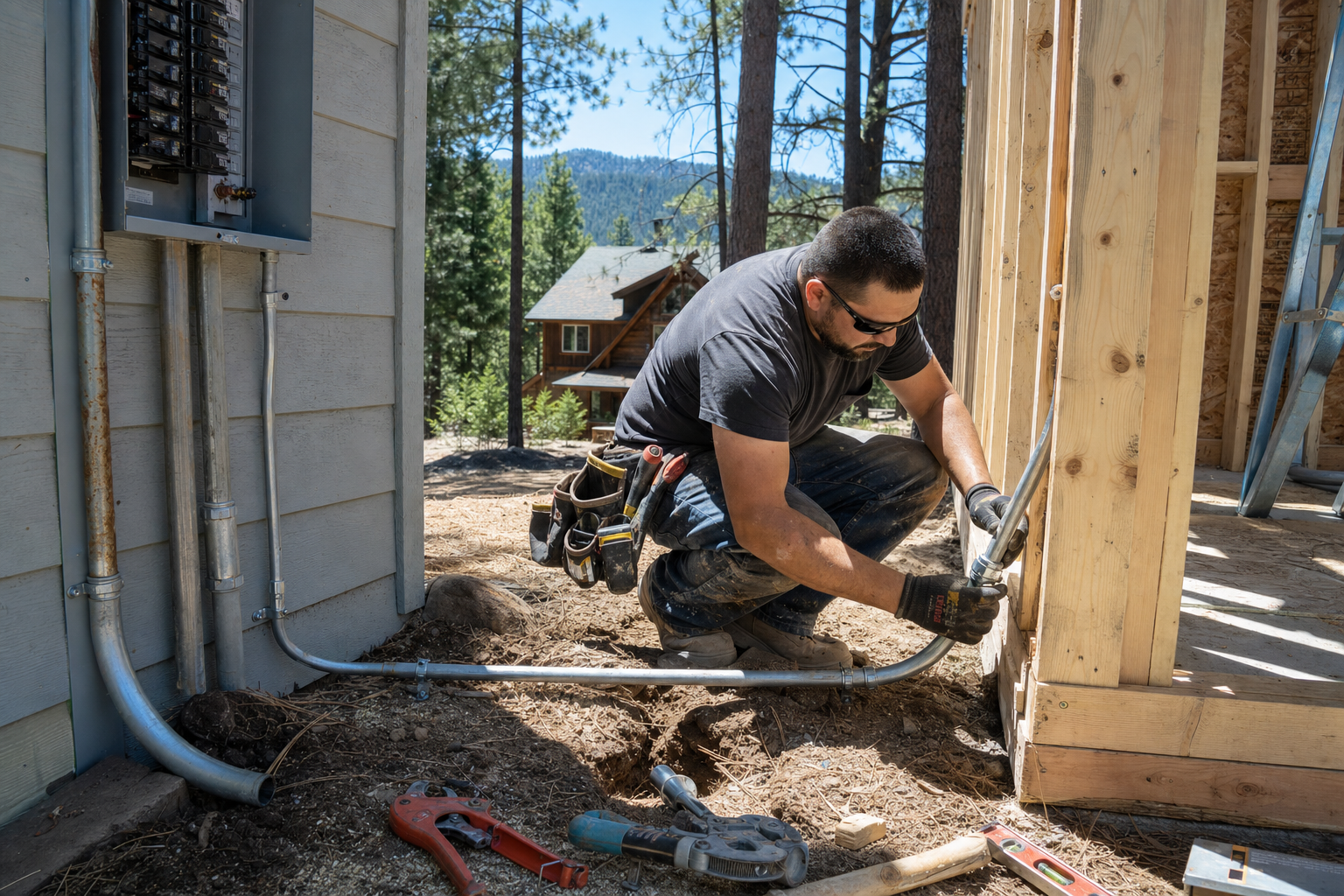
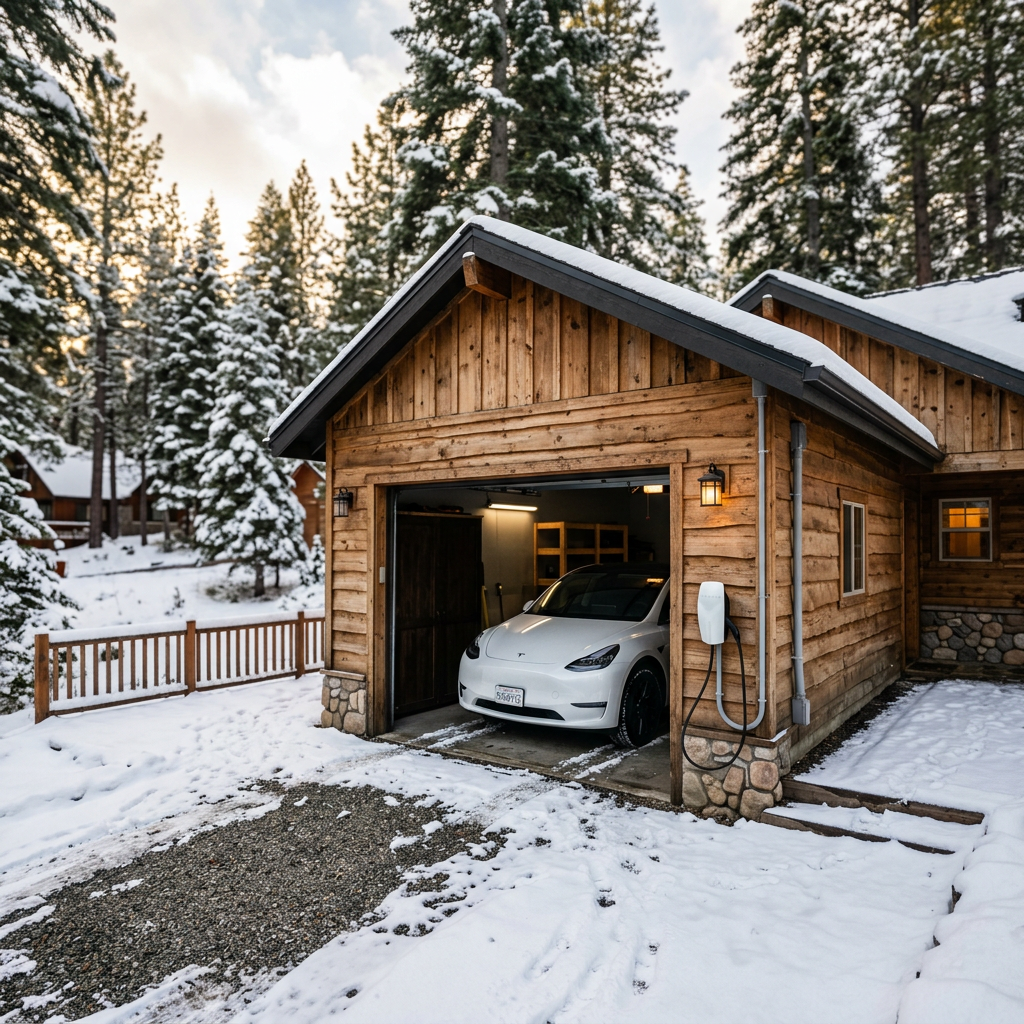
A homeowner in Lake Arrowhead Woods with a 2010-built home, 200-amp panel, and a garage-mounted Tesla Wall Connector parked 15 feet from the panel is usually closer to $1,400 all-in. A homeowner in a 1972 Cedar Glen cabin with a 100-amp panel, detached carport, and a 50-foot run is realistically in the $5,500–$7,000 range because the panel work has to happen first.

Why Lake Arrowhead EV Charger Installs Cost More Than Down the Hill

Quotes from contractors based in Redlands, Yucaipa, or Riverside often look cheaper on paper. They're also rarely accurate for mountain properties. Here's why the gap exists.

Older Electrical Service Across the Rim Communities

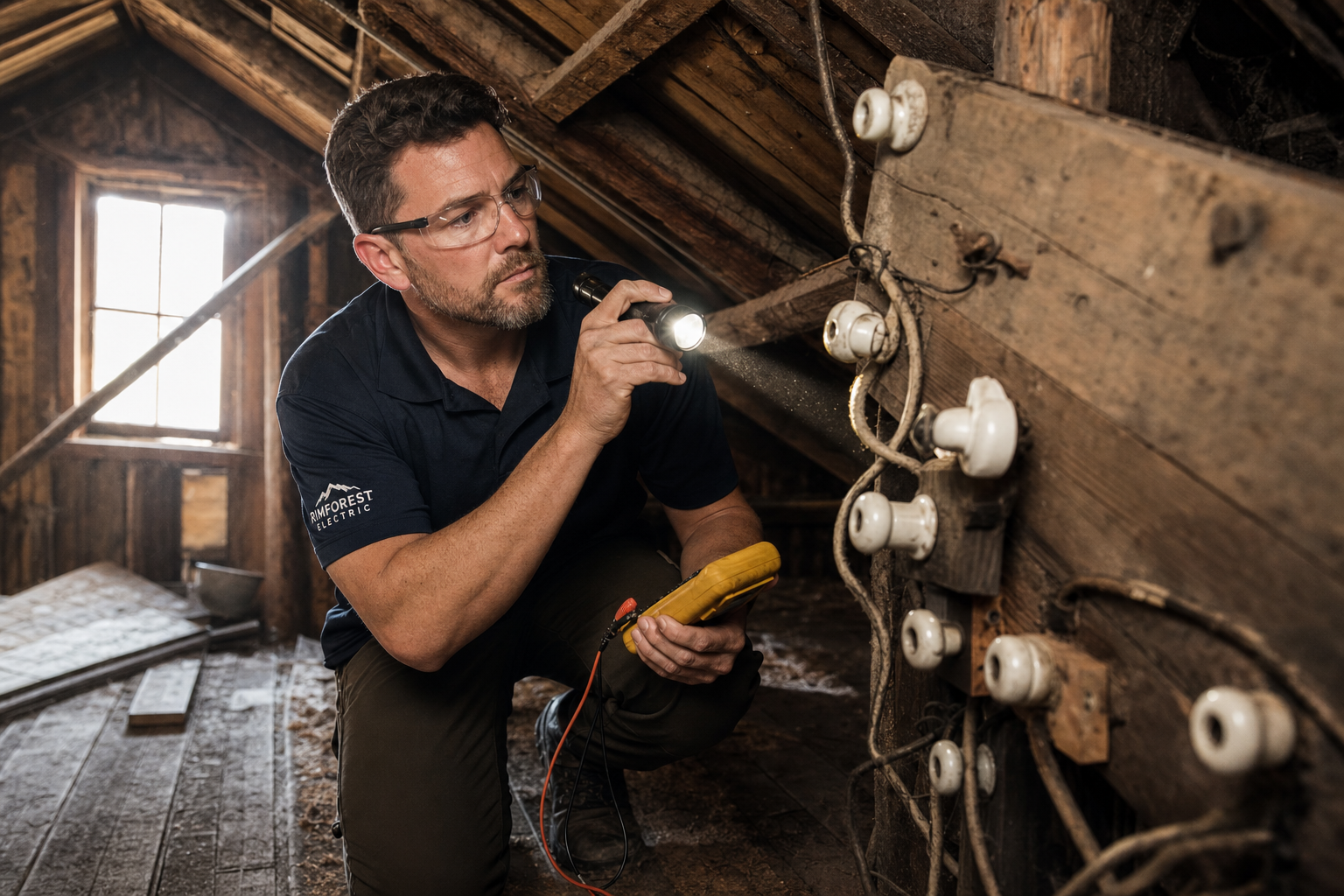
A significant portion of homes in Cedar Glen, Twin Peaks, Blue Jay, Skyforest, and the older Lake Arrowhead Woods neighborhoods were built between the 1950s and early 1980s. Many still run on 100-amp or 60-amp service. A Level 2 charger draws a dedicated 40–50 amp circuit, which means there's often not enough headroom on the existing panel — even before you account for electric heating, well pumps, hot tubs, or future kitchen remodels.

In Rancho Cucamonga or Fontana, an electrician shows up, drops in a 50-amp breaker, runs the wire, and leaves. In Lake Arrowhead, that same job often requires a panel upgrade first. The panel upgrade is the line item that turns a $1,500 quote into a $5,000 project.

SCE Service Coordination and Long Driveways

Lake Arrowhead Electrical works within the Southern California Edison (SCE) service territory. Many properties along North Bay Road, Hospital Road, and the deep-lot sections of Blue Jay have long service drops from the road to the meter — sometimes 100+ feet. If a panel upgrade also requires service entrance work, SCE has to coordinate the temporary disconnect, meter replacement, and reconnect. That's a separate appointment, a separate permit pathway through San Bernardino County, and adds time to the project.

Cold-Weather Equipment Requirements

At 5,100 feet of elevation, Lake Arrowhead averages 30+ freezing nights per winter, with regular snow loads across the rim from December through March. Outdoor-mounted EV chargers in this climate need cold-weather rated equipment — typically NEMA 4X enclosures and chargers spec'd to operate down to -22°F. Generic interior-rated equipment that works fine in Orange County will fail in a Blue Jay garage after the second hard freeze. Quality cold-rated equipment runs $100–$300 more than the budget tier.

Permit Pathway Through San Bernardino County

All electrical work in unincorporated mountain communities — which covers nearly everything from Crestline to Running Springs — pulls permits through San Bernardino County, not a city building department. Permits for EV chargers in the county typically run $150–$350 depending on scope, and a final inspection is required before SCE will energize a new service. Contractors unfamiliar with the county process sometimes underbid the permit line, which surfaces as a surprise charge later.

What's Driving the Total: A Realistic Project Walkthrough

Let's price out three actual scenarios that come through our service area each week.

Scenario 1: Newer Home, Easy Install (Lake Arrowhead Woods, 2008 build)

  • 200-amp panel with available breaker slots ✅
  • Tesla Model Y, charger mounted in attached garage ✅
  • 12-foot conduit run from panel to charger location ✅
  • Indoor mount, no cold-weather enclosure needed ✅

Estimated total: $1,400–$1,800 including permit, parts, labor, and final inspection.

Scenario 2: Older Cabin, Panel Has Room (Blue Jay, 1985 build)

  • 200-amp panel, two open slots ✅
  • Ford Mustang Mach-E, charger on side of attached garage ⚠️
  • 35-foot run from panel to mounting location ⚠️
  • Outdoor mount, NEMA 4X enclosure required ⚠️

Estimated total: $2,400–$3,200 with cold-weather equipment and the longer conduit run.

Scenario 3: 1970s Cabin, Panel Upgrade Needed (Cedar Glen, 1974 build)

  • 100-amp panel, all slots full ❌
  • Rivian R1T, detached carport 50 feet from main panel ❌
  • Service entrance also undersized — SCE coordination required ❌
  • Cold-weather equipment + outdoor mount ❌

Estimated total: $6,200–$7,800 for the panel upgrade, service work, and charger install combined.

The third scenario is the one most "down the hill" contractors underestimate. They bid the charger install at $1,500, then revise upward by $4,000 once they see the panel. Working with a local Lake Arrowhead electrician avoids that surprise because the panel question gets asked on the first site visit.

Federal and California EV Charger Rebates Available in Lake Arrowhead

Out-of-pocket cost isn't the same as final cost. Several programs offset the install for Lake Arrowhead, Blue Jay, and rim community homeowners.

  • Federal 30C Tax Credit — Up to 30% of installation cost, capped at $1,000 for residential installs. Available through 2032. Applies to chargers installed at primary residences in eligible census tracts; much of the San Bernardino mountain region qualifies.
  • California Clean Fuel Reward — A point-of-sale rebate applied at EV purchase, not at charger install, but reduces the overall cost of going electric.
  • SCE Charge Ready Home Installation Rebate — Southern California Edison periodically offers rebates of $250–$1,500 for residential Level 2 installs within their service area. Check current availability before scheduling install, since program funding cycles.
  • San Bernardino County Permit Fee Waivers — Occasionally available for qualifying residential EV infrastructure; ask the permit office at the time of application.

Stacking the federal credit with an SCE rebate can knock $1,500–$2,500 off a typical install. A good local electrician helps you sequence the paperwork — the rebate usually requires the permit number and final inspection sign-off, which means timing matters.

How to Get an Accurate EV Charger Installation Quote in Lake Arrowhead

Three things determine whether the quote you receive is going to hold up:

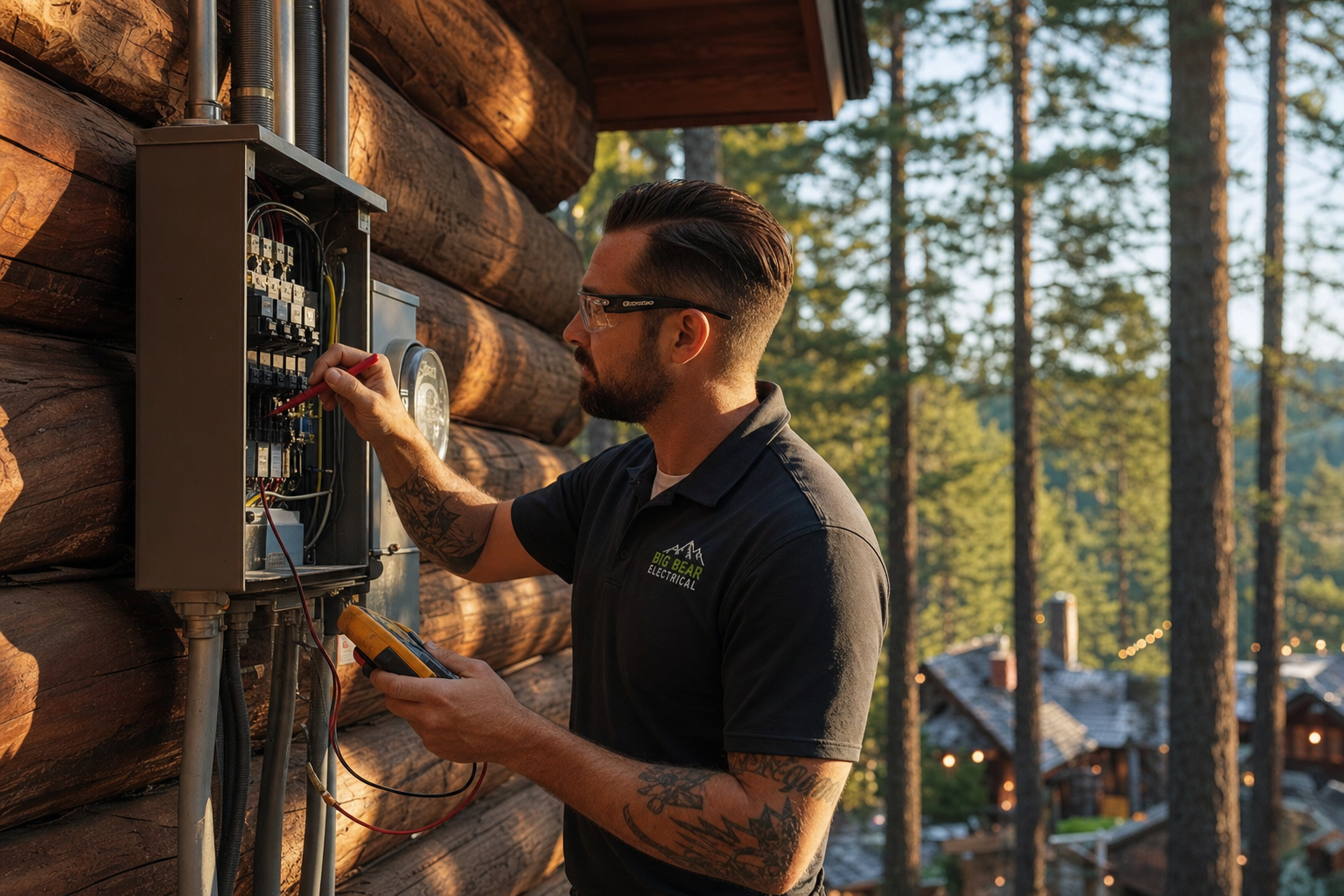
  1. In-person panel inspection. Phone quotes for Lake Arrowhead EV charger installs are unreliable. The electrician needs to look at the panel, see the available capacity, and measure the distance to your parking location. A quote written from a phone call almost always changes once the panel is opened.
  2. Permit costs included in the line items. If the quote doesn't break out the San Bernardino County permit fee separately, ask. Cheap quotes that don't mention permits are often pricing the labor without the inspection sign-off — which means the install won't pass and SCE won't energize.
  3. Cold-weather equipment specified by part number. "We'll use a NEMA 4 enclosure" is not the same as a quote that lists the specific charger model and outdoor box. Lake Arrowhead winters expose the difference.

A complete EV charger installation quote for a mountain property should run 1–2 pages, list parts by manufacturer and model, include the permit line, and specify whether a panel upgrade was evaluated. Anything less leaves room for change orders.

Frequently Asked Questions

How much does a Level 2 EV charger installation cost in Lake Arrowhead?

Most Lake Arrowhead installations run $1,200–$3,500 with an adequate existing panel. If a panel upgrade is required — common in pre-1980s cabins in Cedar Glen, Twin Peaks, and Blue Jay — total cost runs $4,000–$7,500. The variation depends on conduit length, outdoor vs indoor mount, and whether SCE service entrance work is needed.

Do I need a permit to install an EV charger in Lake Arrowhead?

Yes. All EV charger installs in the unincorporated San Bernardino mountain communities — including Lake Arrowhead, Blue Jay, Crestline, Running Springs, and Cedar Glen — require an electrical permit through San Bernardino County. Permit fees typically run $150–$350, and a final inspection is required before Southern California Edison will energize the circuit.

Will my old mountain cabin need a panel upgrade for a Level 2 charger?

Likely yes if your home was built before 1985 and still runs 100-amp service. A Level 2 charger draws a dedicated 40–50 amp circuit, and most older Lake Arrowhead cabins don't have the headroom on their existing panels. A licensed electrician can assess your panel during a site visit. Panel upgrades in the Lake Arrowhead area typically cost $2,500–$4,500.

Can I claim the federal tax credit for an EV charger installed in Lake Arrowhead?

Most Lake Arrowhead, Blue Jay, and rim community homeowners qualify for the federal 30C tax credit — 30% of installation cost up to $1,000 — because the area falls within eligible census tracts. Confirm your specific address with a tax professional, save all receipts including the permit, and file IRS Form 8911 with your return.

How long does an EV charger installation take in Lake Arrowhead?

A straightforward install with an existing 200-amp panel typically takes 4–6 hours of on-site work, plus 1–2 days for permit pickup and final inspection. Installs that require a panel upgrade or SCE service coordination usually run 2–5 days from start to energized, depending on inspector availability and SCE scheduling.

Which EV chargers work best in Lake Arrowhead's climate?

Cold-weather rated chargers operating to at least -22°F are essential for Lake Arrowhead, Blue Jay, and the higher-elevation rim communities. Tesla Wall Connector (Gen 3), ChargePoint Home Flex, and Wallbox Pulsar Plus all have models rated for mountain winter conditions. Pair with a NEMA 4X enclosure for outdoor installs.

Do you service properties in Crestline, Running Springs, and Blue Jay?

Yes. Lake Arrowhead Electrical serves Lake Arrowhead, Blue Jay, Twin Peaks, Cedar Glen, Skyforest, Rimforest, Crestline, Running Springs, and surrounding San Bernardino mountain communities. Call (909) 403-4740 to confirm service to your specific address.

Ready to Get a Real Number for Your Lake Arrowhead EV Charger Install?

Pricing an EV charger installation accurately requires a look at your panel — not a guess from a phone call. Lake Arrowhead Electrical provides free, in-person estimates across Lake Arrowhead, Blue Jay, Cedar Glen, Twin Peaks, Crestline, and Running Springs. We'll inspect your panel, measure the conduit run, evaluate whether a service upgrade is needed, and give you a written quote with parts, labor, permit, and timeline broken out line by line.

📞 Call (909) 403-4740 to schedule your free estimate, or request a quote online. Most appointments scheduled within 24–48 hours.
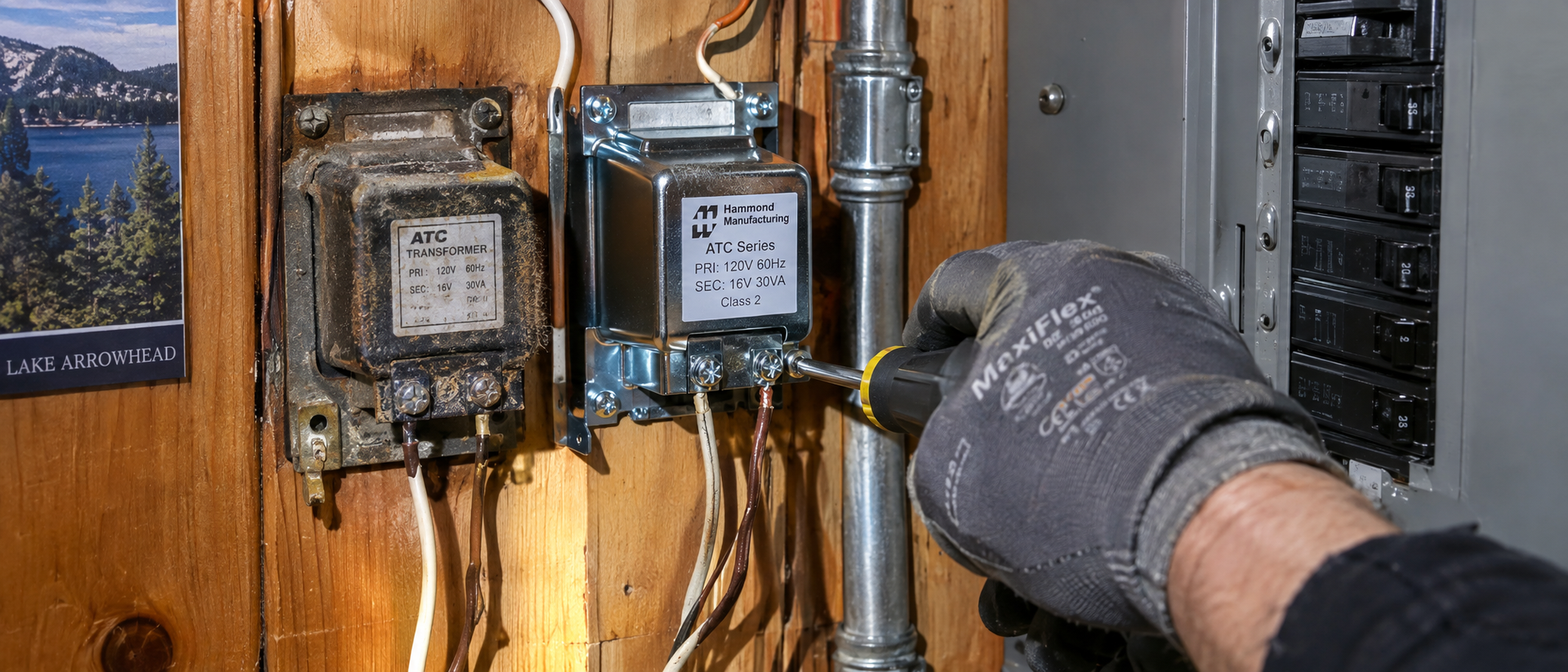
Licensed electrician inspecting an electrical panel inside a Lake Arrowhead mountain cabin
May 9, 2026
Selling or buying in Lake Arrowhead? A licensed electrical inspection finds the issues general inspectors miss & protects your closing. (909) 403-4740.
Licensed electrician upgrading an electrical panel inside a Lake Arrowhead mountain cabin
May 7, 2026
Is your Lake Arrowhead home's electrical panel keeping up? Learn the signs you need an upgrade and why mountain homes need a specialist. Call (909) 403-4740.
 Licensed electrician inspecting an outdated electrical panel inside a Lake Arrowhead mountain cabin
April 16, 2026
Outdated panel in your Lake Arrowhead cabin? We handle full panel upgrades — permits, inspection, done right. Free estimates: (909) 403-4740.
Licensed electrician inspecting outdated wiring inside an older Lake Arrowhead mountain cabin
April 9, 2026
Wondering what rewiring costs at a mountain cabin? Lake Arrowhead Electrical breaks down pricing, what drives it up, and when it's time to call. (909) 403-4740.
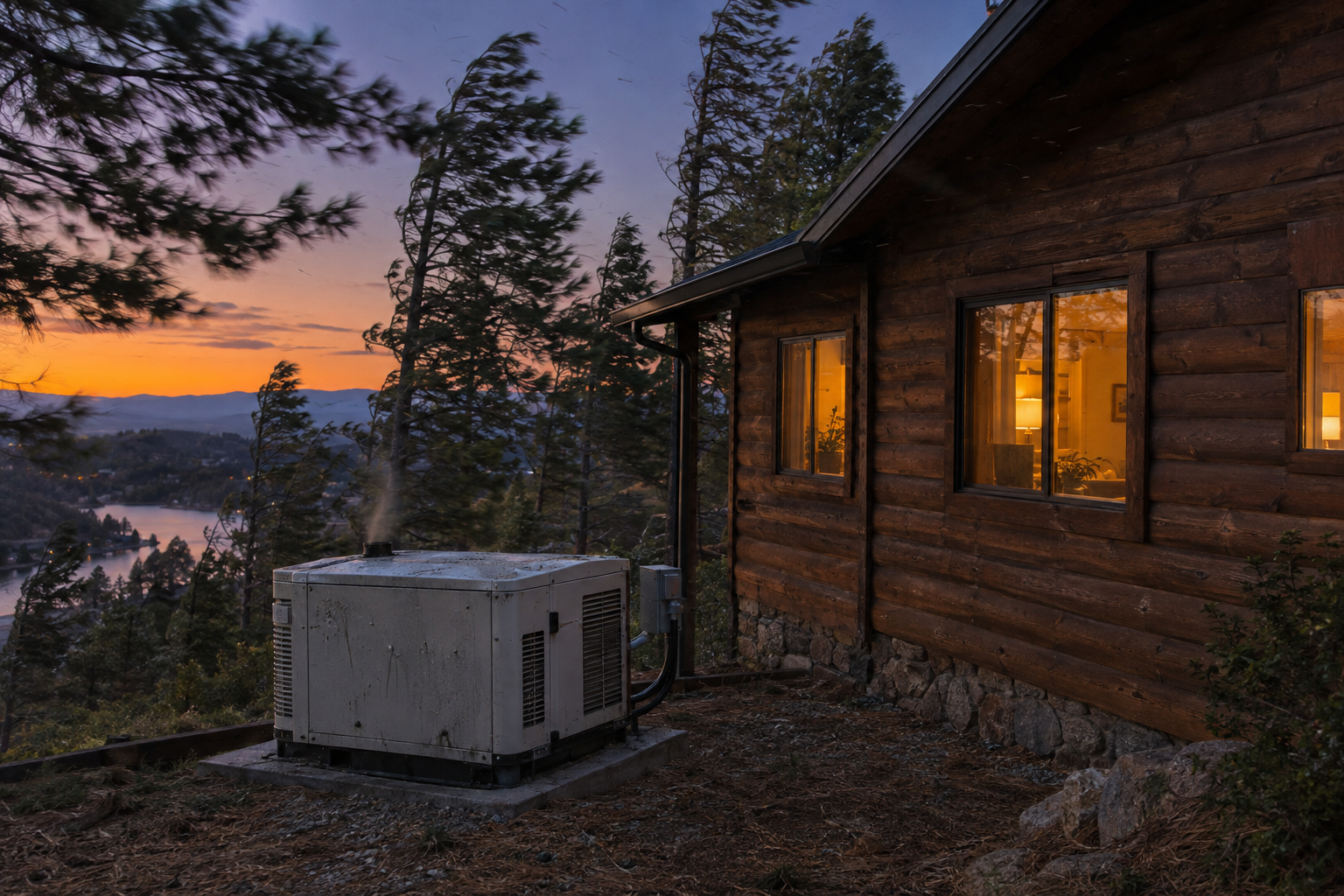
Standby generator installed beside a Lake Arrowhead mountain cabin with pine trees and snow
April 1, 2026
Mountain power outages are inevitable. Backup generator installation for Lake Arrowhead cabins and homes — propane, permits included. Free estimates: (909) 403-4740.
Licensed electrician inspecting outdoor electrical panel at Lake Arrowhead mountain cabin in spring
March 17, 2026
Don't leave your home's electrical safety to luck — Lake Arrowhead homeowners should check these things before summer arrives.
March 4, 2026
Electric vehicles are showing up in Lake Arrowhead driveways more often — and for good reason. But installing an EV charger at a mountain cabin involves challenges that don't come up at a valley home. Older electrical panels, propane-heavy systems, limited permit familiarity, and extreme weather create a completely different installation environment than what most EV charger guides assume. If you're planning an EV charger installation at your Lake Arrowhead, Blue Jay, Crestline, or Running Springs property, here's what you need to know before you call anyone. Why EV Charger Installation Is Different in the San Bernardino Mountains Most EV owners in Rancho Cucamonga or Riverside handle Level 2 charger installation without much drama. Their homes are newer, panels are 200-amp, and the electrician knows the city permit process cold. Mountain properties don't work that way. Three factors make Lake Arrowhead EV charger installation more complex: Older electrical panels. A significant percentage of cabins in Cedar Glen, Twin Peaks, and the surrounding communities were built in the 1960s–1980s with 100-amp or even 60-amp service panels. A Level 2 EV charger requires a dedicated 240-volt, 50-amp circuit. On an undersized panel, that's not available without a panel upgrade first. Long runs from panel to garage. Mountain cabins often have detached garages, steep lots, and unusual layouts where the path from your electrical panel to your parking spot requires 50–100+ feet of conduit — sometimes through finished walls or under decks with limited access. San Bernardino County permitting. EV charger installations in Lake Arrowhead fall under San Bernardino County jurisdiction. Pulling an electrical permit for mountain properties has its own requirements and timelines. Any electrician you hire should be familiar with this process and handle it for you — not leave you to figure it out alone. Level 1 vs. Level 2 vs. DC Fast Charging: What Works for a Mountain Home Level 1 (standard 120V outlet): This charges your EV at roughly 3–5 miles of range per hour. For a weekend cabin where you arrive with a mostly-charged battery, this can work in a pinch. The downside: if you arrive with 40 miles of range left and need to leave Monday with a full charge, overnight Level 1 won't get you there. Level 2 (240V dedicated circuit): This is the practical standard for home charging. A Level 2 charger delivers 20–30 miles of range per hour, meaning most EVs charge fully overnight. This requires a dedicated 240V, 40–50 amp circuit and a licensed electrician for installation. For most Lake Arrowhead homeowners — whether full-time or weekends only — Level 2 is the right answer. DC Fast Charging: Commercial fast chargers aren't viable for residential installation due to the electrical service requirements involved. Not a realistic option for a mountain home. The practical answer for mountain properties: Level 2, installed with a weatherproof outlet or hardwired EVSE (Electric Vehicle Supply Equipment) rated for outdoor use. In Lake Arrowhead's freeze-thaw climate, cold-weather rated equipment isn't optional — it's a requirement. Does Your Lake Arrowhead Cabin Need a Panel Upgrade First? This is the question that determines whether your EV charger installation is a one-step or two-step project. You likely need a panel upgrade if: Your home has 100-amp or less service (very common in pre-1980s mountain cabins) Your panel already has limited space for new breakers You're running electric heating, a hot tub, or other high-draw appliances A licensed electrician evaluates your panel and determines it can't safely accommodate a new 50-amp circuit You may be fine without an upgrade if: Your home already has 200-amp service You have available breaker slots Your overall electrical load has room for a 50-amp addition Panel upgrades at mountain properties typically cost $2,500–$4,500 in the Lake Arrowhead area, depending on scope and whether service entrance upgrades are required. If you're already upgrading the panel, adding an EV charger circuit at the same time is the most cost-efficient path — one permit, one crew visit, lower combined labor cost. According to the U.S. Department of Energy, approximately 80% of EV charging happens at home. Getting the infrastructure right at your mountain property means you arrive to a full charge every time — no more hunting for public stations in Big Bear or running low before you reach the valley. What Does EV Charger Installation Cost in Lake Arrowhead? Costs vary based on your home's existing electrical setup, the distance from panel to charger, and whether any additional work is required. Here are realistic ranges for the San Bernardino Mountain area: Straightforward Level 2 charger on existing 200-amp panel, short run: $600–$1,200 Level 2 charger with long conduit run (50+ ft): $1,000–$1,800 Level 2 charger plus panel upgrade (100A to 200A): $3,500–$5,500 Outdoor-rated EVSE with weatherproof installation: add $150–$300 San Bernardino County permit and inspection: $75–$150 These are installed costs including equipment, labor, conduit, and permit. Equipment-only costs for a quality Level 2 charger (ChargePoint, Wallbox, or JuiceBox) run $400–$800. Don't let a contractor skip the permit — unpermitted electrical work creates liability during home sales and can void your homeowner's insurance. Outdoor Installation Requirements for Mountain Weather Lake Arrowhead isn't Irvine. Your EV charger installation needs to account for: Cold-weather operation. Most quality Level 2 chargers are rated to operate in temperatures as low as -22°F to -40°F. Verify this spec before purchasing — budget units sometimes have limited cold-weather ratings. Weatherproof enclosure. The outlet or EVSE unit must be mounted in a weatherproof location or enclosed housing. NEMA 4 or NEMA 3R rated enclosures protect against rain, snow, and ice. GFCI protection. California code requires GFCI protection on 240V outlets for EV charging in most installation scenarios. This is a safety requirement, not optional. Conduit choice. PVC conduit can become brittle in extreme cold. Rigid metal conduit or schedule 80 PVC handles mountain temperature extremes better and provides more physical protection against snow equipment and wildlife. Mounting location. In areas with significant snow accumulation, mounting the charger higher on the wall prevents snow buildup from blocking or damaging the connection point. EV Charger Installation for Vacation Homes and Part-Time Residences If your Lake Arrowhead property is a vacation cabin rather than your primary residence, a few additional considerations apply: Smart charger features matter more. A charger with Wi-Fi connectivity and an app lets you monitor charging status, schedule charging during off-peak hours, and confirm your vehicle is charging correctly — all from your primary residence in Orange County or the Inland Empire. Brands like ChargePoint, Wallbox, and Emporia include these features. Power management if you have a generator. If you're planning to charge your EV during a grid outage using your generator, the generator must be properly sized (most Level 2 chargers draw 7.2–11.5 kW) and the transfer switch configured to include the EV charger circuit. This requires planning at installation — not an afterthought. Property value impact. EV charger infrastructure is increasingly on buyer checklists. In the Lake Arrowhead real estate market, a properly installed Level 2 charger is a genuine selling feature — especially as EV adoption continues growing across Southern California. How to Choose the Right Electrician for EV Charger Installation in Lake Arrowhead Not every valley electrician should be doing EV charger installations at mountain properties. When evaluating contractors, confirm: C-10 license from the California Contractors State License Board (verify at cslb.ca.gov) Experience with San Bernardino County permits for mountain community properties Familiarity with panel assessment — they should evaluate your current panel capacity before quoting, not assume it's adequate Weatherproof installation experience — they should specify appropriate conduit, EVSE ratings, and mounting location for mountain conditions without prompting Permit handling — they pull and close the permit, including final inspection Ask specifically: "Have you installed EV chargers at Lake Arrowhead or mountain properties before?" A contractor who primarily works on new construction in the valley may not have encountered the panel limitations and unusual layouts common in mountain cabins. Frequently Asked Questions Can I install an EV charger myself at my Lake Arrowhead cabin? No. California law requires a licensed C-10 electrical contractor to install 240V circuits, pull permits, and pass inspection. DIY EV charger wiring also voids most charger warranties and can invalidate your homeowner's insurance coverage. How long does installation typically take? For a straightforward installation on an adequate panel, most jobs complete in 3–6 hours. If a panel upgrade is required, budget 1–2 days. Permitting adds lead time — plan 2–4 weeks for permit approval in San Bernardino County. Will my HOA or the county restrict where I can install the charger? San Bernardino County has no blanket restriction on EV charger installations. Some Lake Arrowhead HOAs have aesthetic guidelines about visible electrical equipment — check your CC&Rs before finalizing the installation location. Does my homeowner's insurance cover EV charger installation? The charger unit itself can typically be added to a homeowner's policy as attached equipment. Notify your insurer after installation. Properly permitted and inspected installations make claims straightforward; unpermitted work can create coverage issues. What happens to my EV charger during a power outage? Level 2 chargers require grid power and don't function during outages unless connected to a generator with adequate capacity. If power reliability is a concern — and it is for most Lake Arrowhead homeowners — discuss generator sizing and transfer switch configuration with your electrician at the time of EV charger installation. Ready to Install an EV Charger at Your Lake Arrowhead Property? Lake Arrowhead Electrical installs Level 2 EV chargers throughout the San Bernardino Mountains — including Lake Arrowhead, Blue Jay, Crestline, Running Springs, Cedar Glen, and Twin Peaks. We assess your panel before quoting, handle all San Bernardino County permits, and install with mountain weather in mind. Call (909) 403-4740 for a free EV charger installation assessment. We'll evaluate your panel capacity, walk you through equipment options, and give you a clear quote with no surprises. Licensed C-10 electrical contractor. Fully insured. Local to the mountain communities we serve.
February 17, 2026
Not every electrician who works in the San Bernardino Valley belongs on your Lake Arrowhead property. This isn't snobbery — it's a practical reality of mountain electrical work. A licensed electrician from Redlands or San Bernardino who does excellent work on tract homes at 1,200 feet of elevation is working in a fundamentally different environment than a cabin at 5,200 feet that was built in 1974, sits in a forest, gets 10 feet of snow per year, has been through three DIY renovations by previous owners, and runs off a 100-amp panel that was undersized when it was installed. The qualifications that matter for mountain electrical work go beyond license number and hourly rate. Here's how to evaluate electricians specifically for Lake Arrowhead, Blue Jay, Crestline, Running Springs, Twin Peaks, and the surrounding San Bernardino Mountain communities. 1. Verify the C-10 License — Then Ask About Mountain Experience Separately California requires all electrical contractors to hold a C-10 Electrical Contractor license from the California Contractors State License Board. This is non-negotiable and easy to verify: search the contractor's name or license number at cslb.ca.gov before hiring anyone. Verifying the license takes 60 seconds and confirms: The license is current and in good standing The contractor hasn't had disciplinary actions or bond violations They're carrying workers' compensation insurance (required for any company with employees) However — and this matters in mountain communities specifically — a valid C-10 license tells you the electrician is qualified to do electrical work. It doesn't tell you they understand the unique challenges of San Bernardino Mountain properties. Once you've confirmed the license, ask directly: "How much of your work is in Lake Arrowhead and the surrounding mountain communities specifically?" and "Are you familiar with the permitting process through San Bernardino County for mountain properties?" An electrician who primarily works in valley communities will still be licensed. But they may not have encountered Federal Pacific panels in aging mountain cabins, may not know how snow loads affect outdoor electrical components, and may not have a working relationship with the county building department for mountain permits. These aren't minor gaps when you're dealing with a 1960s cabin at elevation. 2. Understand What Makes Mountain Electrical Work Different Lake Arrowhead properties present specific electrical challenges that don't exist in most California homes. Before hiring anyone, understand what you're asking them to handle: Older housing stock with accumulated modifications. Many cabins in Lake Arrowhead, Cedar Glen, and Twin Peaks were built between the 1950s and 1980s as weekend retreats — not full-time residences. Over decades, previous owners added circuits, modified wiring, and made improvements of varying quality, often without permits. The result is frequently a layered electrical system with no single person who understands it completely. An experienced mountain electrician knows how to trace these systems, identify unpermitted work, and bring things up to code efficiently. An electrician unfamiliar with this type of property will take far longer and may miss issues hiding behind decades of modifications. Extreme thermal cycling. Lake Arrowhead regularly experiences temperature swings of 40°F or more between day and night, and seasonal swings between below-freezing winters and warm summers. These cycles cause expansion and contraction in electrical connections, gradually loosening wire terminations at outlets, panels, and junction boxes. Loose connections are one of the primary causes of electrical fires in mountain homes — and an electrician who doesn't account for this environment when making connections is setting you up for problems down the road. High snow and moisture exposure. Exterior electrical components — service entrances, outdoor outlets, conduit, meter bases — face ice accumulation, freeze-thaw cycles, and moisture infiltration that doesn't occur at lower elevations. Proper weatherproofing and component selection for mountain conditions isn't optional; it's the difference between a connection that lasts and one that fails after two winters. Propane-heavy systems. Most mountain homes in Lake Arrowhead use propane rather than natural gas, and many have well pump systems. Both have specific electrical requirements — especially generator integration and transfer switch sizing — that an electrician primarily working in utility-served valley neighborhoods may handle less often. Wildfire risk and code implications. San Bernardino National Forest communities have specific code requirements related to fire risk that affect outdoor electrical work, subpanel placement, and certain wiring methods. A locally experienced electrician knows these requirements without needing to research them. 3. Ask About Permit Handling for San Bernardino County Mountain Communities Electrical work requiring permits in Lake Arrowhead falls under San Bernardino County jurisdiction, and the permitting process for mountain communities has its own rhythm and requirements. Unpermitted electrical work is one of the most common — and most costly — issues discovered during Lake Arrowhead real estate transactions. Buyers who inherit unpermitted work can face demands to bring everything up to current code, which on a 1970s cabin can be a substantial project. Sellers who discover unpermitted work late in escrow face pressure to complete remediation on an accelerated timeline, often at premium rates. When getting quotes, ask specifically: "Will you handle the permit application for this project?" "Do you have experience with San Bernardino County permitting for mountain communities?" "What happens if the inspector identifies issues that weren't in the original scope?" A legitimate, professional electrician will pull permits for any work that legally requires them. An electrician who suggests skipping the permit to "save time and money" is offering you short-term convenience in exchange for long-term liability — both in resale value and in safety. 4. Insurance Is Table Stakes — Verify It Specifically Two types of insurance matter when hiring a mountain electrician: General liability insurance covers property damage that might occur during the work. At minimum, look for $1 million per occurrence coverage. Ask for the certificate directly — don't just take verbal confirmation. Workers' compensation insurance covers the electrician's employees if they're injured on your property. In California, any contractor with employees is legally required to carry workers' comp. If they don't, and a worker is injured at your home, you can be held financially liable. The CSLB license verification mentioned above will show whether active workers' comp coverage is on file. For mountain properties specifically, consider this: electrical work on a Lake Arrowhead home often involves working in conditions that aren't present in valley jobs — steep roofs, icy conditions, confined crawl spaces under older cabins, and remote locations far from immediate medical response. Adequate insurance coverage isn't a bureaucratic formality here; it's genuinely relevant to the risk profile of the work. 5. Evaluate Their Familiarity With Vacation Home and Part-Time Resident Scenarios A large percentage of Lake Arrowhead properties are vacation homes, part-time residences, or short-term rentals. This creates electrical scenarios that a primarily residential valley electrician rarely encounters. Seasonal startup and shutdown. Cabins that sit empty for months need electrical systems that remain stable through the winter without damage from freezing, rodent activity, or moisture infiltration. An electrician experienced with vacation properties can advise on how to properly winterize electrical systems and what to inspect at seasonal startup. Remote monitoring and smart home integration. Part-time residents increasingly want remote visibility into their property's electrical and environmental status — especially after hearing about neighbors' pipes freezing during undetected power outages. An electrician familiar with smart panels, remote monitoring devices, and home automation can integrate these systems properly rather than leaving them as add-ons bolted to an unchanged older system. Short-term rental compliance. San Bernardino County has specific inspection requirements for short-term rental permits, including electrical safety standards. If you're renting your Lake Arrowhead property on Airbnb, VRBO, or similar platforms, your electrical system needs to meet these standards. An electrician who works regularly in the mountain rental market will know these requirements; one who doesn't may miss compliance issues that create liability down the road. Generator integration for unoccupied properties. A whole-home backup generator is particularly valuable for a vacation cabin because it operates automatically when you're not there — keeping the heat on, preventing pipe freezes, and maintaining security systems during outages. Proper sizing and transfer switch installation for a vacation home has different considerations than a primary residence. Ask whether the electrician has installed generators specifically for part-time occupied mountain properties. 6. Get Multiple Quotes — And Understand Why They Vary For any significant electrical project in Lake Arrowhead, get at least three quotes. Prices in the mountain market vary for legitimate reasons: Crew location. An electrician based in Lake Arrowhead or Blue Jay has no drive time to your property. An electrician coming from the Inland Valley may charge a travel surcharge or simply quote higher to cover their time. This isn't unreasonable — but it means a significantly lower quote from a valley-based contractor may not actually save you money once travel is factored in, and it means longer waits for return visits and emergency service. Permit inclusion. Some quotes include permit fees; others don't. Confirm explicitly what the quote covers. A quote that omits permits will be lower upfront but higher once permits are added — and if you ask an electrician to skip permits to reduce cost, you're taking on long-term liability. Material quality. Panel brands, breaker quality, wire gauge, and weatherproofing components differ in cost. An experienced mountain electrician may specify higher-quality materials that cost more upfront but last significantly longer in harsh conditions. Ask what specific materials are included in the quote. Scope assumptions. Two electricians quoting a "panel upgrade" may be quoting different scopes — one assuming a straightforward swap, another accounting for the likelihood of finding code violations in an older cabin that will need to be corrected during the work. The lower quote isn't always the more accurate one. When you receive quotes, ask each electrician to explain what's included, what's excluded, and what conditions might change the final price. A contractor who gives you a clear, itemized answer and explains their assumptions is a more reliable partner than one who gives you a number and moves on. 7. Emergency Availability Matters More at Elevation An electrical emergency in Lake Arrowhead in January is not the same as an electrical emergency in Rancho Cucamonga. Response time matters more, conditions are harder, and the consequences of waiting — frozen pipes from lost heat, no water from a dead well pump — compound quickly. Ask any electrician you're considering: "Do you offer emergency service after hours and on weekends? What's your typical response time to Lake Arrowhead during a winter storm?" An electrician who has to drive up from the valley during a snow event may not make it for hours — or at all if chains are required and conditions are deteriorating. A locally based electrician is already at elevation, already has a truck prepared for mountain conditions, and can respond on the timeline that mountain emergencies actually require. The Standard to Hold Any Mountain Electrician To A qualified electrician for Lake Arrowhead properties should be able to: Produce a current C-10 license number you can verify at cslb.ca.gov Provide certificates of general liability and workers' compensation insurance immediately Explain their specific experience with San Bernardino Mountain properties Handle permit applications through San Bernardino County without coaching Give you a detailed, itemized quote with clear scope assumptions Explain their emergency service availability and realistic response times for mountain conditions Demonstrate familiarity with the specific challenges common in older Lake Arrowhead cabins If an electrician hedges on any of these points, keep looking. The right contractor will answer all of them without hesitation — because they work in this environment every day. Lake Arrowhead Electrical is based in Blue Jay, at the heart of the mountain communities we serve. We work exclusively in Lake Arrowhead, Blue Jay, Crestline, Running Springs, Cedar Glen, Twin Peaks, Rim Forest, and the surrounding San Bernardino Mountain communities — which means we know the housing stock, the county permitting process, the weather conditions, and the specific challenges of mountain electrical work better than any valley contractor. We're fully licensed (C-10), insured, and available for emergency service. Whether you need a panel upgrade, generator installation, electrical inspection for a real estate transaction, or emergency repairs during a winter storm, we're already up the mountain. Call (909) 403-4740 for a free quote. Available 24/7 for emergencies.
Lake Arrowhead cabin under storm clouds requiring backup generator power
January 20, 2026
The power flickers. Then it goes out completely. In the San Bernardino Mountains, this isn't a rare occurrence—it's a regular reality of mountain living. Heavy snow, ice storms, fallen trees, and high winds can knock out electricity in Lake Arrowhead, Blue Jay, Crestline, and Running Springs for hours or even days. While you can't control when storms hit, you can control how they affect your home. A whole-home backup generator transforms power outages from major disruptions into minor inconveniences. Power Outages in Lake Arrowhead: The Real Cost Mountain communities face more frequent and longer power outages than valley residents. When the grid goes down at 5,000+ feet elevation during winter, the stakes are higher: Immediate Concerns: Frozen pipes from loss of heating Spoiled food from refrigerator/freezer failure No water (if you have a well pump system) Security system shutdown Medical equipment failure Unsafe conditions for elderly or vulnerable family members Long-Term Damage: Burst pipes causing thousands in water damage HVAC system damage from freezing temperatures Insurance claims and deductibles Temporary housing costs while repairs are made Lost work productivity The average Lake Arrowhead power outage costs homeowners $500-2,000 when you factor in spoiled food, damaged pipes, hotel stays, and lost productivity. A single major outage can cost more than your generator installation. Whole-Home Generators vs. Portable Generators: What Lake Arrowhead Homeowners Need to Know Portable Generators: The Budget Option (With Major Drawbacks) Portable generators cost less upfront ($400-1,500), but they come with significant limitations for Lake Arrowhead homes: Limitations: Manual setup every time power fails (often in freezing, dark conditions) Limited capacity (can't power whole home) Requires fuel storage and regular refueling Carbon monoxide risks if not properly ventilated No automatic operation (useless if you're away from your property) Noisy operation Requires extension cords creating trip hazards Best Use Cases: Occasional weekend cabin use Temporary solution while planning whole-home installation Budget constraints preventing permanent installation Very small cabins with minimal electrical needs Whole-Home Backup Generators: Complete Power Security Permanent backup generators install outside your Lake Arrowhead home and connect directly to your electrical panel through a transfer switch. Advantages: Automatic operation: Power restores within 10-30 seconds of outage Complete coverage: Powers entire home including HVAC, appliances, lighting Runs on natural gas or propane: No fuel storage or refilling needed Operates while you're away: Protects vacation homes and part-time residences Increases property value: Major selling point for mountain real estate Quieter operation: Enclosed units with sound dampening Weather-protected: Built for mountain conditions Weekly self-testing: Ensures readiness when you need it Investment Range: Equipment and installation: $5,000-15,000 depending on home size and fuel type Ongoing costs: Minimal (annual maintenance $150-300) For Lake Arrowhead homeowners, whole-home generators aren't luxury items—they're practical investments that pay for themselves by preventing damage and maintaining comfort during inevitable mountain outages. Sizing Your Generator: How Much Power Does Your Lake Arrowhead Home Need? Generator sizing is critical. Too small and it won't power essential systems. Too large wastes money on unnecessary capacity. Essential Load Calculation A licensed electrician evaluates your home's specific needs, but here are general guidelines: Small Cabin (under 1,500 sq ft): Generator size: 10-12 kW Powers: Refrigerator, furnace, lights, well pump, some outlets Fuel type: Propane (most mountain homes) Installation cost range: $5,000-8,000 Medium Home (1,500-2,500 sq ft): Generator size: 14-20 kW Powers: Full HVAC, all appliances, lighting, outlets, security systems Fuel type: Propane or natural gas (if available) Installation cost range: $7,000-12,000 Large Home (2,500+ sq ft): Generator size: 22-30 kW Powers: Everything including hot tub, additional HVAC zones, garage Fuel type: Propane or natural gas Installation cost range: $10,000-15,000+ Critical Circuits for Mountain Homes Even with a properly sized generator, prioritizing critical circuits ensures efficient operation: Must-Have: Heating system (furnace blower, baseboard heaters) Well pump (if applicable) Refrigerator and freezer At least one bathroom Kitchen outlets Security/communication systems Should-Have: All HVAC zones Water heater Laundry Garage door opener Outdoor lighting Nice-to-Have: Hot tub/spa Electric vehicle charger Workshop/garage outlets All lighting circuits Your electrician will design a load management system ensuring critical circuits receive power first, with additional capacity available for comfort systems. Natural Gas vs. Propane Generators for Lake Arrowhead Propane Generators: The Mountain Standard Most Lake Arrowhead properties use propane for backup generators because natural gas infrastructure is limited in mountain communities. Propane Advantages: Available throughout mountain areas Tanks already exist for heating/cooking Reliable fuel supply (not grid-dependent) Can add larger tank for extended runtime Clean burning with minimal maintenance Propane Considerations: Requires adequate tank capacity (recommend 500-1,000 gallon tank) Tank refills needed during extended outages Fuel costs vary seasonally Tank placement requires space and access Runtime Examples (20 kW generator at 50% load): 250-gallon tank: ~24 hours 500-gallon tank: ~48 hours 1,000-gallon tank: ~96 hours For most Lake Arrowhead outages (12-48 hours), a 500-gallon propane tank provides adequate fuel with buffer capacity. Natural Gas Generators: Limited But Ideal When Available Some Lake Arrowhead neighborhoods have natural gas infrastructure, making it the preferred fuel source. Natural Gas Advantages: Unlimited runtime (as long as gas service continues) No refueling ever needed Lower fuel costs than propane No tank space requirements Simpler installation Natural Gas Limitations: Not available in most mountain areas Depends on utility infrastructure (can fail during disasters) Requires adequate gas line capacity If your Lake Arrowhead property has natural gas service, verify the line can support both your home's existing gas appliances AND generator demand simultaneously. Generator Installation: What Lake Arrowhead Homeowners Should Expect Phase 1: Site Assessment and Planning A licensed electrician visits your property to evaluate: Electrical System: Current panel capacity Load calculation for essential circuits Transfer switch requirements Necessary upgrades to accommodate generator Generator Placement: Level concrete pad location Clearance requirements (3-4 feet from structures) Distance from windows/vents (carbon monoxide safety) Fuel line routing from tank to generator Sound considerations for neighbors Permitting: San Bernardino County building permits Electrical permits Gas line permits (if applicable) Homeowner association approvals (if applicable) Phase 2: Equipment Selection Your electrician recommends specific generator models based on: Required power capacity Fuel type availability Budget constraints Noise level preferences Available space Aesthetic preferences (aluminum vs. steel enclosures) Leading Generator Brands for Mountain Homes: Generac (most popular, widest service network) Kohler (premium quality, quieter operation) Briggs & Stratton (reliable, good value) Cummins (commercial-grade durability) All major brands offer models suitable for Lake Arrowhead conditions, with weather-resistant enclosures and cold-weather starting packages. Phase 3: Installation Professional installation typically takes 2-4 days: Day 1-2: Site Preparation Concrete pad installation (must cure before generator placement) Fuel line routing and connection Electrical conduit installation Day 3: Generator Installation Generator placement on pad Transfer switch installation at electrical panel Electrical connections from transfer switch to generator Fuel line final connection and testing Battery installation Day 4: Testing and Commissioning Complete system testing Load testing to verify proper operation Transfer switch timing adjustment Homeowner training on operation Final inspection and permit closure Phase 4: Activation and Monitoring Modern generators include: Automatic weekly self-testing (usually Sunday mornings) Mobile app monitoring (some models) Maintenance reminders Error code alerts Your electrician will program the generator for optimal performance and explain the monitoring features. Generator Maintenance: Keeping Your System Ready Backup generators are designed for long service lives, but regular maintenance ensures reliability when you need it most. Weekly Automatic Testing Generators self-test weekly, running for 15-20 minutes to: Exercise the engine Circulate oil Charge the battery Verify all systems function properly You'll hear the generator run briefly (usually quieter than lawn mowers). This is normal and ensures readiness. Annual Professional Maintenance Schedule yearly service with a qualified technician: Maintenance Checklist: Oil and filter change Air filter replacement Spark plug inspection/replacement Battery test and terminals cleaning Fuel system inspection Transfer switch testing Voltage and frequency verification Coolant level check (liquid-cooled units) Control panel diagnostics Typical Annual Maintenance Cost: $150-300 Homeowner Responsibilities Between professional services: Keep area around generator clear (3-foot radius) Remove snow and ice buildup in winter Inspect for rodent damage (they like warm enclosures) Listen during weekly tests for unusual sounds Verify no error codes appear Ensure adequate propane level (don't let tank drop below 20%) Extended Warranty Options Most generators include: 2-3 year manufacturer warranty (standard) 5-10 year extended warranty (optional purchase) For Lake Arrowhead's harsh mountain conditions, extended warranties provide peace of mind and protect your investment. Cost typically ranges from $300-800 depending on generator size and coverage length. Common Lake Arrowhead Generator Questions Q: Will my generator work during heavy snow? A: Yes. Generators include weather-resistant enclosures designed for mountain conditions. Snow accumulation should be cleared from around the unit (maintain 3-foot clearance), but the generator will start and run in freezing temperatures. Most include cold-weather starting packages for reliable operation down to -20°F. Q: How long can a generator run continuously? A: Whole-home generators are designed for extended operation. With proper fuel supply, they can run indefinitely. However, most Lake Arrowhead outages resolve within 12-72 hours. The limiting factor is typically fuel capacity (propane) rather than generator capability. Q: Will my generator power my entire house? A: It depends on generator sizing and your home's electrical load. Properly sized generators power all essential systems and most comfort systems. Very large homes may require load shedding (automatically managing which circuits receive power) during peak demand, but critical systems always maintain power. Q: How loud are backup generators? A: Modern residential generators operate at 60-70 decibels (similar to normal conversation or dishwasher). This is significantly quieter than portable generators. Placement away from bedrooms and neighbor proximity further reduces noise impact. Q: Can I install a generator myself to save money? A: No. California law requires licensed electricians to install transfer switches and make electrical connections. Propane work requires licensed gas fitters. DIY installation voids warranties, violates building codes, creates insurance issues, and poses serious safety risks including carbon monoxide poisoning and electrical fires. Q: What happens to my generator when power is restored? A: The transfer switch automatically detects utility power restoration, allows a brief stabilization period (avoiding voltage spikes), then transfers your home back to grid power. The generator runs a short cool-down period, then automatically shuts off. The entire process is seamless—you may not even notice the transition. Q: Do generators require special insurance? A: Your existing homeowner's insurance typically covers permanently installed generators. However, inform your insurance company about the installation. Some insurers offer premium reductions because generators prevent freeze damage and reduce claim likelihood. Q: How do generators affect property value? A: Backup generators significantly increase Lake Arrowhead property values. Buyers view them as essential infrastructure for mountain living, similar to well pumps or septic systems. Expect to recoup 70-90% of installation costs in increased property value, with full cost recovery in high-demand markets. Real Lake Arrowhead Generator Success Stories The Vacation Home Owner "We're only at our Lake Arrowhead cabin every other weekend. Last winter, we were in Orange County when a major storm knocked out power for 4 days. Our neighbors' pipes froze and burst—$15,000 in damage. Our generator kicked on automatically, kept the heat running, and we didn't have a single problem. Best $8,500 we ever spent." - Mark T., Blue Jay The Full-Time Resident "We moved to Lake Arrowhead for retirement and love it—except the power outages. Before installing our generator, we'd go to a hotel every time a storm was forecast. Now we stay comfortable at home no matter what. Last month's 36-hour outage didn't affect us at all. We just lived normally while neighbors sat in the dark." - Susan & Robert K., Lake Arrowhead The Medical Necessity "My wife requires oxygen therapy and refrigerated medications. Losing power isn't just inconvenient—it's life-threatening. Our generator is literally a life-saving device. The peace of mind knowing her medical equipment will never lose power is priceless." - James M., Crestline Financing Options for Lake Arrowhead Generator Installation Generator installation represents a significant investment, but several financing options make it accessible: Home Equity Line of Credit (HELOC) Use existing home equity to finance generator installation: Typically lowest interest rates (currently 7-9%) Interest may be tax-deductible Flexible repayment terms Requires adequate home equity Contractor Financing Many generator installers offer financing programs: Quick approval process Promotional 0% APR periods (12-24 months typical) No collateral required Higher interest rates after promotional period Cash Payment Discounts Some electricians offer 3-5% discounts for cash payment: Immediate savings No interest or financing fees Requires full payment at installation Energy Efficiency Loans Some California programs offer low-interest loans for home improvements that increase resilience and energy efficiency. Check current availability through: PACE financing (Property Assessed Clean Energy) California FHA 203(k) rehabilitation loans Local utility rebate programs Insurance Benefits of Backup Generators Installing a backup generator can reduce homeowner's insurance costs and improve coverage: Premium Reductions Many insurance companies offer 5-10% premium reductions for homes with backup generators because they: Prevent freeze damage from heating system failure Maintain security system operation Reduce likelihood of claims during outages Demonstrate proactive risk management Improved Coverage Generators may help you: Qualify for better insurance companies (some won't insure mountain homes without backup power) Reduce deductibles Improve claim outcomes (showing you took reasonable precautions) Documentation Requirements To receive insurance benefits: Provide professional installation documentation Include generator on homeowner's policy Maintain annual service records Verify adequate fuel supply (propane tank size) Contact your insurance agent before installation to understand specific requirements and potential premium reductions. The Best Time to Install Your Lake Arrowhead Generator Spring and Fall: Ideal Installation Windows Advantages: Better weather for installation crews Concrete curing conditions optimal Less demand = better electrician availability = lower costs Time to test system before winter storms Typical Installation Timeline: Initial consultation: 1-2 weeks Permitting: 2-4 weeks Equipment delivery: 1-3 weeks Installation: 3-5 days Total: 6-10 weeks from decision to operation Don't Wait for Winter Common mistake: Waiting until power outages start to install generators. Problems with winter installation: Electricians overwhelmed with emergency calls Limited crew availability Weather delays installation Frozen ground complicates concrete work You're without protection during current outages By the time you experience a major outage and decide you need a generator, you're 2-3 months away from installation. Meanwhile, another storm could cause thousands in damage. Take Control of Power Outages: Get Your Free Generator Assessment Mountain living means accepting nature's power and beauty—but that doesn't mean accepting powerless vulnerability during storms. A professionally installed backup generator transforms power outages from major disasters into minor inconveniences. Whether you're protecting a vacation cabin or your year-round mountain home, backup power isn't a luxury—it's smart risk management that pays for itself by preventing damage, maintaining comfort, and protecting your family. Lake Arrowhead Electrical has installed hundreds of backup generators throughout the San Bernardino Mountains. We understand mountain conditions, navigate local permitting, and design systems that work reliably when you need them most. Ready to Protect Your Lake Arrowhead Home? Lake Arrowhead Electrical offers: Free in-home generator assessment Load calculations and system design Permit handling and coordination Professional installation with licensed electricians Ongoing maintenance and service 24/7 emergency support Our generator services include: Whole-home backup generator installation Transfer switch installation and upgrades Load management system design Annual generator maintenance Emergency generator repair Pre-purchase generator inspections Propane tank coordination Permit and inspection services Call (909) 403-4740 for your free generator consultation. Proudly serving Lake Arrowhead, Blue Jay, Crestline, Running Springs, Cedar Glen, Twin Peaks, Rim Forest, and all San Bernardino Mountain communities. Lake Arrowhead Electrical – Licensed, insured, and locally trusted for reliable electrical solutions that keep your mountain home safe and comfortable year-round. Don't wait for the next power outage to wish you had a generator. Take control of your power security today.
January 4, 2026
The snow is falling, your fireplace is crackling, and Lake Arrowhead is transforming into the winter wonderland you love. Then suddenly—the lights flicker. A few seconds later, they're back on. Everything seems fine, but you don't realize that brief power surge just shortened the lifespan of your refrigerator, damaged your smart TV, and potentially corrupted data on your home office computer. Power surges are one of the most overlooked electrical hazards facing Lake Arrowhead homeowners, and winter is when they strike most frequently. Between ice storms, heavy snow loads on power lines, and utility grid fluctuations from temperature extremes, our mountain community experiences power quality issues that valley homes rarely encounter. The good news? With the right protection strategies, you can safeguard your valuable electronics and appliances from surge damage—and avoid the frustration and expense of premature equipment failure. What Is a Power Surge (And Why Winter Makes Them Worse) A power surge is a brief spike in your home's electrical voltage that exceeds the standard 120 volts flowing through your outlets. These surges can range from minor fluctuations barely above normal to massive spikes exceeding 6,000 volts. Most people think of lightning strikes when they hear "power surge," but in Lake Arrowhead, the reality is more complex: Internal Surges: When large appliances like your furnace, refrigerator, or well pump cycle on and off, they create small voltage spikes throughout your home's electrical system. These happen daily and gradually degrade sensitive electronics over time. Utility Grid Switching: When Southern California Edison responds to outages or adjusts power distribution during high-demand periods, voltage fluctuations ripple through the system. Mountain communities are particularly vulnerable because we're often at the end of long distribution lines. Weather-Related Events: Ice accumulation on power lines, snow-laden trees contacting electrical equipment, and wind damage create power interruptions followed by restoration surges—the voltage spike when power comes back on after an outage. Temperature Fluctuations: Lake Arrowhead's dramatic temperature swings between day and night cause expansion and contraction in electrical infrastructure, creating loose connections that generate surges. Winter amplifies all these factors. Your heating system cycles more frequently, creating more internal surges. Ice storms and heavy snow create more grid instabilities. And the combination of cold weather equipment stress and high power demand stresses the entire electrical system. The Hidden Cost of Power Surges in Mountain Homes Most surge damage happens gradually, not catastrophically. You won't necessarily see sparks fly or smell burning plastic. Instead, your electronics slowly deteriorate: Shortened Equipment Lifespan: That smart TV that should last 10 years fails after 5. Your refrigerator compressor burns out years early. Your HVAC system needs replacement sooner than expected. Data Loss: Home office computers, security systems, and smart home devices can suffer corrupted memory, lost files, and system failures from repeated small surges. Reduced Performance: Electronics experiencing surge damage often show declining performance—slower computers, dimmer TV displays, inconsistent appliance operation—before complete failure. Expensive Repairs: Modern appliances contain circuit boards and electronic controls that are expensive to replace. A surge-damaged refrigerator control board can cost $400-800 to repair—nearly as much as a new appliance. Consider this: The average American household has over $15,000 worth of surge-sensitive devices. In Lake Arrowhead homes with smart home systems, home offices, and modern appliances, that number is often much higher. Without proper protection, you're gambling with tens of thousands of dollars in equipment. What Mountain Homeowners Need to Protect Not all devices face equal surge risk. Understanding what needs protection helps you prioritize your surge protection strategy: High Priority (Protect First): Computers, laptops, and networking equipment Smart TVs and home entertainment systems Smart home hubs and automation systems Security system control panels Major appliances (refrigerators, washers, dryers) HVAC system control boards Well pump controls (if applicable) Medical equipment Medium Priority: Kitchen appliances (microwaves, coffee makers) Office equipment (printers, monitors) Gaming consoles Garage door openers Ceiling fans with electronic controls Lower Priority (But Still Worth Protecting): Lamps with standard bulbs Basic power tools Simple appliances without electronic controls Everything electronic benefits from surge protection, but if you're working with a budget, start with the most expensive and critical items first. The Three Levels of Surge Protection Effective surge protection isn't a single solution—it's a layered defense strategy that stops surges at different points in your electrical system. Level 1: Whole-Home Surge Protection A whole-home surge protector installs at your electrical panel and protects your entire home by intercepting large surges before they enter your electrical system. How It Works: The device monitors incoming voltage and diverts surge energy safely to ground when voltage exceeds safe levels. Think of it as a pressure relief valve for your electrical system. What It Protects Against: Utility grid surges from power restoration after outages Lightning strikes to nearby power lines Transformer malfunctions Large external surges before they reach your outlets What It Doesn't Protect Against: Internal surges created by appliances cycling within your home. These surges originate downstream from the protection point. Cost: $300-600 for equipment and professional installation by a licensed electrician. Lake Arrowhead Benefit: Because we experience more utility grid fluctuations and weather-related power events, whole-home protection is especially valuable here. It's the foundation of your surge protection strategy. Level 2: Point-of-Use Surge Protectors These are the surge protector power strips you plug into outlets to protect individual devices or groups of devices. Quality Matters: Not all power strips are surge protectors. Look for these specifications: UL 1449 rating (the safety standard for surge protection) Joule rating of at least 1,000 (higher is better—this indicates energy absorption capacity) Clamping voltage of 400V or less (lower is better—this is when protection activates) Indicator lights showing protection status $25,000+ connected equipment warranty What It Protects: Individual devices plugged into the unit from both external and internal surges. Best Practices: Replace surge protectors every 3-5 years—their protection capacity degrades over time Never daisy-chain surge protectors (plugging one into another) Don't use extension cords with surge protectors Ensure the protection indicator light is on—if it's off, the unit is no longer protecting Cost: $20-100 depending on features and number of outlets. Lake Arrowhead Consideration: Mountain weather can cause frequent small surges that deplete surge protector capacity faster. Check your units annually and replace if the protection indicator is off. Level 3: Specialized Protection for Critical Equipment Some devices merit dedicated, high-quality protection beyond standard power strips. Uninterruptible Power Supplies (UPS): These combine surge protection with battery backup, ensuring: Protection from surges and voltage sags Continuous power during brief outages Clean, regulated power for sensitive electronics Time to properly shut down equipment during extended outages Ideal for: Home office computers, networking equipment, security systems, medical devices. Dedicated Appliance Surge Protectors: Heavy-duty units designed for large appliances like refrigerators, washing machines, and HVAC equipment. Whole-House Generator Integration: Properly installed backup generators include surge suppression in the transfer switch, providing both backup power and surge protection. Common Surge Protection Mistakes Lake Arrowhead Homeowners Make After years of electrical service in the mountains, we see these mistakes repeatedly: Mistake #1: Assuming "6-Outlet Power Strip" Means "Surge Protector" Many inexpensive multi-outlet power strips provide no surge protection whatsoever. Always verify: Look for "surge protector" or "surge suppressor" on the packaging Check for a UL 1449 rating Confirm joule rating and clamping voltage specifications If the packaging doesn't mention these specifications, it's not a surge protector—just a basic power strip. Mistake #2: Ignoring the Protection Indicator Light Most quality surge protectors have a light indicating when protection is active. If that light is off or red (depending on the model), your devices are no longer protected. The surge protector has absorbed its maximum capacity and needs replacement. We frequently find homeowners using "dead" surge protectors for years, completely unaware their equipment has no protection. Mistake #3: Protecting Only Computers While Ignoring Appliances Modern appliances contain expensive electronic control boards that are just as vulnerable to surge damage as computers. Your refrigerator, washing machine, dryer, dishwasher, and HVAC system all need protection. Replacing a surge-damaged refrigerator control board costs hundreds of dollars—far more than the surge protector that would have prevented the damage. Mistake #4: Not Replacing Surge Protectors After Major Events If your area experienced a lightning strike, major power outage, or significant electrical event, inspect and potentially replace your surge protectors. Large surges can exhaust a surge protector's capacity in a single event, leaving it unable to protect against future surges. Mistake #5: Forgetting About Coaxial and Phone Line Protection Surges don't only travel through electrical outlets. Cable TV lines, satellite connections, phone lines, and internet connections can also carry surge voltage into your equipment. Quality surge protectors include coaxial and phone line connections alongside electrical outlets, protecting all pathways into your devices. Mistake #6: Skipping Whole-Home Protection Many Lake Arrowhead homeowners rely solely on point-of-use surge protectors, missing the comprehensive protection that whole-home units provide. Whole-home protection is especially important for: Hardwired appliances you can't plug into a power strip Built-in equipment like furnaces and well pumps Lighting systems with electronic controls The overall health of your home's electrical system Think of surge protection like home security: You want both a perimeter defense (whole-home protection) and individual room security (point-of-use protectors). Installing Whole-Home Surge Protection: What to Expect Whole-home surge protector installation is not a DIY project—it requires a licensed electrician and proper permitting. Here's what the process involves: Assessment: The electrician evaluates your electrical panel to determine: Panel compatibility with surge protection devices Available space for installation Proper grounding for surge diversion Overall panel condition (older panels may need upgrades first) Device Selection: Professional-grade whole-home surge protectors come in various capacities. Your electrician will recommend appropriate specifications based on: Your home's electrical service size (100-amp, 200-amp, etc.) Local lightning risk Presence of sensitive equipment Your budget Installation: The surge protector connects directly to your electrical panel's main bus bars and ground system. Installation typically takes 1-2 hours and includes: Shutting off main breaker (temporary power interruption) Mounting the surge protection device Making electrical connections Verifying proper grounding Testing the installation Restoring power Documentation: Your electrician should provide: Warranty registration information Product specifications Installation date (for future reference) Testing and maintenance recommendations Permits: San Bernardino County requires permits for electrical panel modifications. Professional electricians handle permitting and final inspection. Cost Breakdown: Surge protection device: $150-400 Labor and installation: $150-300 Permit fees: $50-100 Total: $300-600 This investment protects tens of thousands of dollars in equipment and provides peace of mind during every mountain storm. Special Surge Protection Considerations for Lake Arrowhead Homes Mountain properties face unique challenges that make surge protection even more critical: Well Pumps and Water Systems If your property relies on a well pump, the control system is highly vulnerable to surge damage. A damaged well pump controller can leave you without water and cost $500-2,000 to replace. Protection strategy: Install dedicated surge protection at both the electrical panel (whole-home) and at the well pump control box. Consider a UPS for the control system if water availability is critical. Vacation Homes and Part-Time Residences If you're not at your Lake Arrowhead property year-round, surge damage can occur while you're away, remaining undiscovered until equipment fails during your next visit. Protection strategy: Whole-home surge protection is essential for vacation properties. Consider unplugging non-essential electronics when away for extended periods, and install monitoring systems that alert you to electrical problems. Smart Home Systems Modern mountain homes often include smart thermostats, security systems, lighting controls, and automation hubs—all expensive and surge-sensitive. Protection strategy: Use high-quality UPS devices for central hubs and networking equipment. Ensure coaxial and network lines have surge protection since smart devices often connect through these pathways. Home Offices With more people working remotely from Lake Arrowhead, home office equipment represents significant investment and contains critical business data. Protection strategy: Never rely solely on basic power strips for home office equipment. Invest in quality UPS units that provide both surge protection and battery backup, ensuring you can save work and properly shut down equipment during power events. Backup Generators If you have a whole-home backup generator (and you should consider one for mountain living), the transfer switch should include surge protection. Generators can actually produce "dirty" power with voltage fluctuations that damage electronics. Protection strategy: Verify your transfer switch includes surge suppression. If not, install whole-home surge protection at your main panel. Surge Protection Maintenance: Keep Your Protection Active Surge protection isn't a "set it and forget it" solution. Regular maintenance ensures continued protection: Monthly: Check indicator lights on all point-of-use surge protectors. Replace any units showing inactive protection. Quarterly: Inspect power cords and surge protector housings for damage. Look for discoloration, burning smells, or loose connections. Annually: Test whole-home surge protection if your unit includes a test button. Consider having your electrician inspect the installation during routine electrical service. After Major Events: Following significant storms, lightning strikes nearby, or extended power outages, inspect all surge protection devices. Large events can exhaust protection capacity. Every 3-5 Years: Replace point-of-use surge protectors even if they appear functional. Protection capacity degrades over time through small surges you may not notice. When Moving or Renovating: If you're updating your electrical panel, add whole-home surge protection during the upgrade. If you're adding sensitive equipment, reassess your protection needs. What to Do When a Surge Happens Despite best protection efforts, some surges may affect your equipment. Here's how to respond: Immediate Actions: Check all surge protector indicator lights—replace any showing inactive protection Test affected devices before continuing use Document any equipment damage for insurance claims Unplug equipment if you suspect electrical system damage Assessment: If multiple devices failed simultaneously, you likely experienced a significant surge If only one device failed, it may be unrelated to surge activity Look for signs of electrical system damage (burning smells, discolored outlets, tripped breakers) Professional Evaluation: Contact a Lake Arrowhead electrician if you notice: Multiple surge protectors failed simultaneously Electrical system irregularities (flickering lights, unusual sounds) Concerns about your panel or wiring Questions about improving your protection strategy Insurance Considerations: Some homeowner policies cover surge damage to electronics and appliances. Document all damage with photos, receipts, and description of the surge event for potential claims. Is Surge Protection Really Worth the Investment? Let's look at the math: Without Surge Protection: Smart TV: $1,200 (replaced after surge damage) Home office computer: $1,500 (replaced after surge damage) Refrigerator control board: $600 (repair after surge damage) HVAC control board: $800 (repair after surge damage) Networking equipment: $400 (replaced after surge damage) Total loss from single major surge: $4,500 With Surge Protection: Whole-home surge protector: $500 (one-time installation) Quality point-of-use protectors (5 units): $250 Replacement surge protectors every 3-5 years: $250 Total 5-year cost: $1,000 The choice is clear. For less than the cost of replacing a single damaged smart TV and computer, you can protect your entire home for years. And this calculation doesn't even account for the inconvenience of equipment failure, lost data, interrupted work, or the stress of dealing with simultaneous appliance failures during a mountain winter. Protect Your Mountain Investment Today Your Lake Arrowhead home is more than a house—it's your mountain retreat, your investment, and your sanctuary from the busy world. Don't let preventable surge damage compromise your comfort or cost you thousands in premature equipment replacement. Winter is the worst time to discover your surge protection is inadequate. The combination of increased heating system cycles, winter storms, and ice-related grid instabilities makes the next few months the highest-risk period for surge events. Now is the time to evaluate your home's surge protection and make improvements before the next major storm rolls through. Ready to Protect Your Home from Winter Power Surges? Lake Arrowhead Electrical specializes in comprehensive surge protection solutions for mountain properties. We understand the unique electrical challenges of life at elevation and provide expert installation and service throughout the San Bernardino Mountains. Our Surge Protection Services Include: Whole-home surge protector installation Electrical panel evaluation and upgrades Point-of-use protection recommendations Electrical system inspections Generator transfer switch integration Emergency electrical repairs after surge events Don't wait until surge damage costs you thousands. Call (909) 403-4740 today for a free surge protection consultation. Proudly serving Lake Arrowhead, Blue Jay, Crestline, Running Springs, Cedar Glen, Twin Peaks, and all San Bernardino Mountain communities. Lake Arrowhead Electrical – Licensed, insured, and trusted by mountain homeowners for reliable electrical solutions that protect your family and your investment. Ready to take the next step? Contact us today at (909) 403-4740 or visit www.lakearrowheadelectrical.com to schedule your surge protection assessment. Winter storms wait for no one—protect your home now.