Aluminum Wiring in Lake Arrowhead Cabins: What to Know and What to Do About It
Aluminum Wiring in Lake Arrowhead Cabins: What to Know and What to Do About It
If your Lake Arrowhead cabin was built between 1965 and 1973 — or if you've recently bought one without a detailed electrical inspection — there's a meaningful chance your branch circuit wiring is aluminum rather than copper.
This isn't a hypothetical concern. The U.S. Consumer Product Safety Commission has documented that homes wired with pre-1972 aluminum wire are 55 times more likely to have one or more connections reach fire hazard conditions than homes wired with copper. The CPSC defines "fire hazard conditions" as outlet cover plates reaching 300°F, sparks emitting from receptacles, or visible charring around connection points — the kind of failure that precedes an electrical fire.
Lake Arrowhead's older cabin stock — the A-frames in Cedar Glen, the mid-century retreats in Twin Peaks, the weekend cabins in Blue Jay and Rimforest that were built as the San Bernardino Mountains became accessible to Southern California families — falls squarely in the window when aluminum branch circuit wiring was standard construction practice across the country. It was cheaper than copper during a period when copper prices spiked, it passed the building codes of the time, and it was installed in an estimated one to two million American homes before its problems became widely understood.
Understanding what aluminum wiring actually is, how to identify it, what the risks are in a mountain environment specifically, and what CPSC-approved remediation options exist — this is what Lake Arrowhead cabin owners and buyers need before making decisions about their property.
For a professional aluminum wiring assessment, call Lake Arrowhead Electrical at (909) 403-4740.
What Is Aluminum Branch Circuit Wiring and Why Was It Used?
The term "aluminum wiring" in a residential context refers specifically to solid, single-strand aluminum wire used for 15-amp and 20-amp branch circuits — the circuits that power your outlets, switches, and light fixtures. It does not refer to the larger aluminum conductors used in service entrance cables (the wires from the utility meter to your panel) or in electric dryer and range circuits, which are still commonly aluminum today and present a different risk profile.
During a copper shortage between approximately 1965 and 1973, builders substituted aluminum for copper in residential branch circuits because it was significantly cheaper. The National Electrical Code permitted it. Manufacturers made devices rated for it. And tens of thousands of homes across the country — including a significant number of weekend cabins in the San Bernardino Mountains — were wired this way.
The problem wasn't discovered until homes were lived in for years and the connections began to fail.
Why Does Aluminum Wiring Become Dangerous Over Time?
The fire hazard from aluminum branch circuit wiring doesn't come from the wire itself running through the walls. It comes from what happens at connection points — at every outlet, switch, junction box, and fixture where the wire terminates or splices.
Aluminum has several physical properties that copper doesn't:
Higher thermal expansion and contraction. Aluminum expands more than copper when it heats up under electrical load, then contracts when it cools. Over thousands of heating and cooling cycles — which happen every time current flows through the circuit — connections at outlets and switches progressively loosen. Loose connections create resistance. Resistance creates heat. Sustained heat at a connection point is the mechanism that leads to electrical fire.
Oxidation. Aluminum oxidizes readily when exposed to air, forming aluminum oxide on the wire surface. Aluminum oxide is a poor electrical conductor. This means oxidized aluminum connections have elevated resistance even before mechanical loosening is a factor — and the resistance increases over time as oxidation progresses.
Galvanic incompatibility. When aluminum comes into contact with copper or brass in standard devices not rated for aluminum, galvanic corrosion accelerates the degradation of the connection. Devices must be specifically rated CO/ALR (copper-aluminum rated) for direct connection to aluminum wire, or terminated to copper via an approved connector — which most older Lake Arrowhead cabins' devices are not.
In a mountain environment like Lake Arrowhead's, these mechanisms operate under additional stress. The freeze-thaw cycles that put pressure on every exterior electrical connection in the San Bernardino Mountains also affect interior connections, because the temperature swings between cold winter nights and warm summer afternoons cause the expansion-contraction cycle to repeat more frequently than in a climate-controlled environment. A cabin that sits vacant in winter and is heated only on weekends experiences more thermal cycling per year than a year-round occupied valley home.
How Do You Know If Your Lake Arrowhead Cabin Has Aluminum Wiring?
By construction year. If your cabin was built, expanded, or had circuits added between 1965 and 1973, aluminum branch circuit wiring is possible. Before 1965, it's unlikely. After the mid-1970s, when the problems became understood and the NEC was updated, it dropped out of use for branch circuits.
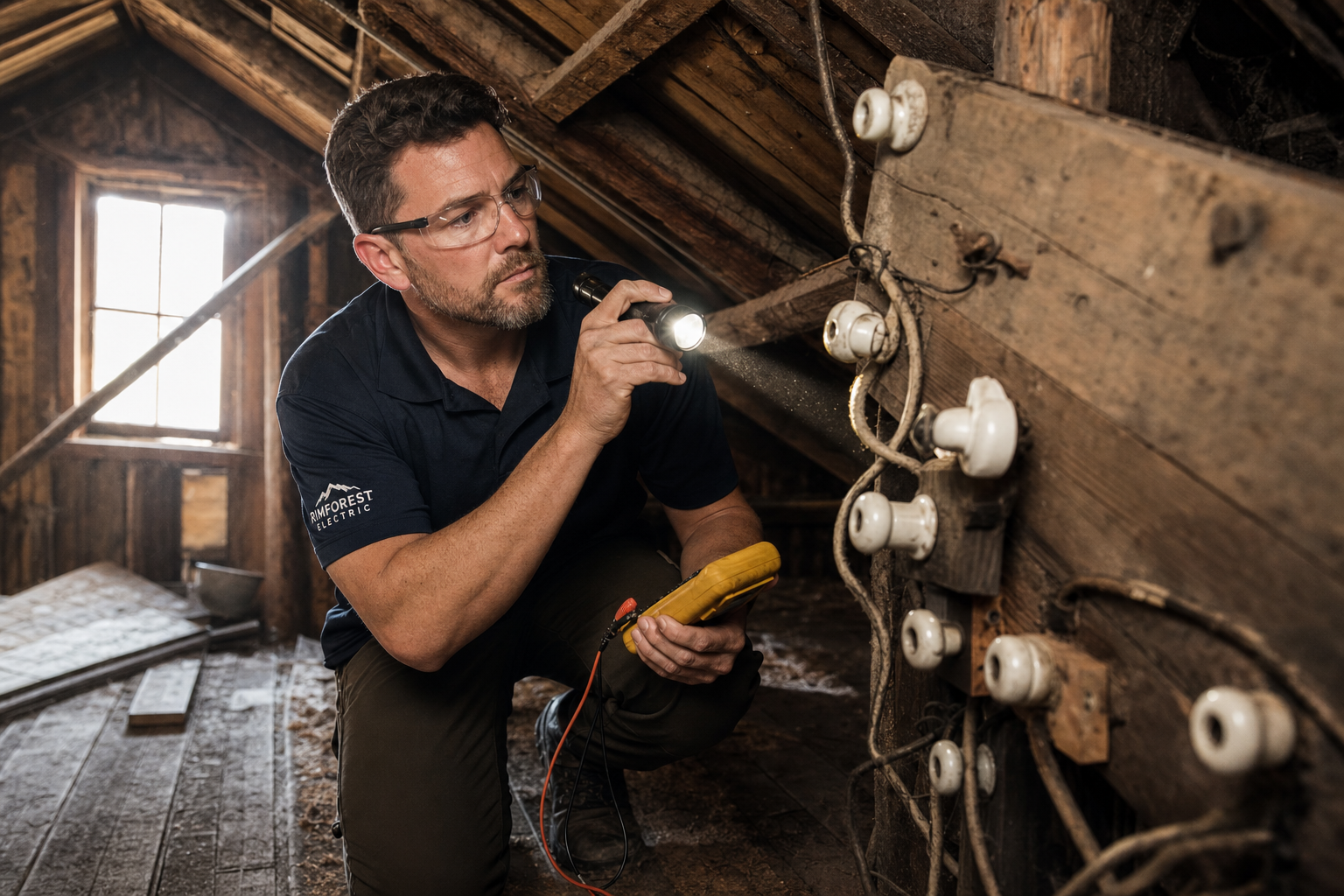
By looking at exposed wire in accessible locations. Aluminum branch circuit wire is silver-colored rather than the reddish color of copper. In an unfinished basement, crawl space, attic, or garage where wiring is visible, you can often see the wire color. The outer sheathing of aluminum-wired cables may also be marked "AL" or "Aluminum."
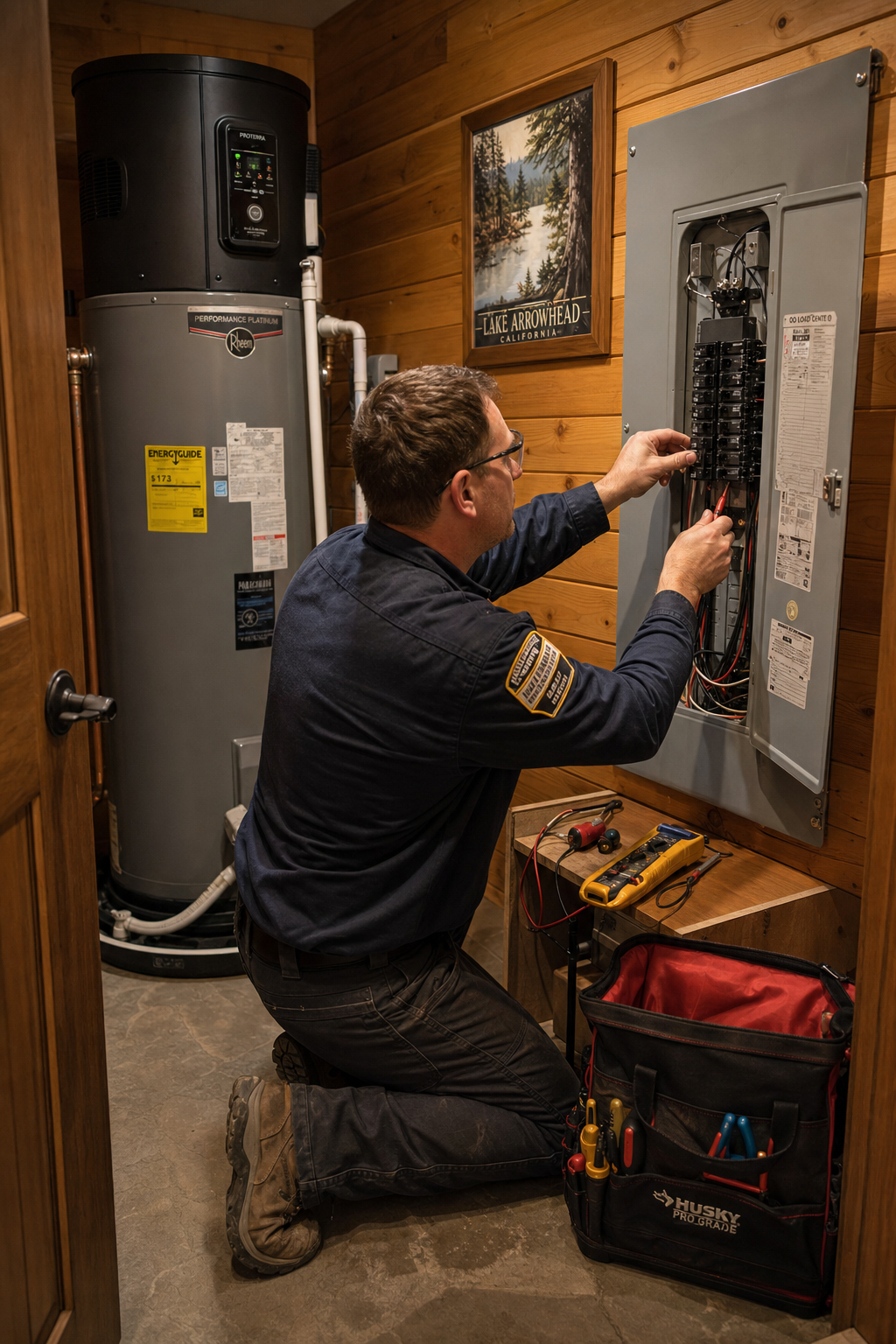
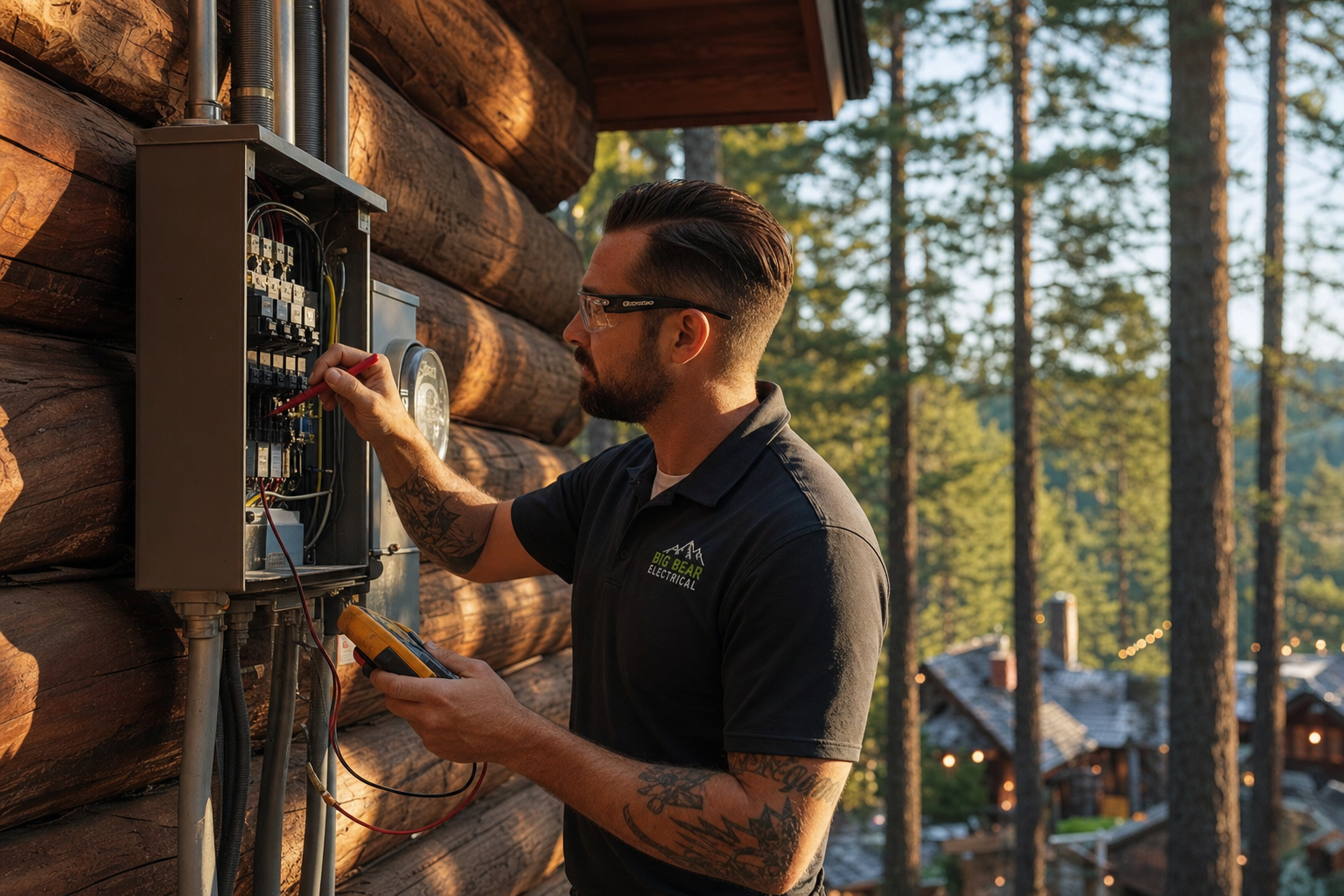
By looking at your panel. When a licensed electrician opens your main panel, the color of the branch circuit wires terminating at the breakers is visible. Silver wires going to 15- or 20-amp breakers indicate aluminum branch circuit wiring.
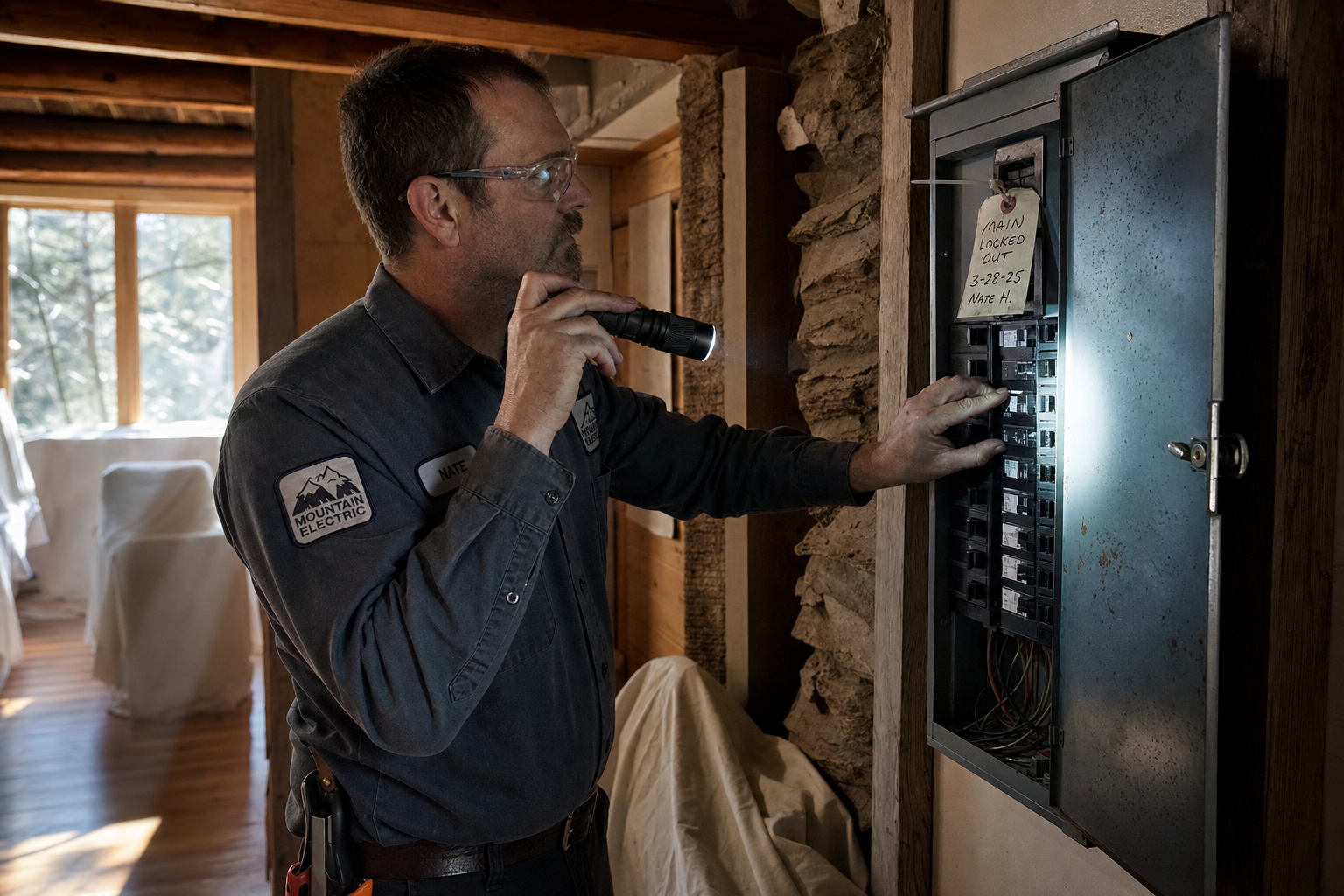
By a licensed electrical inspection. This is the only way to know with certainty. A professional inspection traces the wiring system, identifies what type of wire is present, documents which circuits are aluminum, and evaluates the condition of connection points throughout the home. If you're buying a Lake Arrowhead property, this inspection should happen before you close — not after. Our pre-purchase electrical inspection guide covers what buyers need to know and why general home inspectors frequently miss aluminum wiring issues in older mountain cabins.
What Are the Warning Signs That Aluminum Wiring Connections Are Failing?
Aluminum wiring problems develop gradually over years. The connections don't fail all at once — they deteriorate through the cycle of loosening, oxidation, and increased resistance until a connection reaches the point of sustained overheating.
Warning signs that aluminum connections may be deteriorating:
Warm or hot outlet or switch cover plates. This is the most direct physical indicator. A face plate that is warm — or hot — to the touch without any obvious explanation (a device generating heat in the outlet, for example) indicates elevated resistance at that connection generating heat in the wall. This is a fire hazard condition.
Flickering or dimming lights. Flickering that corresponds with appliance use or that occurs without apparent cause can indicate failing connections creating intermittent resistance in the circuit.
Outlets or switches that stop working. When a connection fails completely rather than intermittently, the circuit at that device stops functioning. If outlets or switches go dead without a tripped breaker as an explanation, failing aluminum connections are a possible cause.
A burning smell near outlets or switches. The smell of hot plastic or burning near an electrical device — even briefly — is a serious warning sign. Don't ignore it.
Frequently tripped breakers on specific circuits. Overloading from excessive resistance can cause breakers to trip on circuits that shouldn't be overloaded. If a circuit trips consistently at a load that shouldn't cause a problem, the electrical system warrants professional evaluation.
If your Lake Arrowhead cabin is showing any of these signs, call (909) 403-4740 immediately rather than waiting for a scheduled inspection. Failing aluminum connections are an active fire hazard.
What Are the CPSC-Approved Options for Remediation?
The Consumer Product Safety Commission recognizes three approaches to addressing the fire hazard from aluminum branch circuit wiring. They are not equally effective or equally appropriate for every situation.
1. Complete Rewiring With Copper
The most thorough and permanent solution is replacing all aluminum branch circuit wiring with copper throughout the home. This eliminates the problem entirely — every connection point in the home is brought to current standards, and the fire hazard from aluminum connections is resolved completely.
Complete rewiring is also the most disruptive and expensive option. In an older Lake Arrowhead cabin with finished walls, plaster ceilings, and the irregular layouts typical of mid-century mountain construction, rewiring requires careful work to minimize damage to the structure. Our house rewiring guide for Lake Arrowhead covers what full rewiring involves, how it's typically approached in older mountain cabins, and realistic pricing for the San Bernardino Mountain area.
Full rewiring is the right answer when: the home has extensive aluminum wiring, the wiring system has other issues that need to be addressed simultaneously (knob-and-tube sections, unpermitted work, overloaded panel), or the owner plans a significant renovation that opens walls and makes rewiring practical.
2. COPALUM Crimp Connectors
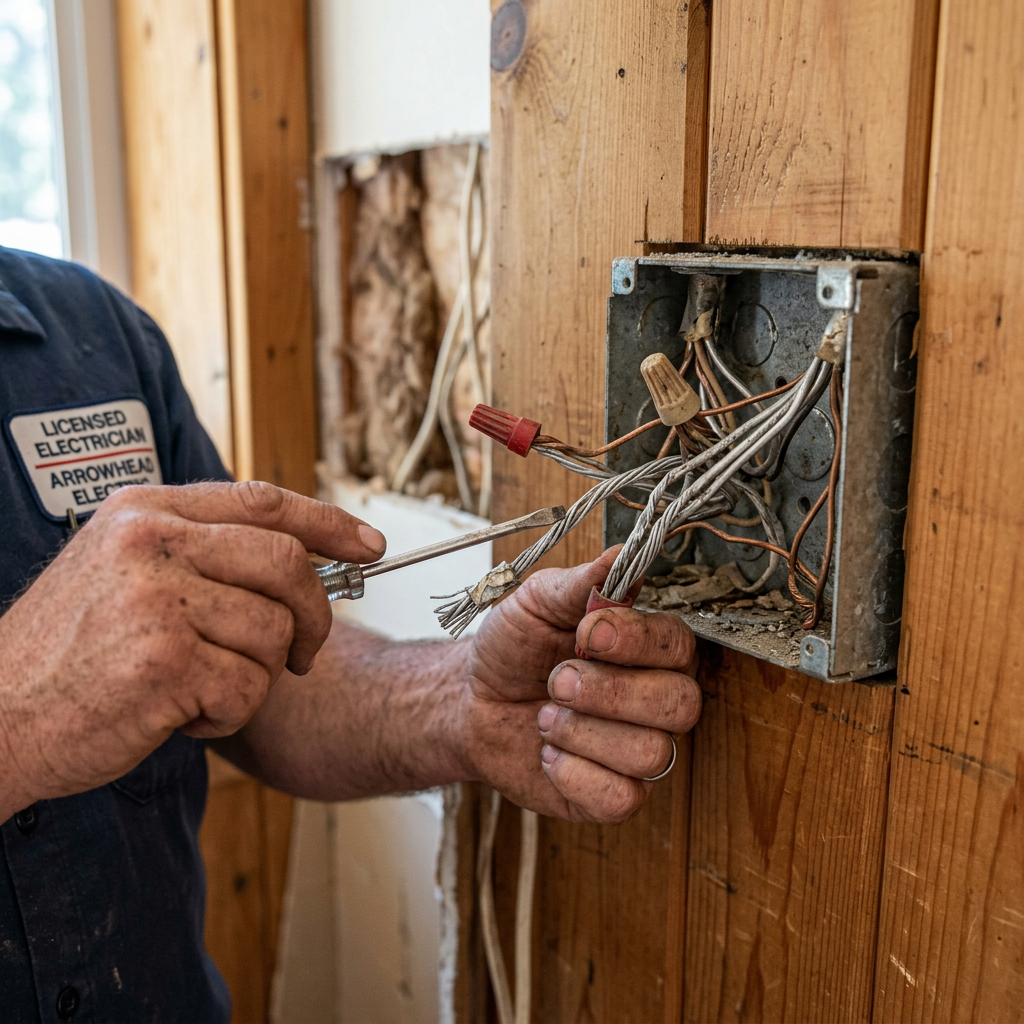
The COPALUM method involves joining a copper pigtail to each aluminum wire branch circuit connection using a specialized crimp connector and proprietary crimping tool. The crimp creates a permanent "cold weld" between the aluminum and copper wires — the CPSC considers this the most reliable connection-level repair available when complete rewiring is not done.
At every outlet, switch, and junction box in the home, the aluminum wire is terminated to a copper pigtail via the COPALUM crimp, and the device then connects to the copper pigtail rather than directly to the aluminum wire. This removes aluminum from the connection points where the fire hazard concentrates.
COPALUM requires a licensed electrician with the specific proprietary crimping equipment, and it must be done at every connection in the aluminum-wired portion of the system to be fully effective. It is thorough but labor-intensive.
3. AlumiConn Connectors
AlumiConn is a set-screw connector — also CPSC-approved — that mechanically joins aluminum and copper wires in a way that addresses the galvanic and oxidation problems at connection points. It's simpler to install than COPALUM and doesn't require proprietary equipment, making it more practical in the tight boxes common in older Lake Arrowhead cabins.
The CPSC's current guidance identifies AlumiConn as an acceptable alternative when COPALUM is not available. Like COPALUM, it must be applied at every aluminum wire connection in the home to fully address the hazard.
What About CO/ALR Devices?
Some homeowners and inspectors mention CO/ALR-rated outlets and switches — devices specifically designed for direct connection to aluminum wire — as a remediation option. CO/ALR devices perform better with aluminum wire than standard devices and are listed by Underwriters Laboratories for the application.
The CPSC's current position, documented in Publication 516, is that CO/ALR devices alone do not meet the standard for a permanent repair under their recommendations — the CPSC-recommended approach at connection points is pigtailing to copper via COPALUM or AlumiConn rather than CO/ALR direct connection. In practice, a licensed electrician familiar with aluminum wiring can advise on what's appropriate for your specific situation after inspecting the wiring.
What the CPSC is clear about: standard outlets and switches not rated CO/ALR should not be directly connected to aluminum wire. If your older Lake Arrowhead cabin has aluminum branch circuit wiring with standard devices that haven't been addressed, that is the condition the CPSC flags as the primary fire hazard.
Aluminum Wiring and Lake Arrowhead Real Estate Transactions
Aluminum wiring surfaces in real estate transactions in ways that create urgency for both buyers and sellers of older Lake Arrowhead properties.
For buyers: A standard general home inspection typically identifies the presence of aluminum wiring but doesn't evaluate the condition of individual connections or provide a remediation recommendation. If you're purchasing a Cedar Glen, Twin Peaks, or Blue Jay cabin built between 1965 and 1973, a dedicated electrical inspection by a licensed electrician — in addition to the general inspection — is the right call. Our electrical inspection service for Lake Arrowhead real estate transactions is specifically designed for this scenario, and we coordinate with your timeline so the inspection fits within your due diligence window.
For sellers: Disclosure is required. California law requires sellers to disclose known material defects, and aluminum branch circuit wiring in older homes is a material fact that affects both safety and insurance. Sellers who proactively address aluminum wiring before listing — through COPALUM, AlumiConn, or full rewiring depending on scope — are in a stronger negotiating position and avoid last-minute remediation demands that arise when buyers' electricians flag the issue during escrow.
For insurance: Many California homeowners insurance carriers treat aluminum branch circuit wiring as a risk factor that affects policy terms, requires specific disclosure, or triggers a requirement for remediation before coverage is issued. If you're buying an older Lake Arrowhead cabin, confirm your insurer's position on aluminum wiring before closing — some require documentation of remediation as a condition of the policy.
Getting an Aluminum Wiring Assessment in Lake Arrowhead
Lake Arrowhead Electrical serves Blue Jay, Cedar Glen, Twin Peaks, Rimforest, Crestline, Running Springs, and the surrounding San Bernardino Mountain communities. We evaluate aluminum wiring systems in older mountain cabins regularly — it's a common issue in the Lake Arrowhead housing stock, and we know what we're looking for.
A professional aluminum wiring assessment includes: identifying whether aluminum branch circuit wiring is present, evaluating the condition of accessible connections, documenting which circuits are affected, and providing a clear recommendation on remediation approach with realistic pricing.
Call (909) 403-4740 to schedule an assessment, or contact us online. We're fully licensed (C-10), insured, and based in Blue Jay — already at elevation when you need us.
Frequently Asked Questions
How do I know if my Lake Arrowhead cabin has aluminum wiring?
The most reliable method is a licensed electrical inspection. Visual indicators include silver-colored branch circuit wires visible in unfinished spaces, "AL" markings on cable sheathing, and a construction date between 1965 and 1973. A licensed electrician can confirm definitively by evaluating the panel and accessible wiring.
Is aluminum wiring illegal in California?
No. Aluminum branch circuit wiring installed under the electrical codes of the time is not illegal in existing homes. What matters is whether the connections have been properly addressed. Unaddressed aluminum connections at devices not rated for aluminum is the specific condition the CPSC identifies as a fire hazard.
Does my homeowner's insurance cover aluminum wiring?
Insurance carriers vary in how they treat aluminum wiring. Some require disclosure and may adjust terms; others require documentation of remediation before issuing or renewing a policy. Contact your carrier directly and disclose the wiring type — attempting to conceal it and then filing a claim involving an electrical fire can result in denied coverage.
Can I sell my Lake Arrowhead cabin if it has aluminum wiring?
Yes. You are required to disclose known material facts, including aluminum wiring. Buyers and their electricians will evaluate what remediation has or hasn't been done. Sellers who address aluminum wiring before listing typically have smoother transactions than those who leave the issue for buyers to discover during due diligence.
What does aluminum wiring remediation cost in Lake Arrowhead?
Costs vary significantly based on the size of the home, how many circuits are aluminum-wired, and which remediation approach is used. COPALUM or AlumiConn connection-level repair is less disruptive and typically less expensive than full rewiring. Full rewiring addresses all wiring issues simultaneously and is the most thorough solution. Call
(909) 403-4740 for a free assessment and estimate.
Lake Arrowhead Electrical is a licensed C-10 electrical contractor serving Lake Arrowhead, Blue Jay, Cedar Glen, Twin Peaks, Rimforest, Crestline, Running Springs, and the surrounding San Bernardino Mountain communities. 27264 CA-189, Ste M-01B, Blue Jay, CA 92317. Call (909) 403-4740.