PSPS Power Shutoffs in Lake Arrowhead: What Mountain Cabin Owners Need to Know
PSPS Power Shutoffs in Lake Arrowhead: What Mountain Cabin Owners Need to Know
If you own a cabin anywhere between Blue Jay, Cedar Glen, Twin Peaks, or the lakefront stretch along North Shore Drive, you've already lived through a Public Safety Power Shutoff — even if you didn't know the official name for it. Southern California Edison cuts power to high fire-risk circuits across the San Bernardino Mountains during dry, windy conditions, and Lake Arrowhead sits squarely in one of the most frequently de-energized zones in the SCE service territory. For homeowners running well pumps, sump pumps, medical equipment, or just trying to keep a freezer full of food from spoiling at 5,100 feet, a PSPS event isn't an inconvenience — it's a planning problem.
Why Does Lake Arrowhead Get Hit So Often by PSPS Events?
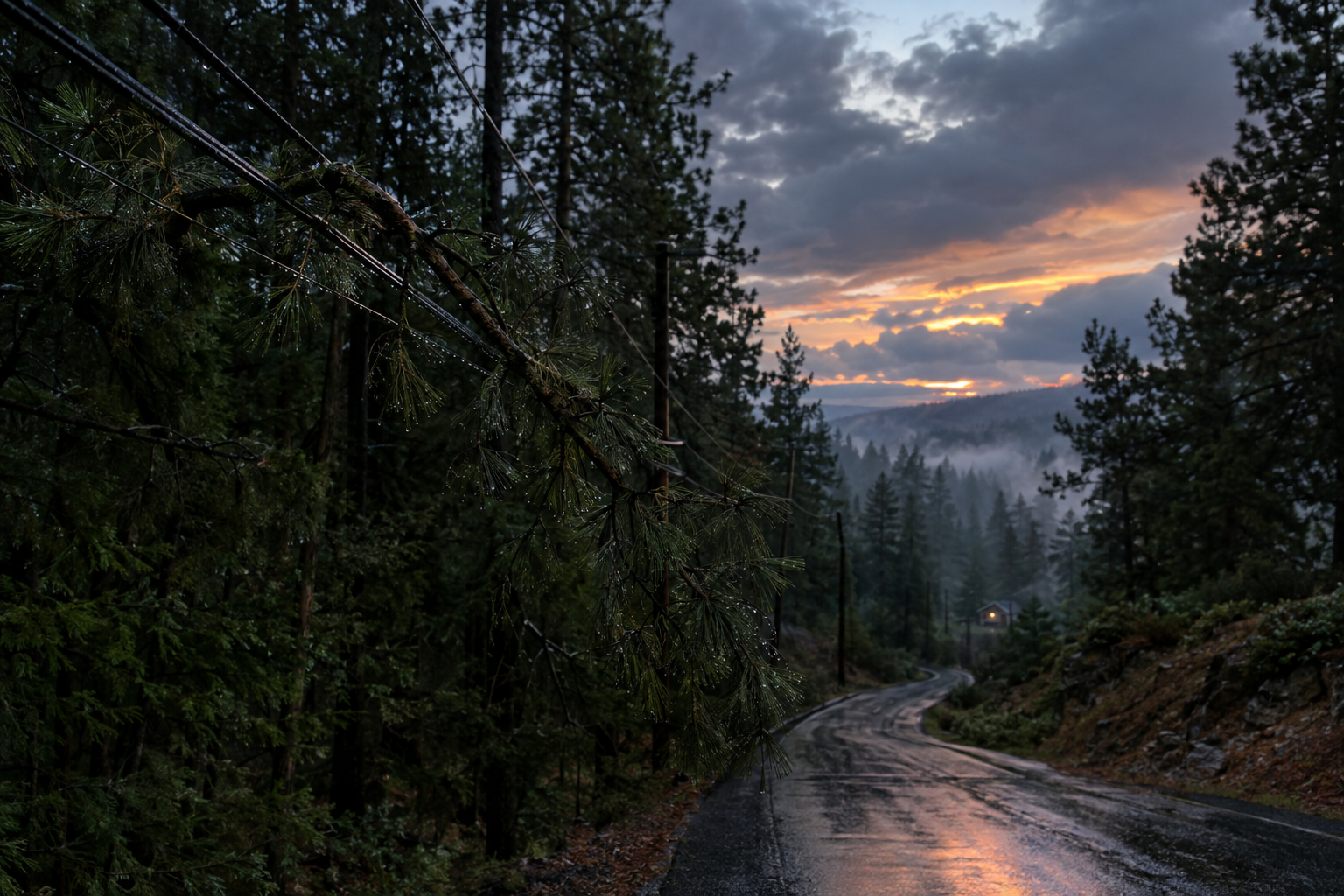
Lake Arrowhead sits inside SCE's Tier 2 and Tier 3 fire-threat zones as designated by the California Public Utilities Commission, and the dense pine canopy along roads like Daley Canyon and Hospital Road means even moderate Santa Ana-driven gusts can trigger preemptive shutoffs. Unlike flatland Inland Empire neighborhoods, mountain communities have fewer redundant circuits, so when SCE de-energizes a line to prevent wildfire ignition from arcing equipment, entire neighborhoods — not just a few streets — can go dark for 24 to 72 hours.
How Do I Know If My Area Is at Risk for a Shutoff?
SCE publishes a PSPS outage map that homeowners can check before red flag warning days. Cabins above 4,500 feet in elevation, particularly in Crestline-adjacent areas and around Lake Gregory, tend to see the longest restoration windows because crews have to physically patrol and inspect every span of line before re-energizing — sometimes mile after mile of switchback mountain road.
What's the Difference Between a Generator and a Battery Backup System for PSPS Events?
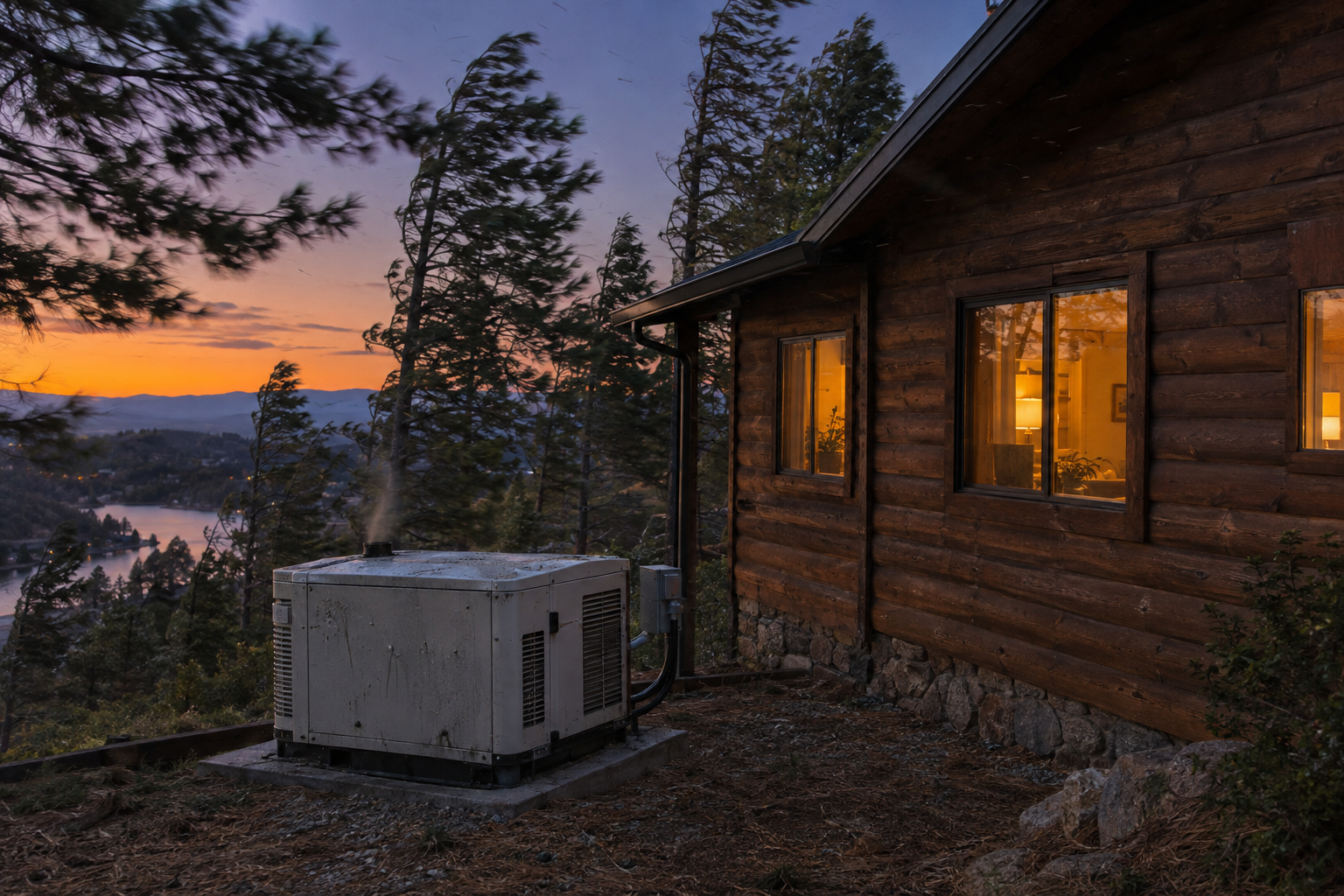
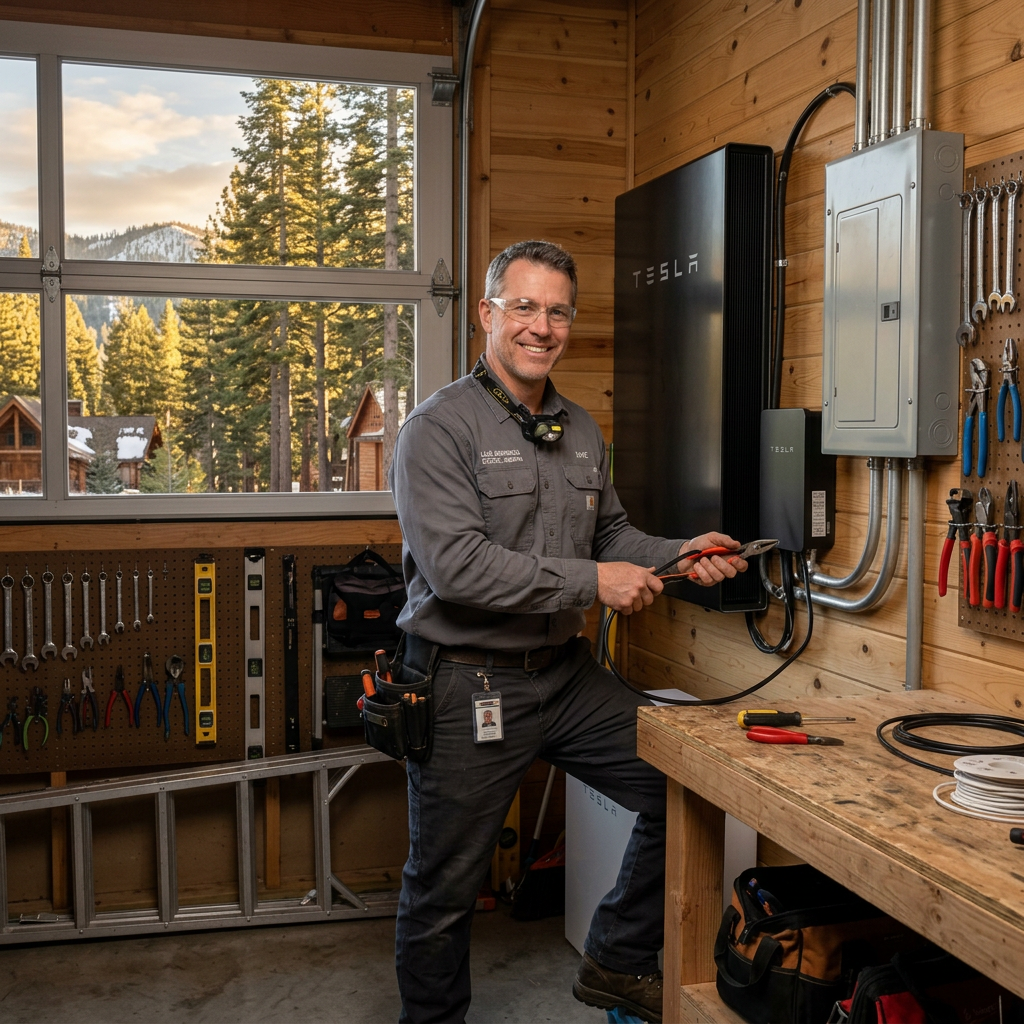
A standby generator, typically propane-fueled given the limited natural gas infrastructure up here, kicks on automatically and can run a full mountain cabin — well pump, furnace, refrigerator — indefinitely as long as the propane tank holds out. A battery backup system, like a Tesla Powerwall or Enphase battery paired with your panel, stores energy silently and switches over instantly, which matters for medical equipment but typically only carries critical circuits for 8 to 24 hours depending on load and whether it's paired with solar. For PSPS events specifically, which can run multiple days during a sustained wind event, most Lake Arrowhead homeowners we work with end up choosing a generator as the primary system — see our backup generator services — sometimes layering a battery on top for the seamless instant-transfer.
What Electrical Work Does My Cabin Need Before the Next Shutoff?
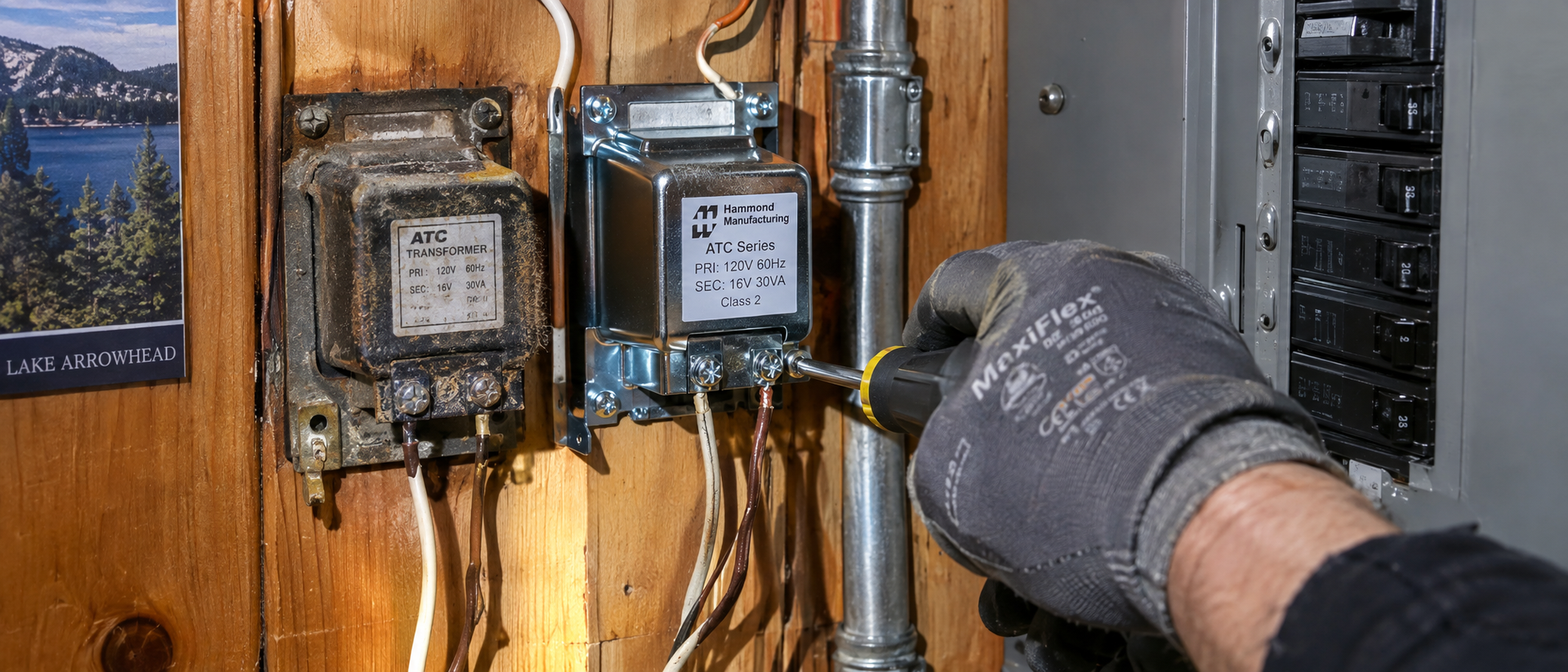
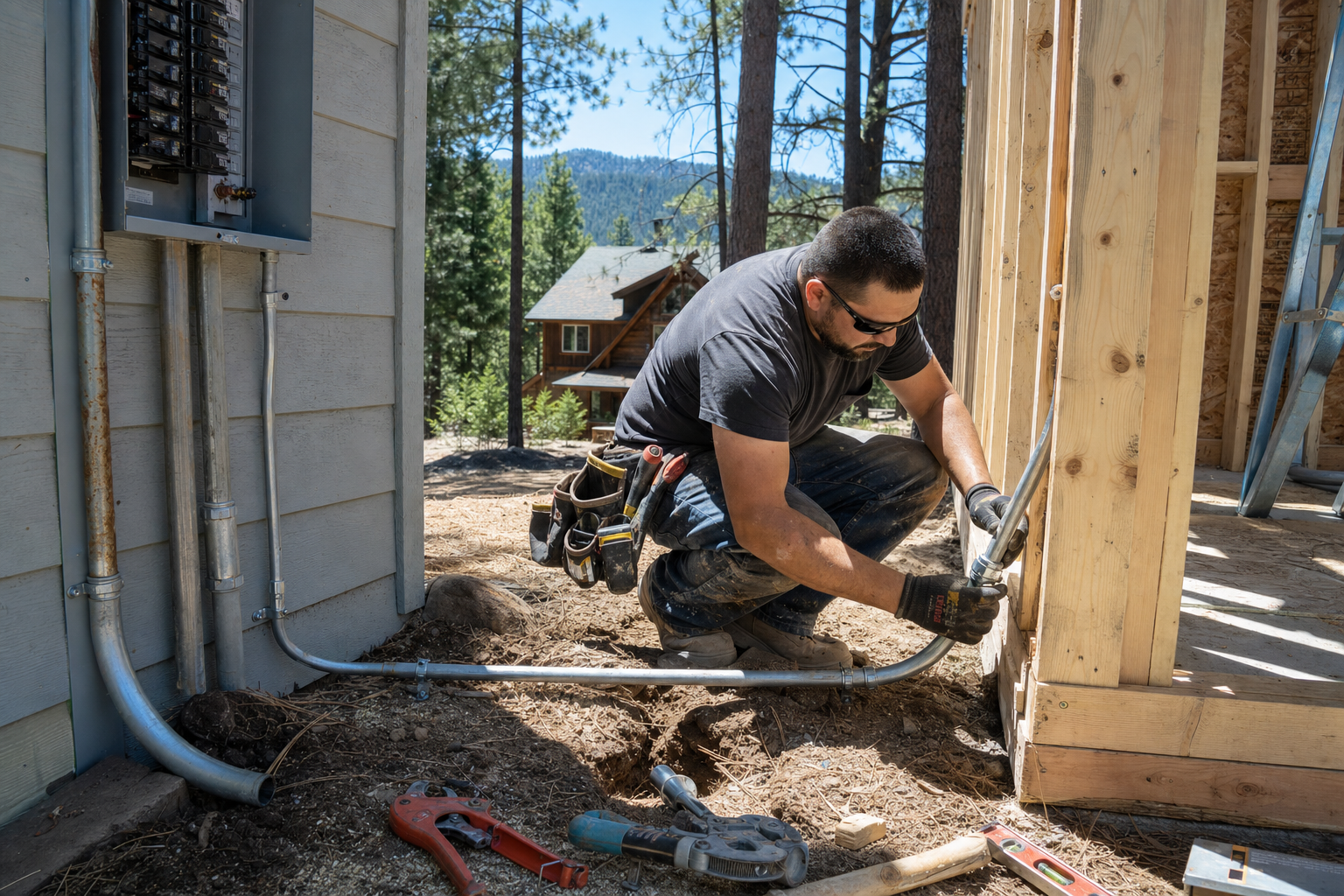
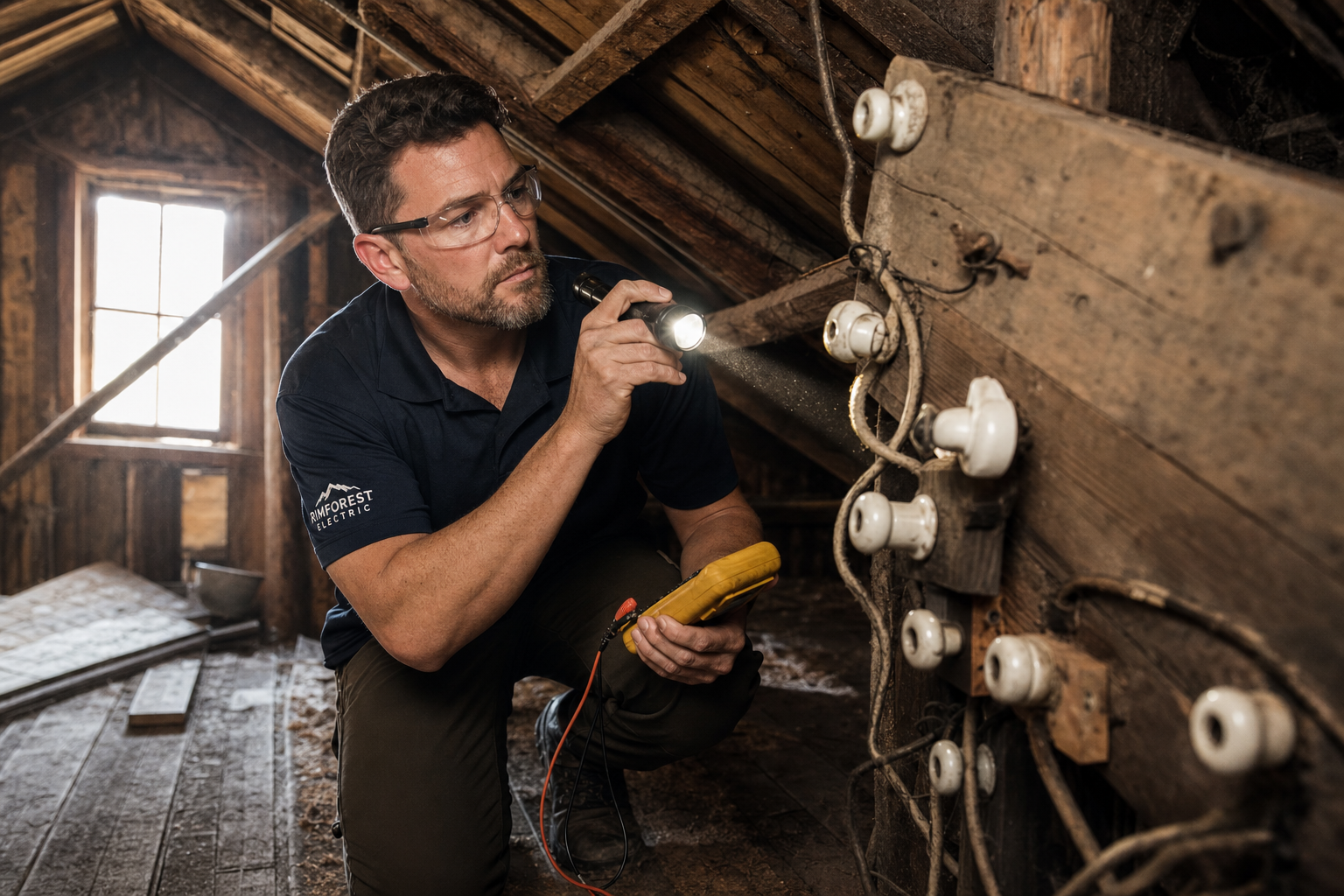
The most common gap we find on service calls is a transfer switch that's either missing entirely or undersized for the panel. Without a properly installed automatic or manual transfer switch, you cannot safely connect backup power to your home's wiring — running extension cords through a window during a PSPS event is both a fire hazard and a code violation under the National Electrical Code. Many older Lake Arrowhead cabins, especially those built before the 1990s along Daley Canyon and Hook Creek Road, also have panels that are at or near capacity, meaning a generator or battery interconnection requires a panel upgrade first. We typically see this pattern: 100-amp panel from the 1970s, no transfer switch, and a homeowner who only discovers the gap mid-outage when the propane company shows up to deliver a generator they can't legally hook up yet.
How Much Does It Cost to Prepare for PSPS Outages in Lake Arrowhead?
A manual transfer switch installation generally runs $800–$1,800 depending on panel access and whether your cabin's panel needs any updates to accept it. An automatic transfer switch paired with a whole-home standby generator is a larger project, often $9,000–$16,000 installed including permitting through San Bernardino County, but it removes the need for anyone to be home to manually switch over during an outage — which matters if you're a part-time mountain resident managing the cabin remotely. Battery backup systems sized for critical loads (refrigerator, well pump, a few circuits of lighting) typically land in the $12,000–$22,000 range before any federal tax credit, though pricing has shifted meaningfully since NEM 3.0 changed the economics of pairing batteries with solar statewide.
What Should I Do Right Now, Before Fire Season Peaks?
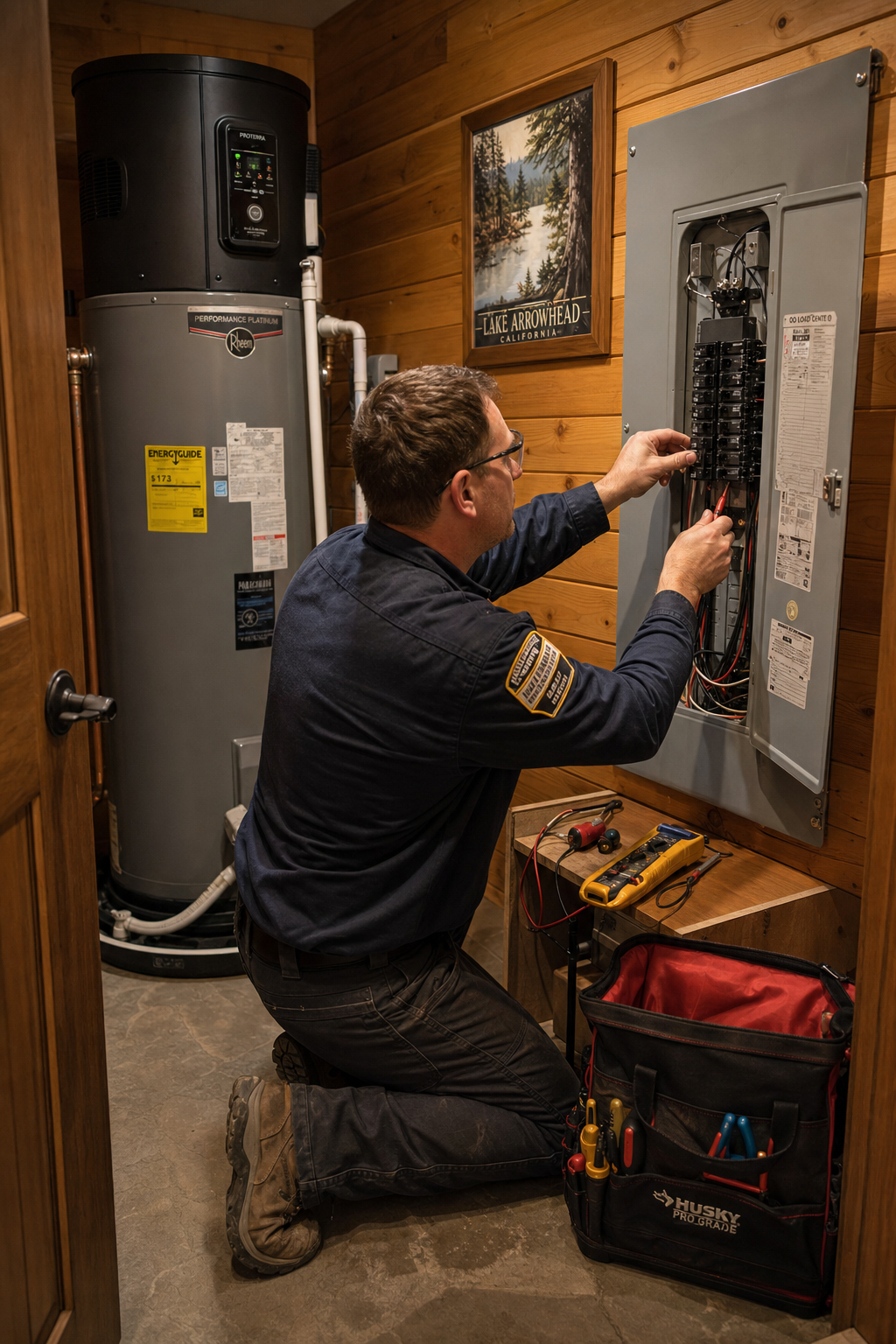
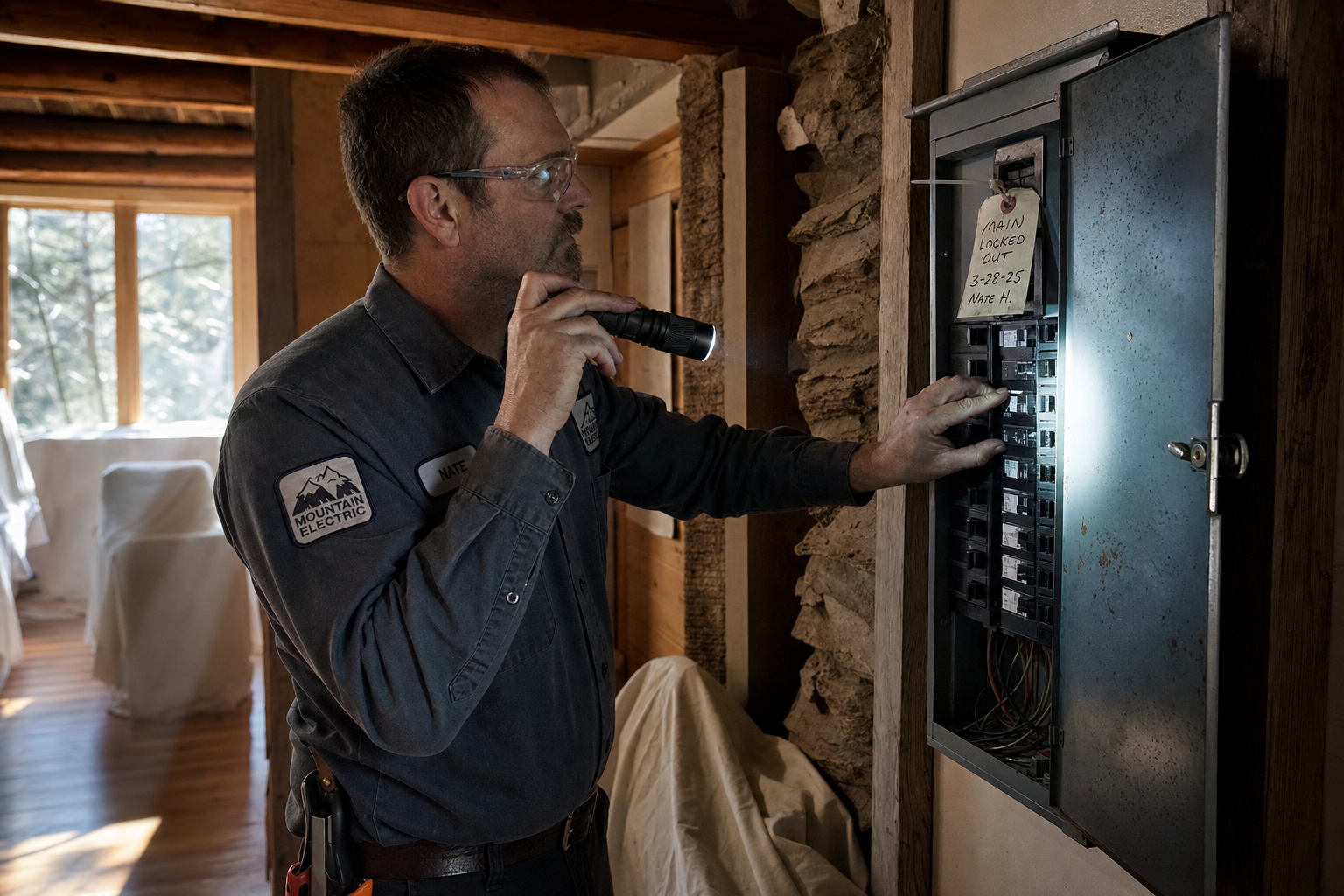
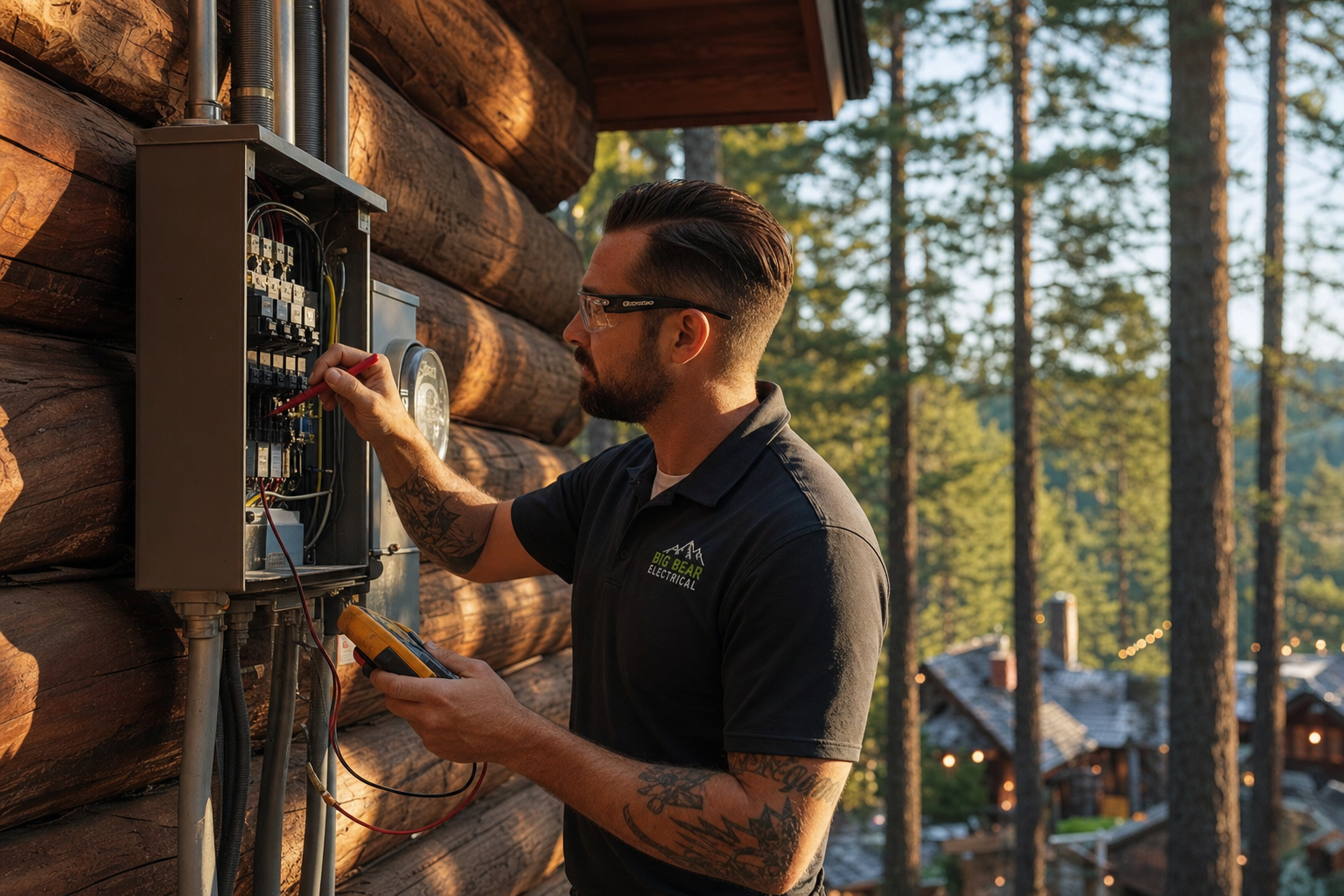
- Check your panel. If it's original to a cabin built before 1995, get it inspected before you invest in any backup power equipment — start with our residential electrical services.
- Install a transfer switch, even if you're not buying a generator yet — it's the piece of infrastructure that makes everything else possible later.
- Test your setup before a red flag warning, not during one. Crews and equipment get booked solid the moment SCE issues a PSPS watch for the San Bernardino Mountains.
- Sign up for SCE PSPS alerts directly through their site so you get a heads-up rather than discovering it when the power's already out.
Get Your Cabin PSPS-Ready
Lake Arrowhead Electrical has installed transfer switches, generator hookups, and battery backup systems in cabins all across Blue Jay, Cedar Glen, Twin Peaks, and the North Shore — we know exactly what these mountain panels can and can't handle. If you want your cabin ready before the next red flag warning, call us at (909) 403-4740 for a free estimate.
FAQ
Does SCE compensate homeowners for PSPS outages?
SCE does not typically compensate residential customers for losses during PSPS events, since the shutoffs are classified as a safety measure rather than equipment failure, which is why many Lake Arrowhead homeowners invest in their own backup power rather than relying on reimbursement.
Can I use a portable generator without a transfer switch?
A portable generator can power individual appliances directly through its own outlets, but it cannot be safely connected to your home's wiring without a transfer switch, since backfeeding a panel without one risks electrocuting utility line workers and violates NEC Article 702.
How long do PSPS outages typically last in Lake Arrowhead?
PSPS outages in mountain communities like Lake Arrowhead commonly run 24 to 72 hours, and can extend longer when high winds prevent SCE crews from safely patrolling and re-energizing remote spans of line.
Does a panel upgrade help with PSPS preparedness even without a generator?
Yes — an updated panel with adequate capacity and a generator-ready interlock or transfer switch slot makes it far faster and cheaper to add backup power later, even if you're not ready to invest in a full system today.