The Complete Guide to EV Charging in Lake Arrowhead & the San Bernardino Mountains
The Complete Guide to EV Charging in Lake Arrowhead & the San Bernardino Mountains
Quick answer: Lake Arrowhead has one public Tesla Supercharger (8 stalls, Stater Bros lot, Village) plus seven Level 2 J1772 chargers spread across Blue Jay, Crestline, and Running Springs. For daily driving, most residents install a home Level 2 charger — typically $500–$2,000+ installed depending on panel condition — permitted through San Bernardino County's expedited AB 1236 process and eligible for up to $4,200 in SCE rebates.
If you drive an EV up the hill to Lake Arrowhead, you've probably already asked the two questions everyone up here eventually asks: where do I charge in town, and should I just install one at home? This guide answers both — every public charging station currently on the mountain, what type of charger makes sense for your cabin, and what it actually takes to get one installed, from permits to rebates to what a power outage does to your charging plans.
FREE DOWNLOAD
Every Public EV Charger From Lake Arrowhead to Running Springs
Download the Free PDF Guide
Where Can You Charge an EV in Lake Arrowhead Right Now?
Lake Arrowhead has a small but real public charging network, anchored by a Tesla Supercharger in the Stater Bros parking lot at Lake Arrowhead Village, plus a handful of Level 2 chargers scattered through Blue Jay, Crestline, and Running Springs.
Tesla Supercharger – Lake Arrowhead Village
Type: DC Fast, 8 stalls
Notes: Tesla only, Stater Bros lot, 24 hours
Lake Arrowhead Resort & Spa
Type: Level 2
Notes: Primarily for hotel guests
Phillips 76 / Village Mart
Type: Level 2, J1772
Notes: Public, non-networked
US Bank – Blue Jay
Type: Level 2, J1772
Notes: Public
Mt Calvary Lutheran Church & School
Type: Level 2, J1772
Notes: Public
SkyPark at Santa's Village
Type: Level 2, J1772
Notes: On-site while visiting
Mountain Storage – Crestline
Type: Level 2, J1772
Notes: Daily 8 AM–5 PM
LuluBelle's Coffee House – Running Springs
Type: Level 2, J1772
Notes: Public
Non-Tesla EVs on the mountain mostly rely on the SAE J1772 connector at these Level 2 spots. For a live, national view of station status, the U.S. Department of Energy's Alternative Fuels Data Center station locator is the official source — though our list above is more current for this specific stretch of mountain, since we drive it.
Eight Supercharger stalls sound like plenty until you're here on a July weekend with the rest of Lake Arrowhead Village traffic. That's the honest case for charging at home instead of planning your day around an open stall.
Want this whole list on your phone before you head out?
What Are the Different Types of EV Chargers?
There are three charging levels, and only one of them is realistic to install at a Lake Arrowhead home. Level 1 uses a standard 120-volt household outlet and adds roughly 3–5 miles of range per hour — too slow for most daily driving once a mountain commute is factored in. Level 2 runs on a dedicated 240-volt circuit (typically 30–50 amps) and adds 20–30 miles of range per hour, enough to go from empty to full overnight. DC Fast Charging (sometimes called Level 3) uses 400–1,000-volt direct current and can add 60–80% range in 20–40 minutes, but it requires commercial-grade equipment and isn't installed at homes — it's what powers the Supercharger in the Village.
Level 1
Voltage: 120V
Range added per hour: 3–5 miles
Where you'll find it: Standard household outlet
Level 2
Voltage: 240V
Range added per hour: 20–30 miles
Where you'll find it: Home installs, hotels, businesses
DC Fast
Voltage: 400–1,000V
Range added per hour: Full charge in 20–40 minutes
Where you'll find it: Tesla Supercharger, public networks only
For nearly every Lake Arrowhead homeowner, that makes Level 2 the only real option worth installing.
Why Does Charging Feel Different at 5,174 Feet?
Cold, high-altitude weather measurably slows EV charging and shortens range, and Lake Arrowhead sits at roughly 5,174 feet in the San Bernardino Mountains — cold enough, often enough, for this to matter. Battery chemistry is simply less efficient in the cold, cabin heating pulls extra power that would otherwise go to the wheels, and DC fast-charging speeds throttle down when the battery itself is cold, since the car limits charge rate to protect the pack.
That's one more reason full-time and weekend Lake Arrowhead residents land on home charging: a car that's been sitting in a heated garage overnight starts every trip with a warm battery and a full charge, no cold-soak charging penalty involved.
Public Charger or Home Charger — Which Actually Makes Sense?
For daily driving, a home Level 2 charger beats relying on public stations, and it isn't close. Public DC fast charging is great for a top-up on a long drive down the hill, but it's not designed for daily use — it's harder on battery longevity over time, costs more per kWh than home electricity, and in Lake Arrowhead specifically, means competing for one of eight Supercharger stalls. The tradeoff is straightforward: public charging has no upfront cost but costs you time and money per session. Home charging has an upfront installation cost but means you never think about it again.
Which EV Charger Should You Install at Your Cabin?
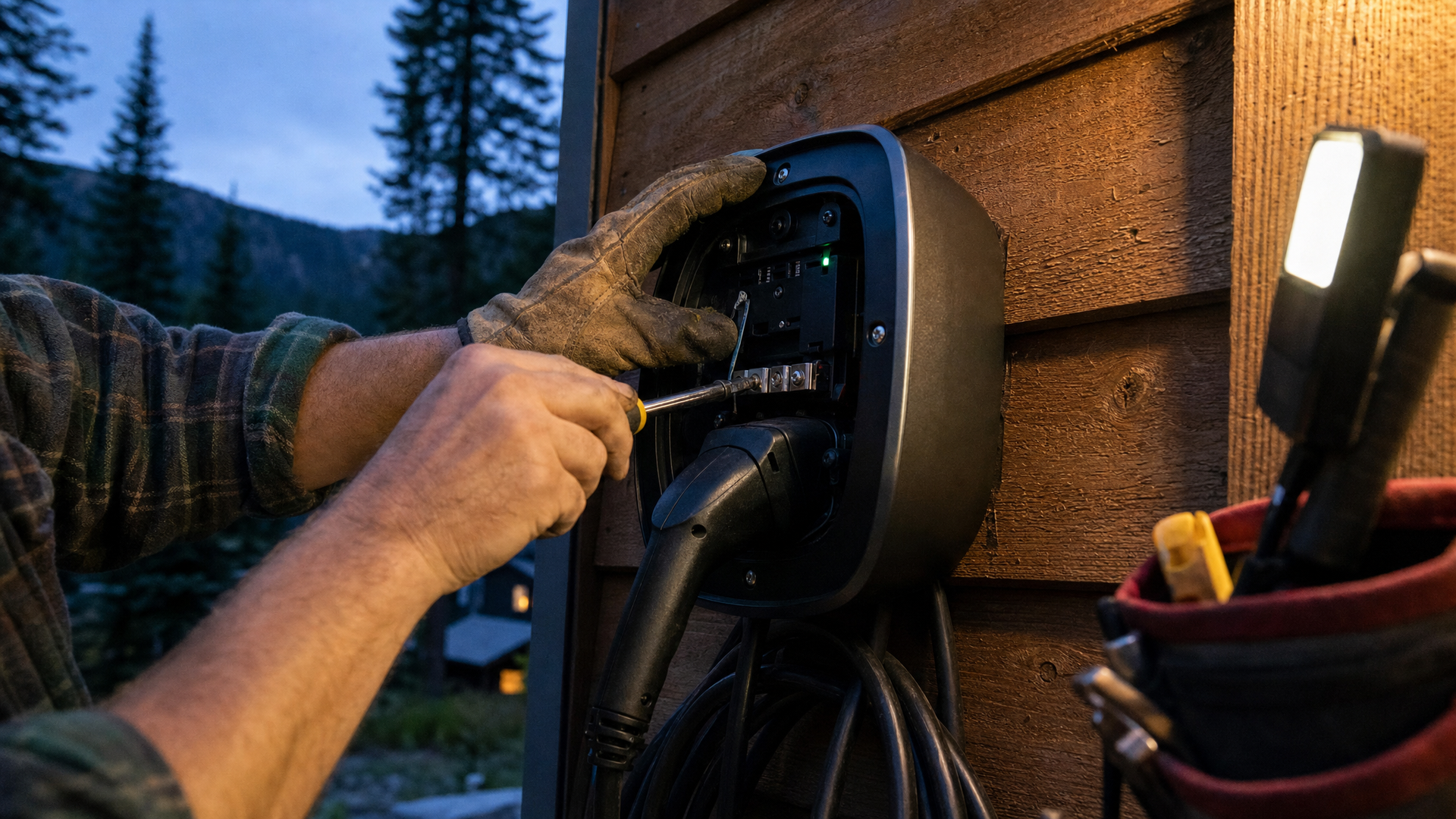
The right charger depends on your EV brand and how much control you want over charging schedules, not on price alone. If you drive a Tesla, the Tesla Wall Connector is the simplest option and pairs natively with the car's software. For non-Tesla EVs, ChargePoint Home Flex, Emporia, and Grizzl-E are three of the most commonly installed Level 2 chargers in Southern California, all compatible with the J1772 connector and all capable of running on a standard 40–50 amp circuit. We're hardware-agnostic — we install whichever charger fits your car, your panel, and your budget, and can walk you through the tradeoffs (WiFi scheduling, amperage, cord length) during your free quote.
What Does It Cost to Install a Home EV Charger in Lake Arrowhead?
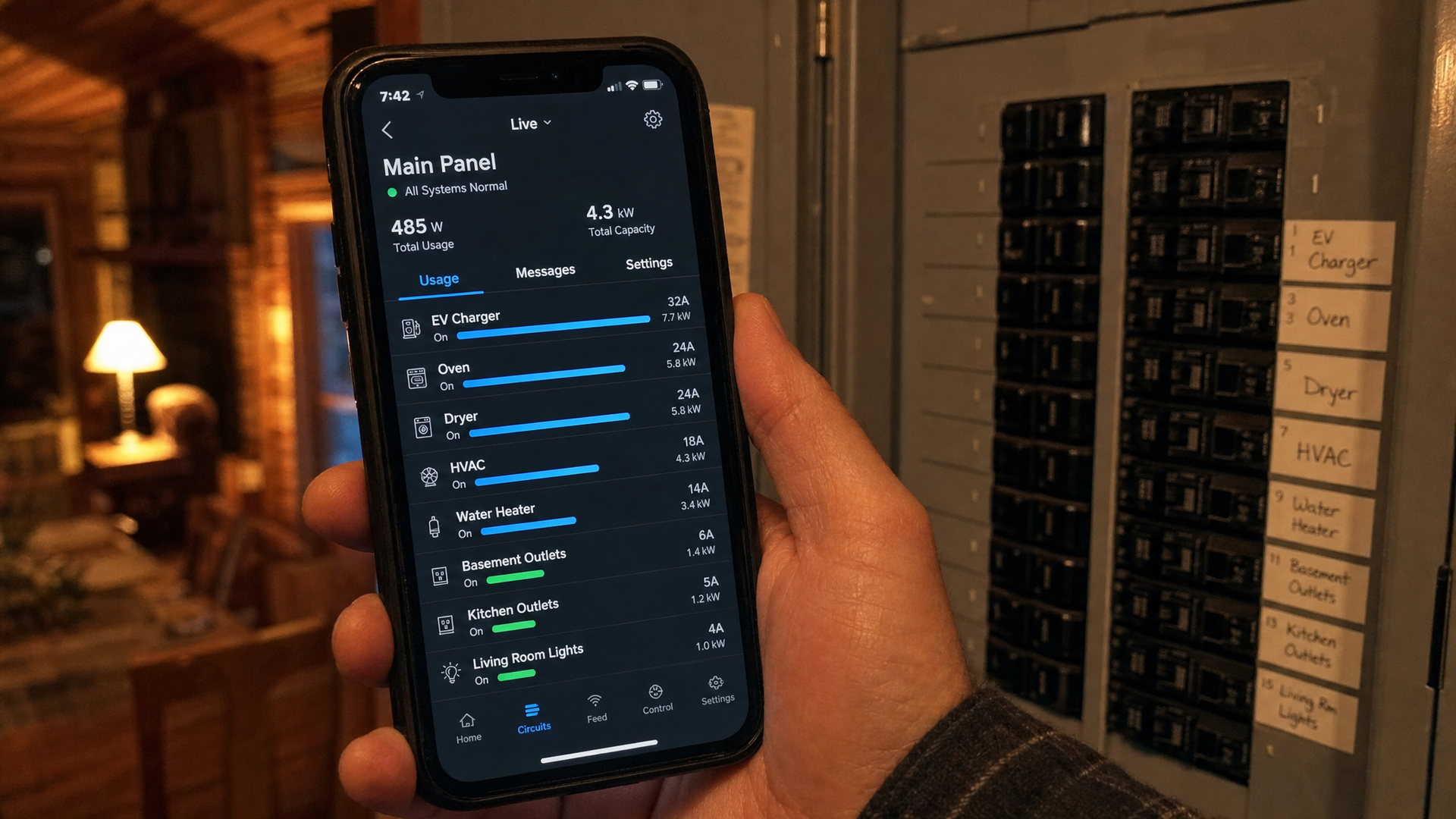
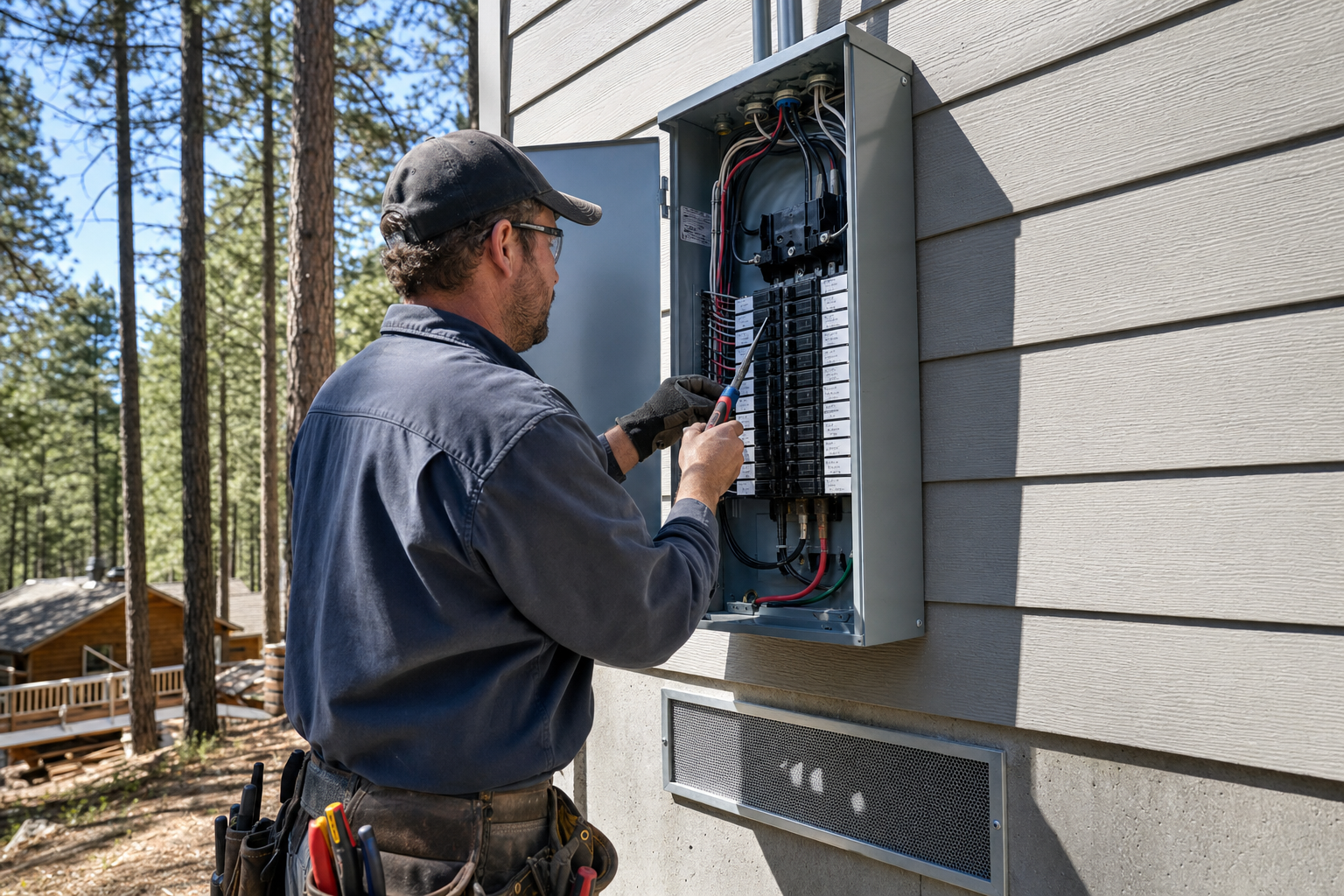
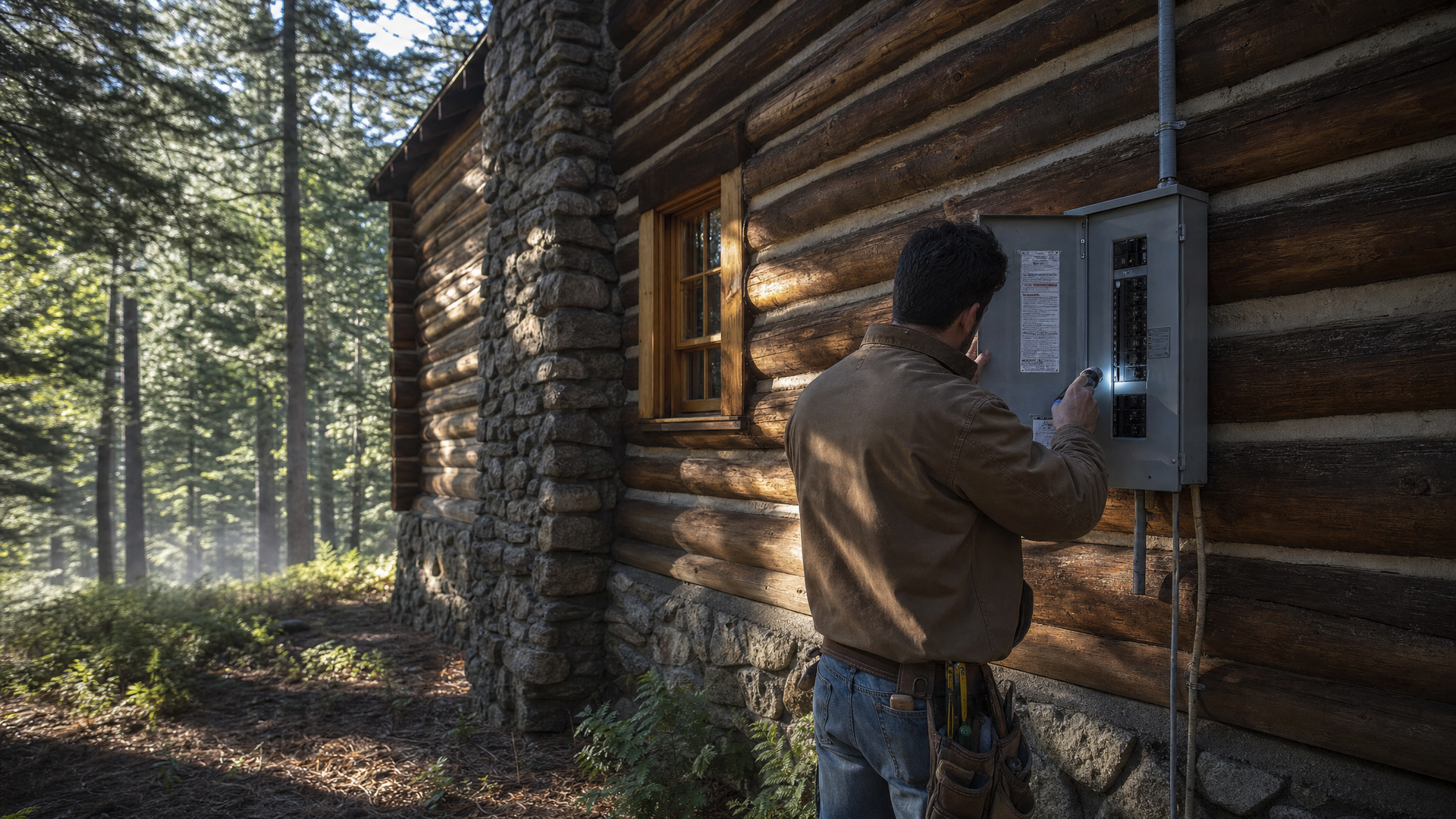
The cost to install an EV charger in Lake Arrowhead comes down to your electrical panel, not the charger itself — the charging unit is usually the cheapest part of the job. What actually drives the price is whether your panel has room for a new 40–60 amp circuit, how far the run is from the panel to where you park, and whether mountain-specific factors like crawlspace access or an older panel come into play. A lot of Lake Arrowhead cabins were originally built as vacation properties with modest 100-amp service, which often need a panel upgrade before a Level 2 charger can go in safely — the same issue we cover in our complete guide to mountain electrical systems.
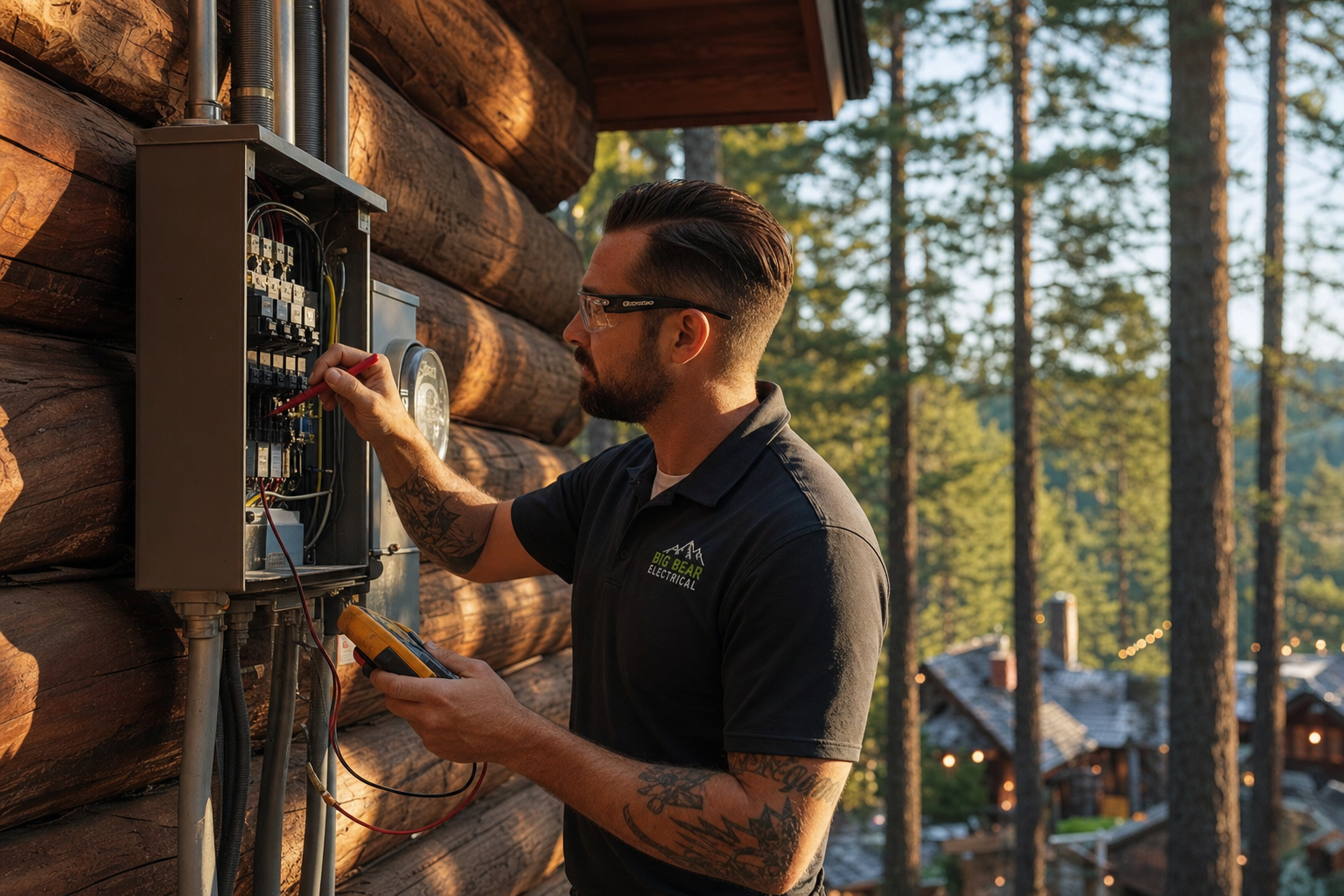
Every EV charger installation also has to meet National Electrical Code Article 625, which governs electric vehicle power transfer systems — dedicated circuit, correct breaker sizing, GFCI protection, and proper disconnect requirements. Because the real cost swings so much by panel condition and distance, we do a free on-site load calculation rather than quote a number over the phone.
Do You Need a Permit to Install an EV Charger in San Bernardino County?
Yes, but California law requires it to be fast. Under Assembly Bill 1236 (2015) and its follow-up, AB 970 (2021), every California city and county — including San Bernardino County — must run an expedited, checklist-based permitting process for EV charging stations, with a 5-business-day completeness review and 20-business-day approval window for small residential installs. San Bernardino County Building & Safety handles these permits for Lake Arrowhead properties, and skipping this step is a real problem: unpermitted electrical work is a common issue that surfaces during a home sale or an insurance claim. We handle the full filing and inspection coordination as part of every install.
Are There Rebates for Home EV Chargers in Lake Arrowhead?
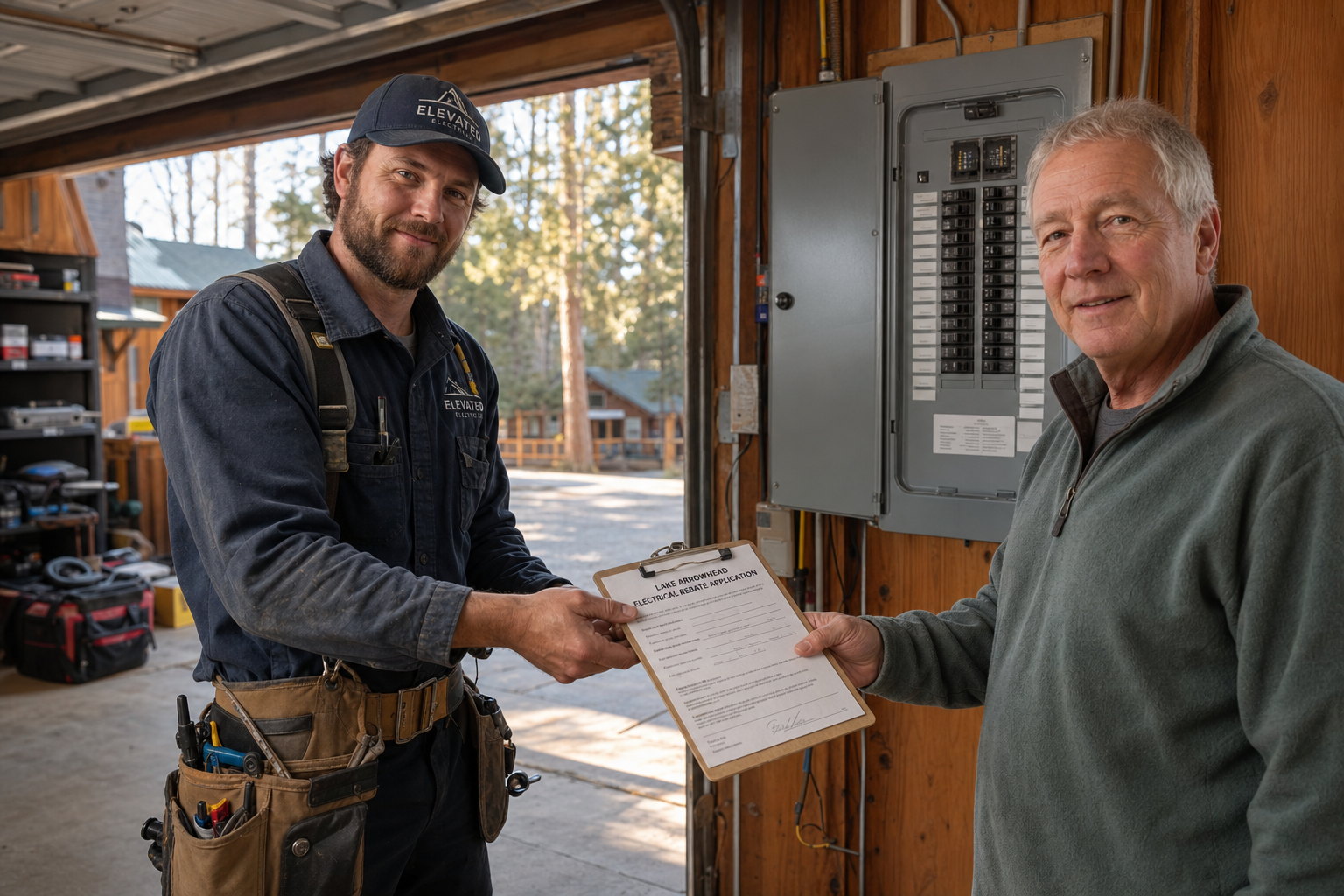
Yes — Southern California Edison serves most of Lake Arrowhead (some boundary areas near Running Springs and Green Valley Lake fall under Bear Valley Electric Service instead), and SCE's Charge Ready Home program currently offers income-qualified residential customers up to $4,200 toward an electrical panel upgrade needed for Level 2 charging. The program is administered with the Center for Sustainable Energy and requires the work to be done by a licensed electrical contractor. Eligibility and funding levels are set by SCE and the California Public Utilities Commission and can change, so check current terms at SCE's Charge Ready Home page — we can also confirm your eligibility as part of your free quote.
What Happens to Your EV Charger During a Power Outage or PSPS?
Your EV charger stops working the moment the power does, and in Lake Arrowhead, that happens more than flatland drivers might expect. SCE and other California utilities use Public Safety Power Shutoffs (PSPS) during high-wind, high-fire-risk conditions, and mountain communities like ours sit squarely in the higher-risk tiers. If home charging is your only option, a multi-day PSPS event during fire season can leave you without a way to charge. It's one of the main reasons Lake Arrowhead homeowners pair a home EV charger with a backup generator installation sized to keep the charger — and the rest of the house — running through an outage.
Lake Arrowhead Neighborhoods We Serve for EV Charger Installation
We install and permit home EV chargers throughout the Lake Arrowhead community — Arrowhead Woods, North Bay, South Bay, Blue Jay, Rimforest, Cedarpines Park, Grass Valley, Cedar Glen, Twin Peaks, Crestline, and Running Springs, including cabins on Hook Creek Road and other harder-to-reach mountain properties. Mountain homes come with steep driveways, long panel-to-parking runs, and older wiring that flatland electricians aren't always prepared for — it's what we do every day.
Frequently Asked Questions About EV Charging in Lake Arrowhead
Is there a Tesla Supercharger in Lake Arrowhead?
Yes. There's an 8-stall Tesla Supercharger in the Stater Bros parking lot at Lake Arrowhead Village, open 24 hours. It uses Tesla's NACS connector and is Tesla-vehicle-only at this location; non-Tesla EVs should use a J1772 Level 2 charger elsewhere in town.
Does Southern California Edison serve Lake Arrowhead?
Yes, SCE serves most of Lake Arrowhead, including Blue Jay and Crestline. Some areas near Running Springs and Green Valley Lake are served by Bear Valley Electric Service instead, so it's worth confirming your provider before applying for utility rebates.
What's the difference between Level 2 and Level 3 EV charging?
Level 2 runs on a 240-volt home circuit and adds 20–30 miles of range per hour, ideal for overnight home charging. Level 3, or DC Fast Charging, uses commercial 400–1,000-volt equipment to add 60–80% range in under 40 minutes, but it's not something that gets installed in a residential garage.
Which EV charger brand should I install at my cabin?
Tesla owners typically install the Tesla Wall Connector; non-Tesla drivers commonly choose ChargePoint Home Flex, Emporia, or Grizzl-E, all J1772-compatible. The right choice depends on your car, panel capacity, and whether you want app-based scheduling — we help you decide during your free quote.
Do I need a permit for a home EV charger in San Bernardino County?
Yes. AB 1236 and AB 970 require San Bernardino County to process residential EV charger permits on an expedited checklist basis, typically within 20 business days for a standard single-charger install.
Are there rebates for home EV chargers in California?
SCE's Charge Ready Home program offers up to $4,200 toward panel upgrades for income-qualified customers installing a Level 2 charger, administered with the Center for Sustainable Energy.
How long does home EV charger installation take?
A straightforward install with an adequate panel typically takes half a day. If a panel upgrade is needed, add the county permit and inspection timeline — usually 1–3 weeks total from quote to final inspection under the AB 1236 expedited process.
How much does it cost to install a Level 2 EV charger in Lake Arrowhead?
It depends mainly on your panel's condition and its distance from where you park, since mountain cabins often need a panel upgrade first. We provide a free on-site load calculation and quote rather than a flat number, since it varies property to property.
Ready to Charge at Home?
Whether you're weighing a panel upgrade, chasing the SCE rebate, or just tired of circling Lake Arrowhead Village for an open Supercharger stall, Lake Arrowhead Electrical handles the whole job — load calculation, permit filing with San Bernardino County, and installation, done right the first time by a local, licensed electrician.
Call (909) 403-4740 for a free quote, get in touch here, or browse more mountain electrical guides on our blog.