Electrician in Cedar Glen, CA: What the 2003 Old Fire Rebuild Still Teaches the Mountain About Fire-Resistant Electrical Work
Electrician in Cedar Glen, CA: What the 2003 Old Fire Rebuild Still Teaches the Mountain About Fire-Resistant Electrical Work
Quick answer: Cedar Glen sits at 5,403 feet along State Highway 173, just east of Lake Arrowhead — a small, historic community of about 800 residents still shaped by the 2003 Old Fire, which destroyed numerous homes and cabins here. That history is why Cedar Glen has more rebuilt, code-current structures than some neighboring communities — and why understanding California's wildfire building requirements matters more here than almost anywhere else on the mountain.
What Happened to Cedar Glen in the 2003 Old Fire?
Cedar Glen was one of the hardest-hit communities during the Old Fire, a major wildfire that swept through the San Bernardino Mountains in 2003 and destroyed a significant number of homes and cabins across the area. For a small town of fewer than a thousand residents, that kind of loss reshaped the community in ways still visible today — a meaningful share of Cedar Glen's current housing stock was rebuilt after 2003, meaning it was constructed under wildfire building standards that didn't exist for the homes lost in the fire.
What Does California's Wildfire Building Code Actually Require?
Rebuilds and new construction in mapped Fire Hazard Severity Zones — which covers Cedar Glen — fall under what was California Building Code Chapter 7A, now consolidated into the new California Wildland-Urban Interface Code (CWUIC) as of the 2025 Title 24 cycle. The technical requirements carried forward largely unchanged; only where they're codified moved. Requirements include ember-resistant vents with mesh screening no larger than 1/8 inch, ignition-resistant or noncombustible exterior wall coverings and eaves, tempered glass skylights, and roof gutters designed to prevent leaf and debris accumulation that could catch embers. You can review the full requirements through the California Department of Housing and Community Development's WUI resource page.
Where Does Electrical Work Fit Into Ignition-Resistant Construction?
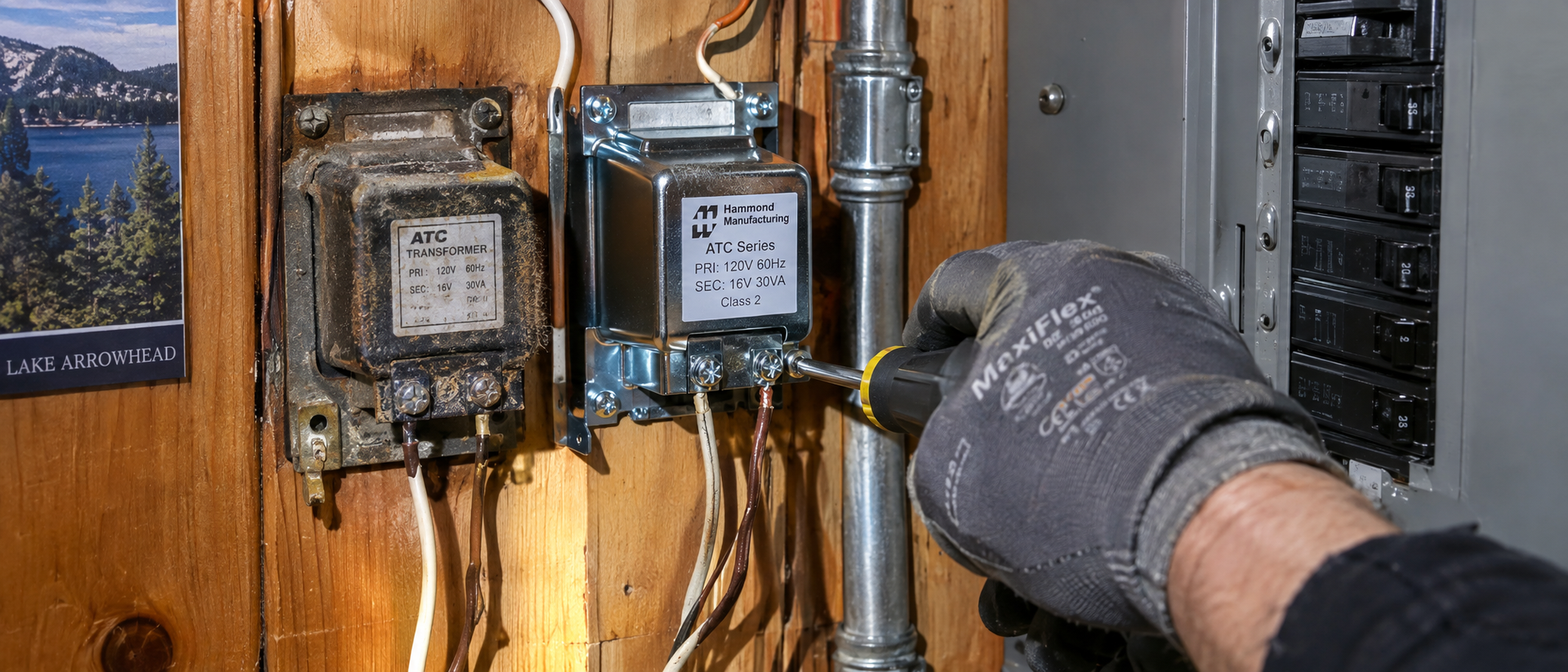
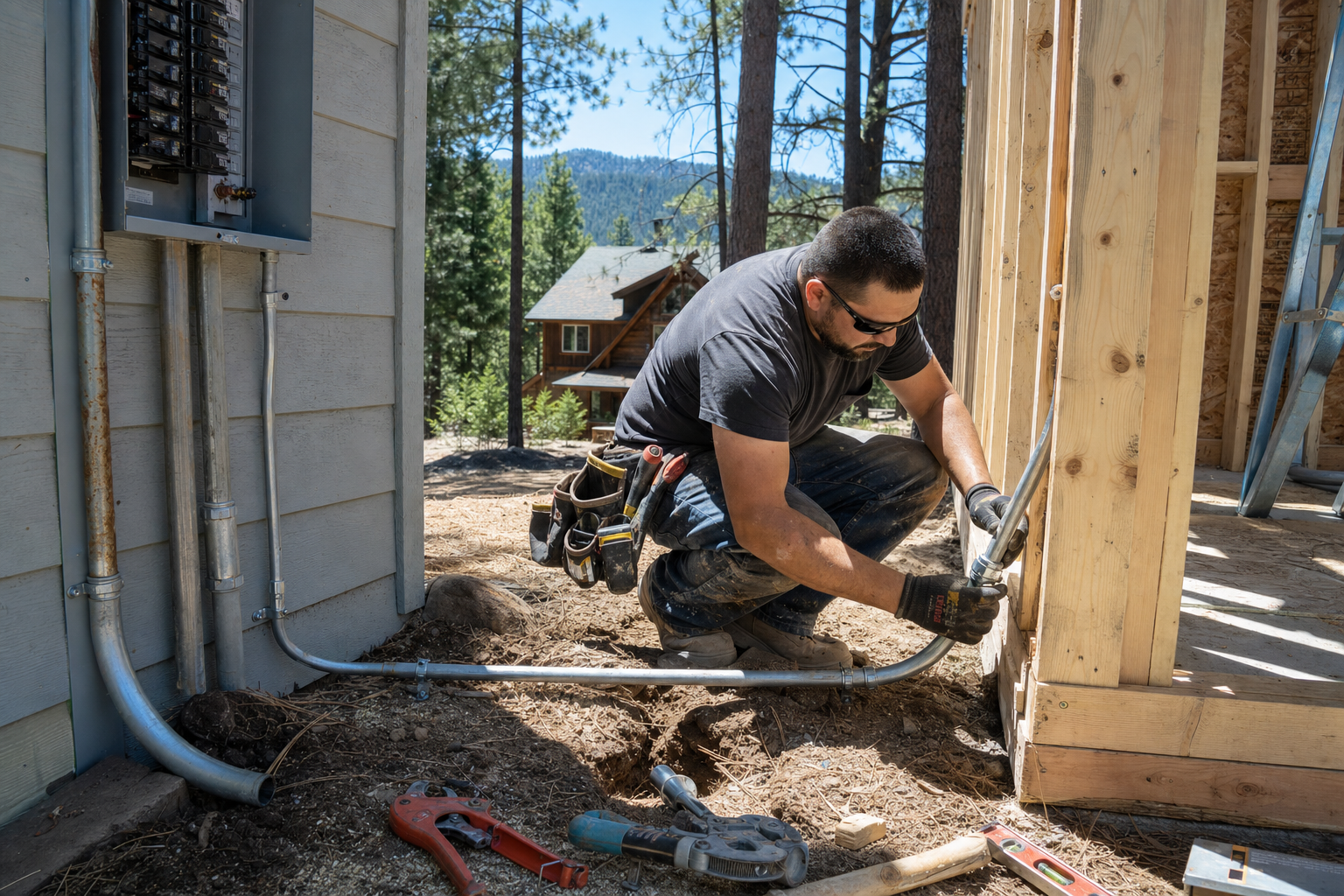
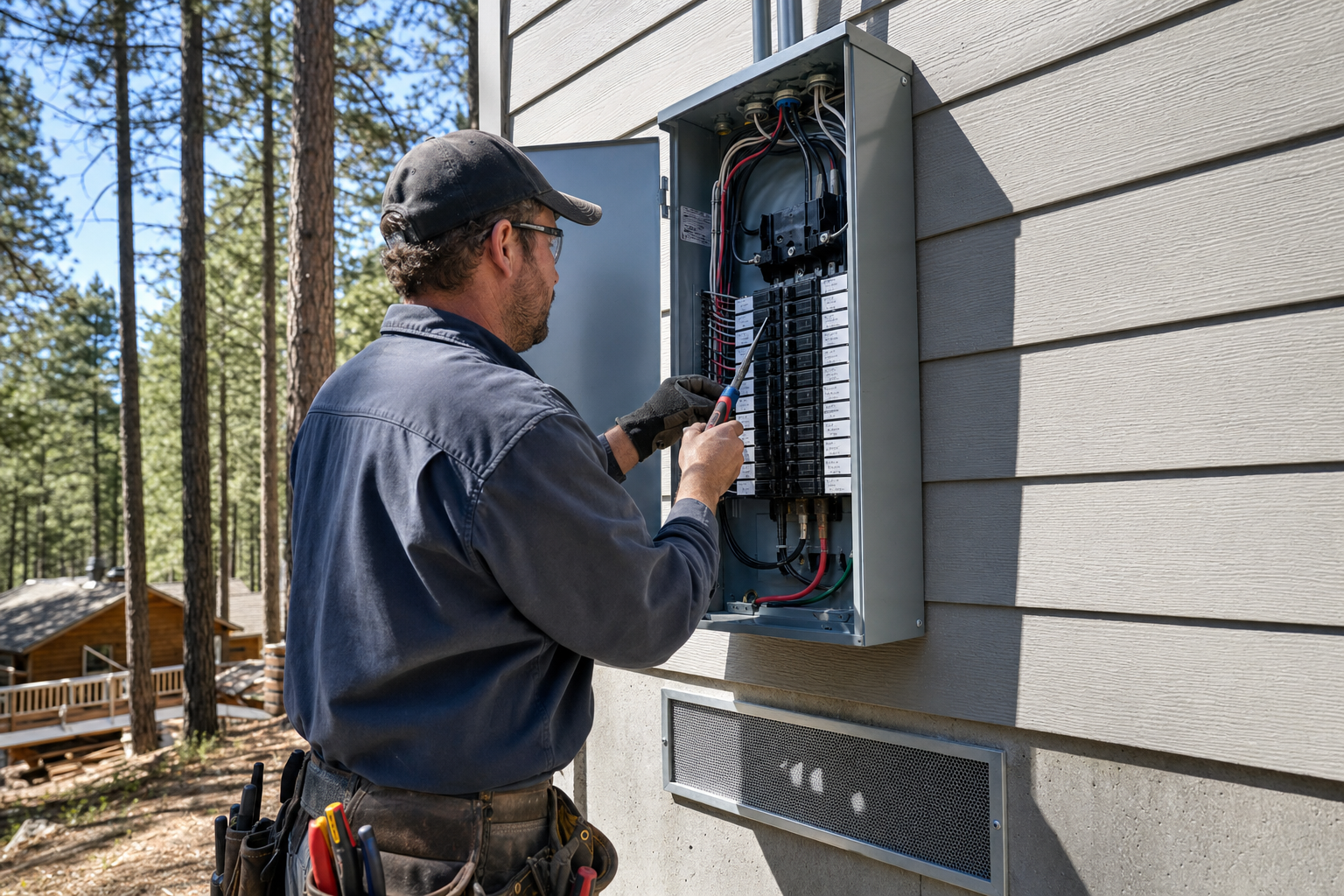
Electrical work has to be coordinated with these requirements, not treated as separate from them. Meter and service equipment penetrations through an ignition-resistant wall assembly need to be properly sealed to maintain the wall's ember-intrusion protection, and any electrical work touching vents, eaves, or soffits needs to preserve — not compromise — the fire-rated assembly already in place. This is exactly the kind of detail that gets missed when electrical work is scheduled separately from the broader construction plan instead of coordinated with it from the start.
Rebuilding or Renovating? Why This Is the Right Time to Upgrade Your Electrical Plan
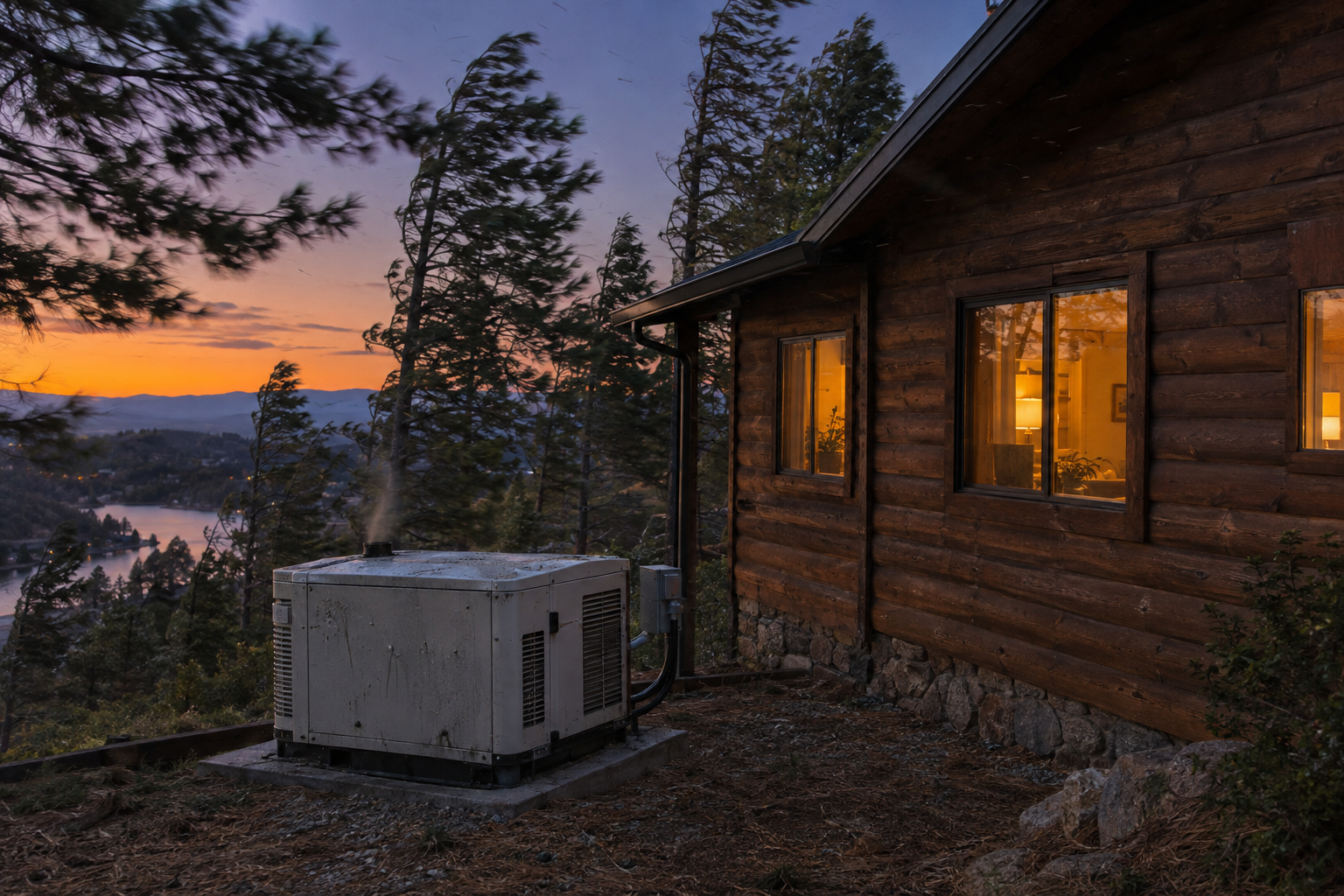
If you're rebuilding, renovating, or buying a Cedar Glen property that was reconstructed after 2003, this is a natural point to address your panel and overall electrical capacity at the same time — not as an afterthought. Documented, permitted electrical work performed alongside wildfire-compliant construction is also exactly the kind of paper trail that supports better insurance terms in a high fire-risk area; our electrical panel upgrade guide covers what insurers are increasingly looking for. It's also worth planning backup power into a rebuild from day one — see our PSPS power shutoff guide — since retrofitting a generator or whole-house surge protection later costs more than building it in during construction.
What Makes Cedar Glen Different From Blue Jay or Twin Peaks?
Cedar Glen has its own distinct identity even among neighboring mountain communities. It was settled by loggers and pioneers in the 1880s, and the Cedar Glen Shopping Center is still run by the same family six generations later — giving the town a small, close-knit character distinct from Blue Jay's larger commercial village or Twin Peaks' seclusion. It also functions as a gateway to the Pacific Crest Trail and Deep Creek, and is home to Wildhaven Ranch and a training site used by CalFire and San Bernardino County Fire — meaning wildfire awareness isn't abstract here, it's part of daily life. We covered a similar fire-history angle in our guide to Crestline's own wildfire-shaped housing stock, which faced its own major fire back in 1980.
What Are the Most Common Electrical Problems in Cedar Glen Homes Today?
Because so much of Cedar Glen was rebuilt after 2003, the panel and wiring situation here often skews newer than in some neighboring communities — but not universally. Older surviving structures and additions built onto rebuilt homes can still carry the same issues found throughout the mountain: undersized panels, aging outdoor circuits, and wiring that hasn't been evaluated since a change of ownership. If you're not sure which category your property falls into, our guide to choosing a mountain electrician covers what an initial assessment should include.
How Does San Bernardino County Permitting Work for Cedar Glen?
Electrical work here falls under the same San Bernardino County Land Use Services jurisdiction as the rest of the mountain, with additional scrutiny for anything touching wildfire-rated assemblies given Cedar Glen's Fire Hazard Severity Zone designation. Build extra review time into rebuild or major renovation projects specifically.
How Much Does an Electrician in Cedar Glen Charge?
- Service call / diagnostic: $125–$195
- Outlet or switch replacement: $145–$225 per device
- GFCI outlet installation: $175–$275 per location
- 100A to 200A panel upgrade: $2,800–$4,800
- Whole-house surge protector: $375–$575 installed
- New construction / rebuild electrical (full scope): quoted per project based on square footage and code requirements
FAQ
Was Cedar Glen destroyed in the 2003 Old Fire?
Cedar Glen was one of the communities hit hardest by the 2003 Old Fire, which destroyed numerous homes and cabins in the area. A significant share of the town's current housing stock was rebuilt afterward under updated wildfire building standards.
Does electrical work need to meet special requirements in a wildfire rebuild?
Yes. Electrical penetrations through ignition-resistant wall assemblies, vents, and eaves need to be properly sealed and coordinated with the overall wildfire-compliant construction plan, not treated as a separate trade.
Is Cedar Glen in a Fire Hazard Severity Zone?
Cedar Glen sits within San Bernardino County's mapped fire hazard areas, which means new construction and rebuilds fall under California's wildfire building code requirements, now consolidated into the California Wildland-Urban Interface Code.
What's the most common electrical issue in Cedar Glen homes?
It varies more here than in some other mountain communities because of how much was rebuilt after 2003. Older surviving structures still show the typical undersized panels and aging wiring found throughout the mountain, while post-2003 rebuilds tend to be more current.
Can documented electrical upgrades help with insurance in a high fire-risk area like Cedar Glen?
Often, yes. Permitted, documented electrical work is exactly the kind of evidence some insurers factor into coverage and pricing decisions for wildfire-zone properties.
Rebuilding, renovating, or just want your Cedar Glen property's electrical evaluated? Call (909) 403-4740 for a free quote.