Fall Shutdown and Spring Startup: The Electrical Checklist Every Lake Arrowhead Cabin Owner Needs
Fall Shutdown and Spring Startup: The Electrical Checklist Every Lake Arrowhead Cabin Owner Needs
Quick answer: Properly shutting down a Lake Arrowhead cabin's electrical system for the off-season means opening branch breakers in a specific order before the main, not just flipping the main switch. Just as important: never flip the main breaker back on in spring without inspecting the panel first. A circuit compromised by rodents, moisture, or freeze-thaw damage over the winter can become a fire risk the moment it's re-energized blind.
Why Does Shutdown Order Actually Matter?
A cabin sitting empty through a Lake Arrowhead winter is exposed to months of freeze-thaw cycling, potential rodent activity in wall cavities, and moisture intrusion — all of which can compromise wiring and connections in ways that aren't visible from outside the panel. Shutting down properly, and inspecting properly before starting back up, is what catches these problems before they become a fire hazard rather than after.
What's the Proper Fall Shutdown Sequence?
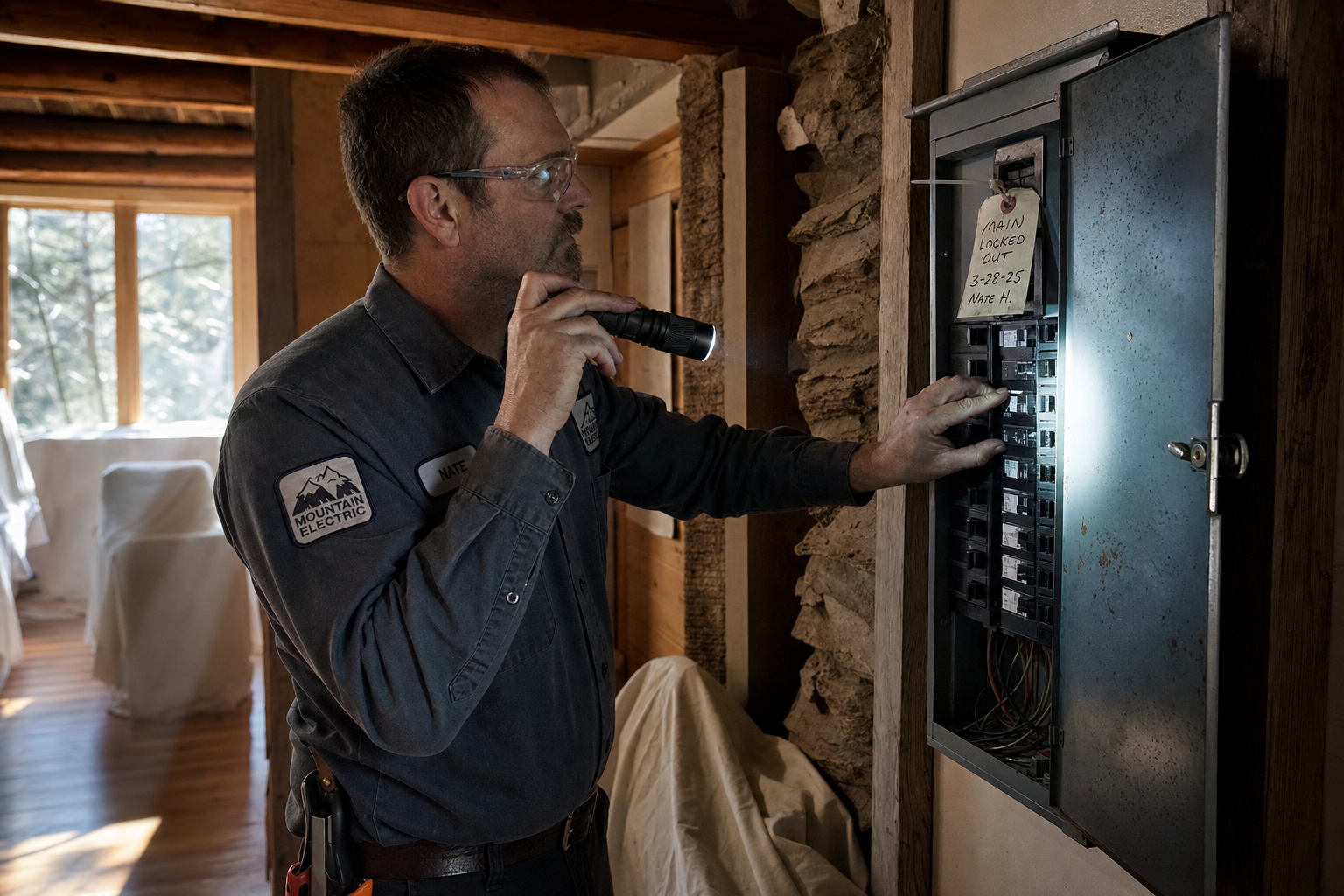
Before closing up for the season, open your largest branch breakers first — electric range, water heater, well pump, and any electric baseboard heat — then work through the remaining branch breakers individually. Open the main service disconnect last, after every branch breaker is already off. Under NEC 230.70, the main service disconnect needs to be fully opened to completely de-energize the panel — leaving individual breakers off while the main stays on doesn't achieve the same result. Apply a lockout tag noting the shutdown date and your contact information, and if your panel isn't already clearly labeled, take the time to label it properly before you leave — an unlabeled panel is not something you want to be deciphering during an emergency months from now.
Why Should You Never Just Flip the Main Breaker Back On in Spring?
This is the single most important safety habit for any seasonal cabin owner. A circuit that's been sitting compromised all winter — chewed wiring from rodents, a freeze-cracked exterior outlet box, a dock GFCI that failed silently — gives no warning before you throw the main breaker and energize everything at once. Inspect the panel, the visible wiring you can access, and any outdoor boxes or fixtures before restoring power, not after something starts smoking.
What's the Spring Startup Checklist?
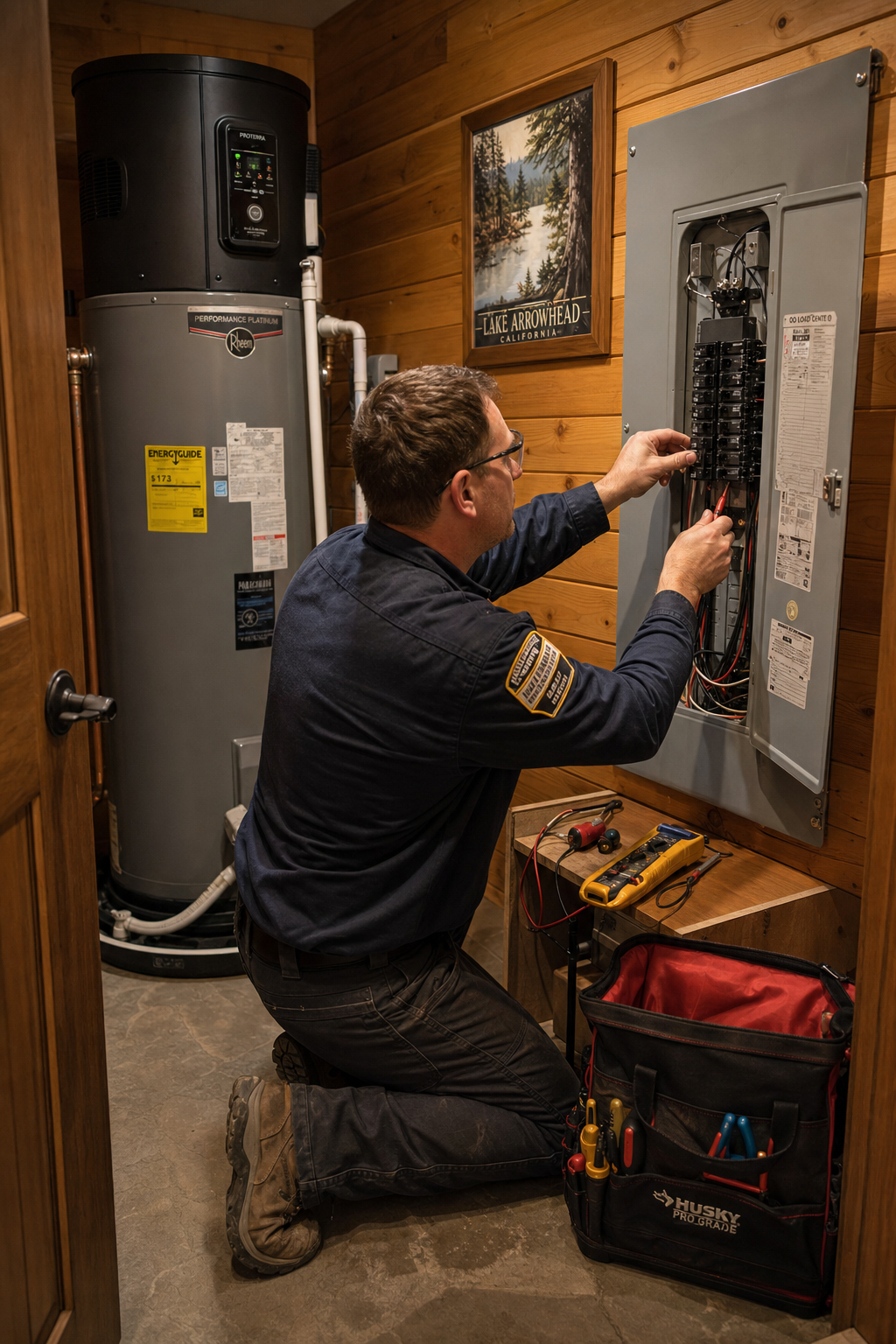
- Visually inspect the panel for signs of moisture, rodent damage, or corrosion before touching anything
- Check your whole-house surge protector's status light if you have one installed — a green light means it's active, while red or no light means it absorbed a surge over the winter and needs replacement, something we cover in our surge protection guide
- Test dock and boat lift GFCI outlets before anyone goes near the water — see our dock electrical guide for what proper protection looks like
- Restore power branch by branch, not all at once — plug in and test appliances individually, watching for anything that trips a breaker, runs abnormally, or shows signs of a problem
- Document anything unusual and don't use a circuit you're not confident is safe until it's been evaluated
What Do Cold Temperatures Actually Do to Your Breakers While You're Away?
This is worth knowing: breakers exposed to sustained cold can behave differently than they would at room temperature, sometimes tripping at a lower percentage of their rated load or responding more slowly than expected to an actual fault. That's part of why a panel that's been through a full Lake Arrowhead winter deserves an inspection before you trust it fully again, rather than assuming it will perform exactly as it did last fall.
Does This Change If You Have a Smart Panel or Remote Monitoring?
Significantly, and for the better. If you've installed a SPAN or Lumin smart panel, you get real-time visibility into your cabin's electrical status throughout the off-season — meaning you'd know about a tripped breaker or unusual power draw the moment it happens, rather than discovering it months later when you arrive for spring startup. This is exactly the scenario we describe smart panels being genuinely worth it for: a part-time property where nobody's around to notice a problem developing in real time.
FAQ
Should I turn off just the branch breakers or the main breaker too when closing up for the season?
Both, in the correct order. Open branch breakers first, largest loads first, then open the main service disconnect last to fully de-energize the panel.
Is it safe to just flip the main breaker back on when I arrive in spring?
No. Inspect the panel and visible wiring for signs of rodent damage, moisture, or corrosion first, and restore power branch by branch rather than all at once.
Do cold temperatures actually affect how my breakers perform?
Yes. Breakers exposed to sustained cold can trip at a lower percentage of their rated load or respond more slowly to a fault than they would at normal temperature.
How do I know if my surge protector did its job during a winter storm?
Check the status light. A green light means it's still active. A red light or no light means it absorbed a surge at some point and needs replacement.
Does a smart panel help with seasonal cabin management?
Yes, significantly. Remote monitoring means you're alerted to a tripped breaker or unusual power draw immediately, rather than finding out on your next visit.
Closing up your Lake Arrowhead cabin for the season, or need a proper spring inspection before you trust the power again?
Call (909) 403-4740 for a free assessment.