SCE Just Changed the Rules for When Your Power Gets Shut Off — Here's What That Means for Lake Arrowhead
SCE Just Changed the Rules for When Your Power Gets Shut Off — Here's What That Means for Lake Arrowhead
Southern California Edison quietly updated its Public Safety Power Shutoff protocol for this fire season, and the change that matters most for Lake Arrowhead: on circuits SCE considers high-risk, power can now be shut off earlier than in past years — before wind speeds even reach the thresholds that used to trigger a shutoff. SCE's own materials put it plainly: this year, PSPS events could happen more frequently, last longer, and affect people who've never experienced one before.
If that sounds like it's describing the exact circuits running through dense forest up here, it is. SCE held a San Bernardino County briefing on these changes on September 16 — worth looking up if SCE posted a recording, but not something to wait on if your property has a history of PSPS events, since fire season here runs well past any single briefing date.
What Actually Changed in SCE's Protocol This Year
Two specific updates are behind this shift. First, SCE refined its wind speed triggers, using updated circuit-by-circuit and environmental risk data rather than a single blanket threshold applied everywhere. Second, and more directly relevant here, SCE now allows earlier shutoffs specifically on circuits already flagged as high fire risk — meaning if your property is on one of those circuits, a forecast of unusually high winds can trigger a shutoff before conditions actually reach the wind speeds that would have been required in past years. In practice, that means less lead time between "a red flag warning gets posted" and "your power is actually off," and it means properties that have never seen a shutoff before could see one this year simply because their circuit's risk classification changed, not because anything about the property itself did.
This Isn't Hypothetical for This Corridor
Lake Arrowhead's neighboring community, Crestline, has already lived through exactly this scenario — residents there have described going four days without power, having it restored for two, then losing it again for three more, all triggered by wind conditions that didn't even feel especially severe on the ground where they lived. That's the nature of how SCE manages PSPS: a circuit can span areas with very different actual wind conditions, and if any section of that circuit is experiencing dangerous winds, the whole circuit can go dark, including parts of the mountain that felt calm that day. With this year's earlier-trigger policy layered on top of that existing pattern, longer and more frequent outages aren't a worst-case scenario — they're the realistic baseline to plan around.
What This Means for Backup Power Planning
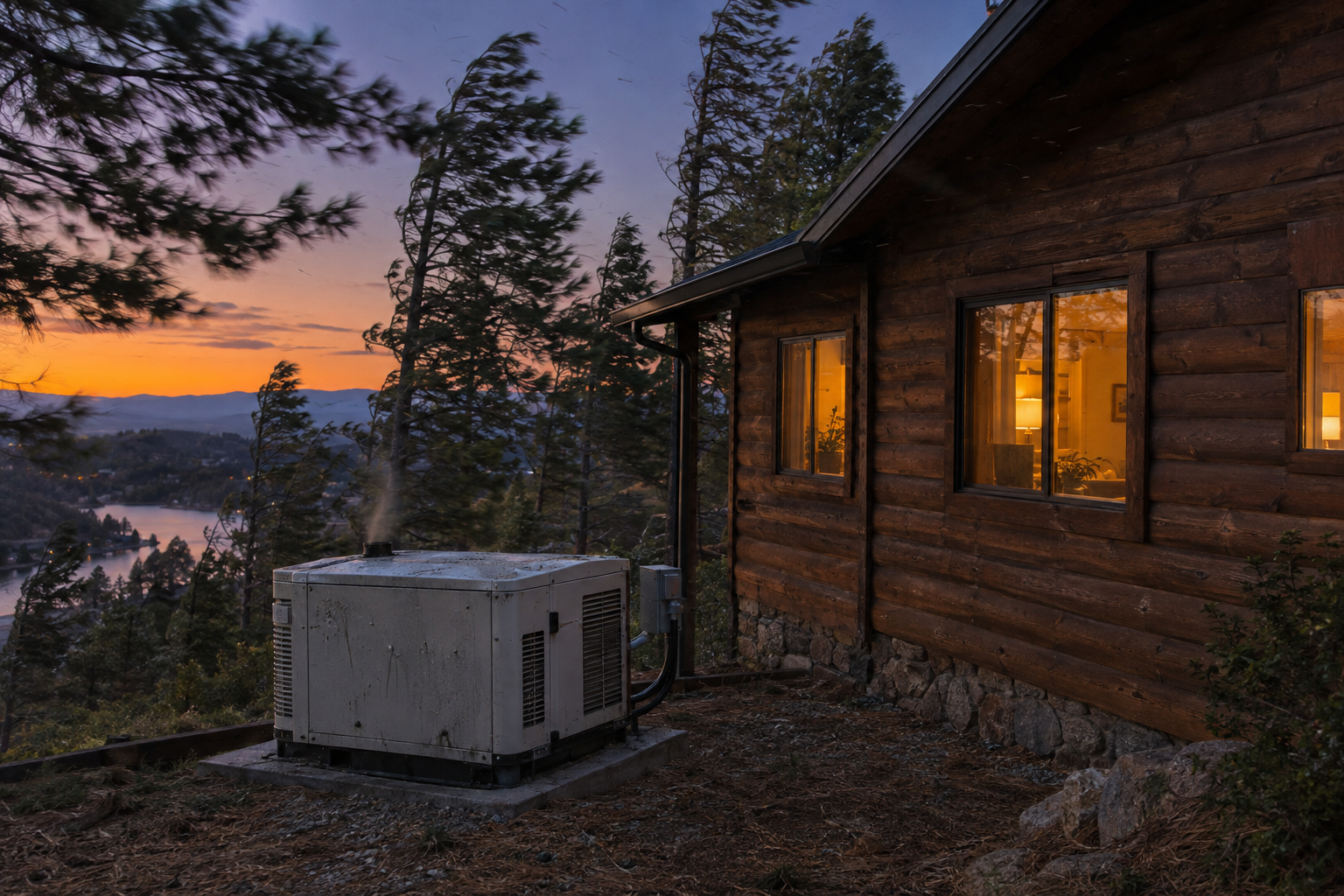
Here's the practical part: "earlier" and "more frequent" both mean less time between a red flag warning and your power actually going out. If your household relies on backup power, that shrinking window is exactly why now — before the next wind event, not during it — is when preparation actually matters. A generator installed the week after your power's already been out for three days is still the right call, but it's a much worse week to make it, both because of scheduling backlogs across every electrician on the mountain and because you're making equipment decisions under pressure instead of with a clear head.
A few things worth checking on your own property before the next PSPS hits:
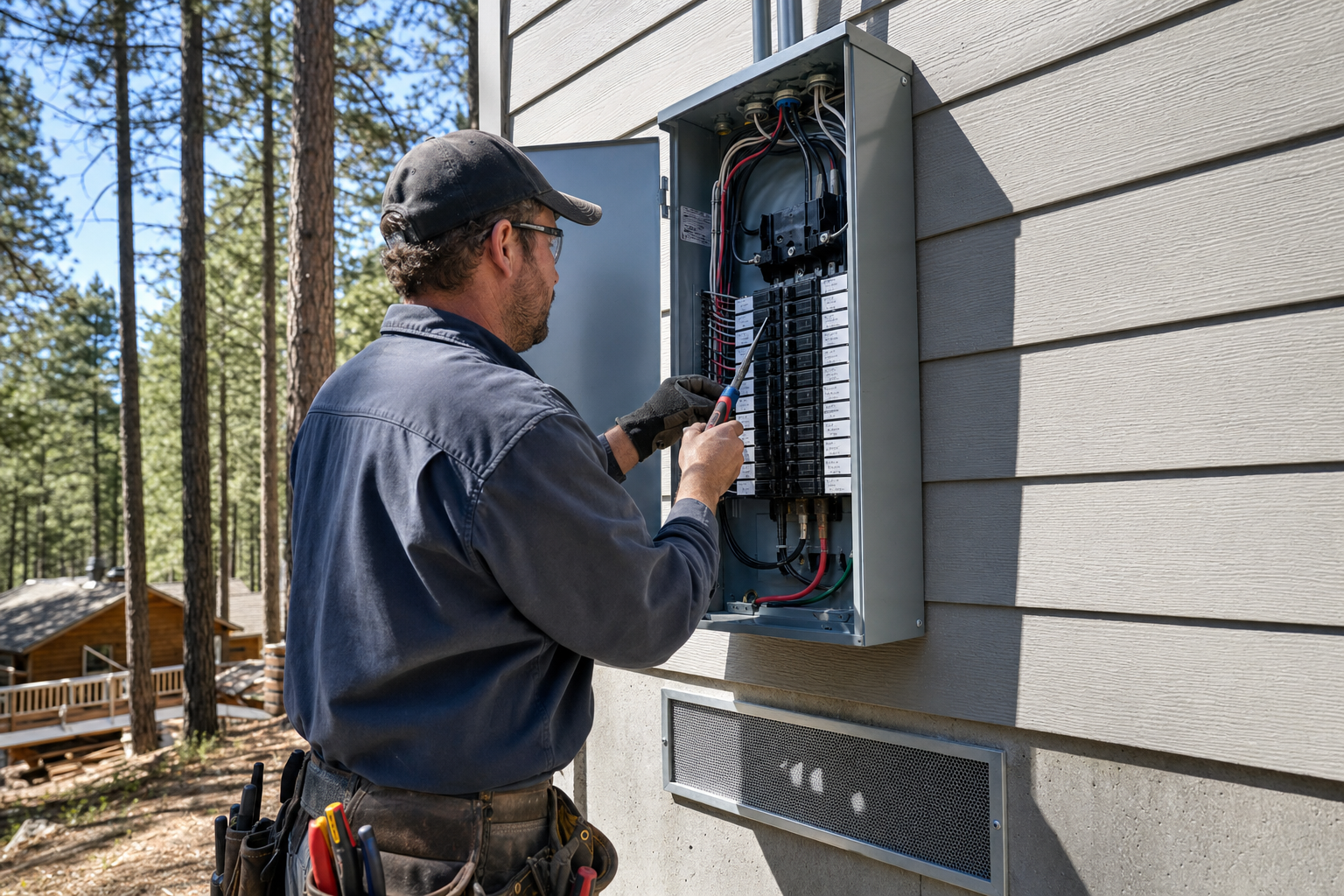
If you already have a backup generator, when's the last time it was actually tested under load, not just started up? A generator that turns on fine in the driveway can still fail to properly power your panel if the transfer switch or connections haven't been checked recently.
If you don't have one yet, sizing it correctly matters more than buying quickly — see our generator sizing guide before you order anything, since an undersized system bought in a panic during outage season is a common and avoidable mistake.
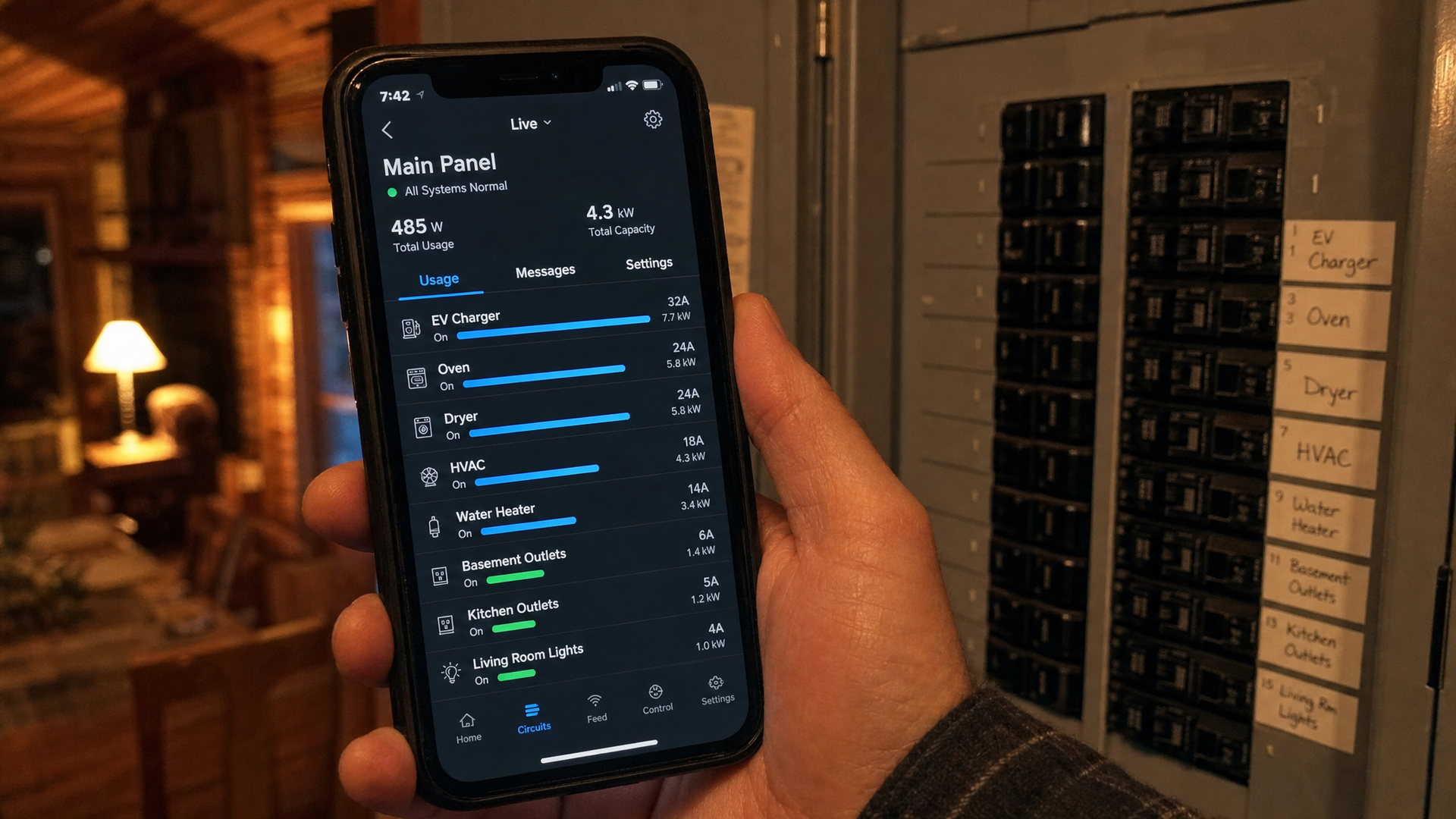
If you're relying on a battery system paired with solar, this is a good moment to confirm your smart panel or critical loads setup is actually configured for the specific circuits you need during an outage — not just installed, but set up correctly for how you'd actually use it during a multi-day shutoff.
And if your property has whole-house surge protection installed, check the indicator light. A surge protector that already absorbed a hit during a past PSPS restoration event needs replacing — it doesn't announce that it's no longer protecting anything, it just quietly stops working. Restoration after a shutoff is actually one of the higher-risk moments for surge events, as power comes back online across a circuit that's been de-energized for days.
Why Waiting Costs More Than Money
None of this requires an emergency call today. It does require not waiting until the next red flag warning is already posted to find out something isn't ready. Every fall, we see the same pattern: a wind event gets forecast, and the phone starts ringing from people who want a generator installed by the weekend. Some of those jobs simply can't happen that fast — permitting, equipment availability, and scheduling all take real time, and a mountain-wide wind event means every electrician on the corridor is getting the same calls at once. The homeowners who get through a multi-day shutoff without incident are almost always the ones who called before the season got bad, not during the worst week of it.
Don't wait for the next Red Flag Warning to find out your generator won't start, your surge protector already failed, or your panel can't handle what you're asking of it. Call (909) 403-4740 today and get your property inspected and ready before the next PSPS event — not scrambling during one.