Why Does Your Cabin's Power Go Out Before the Rest of the Neighborhood — and Come Back Last?
Why Does Your Cabin's Power Go Out Before the Rest of the Neighborhood — and Come Back Last?
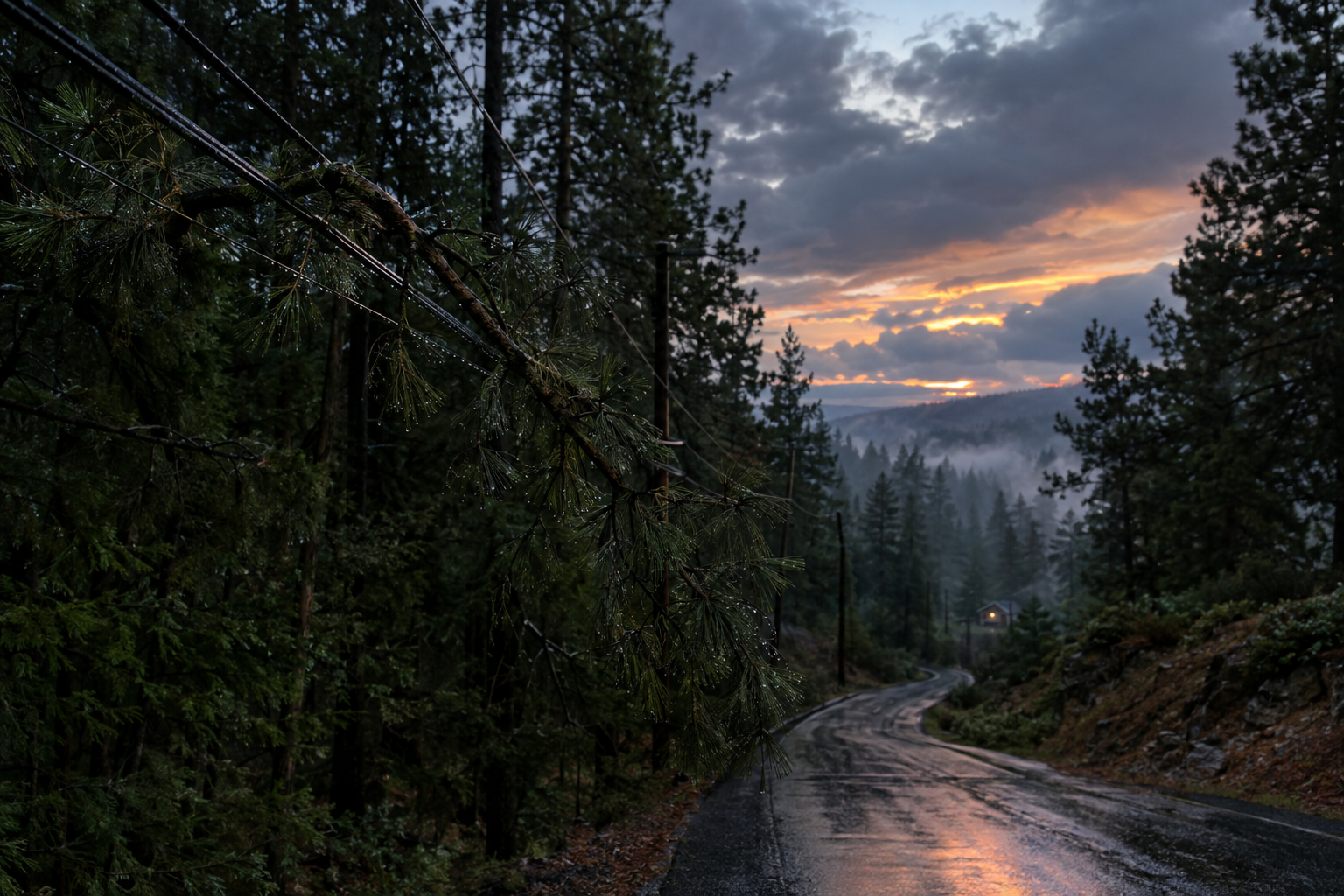
If you've ever compared notes with a neighbor after a storm and found out their power came back six hours before yours did, on the same mountain, in the same weather — you're not imagining a pattern. There's a real reason for it, and it usually comes down to where your specific line sits on the grid, not anything wrong with your house.
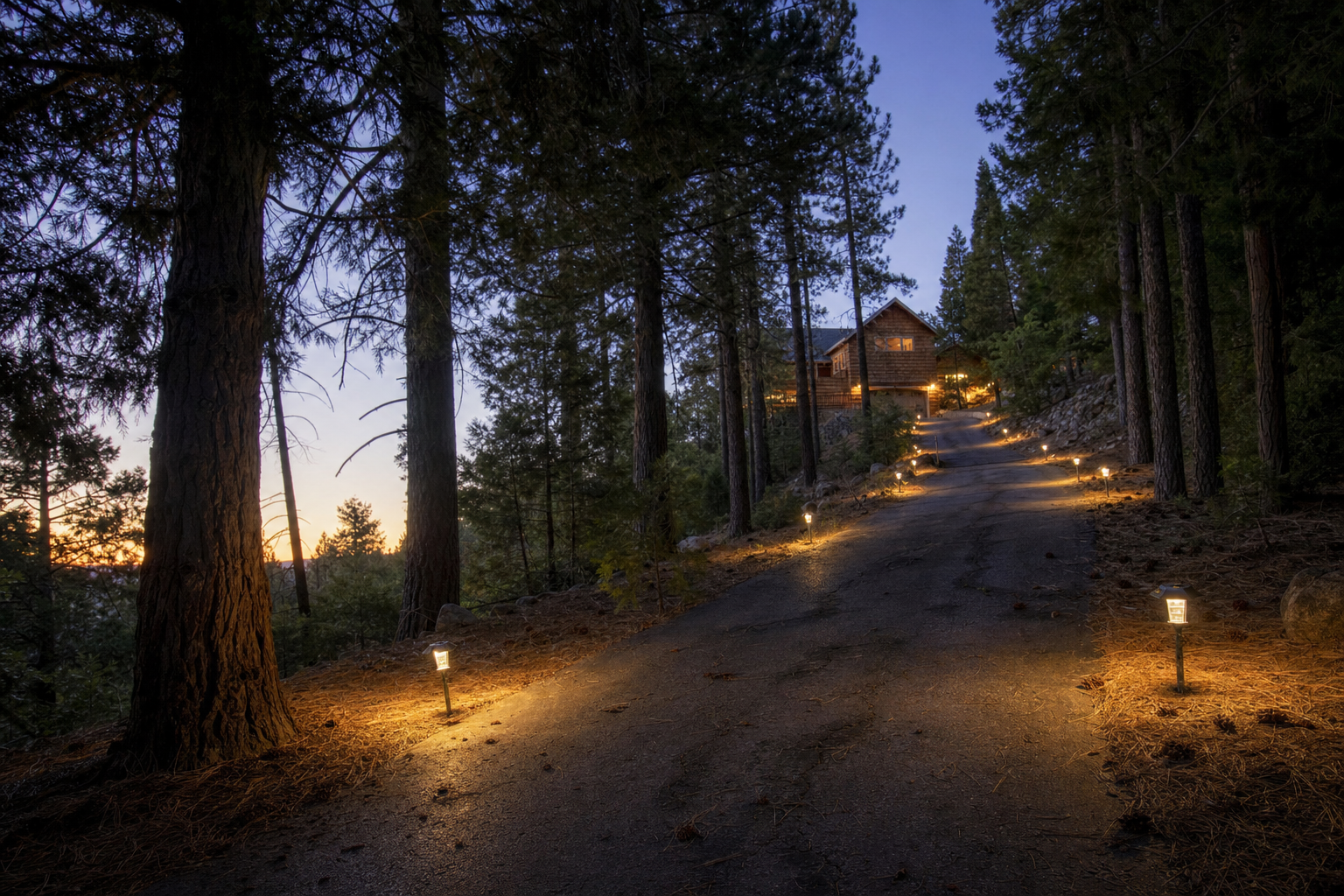
Utility distribution works like a tree, not a grid of equal branches. Power flows from a substation out along main distribution lines, which then split into smaller lines, which split again into the individual service drops that actually reach houses. If your property sits near the end of one of those smaller branches — common for cabins tucked back on a private road, or homes at the far edge of a service area — you're depending on every connection between you and the substation staying intact. A tree limb coming down on a line a mile away, somewhere between you and town, can knock out your power while a house closer to the main line keeps running fine.
What does it actually mean to be "at the tail end" of a circuit?
Utilities describe this in terms of circuit position, and it's a genuinely useful concept to understand about your own property. A circuit starts at the substation and radiates outward, and every property connected to it sits somewhere along that path — closer to the source, or further out toward the end. The properties nearest the substation are the ones that benefit from the shortest, most direct, most heavily maintained section of line. The properties at the tail end are depending on every single segment between them and the source staying intact, through the densest tree cover, over the longest distance, with the most opportunities for something to go wrong somewhere along the way. Two houses a quarter mile apart can be on completely different circuits, or on very different points of the same one, which is exactly why neighbors so often have wildly different outage experiences from the identical storm.
How does PSPS shutoff decision-making interact with this?
This matters beyond just storm damage. During a Public Safety Power Shutoff event, utilities generally de-energize entire circuits or circuit segments identified as high fire-risk — often specifically because they run through dense, hard-to-access forest terrain where a downed line could ignite a fire nobody would catch quickly. Properties at the tail end of a circuit running through exactly that kind of terrain are disproportionately likely to sit inside a PSPS shutoff zone in the first place, on top of being last in line for restoration after a storm knocks the same circuit out for a completely different reason. If your property has a track record of both PSPS shutoffs and slow storm restoration, that's not a coincidence — it's the same underlying circuit geography showing up twice.
This is exactly why storm damage in the mountains doesn't hit evenly. Dense tree cover — which describes most of the Lake Arrowhead area — means more opportunities for a branch or a whole tree to fall across a line somewhere along that chain before it ever reaches your property. And when it comes to restoration, utility crews generally work from the substation outward, restoring the biggest circuits serving the most customers first, then working down toward the smaller branch lines and individual service drops last. That's not favoritism — it's genuinely the fastest way to get the most people back on power the soonest. It also means if you're on one of those last branches, you're going to be one of the last people reconnected, every time, regardless of how minor your specific outage actually was.
What can you actually do about it?
There's not much you can do about where your property sits on the distribution tree. What you can control is how much that vulnerability actually costs you when it happens. A property that reliably loses power before everyone else, and gets it back last, is exactly the kind of situation where a properly sized backup generator or battery system stops being a luxury and starts being the thing that makes six extra hours without power a non-event instead of a real problem — food spoiling, pipes at risk in freezing weather, a hot tub heater cycling on and off unpredictably as power flickers back through a damaged line before final restoration.
If your cabin seems to be first out and last back every single time there's a storm, that's worth planning around directly rather than treating each outage as its own surprise.
A few things worth knowing
How can I find out if my property is at the tail end of a circuit?
Your utility can often tell you your circuit ID and general position when you call, and a pattern of consistently late restoration compared to nearby neighbors is itself a strong practical indicator, even without the technical circuit map in hand.
Does living at the tail end of a circuit mean I'm more likely to be included in a PSPS shutoff?
Often yes, particularly if that circuit runs through dense forest terrain, since utilities frequently de-energize entire high-risk circuit segments together during a shutoff event.
Is there any way to get moved onto a different circuit closer to the substation?
Generally no — your circuit connection is determined by your property's physical location and existing infrastructure, not something a homeowner can request to change.
Does a whole-house generator eliminate the outage entirely, or just cover the gap?
A properly sized system can cover your essential loads for the duration of an outage, effectively closing the gap between when your power goes out and when the utility eventually restores it, regardless of how long that restoration takes.
Tired of always being last to get power back?
Let's talk about what backup power actually makes sense for your property.
Call (909) 403-4740.