Heat Tape and Roof Heat Cable in Lake Arrowhead: The Electrical Requirements Most Cabins Miss
Heat Tape and Roof Heat Cable in Lake Arrowhead: The Electrical Requirements Most Cabins Miss
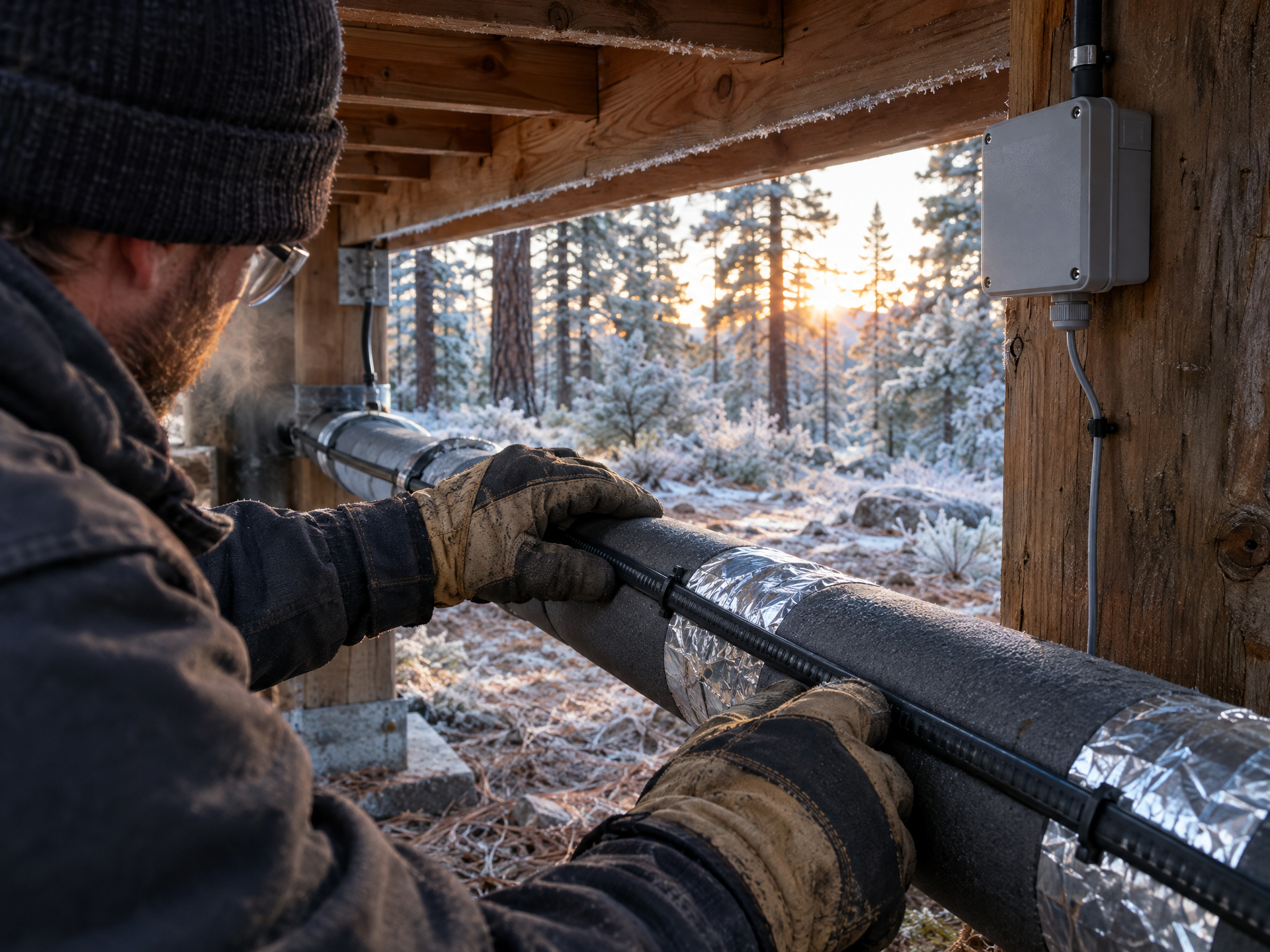
You've seen it on a hundred mountain cabins: a gray cord running along an exposed pipe under the deck, disappearing into a power strip that disappears into an extension cord. It was installed years ago, it works when it's cold, and nobody has thought about it since.
With mountain lows already dropping into the 30s and 40s, this is the time of year that cord matters. It's also the time to find out whether the system it belongs to is set up the way the electrical code expects.
Two different jobs, two different code sections
Electric freeze protection on a house covers two separate things:
- Pipe freeze protection uses heat trace cable, often called heat tape, to keep water lines from freezing. It falls under National Electrical Code Article 427, fixed electric heating equipment for pipelines and vessels. See trace heating for how it works.
- Roof and gutter de-icing uses heat cable to keep meltwater flowing so it doesn't refreeze at the eaves. It falls under Article 426, fixed outdoor electric deicing and snow-melting equipment.
California adopts the NEC as the California Electrical Code with its own amendments, so confirm the current edition with the county before any permanent installation.
The rule that surprises people: 30 mA, not a regular GFCI
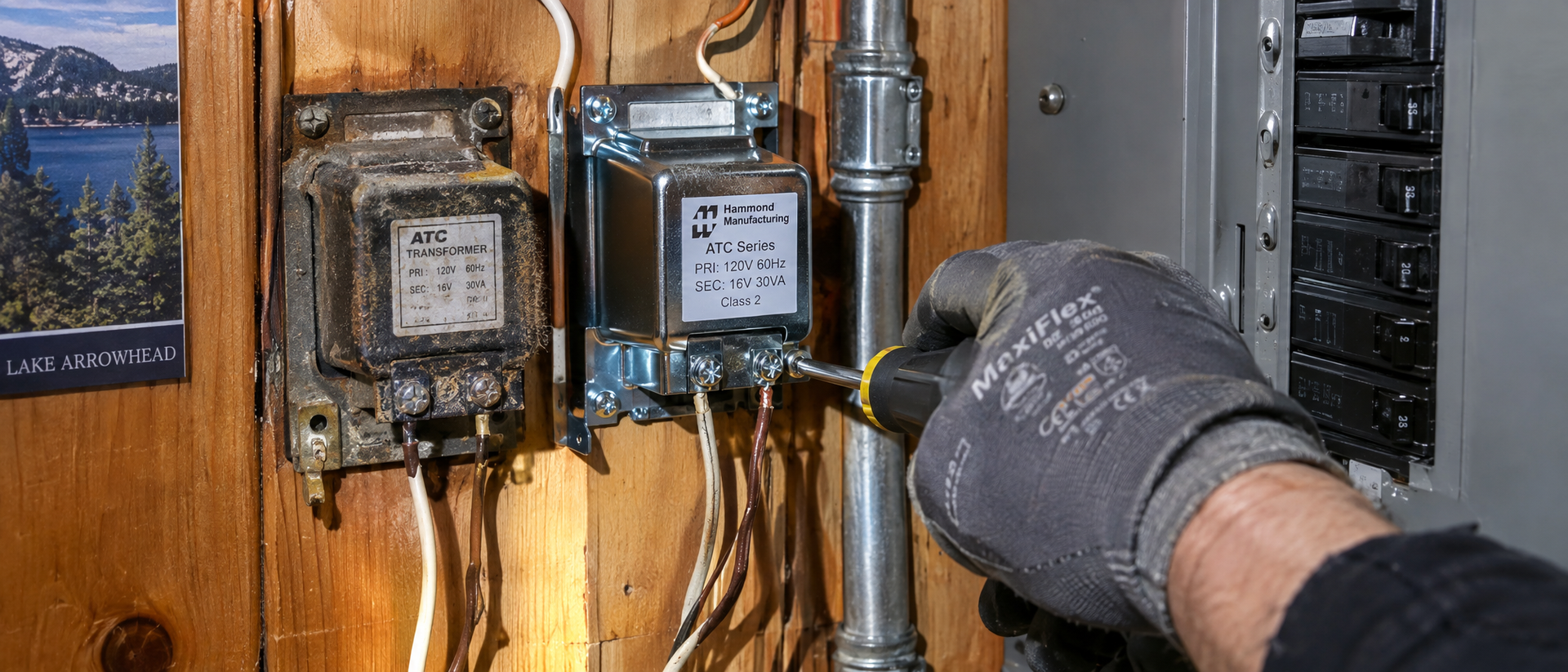
Both articles require ground-fault protection of equipment, known as GFPE. NEC 426.28 requires it for fixed outdoor deicing and snow-melting equipment, and NEC 427.22 requires it for electric heat tracing and heating panels, with a narrow industrial exception.
GFPE isn't the same thing as the GFCI outlet you test in a bathroom. A personnel GFCI trips at about 4 to 6 milliamps. GFPE is set higher, typically at 30 milliamps, because heating cable leaks small amounts of current to ground, especially in cold, wet conditions, and a standard GFCI can trip over and over for no real reason. The higher setting still protects against the ground faults that can start fires. The trade publication IAEI Magazine explains the reasoning.
Plug-in heat tape sold at hardware stores is designed for DIY use, and some include built-in protection. But a permanent system that's hardwired, or that has run for years off a shared outlet, deserves a look from someone who knows these rules.
What a proper installation includes
- Its own circuit, sized with headroom. Heating cable is a continuous load, so the branch circuit is sized at 125% of its draw.
- Room for the cold-start surge. Self-regulating cable can draw two to three times its steady-state current when it starts from very low temperatures, which affects breaker size and how long a run one circuit can handle. Manufacturers publish the limits.
- GFPE protection at 30 mA, as a dedicated device or a listed breaker.
- A thermostat or sensor, so the cable runs only when it's needed. Roof systems often add a moisture sensor, so cable isn't heating on a dry freezing night.
- The right cable and insulation. Self-regulating cable is the usual choice for pipes, and it should never overlap or touch itself. Heat trace also needs insulation over it to work, and wet insulation defeats it.
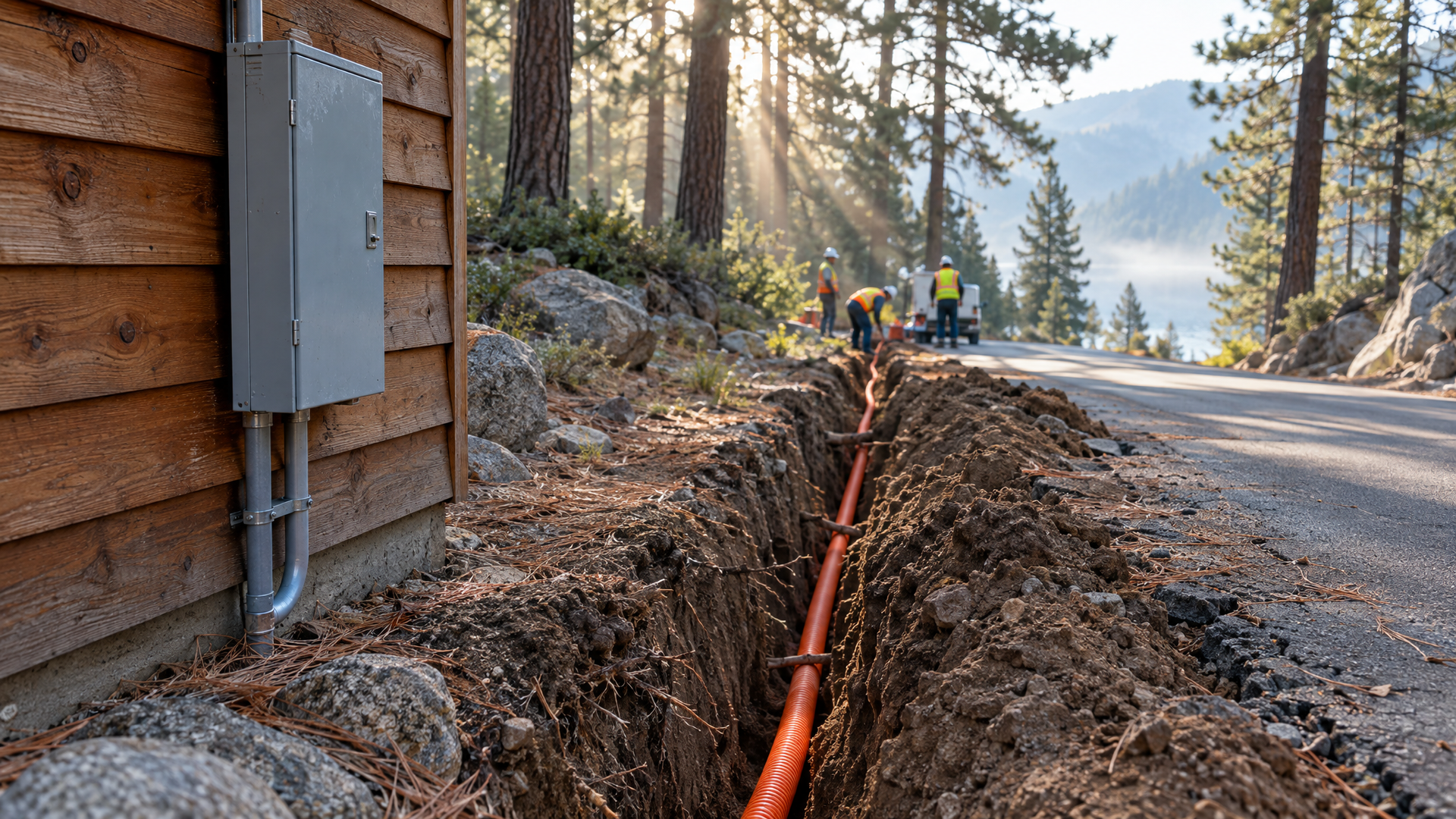
A new dedicated circuit generally needs a permit, so ask whoever does the work to confirm what San Bernardino County requires.
A note on roof heat cable and ice dams
Roof cable treats a symptom. Ice dams usually form when heat escaping from the house melts the snow on the roof, and the meltwater refreezes at the cold eaves. The lasting fix is insulation, air sealing, and ventilation in the attic, which stops the melting at the source. Heat cable protects the eaves and gutters in the meantime, and it can be a reasonable stopgap on a cabin with a complicated roof. It won't solve the underlying heat loss, and it adds to your electric bill, which matters for a cabin you don't occupy full time. Our guide to what SCE's fixed charge means for a seasonal cabin covers how to think about standby loads.
The problem no heat tape solves: no power
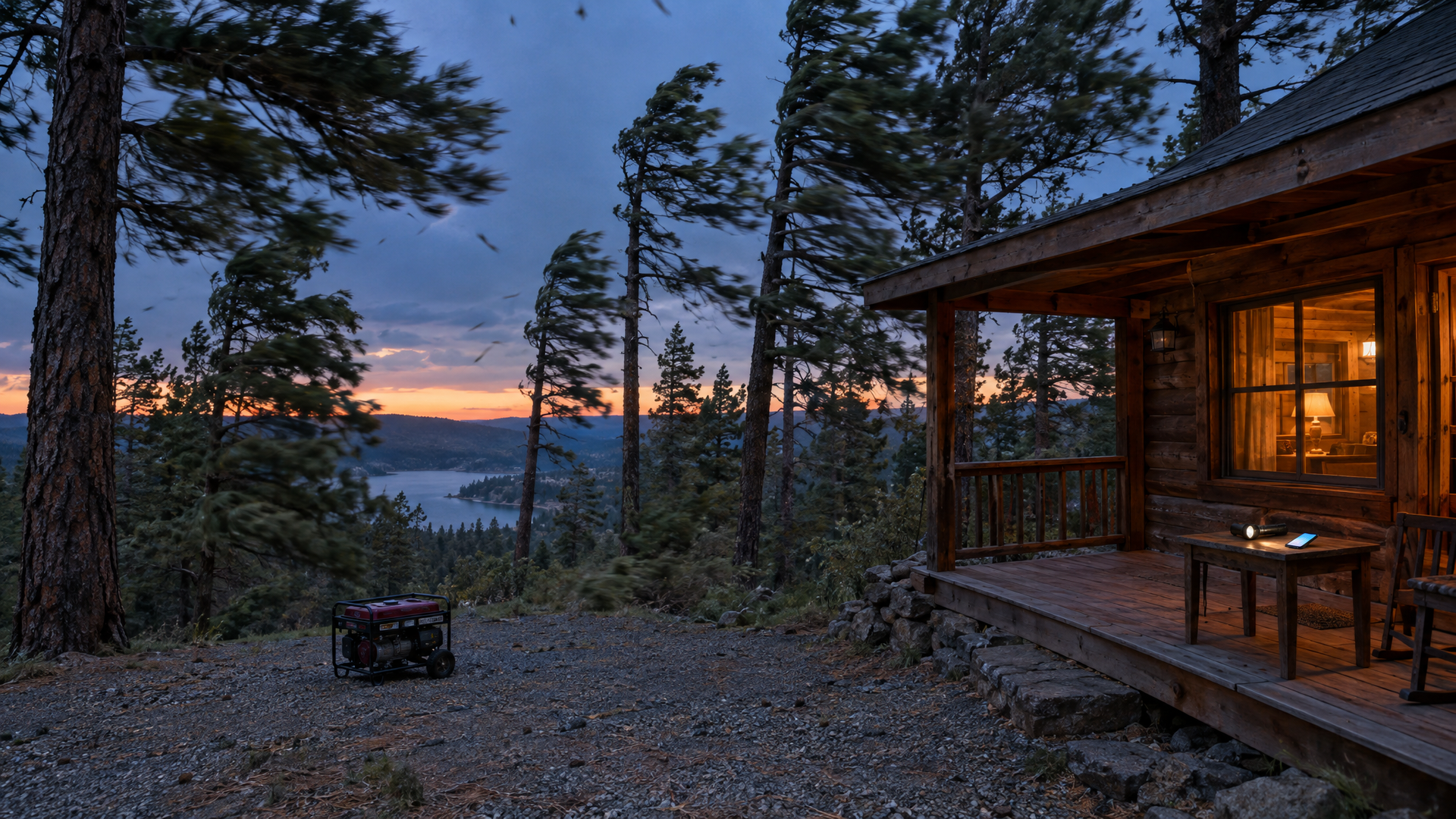
Everything above stops working when the power does. On a mountain where storms, shutoffs, and downed lines are routine, an outage in a freeze is how pipes burst, especially in a cabin nobody's staying in.
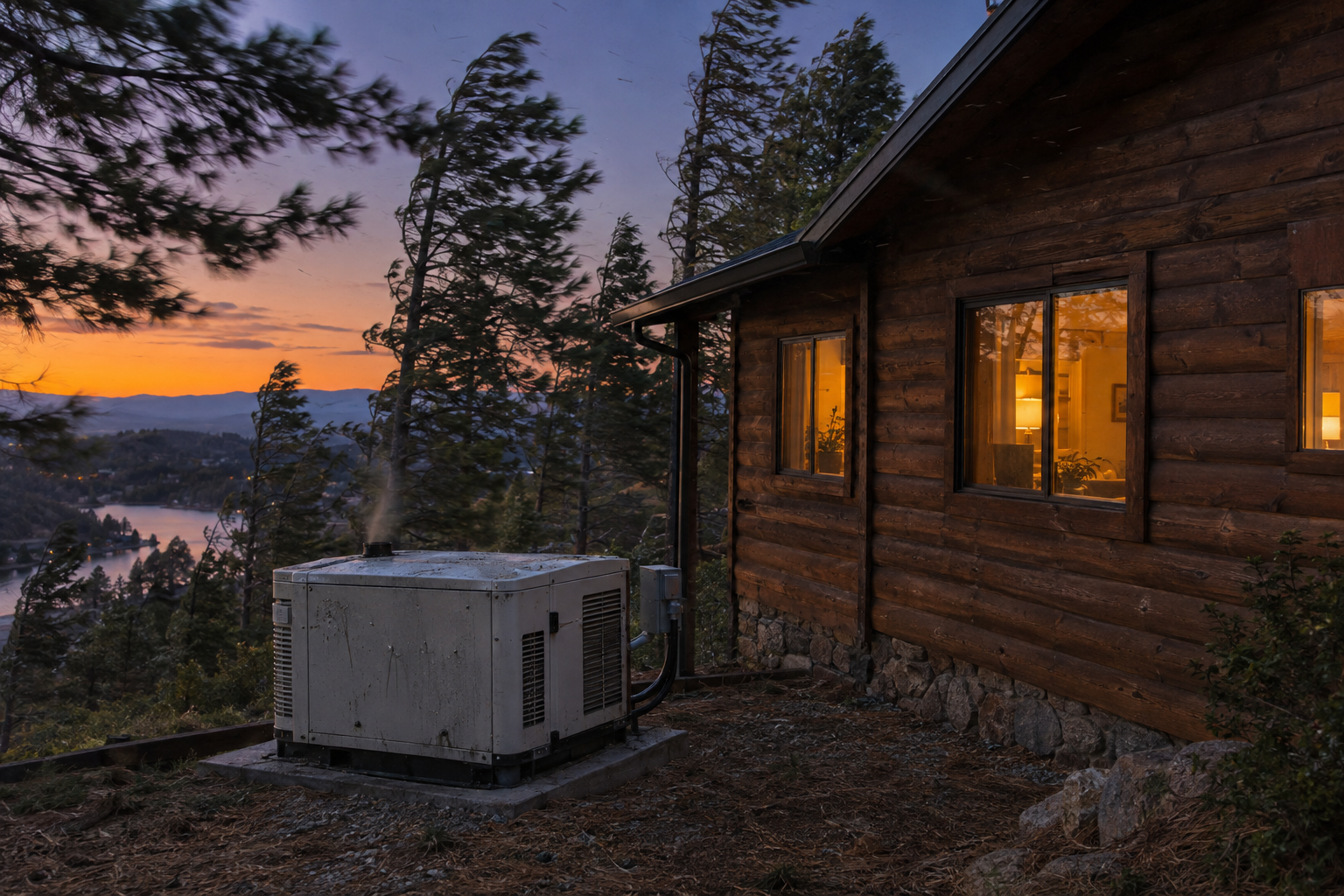
- Know whether your freeze-protection circuits are on your generator's list. A transfer switch only powers the circuits it's wired to. See our backup generator guide.
- Have a plan for outages while you're away. Our fall shutdown and spring startup checklist covers what to do with an empty cabin, and our power shutoff checklist covers the day before a shutoff.
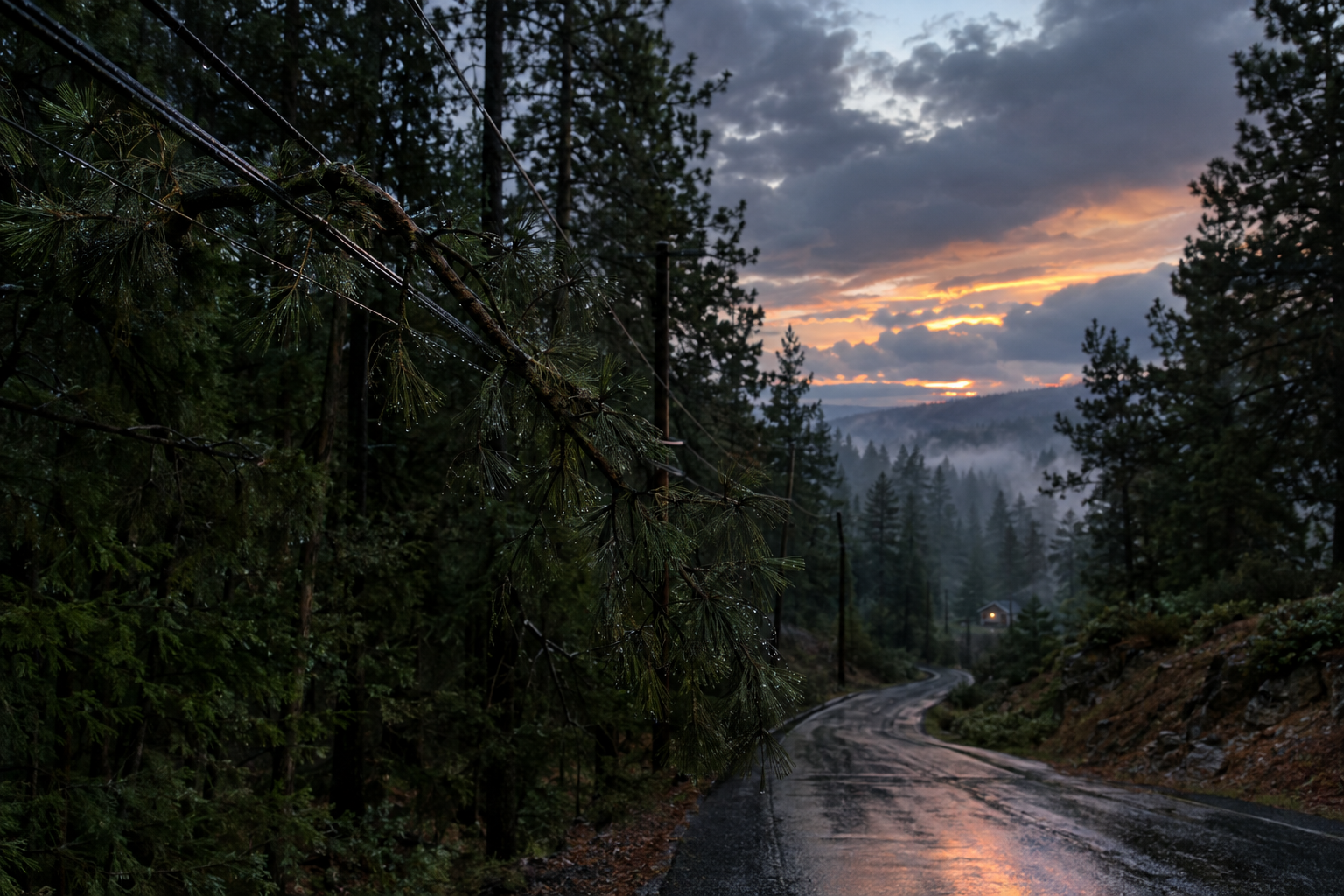
- Remember tail-end circuits. A cabin at the end of a long line may be among the last to get power back, as we explain in why some Lake Arrowhead cabins lose power first.
Before the first freeze
- Inspect the cable's jacket end to end. Cracked, brittle, scorched, or sliced cable should be replaced, not taped.
- Check the insulation over pipe heat trace. If it's wet, missing, or crushed, the cable can't do its job.
- Look at where the power comes from. An extension cord or a power strip feeding permanent heat tape is a warning sign.
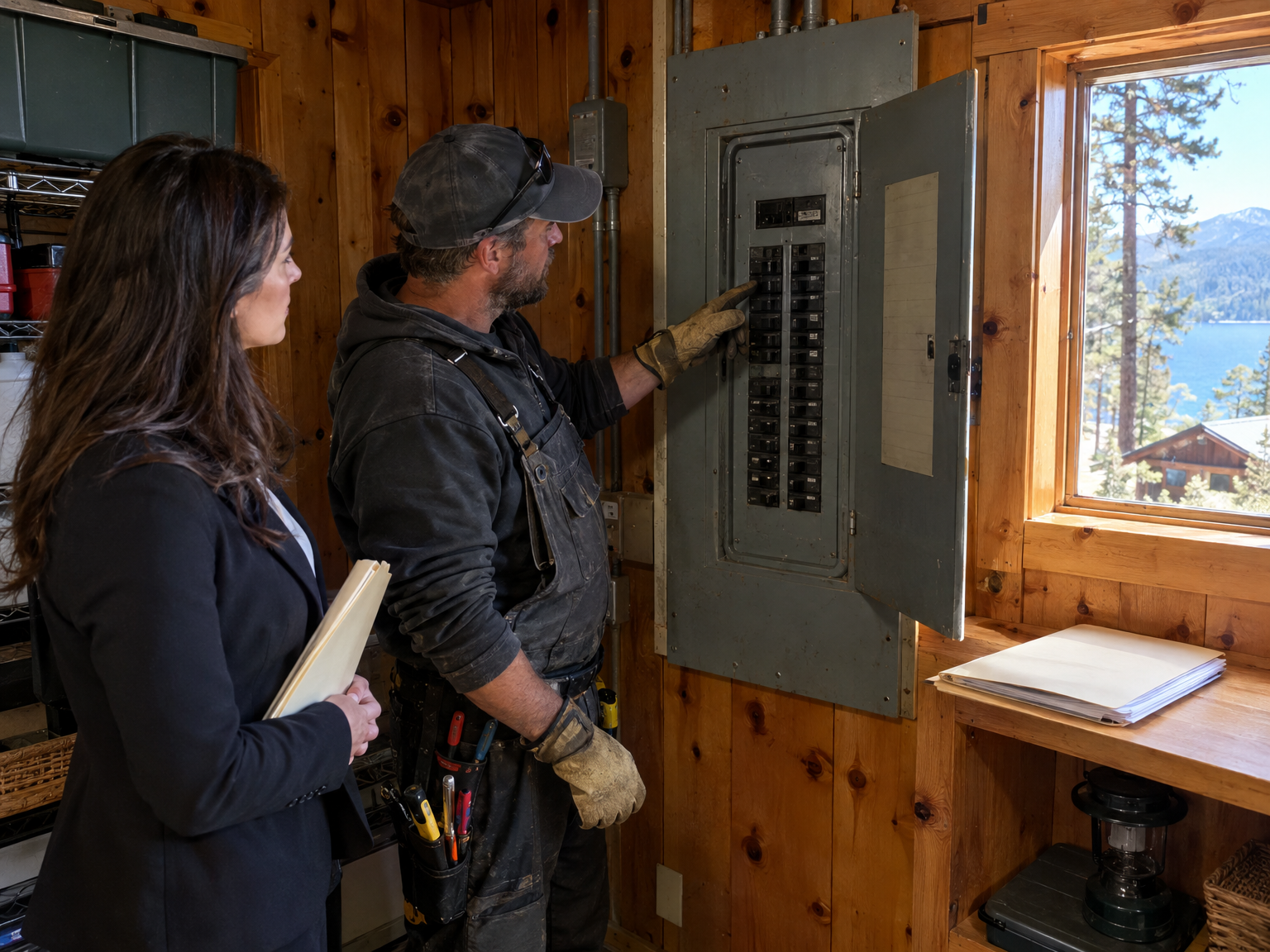
- Test the controls. Make sure the thermostat or sensor turns the system on, and test any GFPE device's test button.
- Check the roof cable for clips that have loosened and any sections that have sagged off the shingles.
- Don't plug anything new into the same circuit without checking the load.
When to call an electrician
- A breaker or GFPE device that trips repeatedly when the cable is on.
- Any melted, scorched, or discolored cable, plug, or outlet.
- Heat tape running off an extension cord or a daisy chain of power strips.
- A system you're not sure was ever installed on a proper circuit.
Questions about heat tape and heat cable
Can I plug heat tape into a regular GFCI outlet?
Fixed heating equipment is supposed to be protected by GFPE, which trips at a higher threshold than a standard GFCI. A regular GFCI may trip repeatedly. Have the circuit evaluated before you decide.
Does heat tape work during a power outage?
No. It needs power to heat. If you want freeze protection to keep running during an outage, those circuits have to be on a generator through a transfer switch.
Will roof heat cable stop ice dams?
It keeps a channel open for meltwater, but it doesn't address the heat loss that causes ice dams. Insulation and air sealing in the attic fix the cause.
Want your freeze-protection circuits checked before the first hard freeze?
Call Lake Arrowhead Electrical at (909) 403-4740 for a free quote.
We'll look at your cable, your protection, and whether those circuits are on your backup plan.