Holiday Lights on a Lake Arrowhead Cabin: What the Mountain Adds to the Usual Warnings
Holiday Lights on a Lake Arrowhead Cabin: What the Mountain Adds to the Usual Warnings
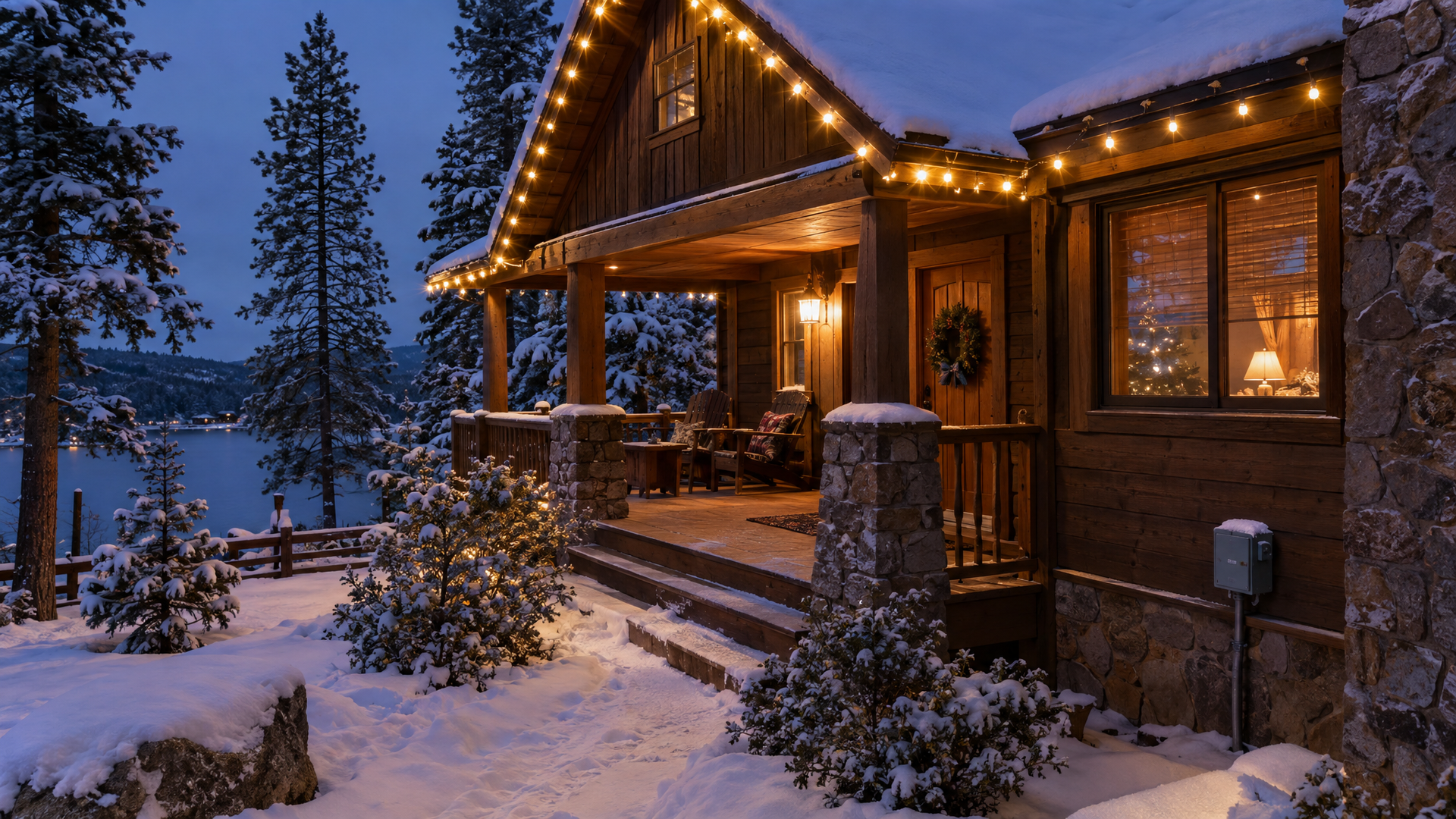
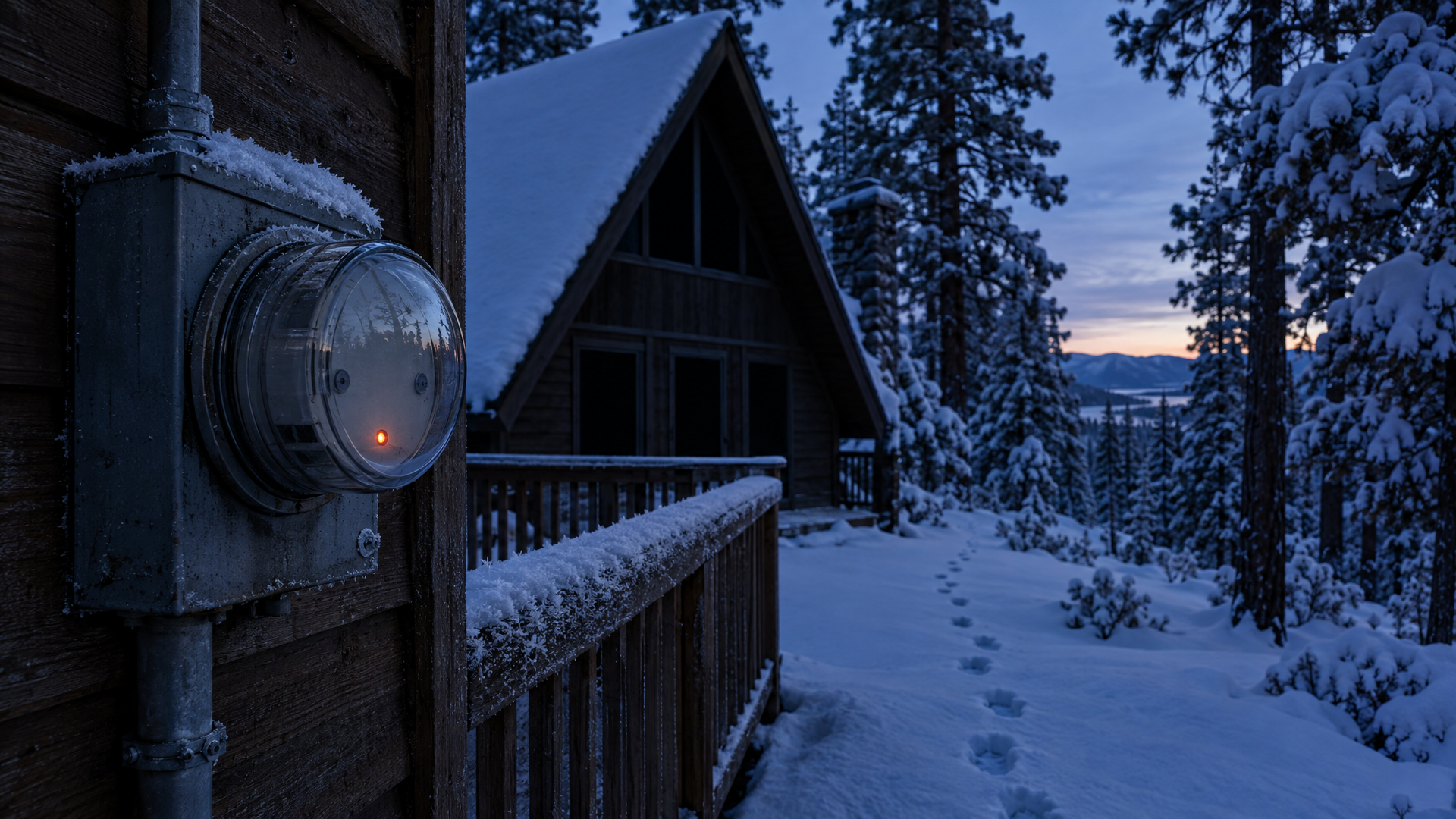
Every cabin on the lake lights up the same week in late November, and most of those decorations go up on circuits that are already working hard. A mountain home in December isn’t just running string lights. It’s running baseboard heat, maybe a space heater in a cold back bedroom, a hot tub, and now an extension cord running out to the eaves through actual snow. That combination is worth more caution than a typical suburban holiday display gets.
The numbers behind the warnings
According to the Electrical Safety Foundation International, decorations cause about 25% of holiday season home fires, roughly 860 home fires a year. The National Fire Protection Association’s data shows that 30% of all home fires and 38% of home fire deaths happen in December, January, and February, and overloaded circuits are a recurring factor. Separately, the U.S. Fire Administration’s figures show holiday decoration and Christmas tree fires cause roughly twice the injuries and five times the fatalities per fire compared with the average winter home fire. None of this is unique to the mountains, but a cabin that’s also running electric heat and an outdoor hot tub starts the season with less spare capacity than a typical house down the hill.
The rule most people have never heard of
Manufacturers generally recommend connecting no more than three strands of incandescent mini-lights end to end on a single run, and ESFI repeats the same warning. LED strings use far less power, so you can typically connect more of them, but “more” isn’t “unlimited,” and the actual number depends on the specific product’s listed wattage. Check the tag on the strand, not a rule of thumb from a blog post, including this one.
Extension cords in snow
This is where Lake Arrowhead’s conditions diverge from a typical holiday safety list:
- Use cords rated for outdoor use, not an indoor cord pressed into service because it was already in the garage. Outdoor-rated cords are built to handle moisture and cold in a way indoor cords aren’t.
- Keep connections off the ground and out of snow or standing water. A cord-to-cord junction sitting in slush is exactly the setup that leads to a short.
- Never plug one extension cord into another. Each extra connection point is another place for moisture to get in.
- Check the gauge against the load. A typical extension cord is rated around 1,250 watts, and it’s easy to exceed that once lights, an inflatable, and a space heater in the garage all end up sharing one cord. Faulty extension cords cause thousands of home fires a year nationally, and overloading is a leading cause.
- Inspect the cord before you use it, every season. Cracked, brittle, or chewed insulation (a real risk in a cabin that sits empty for stretches) means the cord gets replaced, not taped.
Outdoor GFCI protection
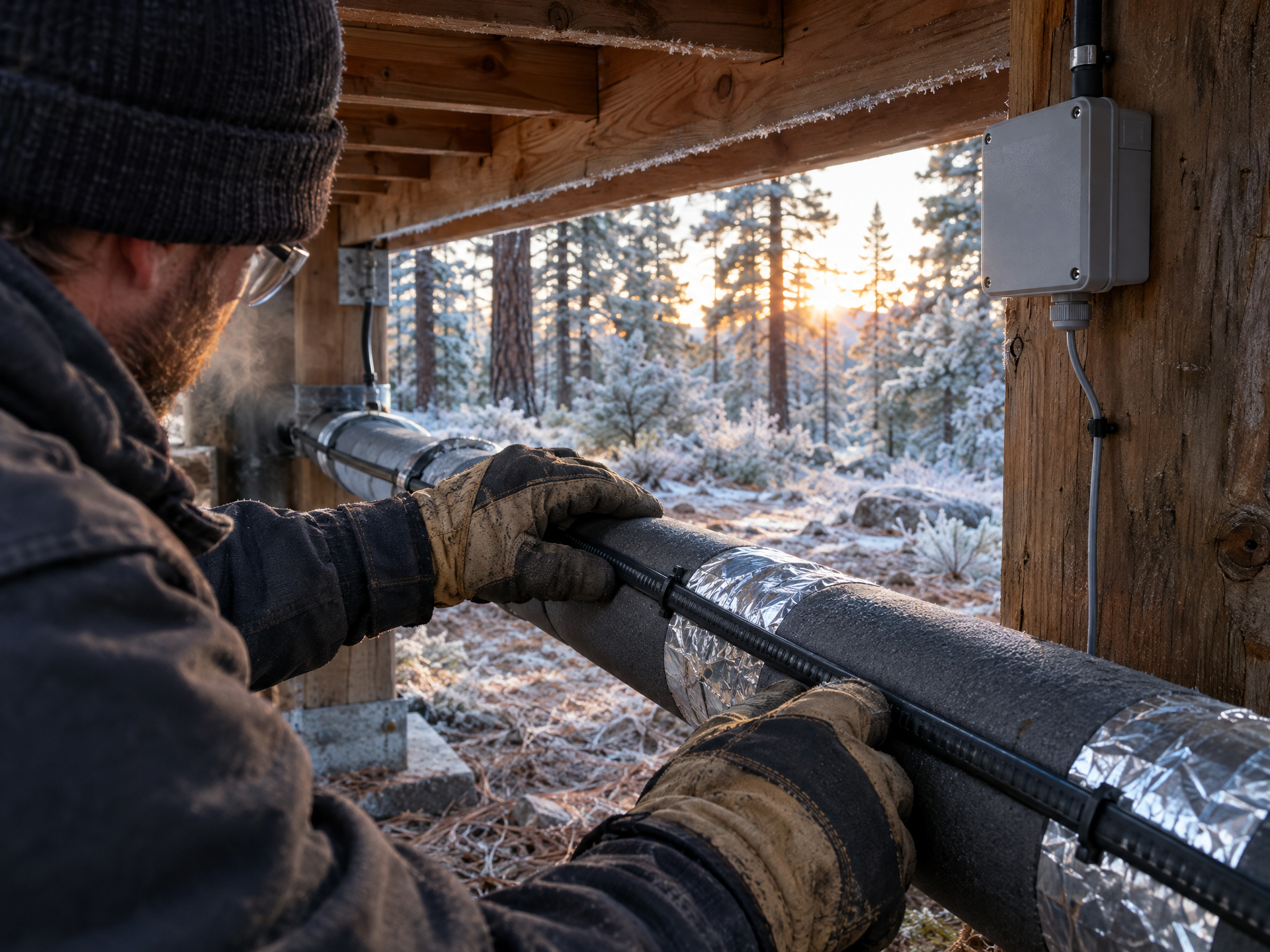
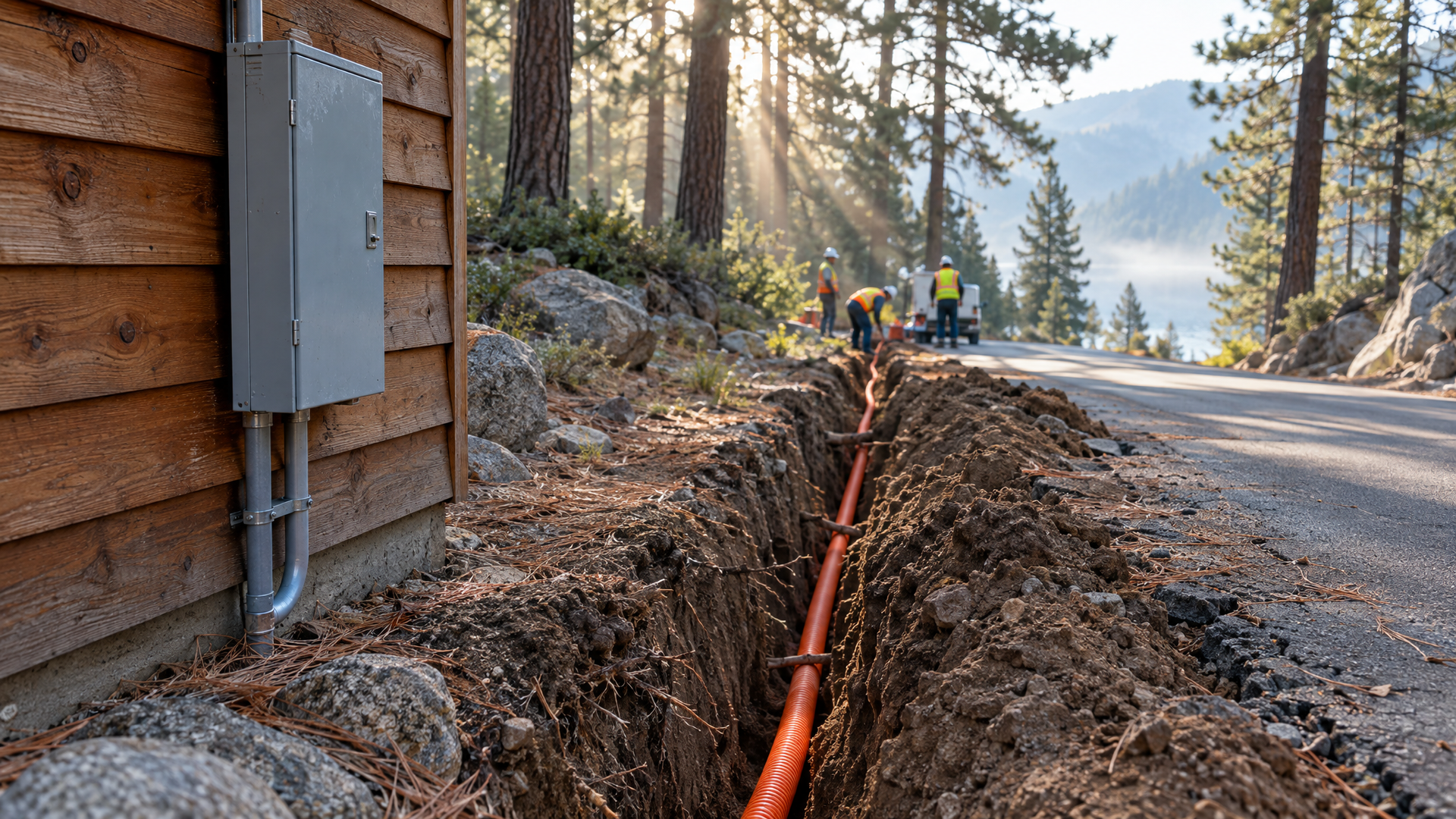
Current code requires outdoor receptacles to be GFCI-protected, with a weatherproof, in-use cover that keeps the outlet covered even with a cord plugged in. That’s a meaningfully different fixture than an older, uncovered outdoor outlet, which is common on cabins that haven’t been updated. If you’re not sure whether your exterior outlets are GFCI-protected and properly covered, that’s worth a quick check before anything goes up this year. It’s the same equipment category we cover in our guide to heat tape and roof heat cable, another outdoor circuit that depends on the same ground-fault protection.
Don’t add the lights to a panel that’s already maxed out
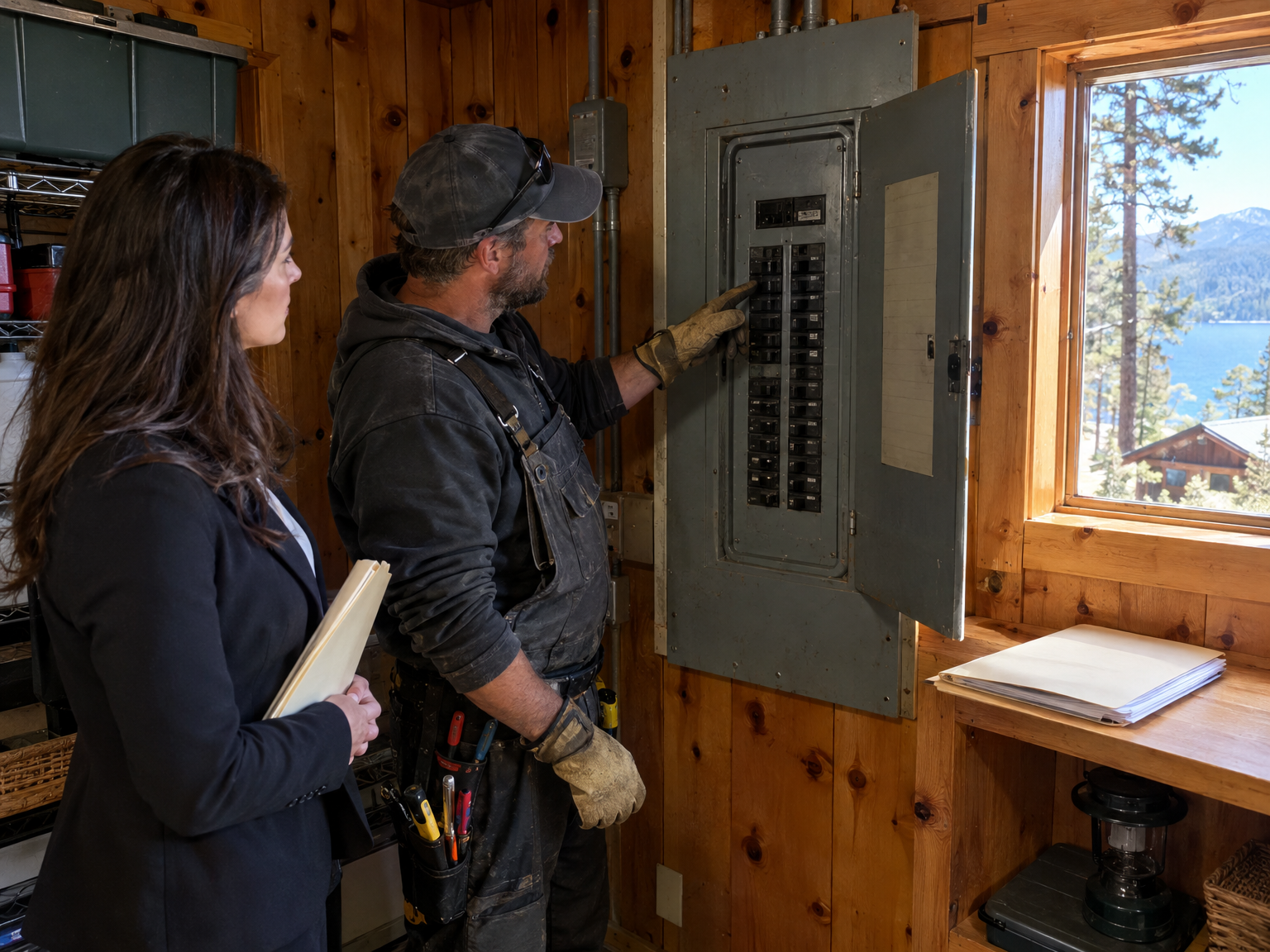
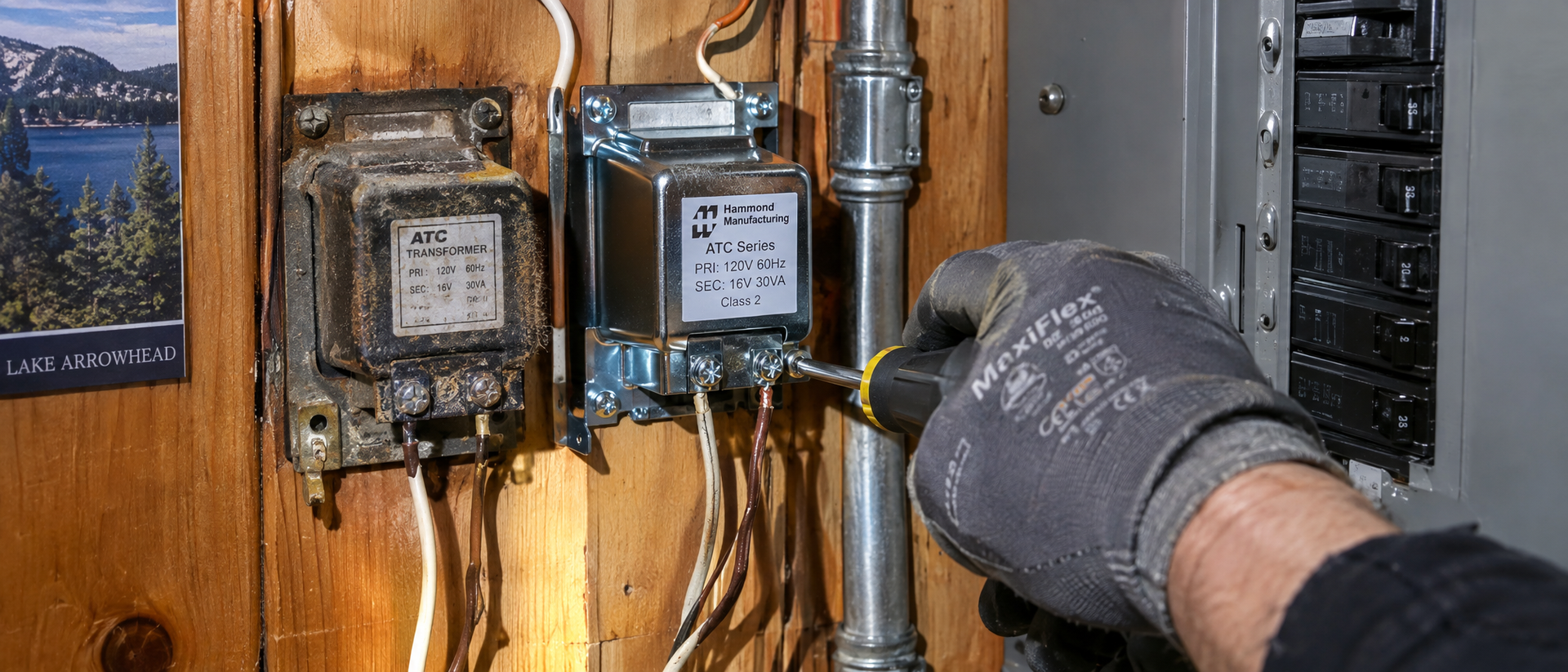
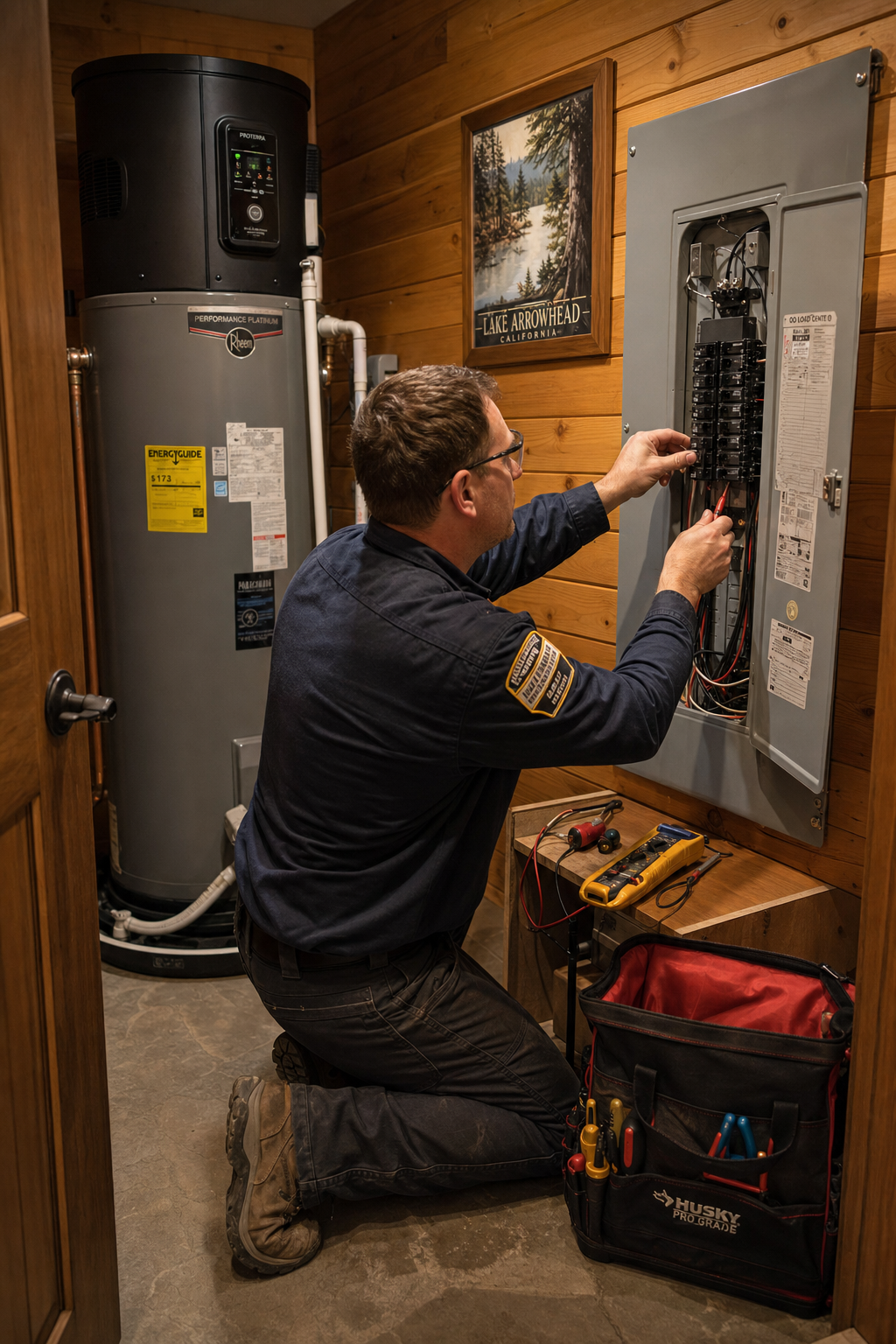
A mountain cabin’s electrical panel is often carrying more than a comparable house at lower elevation: electric baseboard or wall heat, a hot tub, maybe a heat pump water heater, and now, for a few weeks, an outdoor lighting display on top of it. If your panel is already tight, running a heavy light display from the same circuit as your heat is a bad combination, especially on the coldest nights of the year when the heating system is drawing the most. Our guide to panel capacity for heat pumps, EV chargers, and hot tubs (written for the state’s new disclosure rules, but the capacity math is the same) explains how these loads stack up.
If the lights are going up on a vacant cabin
A lot of Lake Arrowhead properties sit empty most weeks, decorated for a holiday visit and then left unattended. A few things matter more in that situation:
- Use a timer, not a “leave it running” approach. Unattended lights for weeks at a time, especially older incandescent strings, are a different risk profile than lights someone’s actually around to notice if something smells wrong.
- Don’t run anything through a window or door gap. It’s a common shortcut, and it also defeats weatherstripping on a cabin that’s already fighting mountain cold.
- If you use a smart plug or app-controlled outlet, confirm it’s rated for outdoor, cold-weather use, not just “smart.”
A quick pre-season checklist
- Pull lights and cords out and inspect them before hanging anything.
- Confirm outdoor outlets are GFCI-protected with weatherproof in-use covers.
- Check the strand’s own wattage rating instead of assuming the three-strand rule covers everything.
- Keep cord connections elevated, dry, and out of the path of snow shoveling or plowing.
- Use a timer for anything left running on an unattended cabin.
- If anything trips a breaker repeatedly, stop adding load to that circuit and have it looked at rather than resetting it over and over.
Questions about holiday lighting on a mountain cabin
Can I use indoor-rated lights outside if I keep them under the eaves?
No. Indoor-rated cords and lights aren’t built for moisture and cold exposure even when partially sheltered. Use outdoor-rated equipment for anything outside.
How many light strands can I actually connect together?
Check the tag on the specific product. The traditional rule of thumb is no more than three strands of incandescent mini-lights end to end; LED strings generally allow more, but the manufacturer’s own rating is the number that matters.
My outdoor outlet doesn’t have a GFCI button. Is that a problem?
It can be. Current code requires outdoor receptacles to have GFCI protection with a weatherproof, in-use cover. An older outlet without one is worth having checked before you depend on it for a holiday display.
Want your outdoor outlets checked, or your panel evaluated before you add a big light display on top of your heating load this winter?
Call Lake Arrowhead Electrical at (909) 403-4740 for a free quote.