Hosting Thanksgiving in Your Lake Arrowhead Cabin? Your Kitchen Circuits Weren’t Built for This
Hosting Thanksgiving in Your Lake Arrowhead Cabin? Your Kitchen Circuits Weren’t Built for This
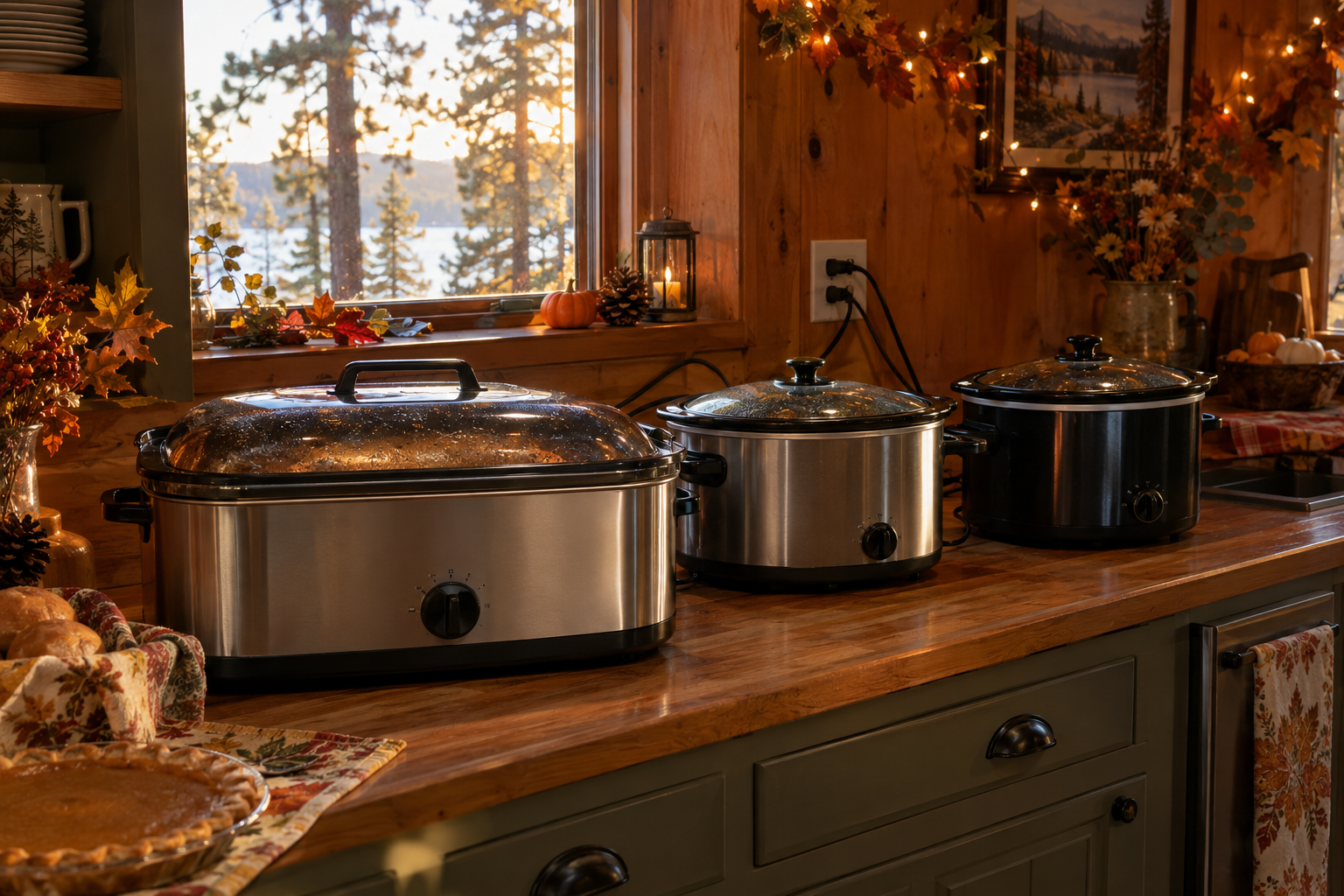
Twelve people, four side dishes in slow cookers, a roaster oven for the turkey, a hot plate keeping gravy warm, and a cabin kitchen that was wired decades ago for a stove, a fridge, and maybe a coffee maker. Thanksgiving asks more of a kitchen’s electrical system than almost any other day of the year, and a mountain cabin’s original wiring often wasn’t built with a dozen guests and six appliances in mind.
Why Thanksgiving specifically is the problem
According to the National Fire Protection Association, Thanksgiving is the peak day of the year for home cooking fires by a wide margin, with estimates showing reported fires running roughly three to four times the daily average. Unattended cooking is the leading factor, but overloaded circuits and extension cords are a close second, and they’re the part most hosts never think about until something trips or smells hot.
The math that catches people off guard
The National Electrical Code requires residential kitchens to have at least two 20-amp, 120-volt circuits. According to NFPA’s own guidance, common holiday cooking appliances draw:
- Roaster ovens: roughly 10 to 12 amps.
- Hot plates: roughly 8 to 12 amps.
- Slow cookers: roughly 2 to 6 amps.
Put two of the heavier draws on the same 20-amp circuit and you’re already close to the limit before anyone’s plugged in a coffee maker or a stand mixer. In an older cabin, where kitchen circuits may predate the current two-circuit code requirement, or where a remodel added outlets without adding capacity, the margin can be even thinner.
Extension cords are where it actually goes wrong
NFPA is direct about this: a standard light-duty extension cord is typically rated around 13 amps, lower than the 20-amp circuit it’s often plugged into. Load it up with a roaster oven and a slow cooker, and the cord itself, not the circuit breaker, can become the overloaded point. Here’s the part that makes this dangerous rather than just inconvenient: an overloaded extension cord doesn’t reliably trip anything to warn you. The circuit breaker is there to protect the house wiring, not the cord sitting on your counter.
NFPA’s guidance is blunt on this point: don’t run extension cords or multi-outlet splitters in the kitchen for cooking appliances at all. If you need more plugs, you need more circuits, not more cords.
What to do before the guests arrive
- Figure out which outlets are on which circuit. NFPA specifically recommends this: know your kitchen’s circuit layout so you can spread heavy appliances across different circuits instead of loading one.
- Keep slow cookers and roaster ovens off the same circuit if you can help it, especially if they’re both running for hours.
- Avoid routing extension cords into the kitchen from another room to power extra appliances. If a cabin’s kitchen only has outlets on one wall, that’s a capacity problem worth fixing before the holiday, not working around with a cord.
- Confirm GFCI protection on kitchen countertop outlets. It’s required by code and it protects against shock, though it won’t prevent an overload fire on its own.
- If you’re hosting a big group every year and this keeps being a scramble, an added kitchen circuit is a straightforward upgrade, and it’s a lot cheaper to schedule in October than to need in an emergency in November.
Why this matters more in an older cabin
A lot of Lake Arrowhead cabins were built or last rewired decades before a holiday gathering of a dozen people with modern countertop appliances was the norm. If your kitchen has never been evaluated against today’s typical holiday cooking load, Thanksgiving is as good a stress test as any, and a far better one to fail in early November than on the day itself.
If you’re cooking through a power outage
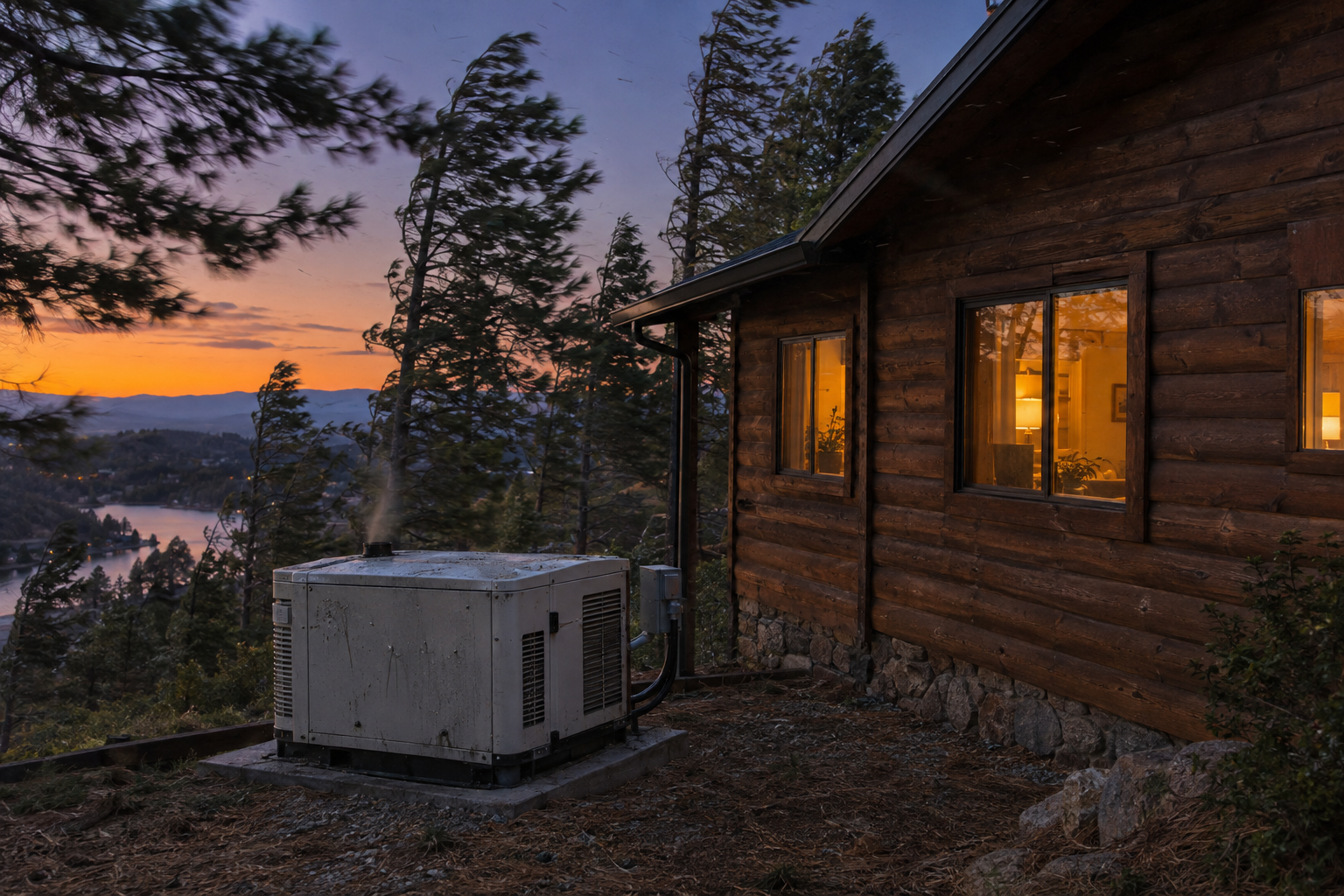
Mountain storms don’t check the calendar. If a PSPS or storm outage hits over the holiday, see our 24-hour power shutoff checklist and our backup generator guide. A generator has its own circuit limits, and running a turkey-day kitchen load off one requires its own planning, not an assumption that everything will just work.
Questions about kitchen circuits and holiday cooking
How do I know if I’m overloading a kitchen circuit?
Watch for a breaker that trips when multiple appliances run together, or for cords and outlets that feel warm to the touch. Neither should be treated as normal or reset repeatedly without a look from an electrician.
Is it ever okay to use an extension cord for a slow cooker?
NFPA’s guidance is to avoid extension cords and splitters for kitchen cooking appliances altogether. If you need another outlet, that’s a sign you need another circuit, not a cord.
Do older Lake Arrowhead cabins meet the current kitchen circuit code?
Not necessarily. The two-circuit minimum is a current code requirement, and cabins wired or last updated before it took effect may not meet it. An electrician can tell you what your kitchen currently has and whether it’s enough for how you actually use it.
Want your kitchen’s circuits checked before the holiday crowd arrives?
Call Lake Arrowhead Electrical at (909) 403-4740 for a free quote.
We’ll tell you honestly whether your cabin’s kitchen can handle the load, and what it would take if it can’t.