AFCI vs. GFCI in Your Lake Arrowhead Cabin: Two Different Protections, and Why Older Cabins Often Have Neither
AFCI vs. GFCI in Your Lake Arrowhead Cabin: Two Different Protections, and Why Older Cabins Often Have Neither
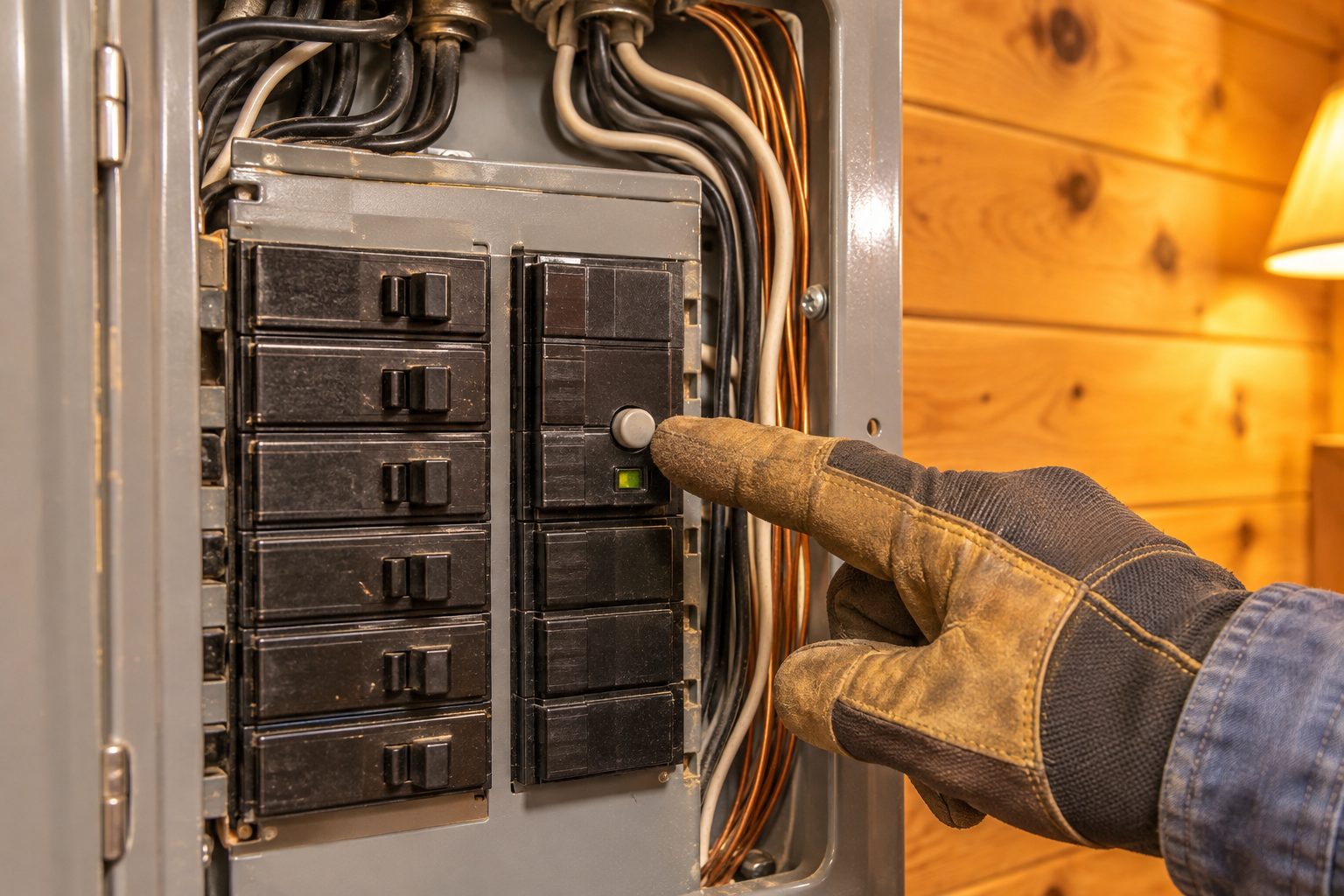
Ask most homeowners what their breaker panel protects against, and they'll say "fire" or "shock" without much more detail. In fact, two separate devices handle two separate hazards, and a cabin that's been updated over the decades in bits and pieces often ends up with one, the other, or neither, in the rooms where it actually matters.
Two different jobs
GFCI (ground-fault circuit interrupter) protects against shock. It detects current leaking to ground, the kind of fault that happens when a hair dryer falls in a sink or a drill bit nicks a wire near a damp surface, and shuts the circuit off in a fraction of a second. It's required in wet and damp locations: bathrooms, kitchens near the sink, outdoor outlets, garages, and similar areas.
AFCI (arc-fault circuit interrupter) protects against fire. It detects the electrical arcing that happens when wiring is damaged, a connection has loosened, or insulation has worn through, the kind of fault that can smolder inside a wall for months before anyone notices. Under NEC 210.12, it's required in nearly every room you actually live in: bedrooms, living rooms, dining rooms, kitchens, dens, hallways, closets, laundry areas, and similar spaces. Notably, it's not required in bathrooms, garages, or outdoor locations, the mirror image of where GFCI applies.
Kitchens and laundry areas need both. A combination AFCI/GFCI breaker at the panel is the cleanest way to cover a circuit that needs both protections.
Why this matters more for an older cabin
A cabin built or last rewired decades ago may have none of this. AFCI protection for bedrooms first appeared in the 1999 NEC and has expanded steadily to cover nearly every habitable room since. If your cabin's wiring predates the relevant code cycle for your room, and nobody has touched that circuit since, it may simply have never been required to have AFCI protection at all.
That matters because mountain cabins accumulate exactly the conditions arc faults come from over time: wiring that's flexed through decades of freeze-thaw cycles, rodent damage in crawl spaces and attics (a real and recurring problem at altitude), staples or nails driven through cable during a remodel years ago, and connections that have loosened from vibration or age. A bedroom with a space heater plugged into an old extension cord, a classic setup in a cold cabin, is a textbook arc-fault scenario: AFCI protection is built specifically to catch that kind of fault before it becomes a fire.
You don't have to retrofit your whole cabin at once
Here's the practical relief: NEC 210.12 doesn't require you to go back and add AFCI protection to circuits nobody is touching. The requirement is triggered when a circuit in a covered room is modified, extended, or replaced, or when new wiring is installed as part of a renovation, addition, or panel upgrade. An untouched circuit that was compliant when it was installed doesn't have to be retrofitted just because the code has since changed. One narrow exception: extending an existing circuit by six feet or less, without adding any new outlets, generally doesn't trigger the requirement either.
In practice, this means AFCI protection tends to get added room by room, whenever that room's wiring is touched for some other reason, which is exactly why a cabin owned for decades can end up with a patchwork: the remodeled kitchen has it, the untouched 1970s bedroom down the hall doesn't.
When it makes sense to address it proactively
- During a panel upgrade. If you're already replacing your panel, this is the natural moment to add AFCI breakers for the rooms that need them, since the labor to access the panel is already being done. Our panel upgrade guide covers what else typically comes up during that work.
- If your cabin has had rodent or pest activity in the walls or attic. That's exactly the kind of insulation damage that creates arc faults, and it's worth having circuits in affected areas evaluated regardless of what triggers the code requirement.
- If you're renovating a bedroom, living area, or kitchen anyway. The requirement will apply to that work regardless, so it's not an added decision, just something to budget for.
- If your breakers are old enough that you're not sure what protection you actually have. An electrician can tell you what's on your panel now without assuming.
A quick way to tell what you have
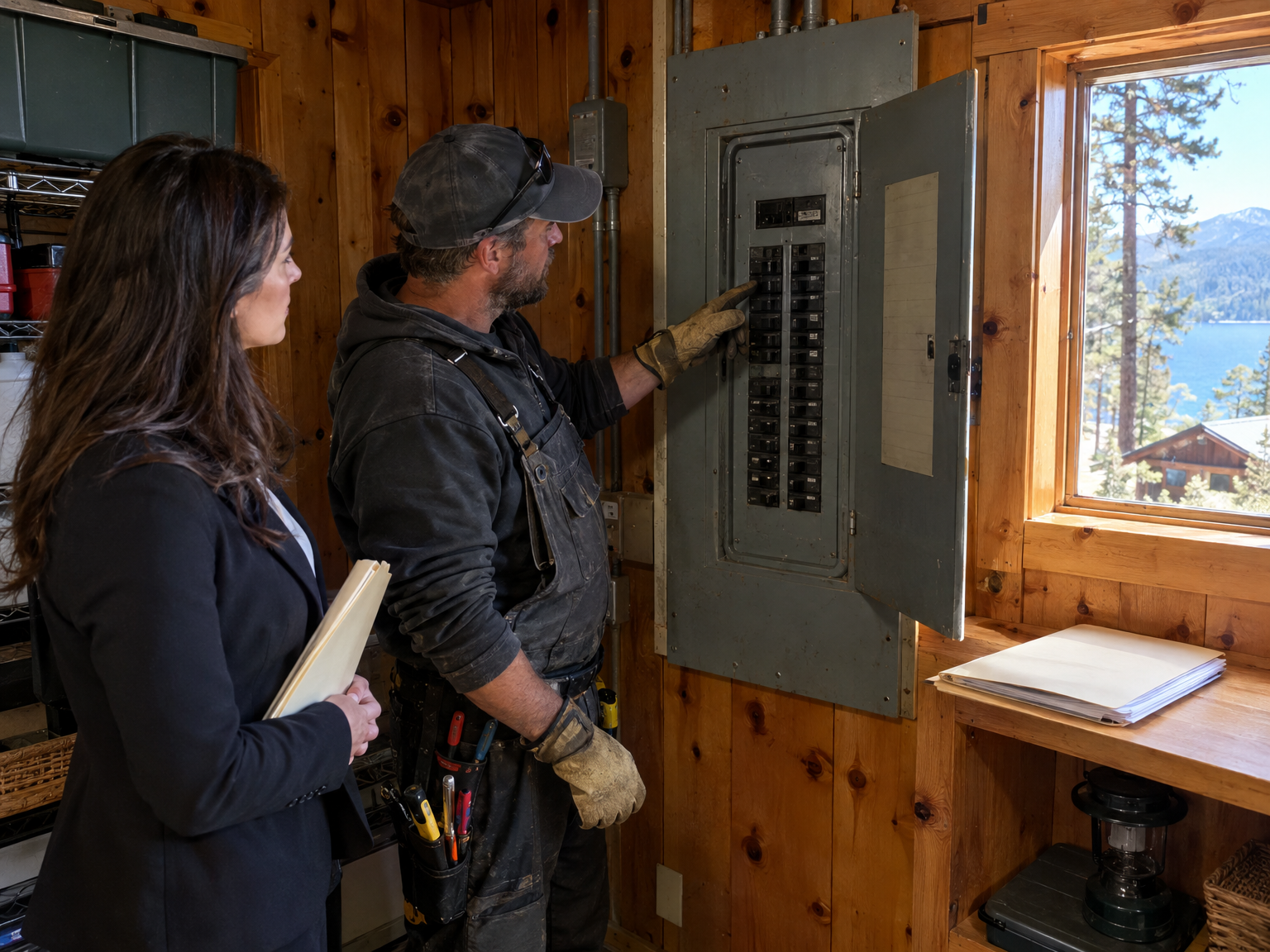
Look at your breaker panel. A standard breaker is just an on/off switch with no test button. A GFCI breaker has a test button and is usually labeled. A combination AFCI breaker also has a test button, often with slightly different labeling, and the two can look similar enough that guessing isn't reliable. If you're not sure which is which on your own panel, that's a quick thing for an electrician to confirm without any other work needed.
Questions about AFCI and GFCI protection
Do I need to add AFCI breakers to my whole cabin right now?
Not unless you're required to under the retrofit trigger rules. Circuits that aren't being modified, extended, or replaced generally don't have to be upgraded just because the code has changed since they were installed.
Can one breaker provide both AFCI and GFCI protection?
Yes, a dual-function combination breaker handles both from a single panel slot, which is the standard solution for kitchen and laundry circuits that require both protections.
Does my bathroom need AFCI protection?
No. Bathrooms require GFCI protection under NEC 210.8 but are not on the list of rooms requiring AFCI protection under NEC 210.12.
Not sure what protection your cabin's circuits actually have, or dealing with rodent damage in the walls?
Call Lake Arrowhead Electrical at (909) 403-4740 for a free quote.
We'll tell you plainly what's on your panel and what, if anything, needs to change.